Requisitos de la foto para el visado de Canadá y biometría del IRCC
El IRCC no aplica una única especificación de foto. Una solicitud de visado exige un encuadre de al menos 35 × 45 mm, fondo claro y liso y una cabeza de 31–36 mm de la barbilla a la coronilla. La tarjeta de residente permanente pide 50 × 70 mm en papel o de 715 × 1000 a 2000 × 2800 píxeles en línea; el pasaporte canadiense, 50 × 70 mm y ninguna clase de gafas. Esta página principal cubre la especificación del visado, la gestión de la biometría y enlaza con una página dedicada a cada una de las 6 categorías de visado más frecuentes.

En este artículo · 8 secciones
- —Al menos 35 × 45 mm, fondo claro y liso, cabeza de 31 a 36 mm
- 01La especificación de la foto para el visado de Canadá
- 02Elija su categoría de visado de Canadá
- 03Las categorías de visado de Canadá de un vistazo
- 04La biometría del IRCC y la ventana de 10 años
- 05Preguntas frecuentes
- 06Guías transversales por país
- 07Fuentes
Respuesta rápida
Al menos 35 × 45 mm, fondo claro y liso, cabeza de 31 a 36 mm
La foto para el visado de Canadá exige un encuadre de al menos 35 × 45 mm en orientación vertical, con la cabeza de 31–36 mm de la barbilla a la coronilla sobre fondo liso blanco o gris claro, iluminación uniforme. Expresión neutra, ojos abiertos, gafas graduadas con cristales transparentes permitidas, tomada en los últimos 6 meses. Registro biométrico en el VAC para la mayoría de las nacionalidades. Actualizado el .
La especificación de la foto para el visado de Canadá
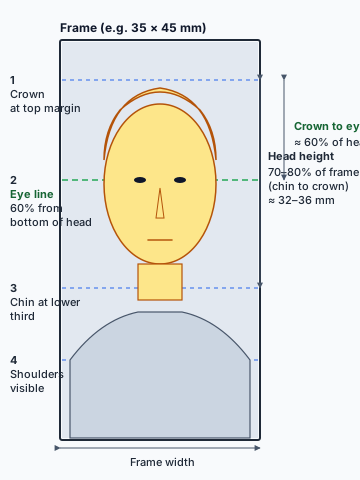
| Tamaño | al menos 35 × 45 mm en vertical |
|---|---|
| Altura de la cabeza | 31–36 mm de la barbilla a la coronilla |
| Fondo | blanco liso o gris claro, iluminación uniforme |
| Postura | De frente, cabeza recta, con ambas orejas normalmente visibles |
| Expresión | Expresión neutra, boca cerrada (sin sonreír) |
| Gafas | Se admiten gafas graduadas con cristales transparentes y sin tintar, siempre que los ojos queden visibles y la montura no los tape; nada de gafas de sol. Ver todas las reglas → |
| Prendas en la cabeza | Se permiten las prendas de cabeza por motivos religiosos o médicos; los rasgos del rostro deben quedar visibles |
| Antigüedad de la foto | Tomada en los últimos 6 meses |
| Fichero digital | JPEG o JPEG2000, mínimo 420 × 540 píxeles, alrededor de 240 KB y no menos de 60 KB |
| Contrastado con fuentes primarias. Actualizado: . Fuentes | |
Elija su categoría de visado de Canadá
La especificación de la foto es idéntica en todas las categorías. Lo que cambia según la categoría es la vía de solicitud: la tasa, el plazo de tramitación y los documentos justificativos.
Ese país no está en la lista.
Las categorías de visado de Canadá de un vistazo
| Visado | Tasa | Plazo | Biometría |
|---|---|---|---|
| Visado de visitante (TRV) | CAD $100 por solicitante | 20-60 días en plazo estándar | Sí para la mayoría de las nacionalidades — en un Centro de Solicitud de Visado (VAC) |
| Permiso de estudios (Study Permit) | Tasa del Study Permit de CAD $150 | Variable según el país | Sí para la mayoría de las nacionalidades — la fotografía biométrica y las huellas se toman en el VAC |
| Permiso de trabajo (Work Permit) | Tasa del Work Permit de CAD $155 | De 4 a 16 semanas, según el país y el estado de la LMIA | Sí para la mayoría de las nacionalidades — la toma se realiza en el VAC |
| Express Entry (PR federal) | consulte la lista de tasas vigente del IRCC: los importes se reindexaron el 30 de abril de 2026 | 6 meses en plazo estándar desde la ITA hasta la resolución final | Sí — la toma se realiza en el VAC |
| Patrocinio familiar (Family Sponsorship) | consulte la lista de tasas vigente del IRCC: los importes se reindexaron el 30 de abril de 2026 | De 12 a 24 meses para el patrocinio de cónyuge o pareja desde fuera de Canadá | Sí — la toma se realiza en el VAC |
| Super Visa | Tasa de solicitud de CAD $100 | De 2 a 8 semanas | Sí, en el centro de visados (VAC) |
La biometría del IRCC y la ventana de 10 años
La biometría es obligatoria para la mayoría de los solicitantes de visado, permiso de estudios y permiso de trabajo de Canadá. El VAC toma una foto biométrica y 10 huellas dactilares. La tasa de biometría es de CAD $85 (CAD $170 para una familia de 2 o más personas que soliciten juntas).
Una vez tomada, su biometría queda registrada en el IRCC durante 10 años. Cualquier solicitud posterior de visado de Canadá dentro de esa ventana reutiliza la biometría existente y no exige un segundo registro. Vale para cualquier categoría: quien haya pedido un TRV y tenga la biometría vigente hasta 2034 puede solicitar después un Study Permit, un Work Permit o la residencia permanente sin volver a registrarla hasta esa fecha.
Consecuencia práctica: la foto biométrica tomada para su primer visado de Canadá será la imagen de referencia de todas sus solicitudes canadienses durante la próxima década. Trate esa primera toma como la fotografía que le representa durante 10 años.
Preguntas frecuentes
01¿Qué tamaño tiene la foto para el visado de Canadá?
La foto para el visado de Canadá necesita un encuadre de al menos 35 × 45 mm, el mismo mínimo que el formato Schengen. El IRCC mide además la cabeza por separado: 31–36 mm de la barbilla a la coronilla. Ese es justamente el criterio que más veces obliga a repetir la toma. Los 50 × 70 mm que se citan en muchos sitios corresponden al pasaporte canadiense y a la foto impresa de la tarjeta de RP, no al visado.
02¿Es lo mismo que una foto para el pasaporte canadiense?
No. El pasaporte canadiense exige 50 × 70 mm y allí no se admiten gafas de ningún tipo. Para el visado, el IRCC pide un encuadre de 35 × 45 mm como mínimo y sí acepta gafas graduadas con cristales transparentes. La tarjeta de residente permanente tiene todavía otra especificación propia. Por eso una foto de pasaporte no se puede reutilizar sin comprobarla para la solicitud de visado.
03¿Hace falta biometría para todos los visados de Canadá?
La mayoría de las nacionalidades debe registrar la biometría en un centro de solicitud de visados (VAC) al pedir el primer visado canadiense o un permiso de trabajo o estudios. Una vez tomada, la biometría vale 10 años y se reutiliza en las solicitudes posteriores sin repetir el registro. La tasa de biometría es de CAD $85.
04¿Se puede sonreír en la foto para el visado de Canadá?
No. El IRCC exige una expresión neutra con la boca cerrada. Una sonrisa leve la rechaza la comprobación automática de fotos del IRCC ya en el momento de subir el archivo.
05¿Se pueden llevar gafas en la foto para el visado de Canadá?
Sí. El IRCC admite en la foto de visado gafas graduadas con cristales transparentes y sin tintar, siempre que los ojos se vean con claridad y la montura no tape ninguna parte del ojo. Las gafas de sol y los cristales tintados no se aceptan. En el pasaporte canadiense la regla es más estricta: allí no se admiten gafas en absoluto.
06¿Qué hago si el portal del IRCC rechaza la foto que he subido?
El IRCC hace una comprobación geométrica automática al subir el archivo. Motivos de rechazo habituales: cabeza descentrada, ojos a una altura incorrecta, fondo no uniforme o un archivo menor de 420 × 540 píxeles. El archivo puede pesar hasta 4 MB: el IRCC señala unos 240 KB como referencia y 60 KB como mínimo, así que comprimir mucho no sirve de nada y hace perder detalle alrededor de los ojos. Repita la toma con luz de día frente a una pared lisa.
Guías transversales por país
Fuentes
- Immigration, Refugees and Citizenship Canada (IRCC), Temporary Resident Visa application photograph specifications — especificación oficial de la foto para las solicitudes de visado canadiense (encuadre, altura de la cabeza, gafas). canada.ca ↗
- Documento ICAO 9303 Machine Readable Travel Documents, Parte 9 — calidad del retrato y encuadre biométrico. Canadá adopta ICAO 9303 como estándar de base para la geometría de la foto de visado. ICAO 9303 ↗
Verificado el . Hacemos seguimiento de los cambios en canada.ca; las tasas de visado y los plazos de tramitación de cada categoría provienen de la página correspondiente (los enlaces directos figuran en las subpáginas).
Prepare su foto para el visado de Canadá
Suba un retrato: Anfas.Pro aplica automáticamente el formato de visado del IRCC desde 35 × 45 mm y el encuadre biométrico.