Puis-je porter des lunettes sur une photo d’identité ?
Pour la plupart des documents biométriques modernes, la réponse la plus sûre est non : retirez vos lunettes avant la prise de vue, sauf si l’autorité émettrice accorde une exception médicale claire. Ce guide couvre les règles des 14 démarches les plus fréquentes, ce qui constitue une exception médicale valable, comment gérer les reflets et que faire si vous ne pouvez physiquement pas retirer vos lunettes.
Dans cet article · 8 sections
- —Réponse rapide
- 01Règle par démarche documentaire
- 02Étape par étape
- 03Pourquoi les autorités refusent les lunettes
- 04Types de verres qui échouent plus souvent
- 05Ce qui constitue une exception médicale valable
- 06Que faire si votre photo a été refusée à cause des lunettes
- 07Cas particuliers : enfants, malvoyants, lunettes religieuses
Réponse rapide
Réponse rapide
Les lunettes sont souvent refusées car les reflets sur les verres et les montures peuvent masquer la zone des yeux utilisée par les systèmes biométriques. Si vous devez les porter, n’utilisez que des verres transparents et retirez les verres teintés ou photochromiques bien avant la prise de vue.
Règle par démarche documentaire
| Démarche | Règle sur les lunettes | Source |
|---|---|---|
| Passeport États-Unis | Interdites depuis le 1er novembre 2016. Seules de rares exceptions médicales documentées sont acceptées. | travel.state.gov |
| Visa États-Unis (DS-160) | Interdites. Les reflets sont détectés par le contrôle automatisé. | travel.state.gov |
| Passeport Royaume-Uni | Déconseillées pour les nouvelles demandes depuis 2016. Autorisées uniquement pour un motif médical clair. | gov.uk |
| Visa Royaume-Uni | Même règle que le passeport — retirez-les si possible. | gov.uk |
| Visa Schengen | Déconseillées. Les yeux doivent être entièrement visibles, sans reflet. Le pré-contrôle consulaire refuse les reflets même invisibles à l’œil humain. | EU visa code + ICAO 9303 |
| Passeport / carte d’identité Allemagne | Autorisées uniquement sans reflets et avec les yeux entièrement visibles. La monture ne doit pas couvrir les sourcils. | Bundesdruckerei (BSI TR-03121) |
| Visa Chine | Autorisées sauf montures épaisses, teintées ou provoquant des reflets. | CVASC / MFA China |
| Passeport Chine | Autorisées uniquement si les yeux sont entièrement visibles et sans reflets. | National Immigration Administration |
| Passeport / visa Inde | Autorisées uniquement si les yeux sont visibles et la monture fine. | passportindia.gov.in |
| Passeport Canada | Interdites depuis le 1er juillet 2016 pour les passeports biométriques. | Service Canada / Passport Canada |
| Passeport Australie | Interdites sauf motifs médicaux documentés. | passports.gov.au |
| Passeport Japon | Autorisées uniquement sans reflets. | MOFA Japan |
| Documents ÉAU | Les lunettes médicales peuvent être acceptées si les yeux ne sont pas couverts et les verres non teintés. | ICA UAE |
| Passeport intérieur Russie | Autorisées pour les porteurs permanents ; les verres teintés sont interdits. | MVD Russia |
Étape par étape
Déterminez si vous relevez d’une exception médicale
Une exception médicale ne s’applique que lorsque vous ne pouvez pas retirer vos lunettes pour un motif physique documenté (par exemple après une opération ou pour certaines affections neurologiques). « Je les porte toujours » n’est pas un motif médical — même avec une forte correction, la photo n’est qu’un instant ponctuel.
Retirez vos lunettes 10 minutes avant la prise de vue
Les verres photochromiques et réactifs peuvent rester légèrement teintés plusieurs minutes après être rentré à l’intérieur. Posez les lunettes de côté, clignez plusieurs fois des yeux pour les laisser s’adapter et prenez la photo dans une lumière claire.
Si les lunettes doivent rester, supprimez d’abord les reflets
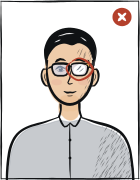
Inclinez très légèrement le plan des verres vers le bas (1-2°) pour que la lumière de la pièce se reflète vers le sol plutôt que vers l’appareil. Utilisez une lumière diffuse de fenêtre directement de face, jamais une lampe annulaire ni un spot de plafond.
Vérifiez que les deux yeux sont entièrement visibles
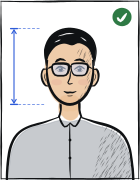
La monture ne doit couvrir ni les sourcils, ni les pupilles, ni le bord supérieur ou inférieur de l’œil. Si la monture entre dans la zone oculaire utilisée par le comparateur biométrique, la photo échoue au contrôle automatisé même sans reflet.
Apportez un certificat médical au rendez-vous
En cas de dépôt en personne, apportez un certificat médical signé et daté expliquant pourquoi les lunettes ne peuvent pas être retirées. La plupart des autorités exigent malgré tout la photo sans lunettes — le certificat ne compte qu’à l’étape de la vérification humaine.
Pourquoi les autorités refusent les lunettes
Les passeports biométriques à puce stockent une image de référence ICAO 9303 qui est comparée aux portiques électroniques et aux contrôles frontaliers des années plus tard. Les reflets, les verres teintés et les montures épaisses dégradent trois des caractéristiques utilisées par le comparateur : la position de la pupille, la géométrie du coin de l’œil et la distance interpupillaire. Même une tache de reflet qui paraît petite à l’œil peut couvrir plusieurs points mathématiques clés dont l’algorithme a besoin.
Types de verres qui échouent plus souvent
Les verres photochromiques / réactifs (Transitions) restent teintés 1-3 minutes à l’intérieur. Les traitements antireflets ont souvent un léger reflet bleuté que le comparateur interprète comme une teinte. Les verres progressifs avec ligne visible échouent car la ligne traverse la zone oculaire. Les lunettes de soleil polarisées avec insert transparent paraissent souvent correctes, mais le polariseur bloque une partie du spectre visible.
Ce qui constitue une exception médicale valable
Les autorités varient, mais le critère commun est : une affection permanente ou de longue durée où retirer les lunettes est physiquement nuisible ou impossible. Phase postopératoire après une opération de la cornée, photosensibilité sévère (par exemple albinisme), nystagmus avec dérive de la mise au point empêchant toute prise utilisable, ou période de récupération après une opération du strabisme. « Forte correction » ne suffit jamais à elle seule.
Que faire si votre photo a été refusée à cause des lunettes
La plupart des refus précisent le motif exact (« reflet sur le verre droit », « la monture couvre le sourcil gauche », « yeux non entièrement visibles »). Reprenez la photo sans lunettes si l’exception médicale n’est pas claire — contester un refus lié aux lunettes aboutit rarement en 2024-2026 car la couche de contrôle automatisé ne peut pas être annulée par le vérificateur humain en première instance.
Cas particuliers : enfants, malvoyants, lunettes religieuses
Les enfants ont rarement une exception médicale valable — la plupart des autorités demandent de retirer les lunettes pour la prise de vue. Certaines (notamment l’Allemagne) acceptent expressément des lunettes médicales à monture légère pour les enfants très myopes. Les lunettes religieuses (par exemple des lunettes de prière permanentes) ne constituent pas une catégorie reconnue — les couvre-chefs religieux relèvent d’une règle distincte.
À lire ensuite
tous les guidesRéussissez votre photo avec lunettes du premier coup
Envoyez un portrait — Anfas.Pro vérifie la zone des yeux (reflets, couverture) selon la règle de votre pays, pour être sûr que le problème des lunettes est vraiment résolu avant l’envoi.