Requisitos da foto de visto para a Austrália e biometria do Home Affairs
O Department of Home Affairs australiano aplica uma única especificação de foto comum a todas as principais categorias: 35 × 45 mm, fundo claro liso, cabeça 32 a 36 mm do queixo ao topo da cabeça. Esta página pilar descreve o padrão comum, o decorrer da biometria e remete para páginas dedicadas às 6 categorias de visto mais frequentes.

Neste artigo · 8 secções
Em resumo
35 × 45 mm, fundo claro liso, cabeça 32–36 mm
A foto de visto para a Austrália é em formato 35 × 45 mm na orientação retrato, cabeça 32 a 36 mm do queixo ao topo da cabeça, sobre um fundo «cinzento-claro ou tom neutro liso, que contraste com o rosto, iluminação uniforme». Expressão neutra, olhos abertos, sem óculos, tirada nos últimos 6 meses. Biometria no centro de pedidos de visto para a maioria das nacionalidades. Atualizado: .
A especificação da foto de visto para a Austrália
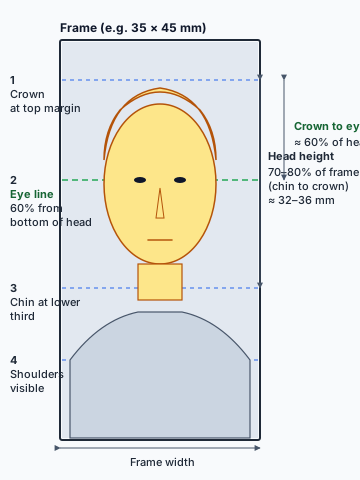
| Tamanho | 35 × 45 mm formato retrato |
|---|---|
| Altura da cabeça | 32 a 36 mm do queixo ao topo da cabeça |
| Fundo | cinzento-claro ou tom neutro liso, que contraste com o rosto, iluminação uniforme |
| Pose | De frente, cabeça direita, as duas orelhas normalmente visíveis |
| Expressão | Neutra, boca fechada (sorriso não recomendado) |
| Óculos | Não recomendados; proibidos na maioria dos centros de pedidos de visto devido aos reflexos. Ver todas as regras → |
| Cobertura da cabeça | Coberturas de cabeça religiosas ou médicas permitidas; os traços do rosto têm de ficar visíveis |
| Antiguidade da foto | Tirada nos últimos 6 meses |
| Ficheiro digital | JPEG, de 70 KB a 3,5 MB; resolução preferida de 1200 × 1600 píxeis. Não se aceita a digitalização de uma cópia impressa nem a fotografia de uma fotografia. |
| Conferido com fontes primárias. Atualizado: . Fontes | |
Escolha a sua categoria de visto australiano
A especificação da foto é idêntica para todas as categorias. O percurso de pedido — taxa, prazo de processamento e documentos comprovativos — varia consoante a categoria.
Esse país não está na lista.
As categorias de visto australiano num relance
| Visto | Prazo | Biometria |
|---|---|---|
| Visto de visitante (Subclass 600) | 50% em 21 dias | Sim, para determinadas nacionalidades — num centro de pedidos de visto (VFS Global) |
| Visto de estudante (Subclass 500) | 50% em 4 semanas | Sim, para a maioria das nacionalidades — num centro de pedidos de visto (VAC) |
| Visto Skills in Demand (Subclass 482) | Variável | Sim, para a maioria das nacionalidades — num centro de pedidos de visto (VAC) |
| Qualificados independentes/nomeados (Subclass 189 / 190) | 50% em 6 a 12 meses a partir do convite | Sim, para a maioria das nacionalidades — num centro de pedidos de visto (VAC) |
| Working Holiday (Subclass 417 / 462) | 50% em 18 dias | Sim, para algumas nacionalidades — num centro de pedidos de visto (VAC) |
| Visto de parceiro (Subclass 820 / 801) | 50% em 14 meses para a 820 | Sim — num centro de pedidos de visto (VAC) |
Não incluímos aqui uma coluna de taxas: o Home Affairs indexa cada taxa de candidatura a 1 de julho, pelo que um número impresso aqui ficaria rapidamente errado. O valor atual da sua categoria consta da Visa Pricing Table ↗.
Biometria do Home Affairs
A biometria é obrigatória para muitos requerentes de visto australiano. No centro de pedidos de visto (VFS Global na maioria dos mercados) são recolhidas uma foto biométrica e 10 impressões digitais. Não existe uma taxa de biometria separada — está incluída na taxa de serviço do centro de pedidos de visto.
Uma vez recolhidos, os dados biométricos ficam no processo do Home Affairs. Os pedidos de visto seguintes, dentro de um prazo razoável, podem reutilizar os dados existentes. A política exata de reutilização depende do tempo decorrido desde a recolha inicial e da categoria de visto. Os visitantes que usam a ETA (subclass 601) ou o eVisitor (subclass 651) geralmente não precisam de biometria.
A Austrália não emite cartão de residente permanente: um visto — mesmo permanente — fica registado eletronicamente, associado ao passaporte e verificado através do Visa Entitlement Verification Online (VEVO). A sua foto não é impressa num cartão; permanece no registo de identidade do Departamento. Ainda assim, escolha uma imagem fiel ao seu aspeto atual: na fronteira, o rosto é comparado precisamente com esse registo.
Perguntas frequentes
01Qual é o tamanho de uma foto de visto para a Austrália?
A foto de visto para a Austrália mede 35 × 45 mm — o mesmo tamanho de uma foto Schengen e de uma foto de passaporte australiano. A altura da cabeça é de 32 a 36 mm do queixo ao topo da cabeça. O Department of Home Affairs aplica esta especificação a quase todas as categorias de visto.
02A foto de visto para a Austrália é igual a uma foto de passaporte australiano?
Sim — ambas utilizam o formato 35 × 45 mm, com proporções de cabeça, regras de fundo e de expressão idênticas. A especificação de foto de passaporte do DFAT e a especificação de visto do Home Affairs estão alinhadas.
03Preciso de dados biométricos para um visto australiano?
A maioria das nacionalidades tem de recolher os dados biométricos (foto e impressões digitais) num centro de pedidos de visto. Uma vez recolhidos, os dados biométricos ficam no processo. Os cidadãos de países de baixo risco que pedem a ETA (subclass 601) ou o eVisitor (subclass 651) ficam frequentemente dispensados da biometria.
04Posso sorrir numa foto de visto para a Austrália?
Não. O Home Affairs exige uma expressão neutra, de boca fechada. Um sorriso discreto de lábios fechados é tecnicamente tolerado, mas a avaliação biométrica penaliza-o — uma expressão totalmente neutra é a opção mais segura.
05Posso usar óculos numa foto de visto para a Austrália?
Os óculos com lentes transparentes só são permitidos se os olhos permanecerem totalmente visíveis, sem reflexos. Na prática, os controlos biométricos do centro de pedidos de visto rejeitam a maioria das fotos com óculos devido ao risco de reflexo. Retire os óculos antes da captura.
06O que fazer se o ImmiAccount do Home Affairs rejeitar a minha foto?
O ImmiAccount faz uma verificação geométrica automática no carregamento. Motivos de rejeição frequentes: cabeça descentrada, proporção de cabeça incorreta, fundo não uniforme, problemas de formato de ficheiro. Repita a foto à luz do dia diante de uma parede lisa e volte a carregá-la através do ImmiAccount.
Guias relacionados entre países
Fontes
- Department of Home Affairs da Austrália, Photo requirements for citizenship applications — a especificação de foto publicada pelo Departamento: fundo neutro ou cinzento-claro, JPEG de 70 KB a 3,5 MB, de preferência 1200 × 1600 píxeis, foto com menos de 6 meses. homeaffairs.gov.au ↗
- Documento ICAO 9303 Machine Readable Travel Documents, parte 9 — qualidade do retrato e enquadramento biométrico. A Austrália adota a ICAO 9303 como norma de base para a geometria das fotos de visto. ICAO 9303 ↗
Verificado em . Acompanhamos as alterações em homeaffairs.gov.au. Não indicamos aqui valores concretos das taxas: o Home Affairs indexa-as todos os 1 de julho, pelo que um número copiado fica desatualizado em poucos meses — consulte o valor de hoje na Visa Pricing Table ↗. Os prazos de tramitação são recalculados continuamente, por isso os números das páginas de categoria são indicativos e não uma promessa.
Prepare a sua foto de visto para a Austrália
Carregue um retrato — o Anfas.Pro aplica automaticamente o formato Home Affairs 35 × 45 mm e o enquadramento biométrico, e depois acerta o tamanho do ficheiro.