Pular para o conteúdo

News and updates

When an issuing authority changes its document photo specification — a new size, a tightened head ratio, a different background colour — we publish an editorial note linking the affected country and document pages on this site.

What this feed covers

Latest editorial updates

Country update

USCIS ends self-submitted photos for most US immigration forms — ASC capture now mandatory

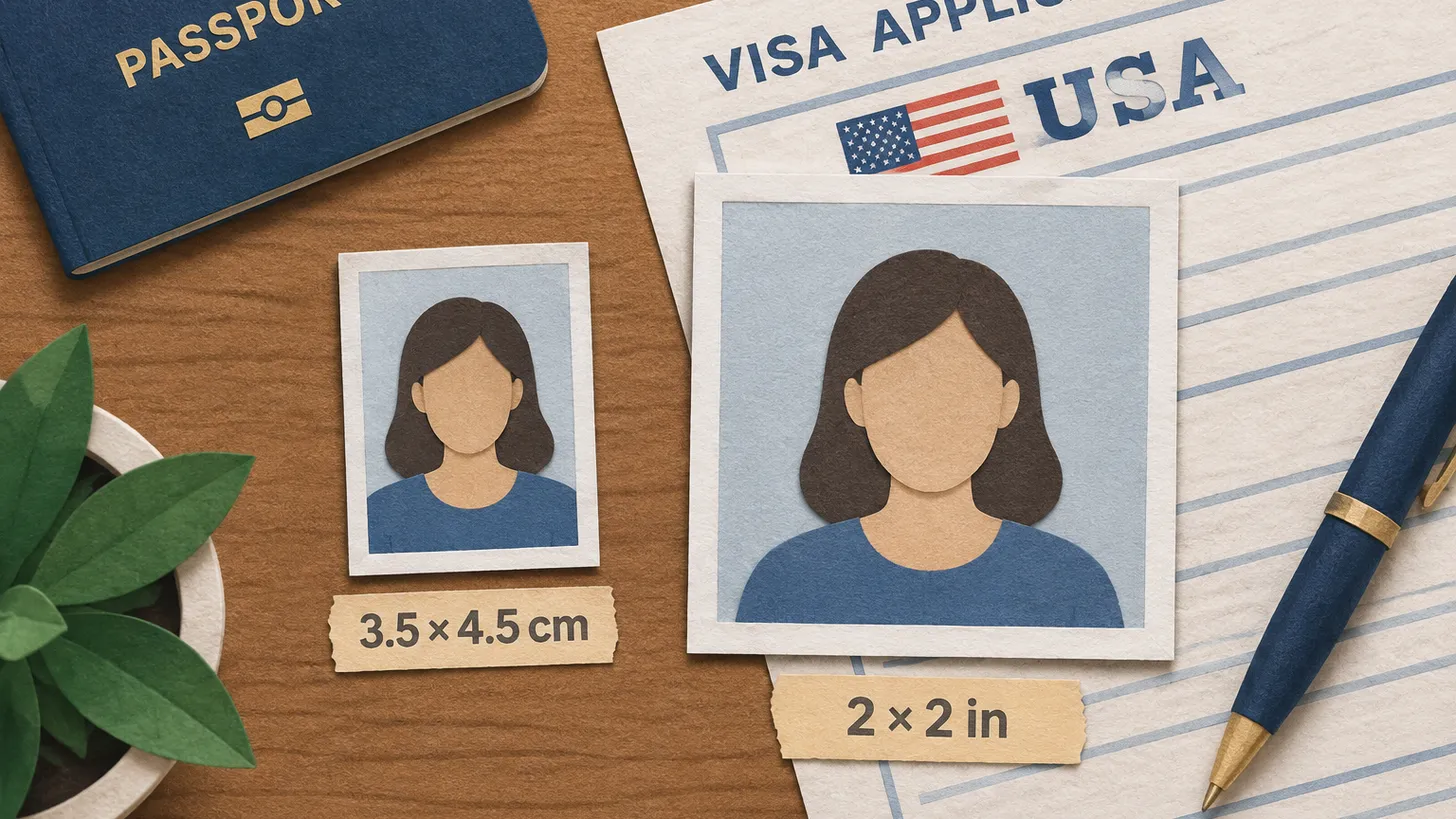
As of December 12, 2025, US Citizenship and Immigration Services (USCIS) no longer accepts self-submitted photographs with most immigration applications including Form I-765 (EAD), I-485 (Green Card adjustment), N-400 (naturalisation) and N-600 (citizenship certificate). Photos are now captured at USCIS Application Support Centers (ASCs) during the biometrics appointment. Self-submitted 2"×2" photos still apply to the DS-11/DS-82 passport applications and the DS-160 visa form. Practical impact: applicants no longer need to commission a USCIS-compliant studio session for I-765 / I-485 / N-400 / N-600 — but they must attend the ASC appointment in person. The DV lottery entry photo upload at dvprogram.state.gov is unaffected (still applicant-submitted, automated scan rejection).

5 min read
Country update

Germany eAT (electronic residence permit) — one year of digital-only QR-code photos

On 1 May 2025 Germany switched its electronic Aufenthaltstitel (eAT) issuance to a digital-only photo workflow: applicants must use a certified Fotostudio that uploads a Lichtbild with QR code via the approved cloud delivery system, or use the LEA (Ausländerbehörde) self-service photo terminal. The printed-photo workflow was discontinued. One year on, the change has tightened BSI TR-03121 compliance significantly — rejected-photo rate dropped from approximately 8% (printed era) to under 2% (digital era), per Bundesdruckerei figures. The change applies to all Aufenthaltstitel categories: residence permits, EU Blue Card, and settlement permits.

5 min read
Photo standards

India e-visa: September 2025 glasses ban tightens to no-exceptions enforcement

Since September 2025 the Indian Bureau of Immigration has enforced a strict no-glasses rule for e-visa photo uploads via indianvisaonline.gov.in — no exceptions, including prescription glasses with clear lenses that were previously tolerated. The change closes the previous gap where applicants would upload a passport-style photo with eyewear and get accepted by the automated check. The 51×51 mm square format, 10–300 KB JPEG file size limit, and 25–35 mm head height range remain unchanged. The OCI (Overseas Citizen of India) card follows different specs (light-coloured background, not white). Pakistani and Bangladeshi visa photos are also no-glasses but enforced less consistently.

4 min read
Country update

China launches COVA digital visa application portal — dual photo workflow now required

On 30 September 2025 China launched the new China Online Visa Application (COVA) system at cova.mfa.gov.cn, replacing the older paper-form-only workflow at CVASC (Chinese Visa Application Service Center) offices. The COVA digital upload accepts JPEG photos sized 40–120 KB at 354–472 × 420–560 pixels, plus 33×48 mm printed dimensions for the appointment. Critically: a successful COVA upload does NOT replace the printed photo — applicants must bring a matching printed 33×48 mm photo to the CVASC appointment for the visa sticker. The 33×48 mm size remains uniquely Chinese — neither the ICAO 35×45 nor 51×51 standard applies.

5 min read
Country update

Switzerland rolls out new biometric ID card with chip — November 2025 onwards

Switzerland's fedpol (Federal Office of Police) began rolling out a new biometric chip Identitätskarte from November 2025. Unlike the Swiss passport, the new biometric ID card uniquely accepts EITHER colour or black-and-white photos — the passport requires colour only. The card stores biometric photo and fingerprints in the chip and is valid as an EU/EEA/Schengen travel document. Photo spec stays at 35×45 mm with the distinctive Swiss biometric range: head 29–34 mm (narrower than the typical EU 32–36 mm), exactly 5 mm top-of-head margin, and light-grey biometric background. Older non-biometric Swiss ID cards remain valid until printed expiry.

4 min read
Editorial process

Three-tier honest review model — distinguishing single-reviewer-cited vs externally-audited

We have refined the editorial transparency model into three honest tiers. `compiled-source-check`: spec data extracted from authority pages during initial compilation, no narrative review. `single-reviewer-cited`: compiled and cited by an internal reviewer against gov sources, with country-unique quirks identified — but reviewed by ONE author within a short window, which by Google YMYL quality-rater standards is not "independent". `independently-reviewed`: reserved for profiles re-verified by a SEPARATE named domain expert (none currently — external editor pipeline in setup). The review strip on each leaf page reflects the actual tier rather than blanket-marking 218 docs as reviewed. Each rejection code now carries `provenance` metadata: `authority-published` (UK/US/DE catalogues), `derived-from-rule` (explicit authority rule mapped to a code), or `synthesized` (plausible code mnemonic for failure modes the authority does not enumerate publicly). This three-tier transparency model trades marketing-friendly "all-reviewed" claims for editorial honesty — a defensive E-E-A-T signal under Google's helpful-content classifier.

5 min read
Industry analysis

Schengen visa applications enter 2026 with mandatory biometric capture

Since 2025 the EU has phased in mandatory fingerprint + face capture for all Schengen visa applications via the new Visa Information System (VIS) consolidation. Practical impact for applicants: the photo uploaded with the e-form is now used as the reference image for VIS biometric matching, not only as ID for the visa sticker. Photos that pass at the consulate but score low on automated VIS quality checks can trigger an additional appointment for re-capture — adding 2-4 weeks to the timeline. Applying with a photo that already meets ICAO 9303 minimum scores helps avoid this.

4 min read
Country update

Germany completes transition to digital-only Lichtbilder for passports and ID

One year on from the 1 May 2025 transition, German Bürgeramt offices no longer accept printed photos for new passport or Personalausweis applications. All photos must be captured digitally — either by the office's own camera or by an approved external Lichtbild service provider that uploads via secure cloud delivery to Bundesdruckerei. The change tightened BSI TR-03121 compliance: rejected-photo rate dropped from approximately 8% (printed photo era) to under 2% (digital era), per Bundesdruckerei figures published April 2026. Citizens renewing existing documents can still use the prior chip photo where appearance has not changed significantly.

5 min read
Photo standards

UK HMPO publishes updated P01-P15 rejection code catalogue

HM Passport Office has refreshed its publicly-documented rejection code list. The 15 codes (P01 head-not-centred through P15 image-quality) now include more granular guidance on specific failure modes — for example, P05 (background colour) now distinguishes between "background not cream-or-grey" (hard reject) and "background colour borderline, accepted with note" (the photo is accepted but flagged for the next renewal). The online photo-check tool at gov.uk/photos-for-passports uses the same code mapping. Knowing your rejection code lets you address the exact cause on the reshoot — saving the £8-12 retake fee at most Post Office Photo-Me booths.

4 min read
Industry analysis

US DS-160 visa photo upload tightens to 240KB after server-side check rollout

The US State Department's DS-160 visa application form now enforces a strict 240KB JPEG file size limit at upload, rejecting larger files server-side rather than during human review. The change affects the 9+ million non-immigrant visa applications processed annually. Applicants whose phone-captured photos exceed the limit must re-encode (most online tools handle this automatically). The 600×600 px minimum resolution and sRGB colour space requirements are unchanged. Note: the printed-photo passport application (DS-11/DS-82) is unaffected — 2"×2" print still applies.

4 min read
Country update

Canada IRCC consolidates passport and PR card photo specs onto single standard

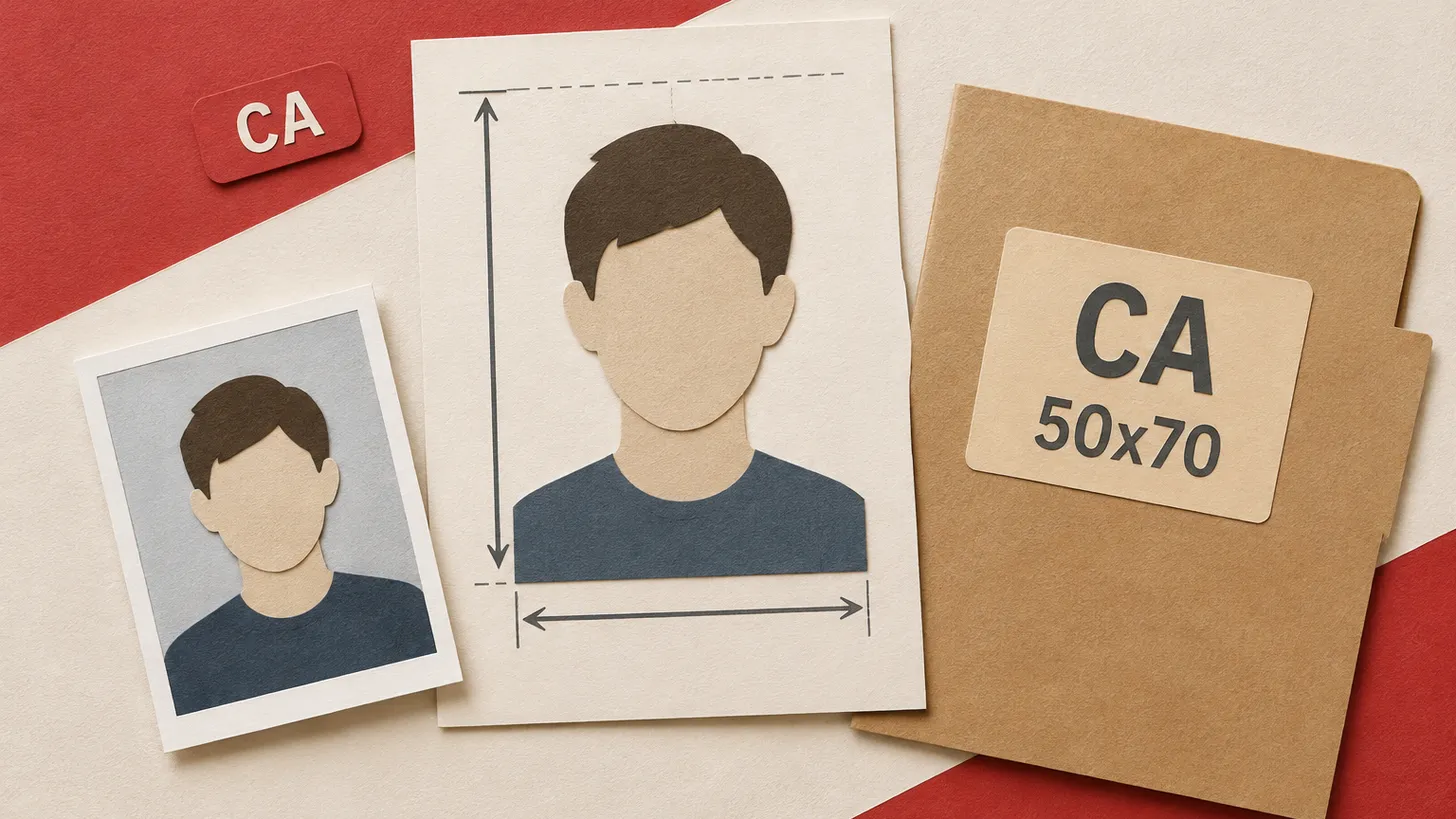
IRCC has aligned the photo specification for Canadian passports and Permanent Resident cards onto a single unified standard: 50 × 70 mm printed, 35 mm chin-to-crown head height, neutral light background. The previous variance between routes (passport at 50×70 mm, PR card at 35×45 mm) caused ~6,000 rejected applications per year per IRCC statistics. The change took effect with the February 2026 IRCC Operations Bulletin and is reflected across all Service Canada offices and overseas embassies. Applicants with photos taken to the older standard before February 2026 are accepted if the photo is within 6 months of submission.

5 min read
Industry analysis

ETIAS expected to launch late 2026 — what travellers from VWP countries need to know

The European Travel Information and Authorisation System (ETIAS) is on track for a late 2026 launch after several delays. Visa-free travellers from 60+ countries — including the United States, United Kingdom, Canada, Australia, Japan and South Korea — will need a €20 ETIAS authorisation before flying to any Schengen state. Unlike a visa, ETIAS does not require a separate photo upload; the e-Passport chip photo is used at the border. The system mirrors the US ESTA in scope and intent.

4 min read
Photo standards

Why "off-white" backgrounds still cause Schengen visa photo rejections

The EU Visa Code (Regulation 810/2009, Annex VI) specifies a "plain light grey or off-white" background — but consulates apply this rule with regional variation. German Bürgeramt offices reject any tint warmer than pure grey. French and Italian consulates accept a wider range. Print-on-photo-paper renders colours differently than the screen preview, which is the single most common cause of an otherwise-correct photo being rejected at the appointment. We recommend pure white as the safest default unless the destination consulate explicitly specifies otherwise.

3 min read
Country update

Cyprus and Romania advance toward full Schengen integration

Cyprus is expected to complete its Schengen integration process during 2026, joining Romania and Bulgaria, which gained full membership earlier. For document photo requirements, full Schengen membership means the country adopts the shared 35 × 45 mm biometric photo standard for visa applications and aligns its consulate handling with the rest of the bloc. Travellers preparing visa applications to these countries should now use the shared Schengen photo specification rather than older national variants.

3 min read
Rejection patterns

Top 5 document photo rejection causes we see across English-speaking routes

Based on the editorial cycle for English-speaking visa routes (US, UK, Canada, Australia, New Zealand), five rejection causes account for the majority of issues: (1) background not plain enough — gradient or shadow, (2) head ratio outside the country-specific tolerance, (3) glasses with visible glare or tinted lenses, (4) facial expression not neutral — even subtle smile rejected at HMPO and IRCC, (5) photo older than 6 months. The Anfas.Pro tool addresses 1-4 automatically; recency is a planning question for the applicant.

4 min read
Photo standards

ICAO 9303 Part 9 — what the standard actually says about your passport photo

ICAO Doc 9303 is the international biometric passport standard adopted by all 193 ICAO member states. Part 9 specifies the portrait quality used inside the chip: head occupies 70–80% of the frame, eyes level at 60% from the bottom of the head crop, neutral expression, plain light background, even frontal lighting. The standard does not mandate a printed photo size — that is set by each national passport authority. This is why the US uses 2 × 2 inches, Schengen states use 35 × 45 mm and India uses 35 × 35 mm even though the chip-data geometry is identical worldwide.

4 min read
Country update

IRCC Canada biometrics policy: the 10-year reuse window explained

Immigration, Refugees and Citizenship Canada (IRCC) keeps biometric data — fingerprints plus a digital photo — on file for 10 years after first capture. Any subsequent Canadian visa, study permit, work permit or permanent residence application within that window reuses the existing biometrics, with no second appointment required. The practical implication for applicants: the photo captured for your first Canadian application becomes the reference image for every IRCC application over the next decade. We recommend choosing a photo session with that long-term view in mind.

4 min read
Photo standards

US Department of State: why glasses have been banned in passport photos since 2016

The US Department of State updated its passport photo guidance in November 2016 to ban eyewear in passport photos except for documented medical reasons. The reason is automated biometric scoring at border control: even minor lens glare invisible to the naked eye lowers the match confidence score used by US Customs and Border Protection facial-recognition systems. The same rule applies to all US visa photo categories (DS-160, DS-260). Medical exemptions require a signed letter from a healthcare provider. We see this rule as a leading indicator — other countries (UK 2016, Canada 2016, Australia gradual) have adopted similar restrictions.

5 min read
Cluster launch

Schengen visa photo cluster — full coverage of all 27 member states published

New pillar guide and 27 country sub-pages covering the shared Schengen visa photo standard (35 × 45 mm, ICAO biometric framing) plus per-country consulate handling, fees and processing times. Each country page links to the national MFA or consular service portal and explains practical differences between consulate networks — VFS Global vs TLScontact vs BLS International — that affect how the same photo specification is enforced at the appointment.

3 min read
Photo standards

Why background-only AI tools can leave halo artefacts on passport photos

Background removal tools that operate on phone-camera selfies often leave edge artefacts around hair — a soft halo where the AI cutout meets the new background. This is invisible at thumbnail size but detected by automated consulate checks at upload. Tools that handle hair edges specifically (Photoroom, our own pipeline) produce a cleaner result. Generic background removers like older versions of remove.bg sometimes fail the corner-uniformity check that border-control systems apply. Reshooting against a plain wall is always safer than AI background replacement.

3 min read
Rejection patterns

India Passport Seva: why studio default 50 × 50 mm photos get rejected

The Indian Passport Seva Kendra (PSK) requires a 35 × 35 mm square photo with plain white background. Many studios default to 50 × 50 mm or 35 × 45 mm portrait when asked for a "passport photo" — these are the most common sizes for other countries. Applicants who do not specify the Indian size at order time consistently end up with rejected photos. For online applications through Passport Seva, the digital file specification is even more unusual: 4.5–12 KB at 200 × 230 pixels — a tight constraint that few tools handle out of the box.

3 min read
Editorial methodology

How Anfas.Pro verifies country photo specifications

Every country specification on this site is traced to an authority source — passport agency, immigration ministry, EU Visa Code or published embassy guidance. The source URL appears next to the spec table on every leaf page. Profiles are reviewed annually or when the authority publishes an update; profiles older than 18 months trigger a warning in the editorial validator. Where an authority does not publish a complete biometric matrix, the profile is marked as official-general rather than official-exact, and we do not infer missing values. See the editorial policy for the full process.

4 min read
Country update

UK Biometric Residence Permit phase-out: timeline and what it means

UK Visas and Immigration (UKVI) is phasing out the physical Biometric Residence Permit (BRP) in favour of a digital eVisa system from 2025 onwards. Existing BRPs remain valid until their printed expiry date, but new visas issued from late 2025 may receive a digital eVisa instead. For applicants, the photo specification (45 × 35 mm, UKVI standard) is unchanged — the biometric photo is still captured at the Visa Application Centre. What changes is what the holder receives: a digital credential accessed via a UKVI account rather than a physical card.

4 min read

Get requirement updates by email

Tell us the country and document you care about. We only send alerts when an authority changes a rule or a new verified profile goes live.

Request alerts
Experimentar · €4,99 Pré-visualização gratuita