Règles d’expression pour la photo d’identité : sourire, bouche et position des yeux
Presque toutes les normes biométriques modernes exigent une expression neutre, bouche fermée et yeux ouverts. La raison est technique : les systèmes de reconnaissance faciale biométrique se calibrent sur une référence neutre, et le moindre mouvement musculaire abaisse le score de correspondance.
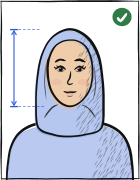
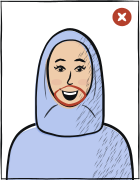
Réponse rapide
Neutre, bouche fermée, yeux ouverts — partout
Pas de sourire (un léger sourire lèvres fermées est parfois toléré, mais ce n’est jamais le choix le plus sûr). Bouche entièrement fermée. Yeux ouverts et bien visibles. Sourcils détendus. Tête droite, sans inclinaison. Regardez directement l’objectif.
Pourquoi l’expression compte plus qu’on ne le pense
La reconnaissance biométrique lit la zone des yeux, le contour de la mâchoire et la ligne des lèvres comme trois des repères les plus importants. Un sourire soulève les joues, élargit la bouche et modifie le contour de la mâchoire. Un sourcil relevé déplace la zone des yeux. Même un sourire lèvres fermées modifie assez l’angle de la ligne des lèvres pour abaisser le score de correspondance automatique.
L’ancienne règle du « léger sourire », en vigueur au début des années 2000, a été abandonnée par la plupart des autorités dès que les passeports biométriques à puce sont devenus la norme. Aujourd’hui, le léger sourire est purement et simplement refusé aux États-Unis, en Chine, au Japon, au Royaume-Uni et dans la plupart des États Schengen.
Règle d’expression selon la démarche
| Pays / démarche | Règle d’expression | Remarques |
|---|---|---|
| Passeport États-Unis | Neutre ou léger sourire naturel, bouche fermée | Léger sourire toléré ; grand sourire refusé. |
| Passeport Royaume-Uni | Neutre, bouche fermée | Le HMPO interdit explicitement tout sourire. |
| Visa Schengen | Neutre, bouche fermée | Norme du Conseil de l’UE. |
| Passeport / visa Allemagne | Neutre, bouche fermée | Ministère fédéral des Affaires étrangères : neutraler Gesichtsausdruck. |
| Passeport / visa Chine | Neutre, bouche fermée | NIA : ni sourire ni bouche ouverte. |
| Passeport Inde | Neutre, bouche fermée | Règle explicite du Bureau of Immigration. |
| Passeport Japon | Neutre, bouche fermée | Règle explicite du MFA japonais. |
| Passeport intérieur Russie | Neutre, bouche fermée | Règle explicite du MVD. |
| Passeport Canada | Neutre, bouche fermée | Règle explicite de l’IRCC ; léger sourire refusé. |
| Passeport Australie | Neutre, bouche fermée | Règle explicite du DFAT. |
| Emirates ID (EAU) | Neutre, bouche fermée | Règle explicite de l’ICP. |
| Photo biométrique Turquie | Neutre, bouche fermée | Règle explicite du NVI. |
Enfants et bébés
Les enfants jusqu’à environ 6 ans et les bébés sont généralement dispensés de la règle stricte d’expression neutre. Le visage doit tout de même rester bien visible, avec les deux yeux ouverts si l’enfant est éveillé. Voir les guides bébé et enfant pour la prise de vue.
À quoi ressemble vraiment une expression « neutre »
Un visage neutre a la mâchoire détendue, les lèvres jointes sans être pressées, les yeux ouverts et regardant devant soi, les sourcils dans leur position naturelle. Le plus simple pour obtenir une expression neutre est d’inspirer profondément, d’expirer, puis de déclencher avant le retour de toute tension musculaire.
Questions fréquentes
01Puis-je sourire sur une photo de passeport américain ?
Un léger sourire lèvres fermées est techniquement toléré selon les consignes du Département d’État américain. En pratique, l’analyse biométrique pénalise toute élévation des joues, donc une expression totalement neutre reste plus sûre.
02Pourquoi dois-je fermer la bouche ?
Une bouche ouverte modifie la ligne des lèvres et le contour de la mâchoire, deux repères utilisés par la reconnaissance biométrique. La règle de la bouche fermée est vérifiée par des contrôles automatiques de géométrie faciale.
03Je n’arrive pas à garder les yeux ouverts avec un flash — que faire ?
Utilisez la lumière naturelle d’une fenêtre plutôt qu’un flash. Regardez un point proche de l’objectif pendant quelques secondes avant le déclenchement pour détendre les yeux. Prenez plusieurs clichés et gardez le meilleur.
04Les yeux plissés sont-ils acceptés ?
Non. Les deux yeux doivent être totalement ouverts et bien visibles. Reprenez la photo sous une lumière plus douce si vous ne parvenez pas à garder les yeux ouverts avec l’éclairage initial.
Guides associés
Préparez votre photo d’identité dès maintenant
Envoyez un portrait — Anfas.Pro applique automatiquement les règles de ce guide au pays et au document sélectionnés.