 Ukraine
Digital apostille and consular services for Ukrainians abroad: what changed in 2026
From 2 March 2026 the apostille in Ukraine has become digital: the new Ministry of Justice register issues an e-apostille with QR codes in ASiC-E format, verification is online, without coming to Ukraine.

Key points
6 points- On 2 March 2026 the updated Electronic Apostille Register (e-APP) of the Ministry of Justice went live — this is a modernisation of the register operating since 2015, not a new service.
- Each apostille now has QR codes for the signature and seal and a unique QR for instant authenticity verification.
- Alongside the paper one, an electronic apostille is created — an ASiC-E container with a qualified electronic signature (QES), a format compatible with EU requirements (eIDAS); it can be downloaded as a PDF.
- Apostilles issued after 1 March 2026 are verified online at apostille.minjust.gov.ua; for older ones an archive is maintained (the register itself went live on 2 March 2026).
- The service can be obtained without physical presence in Ukraine — this reduces the burden on consulates; in the first month 30,744 apostilles were issued.
- In parallel, the Diia and e-Consul online services operate: online marriage registration via video link, extracts from the civil status register (DRATsS), a digital apostille on a criminal record certificate via Diia.
For Ukrainians living abroad, legalising documents for foreign institutions has always been a painful topic: certificates, civil records, translations, apostille — often this meant coming to Ukraine or queueing at a consulate. In 2026 this procedure has changed significantly.
What happened: the updated Electronic Apostille Register
On 2 March 2026, the Ministry of Justice of Ukraine, together with the state enterprise "National Information Systems", launched the updated Electronic Apostille Register. This is not a new service, but a modernisation of the register within the e-APP programme of the Hague Conference on Private International Law, which Ukraine has been running since 2015. The updated system was presented at the Permanent Bureau of the Hague Conference; the Ministry of Justice delegation was headed by Deputy Minister for Digital Development Olha Riabukha.
This is a transition from a fragmented paper model to a single digital environment where apostilles are centrally stored, verified and confirmed.
What specifically changed in the apostille
- QR codes. The apostille now contains QR codes for the signature and seal of the institution that affixed it, as well as its own unique QR code for quick authenticity verification.
- Electronic version. Alongside the paper apostille, an electronic one is created — an ASiC-E container with a qualified electronic signature (QES). This is an international format compatible with EU requirements (eIDAS); the file can be downloaded as a PDF and provided at the request of a foreign institution.
- Online verification. The authenticity of apostilles issued after 1 March 2026 is verified on the official resource apostille.minjust.gov.ua. For apostilles affixed earlier, an archive is maintained. During verification, a foreign institution sees both the apostille itself and a scanned copy of the document on which it is affixed.
- No need to come to Ukraine. The new system allows the service to be obtained without physical presence in Ukraine and reduces the administrative burden on Ukrainian consulates.
Note two close dates: the register itself went live on 2 March 2026, while online verification covers apostilles issued after 1 March 2026 (older ones — via the archive). From 2 March 2026 the functionality for accepting apostille applications is available for the civil status registration (DRATsS) units of the territorial bodies of the Ministry of Justice and for state notary offices. In the first month of operation, 30,744 apostilles were issued through the updated Register.
Who this concerns
Primarily Ukrainians abroad who need documents for work, study, a residence permit, tenders, marriage or other official procedures in countries that are parties to the Apostille Convention. A digital apostille with QR verification is easier for a foreign institution to recognise, and the service itself no longer requires a personal visit to Ukraine.
Registration of civil acts and documents via Diia and e-Consul
The apostille update is part of a broader shift of consular and registration services online:
- A digital apostille on a criminal record certificate is available via the Diia portal (the service launched in beta mode in 2025 and has been available in the app since then). Cabinet of Ministers Resolution No. 853 of 25 July 2024 amended the Procedure for maintaining the Electronic Apostille Register and extended electronic apostillisation to central government bodies, in particular the Ministry of Internal Affairs. Access requires a verified tax number (RNOKPP) and a passport (or residence permit) in the Diia app.
- Online marriage registration via Diia using a video link — regardless of the spouses' actual location, including abroad.
- Extracts from the State Register of Civil Status Acts can be ordered electronically via Diia; some DRATsS services are available online and at consular offices.
- Registration of a child's birth abroad: if at least one of the parents is a citizen of Ukraine, the child is entitled to citizenship regardless of the country of birth. The act can be registered through a diplomatic mission or consulate (booking the service — via the e-Consul portal) or with the competent authorities of the country of birth. Important: registration with foreign authorities alone does not yet mean automatic entry of the data into the Ukrainian register.
- Online notary services at consulates. Ukrainian citizens abroad can request certain notarial acts at embassies and consulates remotely.
What a Ukrainian abroad should do
- Check whether the country for which the document is needed is a party to the Apostille Convention — if so, an apostille is sufficient instead of consular legalisation.
- If you already have a new apostille (issued after 1 March 2026), save its electronic version in ASiC-E / PDF format and, if necessary, send it to the foreign institution together with a link to the online verification.
- Verify the authenticity of an apostille only on the official Ministry of Justice resource apostille.minjust.gov.ua.
- To register civil acts (birth, marriage) or order extracts — use booking via e-Consul and the services in the Diia app, clarifying the list of services of the specific consulate.
The exact lists of documents, fees and submission procedures depend on the specific institution and may be updated, so before submission check against the official sources of the Ministry of Justice and the Ministry of Foreign Affairs.
06Questions
6 answers01From what date does the updated Electronic Apostille Register operate in Ukraine?
From 2 March 2026. This is a modernisation of the e-APP register operating since 2015. At the same time, the functionality for accepting apostille applications became available for the DRATsS units of the territorial bodies of the Ministry of Justice and for state notary offices.
02What is new in the apostille itself?
The apostille now contains QR codes for the institution's signature and seal and its own unique QR code for authenticity verification. Alongside the paper one, an electronic apostille is created — an ASiC-E container with a qualified electronic signature (QES), a format compatible with EU requirements (eIDAS), which can be downloaded as a PDF.
03How do I verify the authenticity of an apostille online?
On the official Ministry of Justice resource apostille.minjust.gov.ua. Apostilles issued after 1 March 2026 are verified online; for older ones an archive is maintained (the register itself went live on 2 March 2026). The foreign institution sees both the apostille and a scanned copy of the document.
04Do I need to come to Ukraine to obtain an apostille?
No. The updated system allows the service to be obtained without physical presence in Ukraine, which reduces the burden on consulates. In the first month of operation, 30,744 apostilles were issued.
05Can I register a child's birth abroad and obtain Ukrainian documents?
Yes. If at least one of the parents is a citizen of Ukraine, the child is entitled to citizenship. The act can be registered through a consulate (booking — on the e-Consul portal) or with the authorities of the country of birth. Registration with foreign authorities alone does not yet automatically enter the data into the Ukrainian register.
06Which services are already available online via Diia?
Among others — a digital apostille on a criminal record certificate (the service launched in beta mode in 2025 and has been available since then; Cabinet of Ministers Resolution No. 853 of 25.07.2024 extended electronic apostillisation to central government bodies), online marriage registration via video link, and ordering extracts from the State Register of Civil Status Acts.
07Official sources
- Міністерство юстиції України — оновлений Електронний реєстр апостилів (офіційна новина)
minjust.gov.ua - Електронний реєстр апостилів — офіційний ресурс Мін'юсту
apostille.minjust.gov.ua - Interfax-Ukraine — Ukraine presents modernized Electronic Register of Apostilles at Hague Conference
en.interfax.com.ua - HCCH — Ukraine launches a Category 2 e-Register (e-APP)
hcch.net - Міністерство юстиції України — Шлюб онлайн: підсумки I кварталу 2026
minjust.gov.ua - Schmidt & Schmidt — Digitally apostilled Certificates of No Criminal Record in Ukraine (CMU Resolution No. 853)
schmidt-export.com
Author: Yevhen Kravchenko. Published . Checked against official sources on .
UkraineUkraine's 2026 exit rules: new categories allowed to leave under martial law
Throughout 2026, Ukraine's Cabinet of Ministers expanded the grounds for exiting the country under martial law through separate resolutions: since January 1, media and information workers may exit with a Derzhkomteleradio letter (up to 60 days); since May 11, women in state positions are no longer limited to business trips; reserved men saw no major easing as of August.

 EUUkraine
EU Temporary Protection: New Exit-Stamp Requirement for Men of Military Age
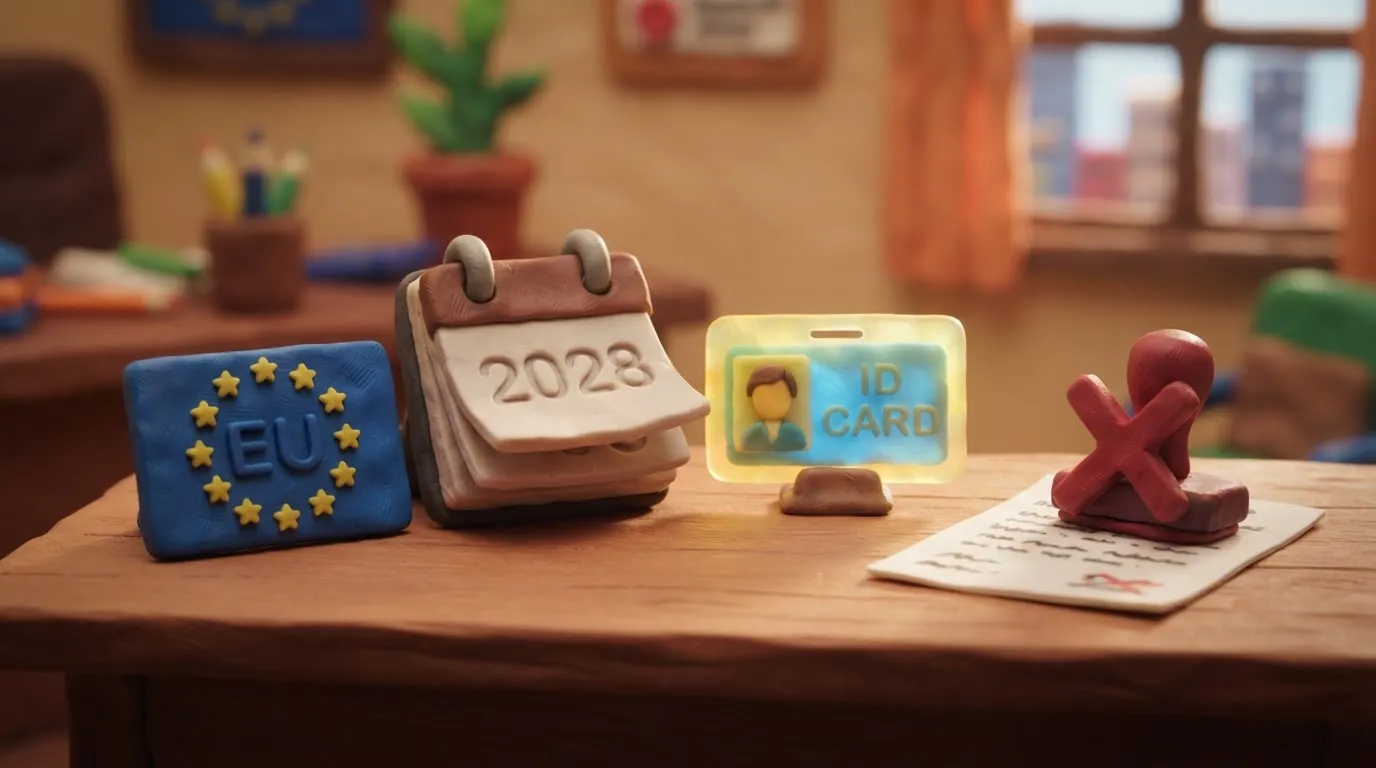
Alongside extending temporary protection to March 2028, EU countries agreed on a new condition: men of military age applying for the first time must prove they left Ukraine legally.
 EUUkraine
EU proposes extending temporary protection to 2028 with restrictions for men
On June 26, 2026, the European Commission officially proposed extending the Temporary Protection Directive for Ukrainians for another year — until March 4, 2028. At the same time, an important exception is proposed: newly arrived military-liable individuals who do not have legal permission to leave Ukraine will no longer receive this status automatically. Those Ukrainians, including men, who have already received temporary protection earlier will retain their status. The proposal still needs final approval by the Council of the EU.
Make your photo to the current rules
Pick your document and upload a selfie — we crop it to size, replace the background and check it. Free. The sizes come from the same official sources as the news.