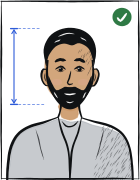
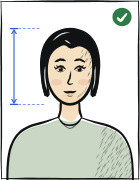
Quick answer: A UK passport photo must be 35 × 45 mm. Plain light background in cream or grey tone without patterns. Head occupies 64–76% of photo height (29–34 mm chin to crown). Neutral expression, better without glasses. Last verified .
UK passport photo: size in mm, cm, inches and pixels
Millimetres
35 × 45 mm
Centimetres
3.5 × 4.5 cm
Inches
1.38 × 1.77″
Pixels at 300 dpi
413 × 531 px
Pixels at 600 dpi
827 × 1063 px
UK-specific things to know
The background differs by route: plain light-coloured for the digital photo, plain cream or light grey for the printed one — white is not asked for on either.
The age limit is one month — shorter than the 3 or 6 months on most visa lists — and a new photo is needed with each new passport even if your appearance has not changed.
The printed photo must be 45 mm high by 35 mm wide with the head 29–34 mm and not cut down from a larger picture; the digital one is not measured in millimetres but in pixels (600 × 750 minimum) and is cropped for you.
How passport photos are verified
A UK passport photo follows GOV.UK, and which rules apply depends on how you apply. Online, you give a digital photo — clear, in focus, in colour, unaltered by software, at least 600 pixels wide and 750 pixels tall, 50 KB to 10 MB, on a plain light-coloured background in clear contrast — either from a booth or shop with a code, or taken with your own device during the application (head, shoulders and upper body, and the system crops it). On a paper form you give 2 identical printed photos, 45 mm high by 35 mm wide (the standard booth size, not cut down from a larger picture), with the image from crown to chin 29–34 mm, on plain white photographic paper with no border, plain cream or light grey background, without creases or tears and unmarked on both sides unless countersigned. In both cases the photo must be taken in the last month, you face forward with a plain expression and the mouth closed, eyes open and visible, no hair in front of the eyes, no head covering unless for religious or medical reasons, nothing covering the face and no shadows. Do not wear glasses unless you have to; if you must, no sunglasses or tint, and no frames, glare, reflection or shadow over the eyes.
Examples and mistakes
What makes UK passport photos accepted
A photo that will be accepted, next to the six most common reasons UK passport photos get rejected.
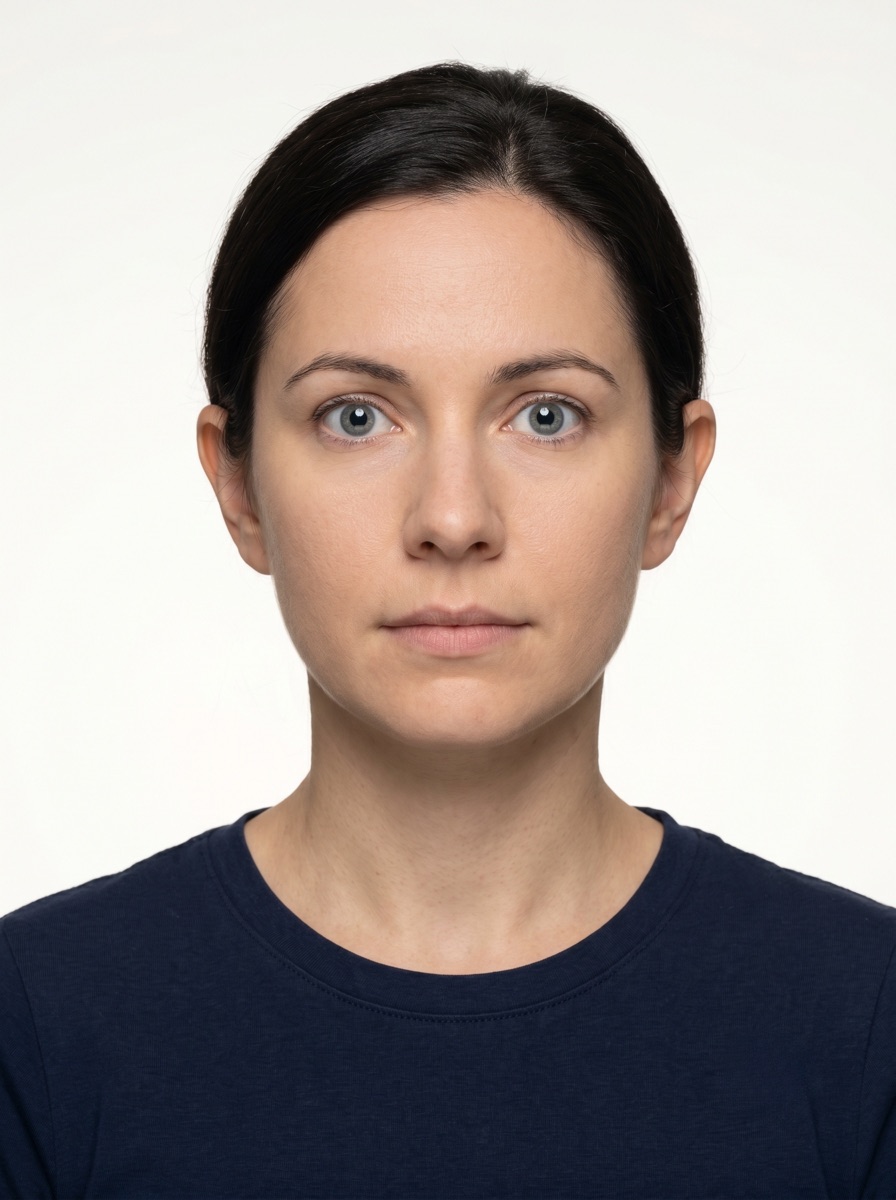
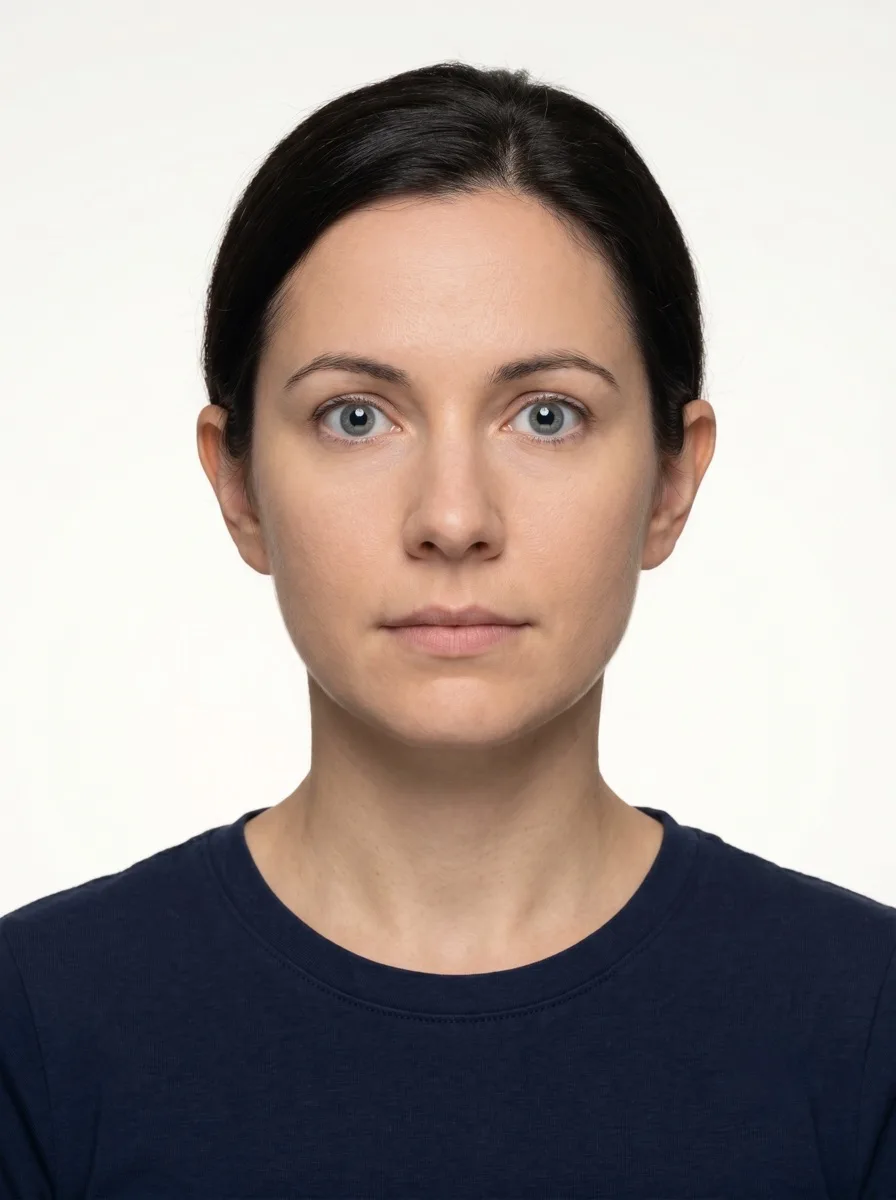
Accepted
Compliant UK passport example (35 × 45 mm)
Face centred, looking directly into the lens
Plain background — no shadow, pattern or texture
Neutral expression, eyes open, mouth closed
No glasses, no hair across the face
Top 6 UK passport rejection causes
Background shadowShadow on the wall behind the head, or background with a visible pattern or gradient
Smile / open mouthVisible smile with teeth or open mouth instead of a neutral expression
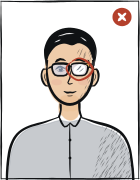
Glasses with glareGlasses with a clearly visible light reflection covering part of the eye
Hair across the faceLoose hair strands covering the eyes, eyebrows or part of the face
Eyes off-cameraEyes looking to the side instead of directly into the camera lens
Head tiltedHead tilted so the eye line is no longer horizontal
Typical rejection reasons and how to fix them
Typical reasons a photo is rejected under the rules HM Passport Office (Home Office), GOV.UK publishes: what is wrong and what to change.
Reason
Fix
A photo older than one month, or reused from a previous passport
Take a new photograph in the last month.
A digital file under 600 × 750 pixels, under 50 KB or over 10 MB
Use a photo of at least 600 × 750 pixels, between 50 KB and 10 MB.
A printed photo that is not 45 × 35 mm, is cut down from a larger picture, or has a border
Print 45 mm high by 35 mm wide on plain white photo paper with no border.
A head outside 29–34 mm from crown to chin, or a background that is not cream or light grey (printed)
Keep the head 29–34 mm and use a plain cream or light grey background.
Glasses with glare or tint, hair over the eyes, shadows, a smile or open mouth
Remove the glasses unless you must wear them; keep a plain expression and the face clear.
The tool puts in the required background. Stand half a metre from a plain light wall, face a window and shoot without flash — then there are no shadows on your face or on the wall.
Framing
Head: 64–76 % of the photo height (29–34 mm)
Camera at eye level, about a metre away; head and shoulders in the shot. The tool crops it to 35 × 45 mm.
Glasses
Better without glasses
Take them off before the shot.
Expression and gaze
Neutral expression; the applicant must be recognisable
Look straight into the lens with your head level; keep hair away from your eyes and eyebrows.
Print at 100% scale, borderless, and turn off fit-to-page so each photo keeps its exact size.
Where to submit your passport application
A UK passport is applied for online with a digital photo (from a booth or shop with a code, or taken with your own device) or on a paper form with two identical printed photographs; some printed photos need countersigning.
Apply for a UK passport (GOV.UK)online with a digital photo, or a paper form with printed photos
gov.uk — apply for a passport online or request the paper form
Processing
See GOV.UK passport processing times
Cost
See the GOV.UK passport fees
Digital: at least 600 × 750 pixels, 50 KB to 10 MB. Printed: 2 identical, 45 mm high by 35 mm wide.
GOV.UK, digital photos: you need a digital photo to apply online; you must get a new photo with each new passport; it must have been taken in the last month; photos from a booth or shop (with a code) are more likely to be approved than a photo from your own device, which needs someone to help you.
GOV.UK, digital photo rules: clear and in focus; in colour; unaltered by computer software; at least 600 pixels wide and 750 pixels tall; at least 50 KB and no more than 10 MB; no other objects or people; a plain light-coloured background in clear contrast; no red eye; with your own device include head, shoulders and upper body and do not crop the photo — it will be done for you.
GOV.UK, printed photos: 2 identical photos for a paper application, measuring 45 millimetres high by 35 mm wide (the standard size used in photo booths in the UK) and not a cut-down version of a larger picture; the image from the crown of the head to the chin between 29 mm and 34 mm high; printed to a professional standard, clear and in focus, in colour on plain white photographic paper with no border, without creases or tears, unmarked on both sides (unless a photo needs to be countersigned) and unaltered by computer software.
GOV.UK, what printed photos must show: a close-up of the full head and upper shoulders; no other objects or people; a plain cream or light grey background in clear contrast; no red eye; facing forwards and looking straight at the camera with a plain expression and the mouth closed; eyes open and visible; no hair in front of the eyes; no head covering unless for religious or medical reasons; nothing covering the face; no shadows on the face or behind. Glasses: «Do not wear glasses in your photo unless you have to do so»; if you must, no sunglasses or tinted glasses, and the eyes not covered by the frames or any glare, reflection or shadow.
GOV.UK, babies and children: children on their own in the picture; babies not holding toys or using dummies; children under 6 need not look directly at the camera or have a plain expression; children under one need not have their eyes open, may be supported by a hand that is not visible, and should lie on a plain light-coloured sheet photographed from above.
Questions
Frequently asked questions
Taken in the last month, in colour, clear and unaltered, facing forward with a plain expression and the mouth closed, eyes open and visible, no shadows, no glasses unless you have to. Online: a digital photo of at least 600 × 750 pixels, 50 KB to 10 MB, on a plain light-coloured background. On paper: 2 identical prints 45 mm high by 35 mm wide, head 29–34 mm, plain cream or light grey background.
Printed: 45 mm high by 35 mm wide, with the head from crown to chin 29–34 mm. Digital: at least 600 pixels wide and 750 pixels tall, 50 KB to 10 MB.
A plain light-coloured background for the digital photo; a plain cream or light grey background for printed photos — in clear contrast to you either way.
Taken in the last month, and you need a new photo with each new passport, even if your appearance has not changed.
Not unless you have to. If you must, no sunglasses or tinted glasses, and the eyes must not be covered by the frames or any glare, reflection or shadow.
The UK passport photo must be 35 × 45 mm. The head must occupy 64–76% of the photo height. For digital upload, use 600 × 750 px.
Yes. A phone and a light wall near a window are enough. The rear camera is sharper than the front one, so ask someone to take the photo or use a 3-second timer. The tool crops it to size, fixes the background and checks it against the UK passport photo rules.
We refund the payment in full. Email us within 14 days of purchase with your order number and the rejection notice from the UK authority — the refund policy page has the details.
35 × 45 mm = 3.5 × 4.5 cm = 1.38 × 1.77 inches. At 300 dpi that is 413 × 531 pixels; at 600 dpi, 827 × 1063 pixels.
Religious or medical reasons only; must not cover the facial oval. The face must stay fully visible from chin to forehead and on both sides, with no shadow across it.
Yes. The same 35 × 45 mm format and head size apply to: BN(O) passport, driver's license.