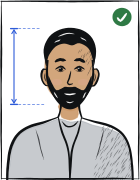
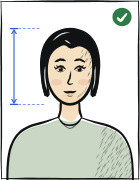
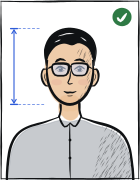
Quick answer: The recommended Schengen visa photo size is 35 × 45 mm. Plain light background. Head occupies 70–80% of photo height. Neutral expression, clear lenses only, no glare. Last verified .
Schengen visa photo: size in mm, cm, inches and pixels
Millimetres
35 × 45 mm
Centimetres
3.5 × 4.5 cm
Inches
1.38 × 1.77″
Pixels at 300 dpi
413 × 531 px
Pixels at 600 dpi
827 × 1063 px
Schengen area-specific things to know
Apply at the embassy/consulate of the Schengen country where you'll spend most days — the photo standard is identical but VAC operators differ in strictness
VFS Global VACs operate on-site photo booths charging €7-12 — useful fallback when your photo fails the visual pre-check
VIS biometric quality scores were introduced in 2025 — older guides referring only to dimensional checks are outdated
TLS Contact (used for UK/Australia applicants to Schengen states like France, Italy) applies stricter background-colour rules than VFS Global
How Schengen visa photos are verified
The Schengen visa photo follows the EU Visa Code (Regulation 810/2009, Annex VI) — a single shared standard across all 27 Schengen states: 35 × 45 mm print, 70-80% head height, light grey or off-white background. The standard references ICAO 9303 directly, so a photo that meets ICAO scoring at any embassy will pass at any other Schengen consulate.
Read more
Practical verification is multi-stage. First the VAC operator (VFS Global, TLS Contact or BLS, depending on the consulate) does a visual check at appointment intake — about 8-12% of submissions are returned at this stage for obvious issues.
Then the photo is digitised and added to the Visa Information System (VIS) — since 2025 VIS performs an automated biometric quality score against the ICAO 9303 reference. Scores below the threshold (~0.6 on the 0-1 scale) flag the application for a re-capture appointment, adding 2-4 weeks to processing.
Finally, the consular officer reviews the assembled file. Consulate-level interpretation varies. German embassies require a near-pure light-grey background; French and Italian consulates accept a wider range from cream to grey.
Spanish consulates are strict on the head-position (centred within ±2mm). The safest cross-consulate strategy is a neutral light-grey background and conservative 72-78% head height.
Examples and mistakes
What makes Schengen visa photos accepted
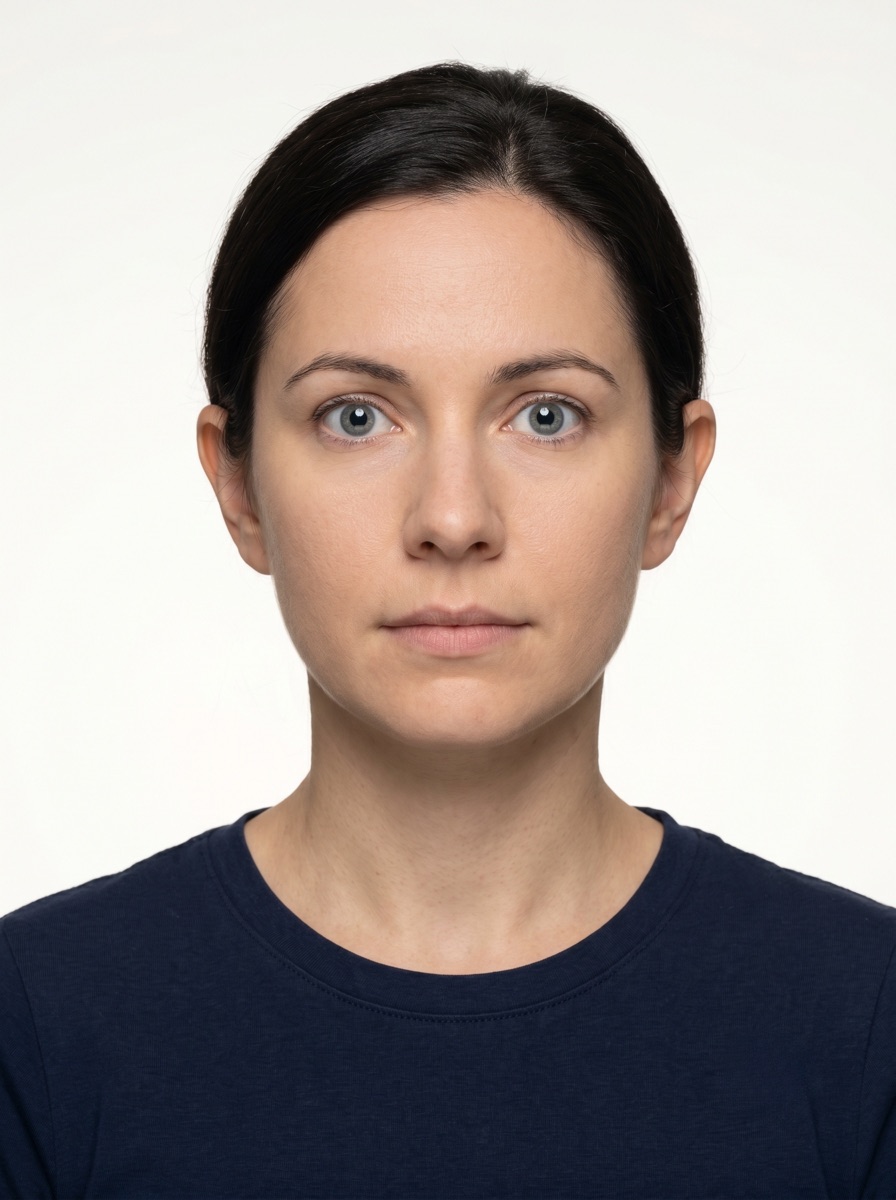
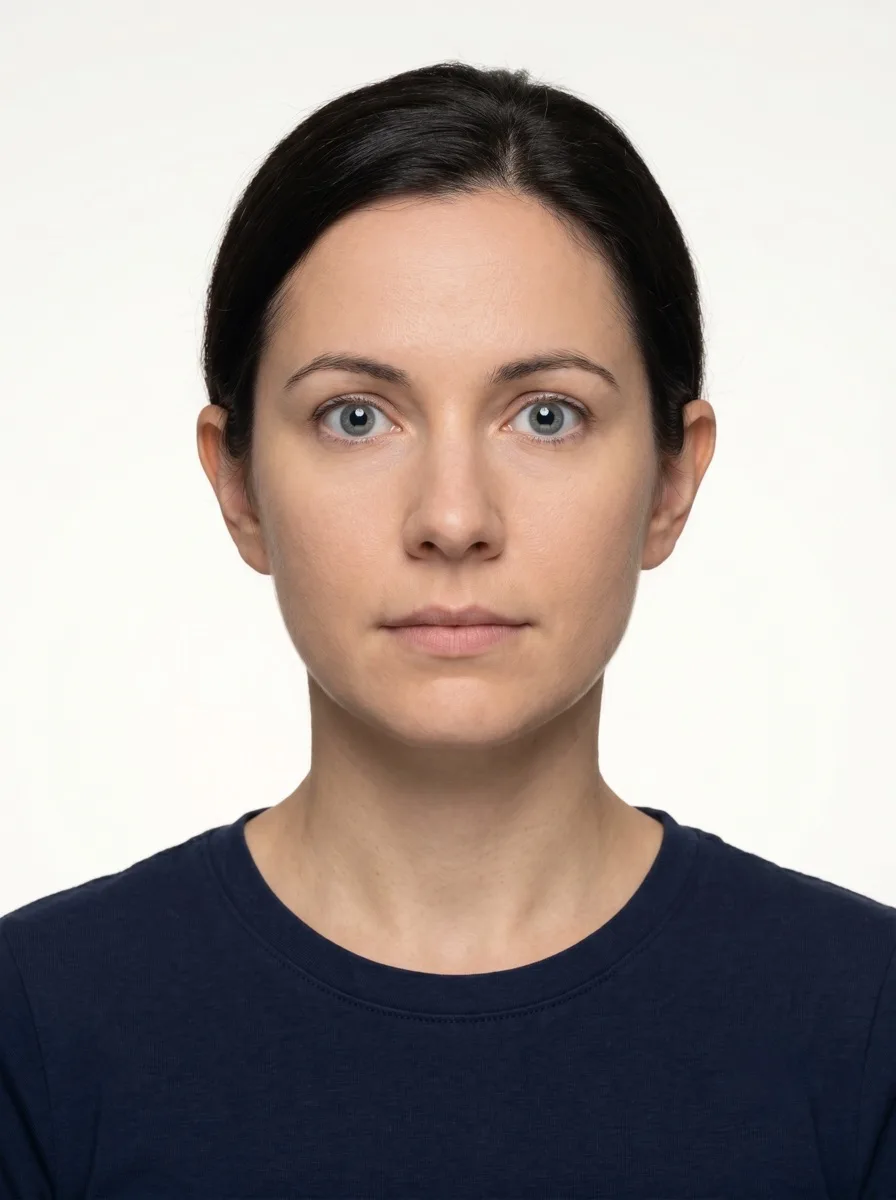
A photo that will be accepted, next to the six most common reasons Schengen visa photos get rejected.
Accepted
Compliant Schengen area Schengen visa example (35 × 45 mm)
Face centred, looking directly into the lens
Plain background — no shadow, pattern or texture
Neutral expression, eyes open, mouth closed
No glasses, no hair across the face
Top 6 Schengen area Schengen visa rejection causes
Background shadowShadow on the wall behind the head, or background with a visible pattern or gradient
Smile / open mouthVisible smile with teeth or open mouth instead of a neutral expression
Glasses with glareGlasses with a clearly visible light reflection covering part of the eye
Hair across the faceLoose hair strands covering the eyes, eyebrows or part of the face
Eyes off-cameraEyes looking to the side instead of directly into the camera lens
Head tiltedHead tilted so the eye line is no longer horizontal
Typical rejection reasons and how to fix them
Common reasons a document photo is rejected, checked against the requirements European Union / Schengen authorities publishes: what is wrong and what to change.
Reason
Fix
VIS biometric quality score below 0.6 threshold
Re-shoot with sharper lighting and exact ICAO 9303 geometry
Background outside the EU Visa Code light range (too white, too dark, or coloured)
Match exact consulate's interpretation — German: light grey; French/Italian: cream OK; Spanish/Portuguese: pale grey
Head height outside 70-80% of frame (chin to crown)
The tool puts in the required background. Stand half a metre from a plain light wall, face a window and shoot without flash — then there are no shadows on your face or on the wall.
Framing
Head: 70–80 % of the photo height
Camera at eye level, about a metre away; head and shoulders in the shot. The tool crops it to 35 × 45 mm.
Glasses
Clear lenses only, no glare
If you wear glasses, check the shot: no glare on the lenses, eyes clearly visible.
Expression and gaze
Neutral expression, mouth closed, eyes open
Look straight into the lens with your head level; keep hair away from your eyes and eyebrows.
A Schengen visa is a short-stay entry permit for up to 90 days in any 180-day period.
The EU document list includes a valid passport, a visa application form, a photo in compliance with ICAO standards, medical insurance and supporting documents.
The EU page says fingerprints are collected when the application is submitted, with specific exemptions.
As a general rule, applicants must apply at the consulate responsible for the country where they are legally resident.
Questions
Frequently asked questions
The recommended size for the Schengen visa photo is 35 × 45 mm. The head occupies 70–80% of the photo height.
Plain light background. The wall should be evenly lit, with no shadow around the head and no pattern. You don’t need a studio backdrop: the tool sets the right background colour.
For this document the photo must be no older than 6 months. Take a new one that looks like you today.
Often yes, but not always: tourist, student, work and transit visas can have different size or background rules. Compare the requirements of each Schengen area visa — if they match, one photo will do.
We refund the payment in full. Email us within 14 days of purchase with your order number and the consulate’s rejection notice.
No tinting or reflections; eyes must be fully visible. If you keep them on, tilt them slightly downwards by lifting the arms a little above your ears: this usually moves reflections of a window or lamp off the lenses.
35 × 45 mm = 3.5 × 4.5 cm = 1.38 × 1.77 inches. At 300 dpi that is 413 × 531 pixels; at 600 dpi, 827 × 1063 pixels.
Religious reasons only; must not cover the facial oval. The face must stay fully visible from chin to forehead and on both sides, with no shadow across it.
Yes. The same 35 × 45 mm format and head size apply to: EU blue card, EU ID card, EU passport, national visa (Type D), residence card.