 Poland
 Germany
 Czech Republic
 Italy
ItalyChild Benefits for Ukrainians in the EU 2026: How Much Poland, Germany, the Czech Republic and Italy Pay and How to Apply
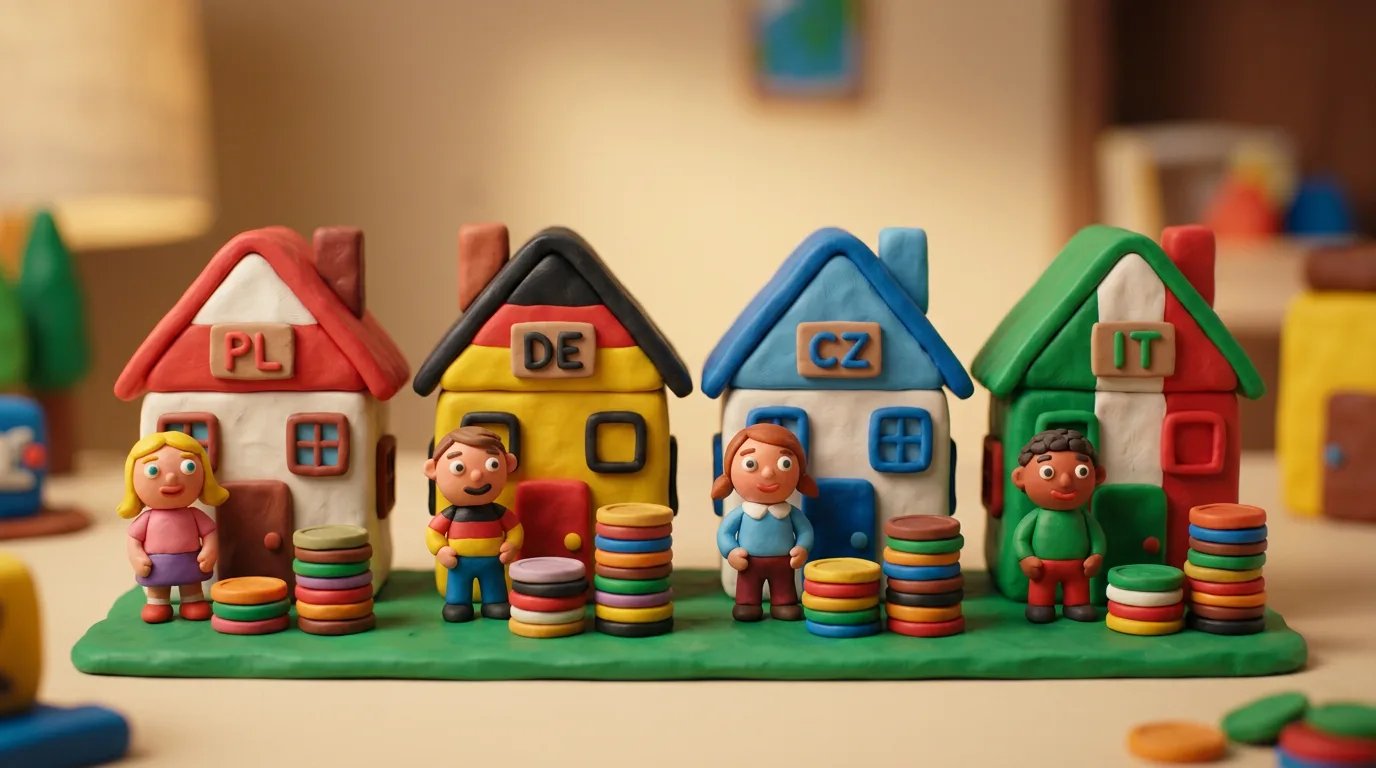
Poland: 800 zł/month per child, but from 1 February 2026 the UKR status requires a new application, work in the previous month and the child's enrollment in a Polish school. Germany: Kindergeld €259/month per child from 1 January 2026 — requires a §24 TP permit AND either work or 15 months of residence. Czech Republic: there are no separate child benefits — only humanitarian assistance (from 1 July 2025: 150 days at the subsistence-minimum level, then 3,130 Kč adult / 3,490 Kč child). Italy: Assegno Unico €58.30–203.80/month depending on ISEE; Ukrainians with temporary protection are eligible (INPS circular No. 41/2023).
Key points
5 points- Poland: 800 zł/month per child, but from 1 February 2026 holders of UKR status must submit a NEW application, confirm work in the month before submission and the child's enrollment in a Polish school or kindergarten.
- Exceptions from the employment requirement in Poland: the child is a Polish citizen, a child under 16 with a disability certificate, or a child over 16 with a moderate/significant degree of disability.
- Germany: Kindergeld €259/month per child from 1 January 2026 (an increase of €4); a §24 AufenthG permit is required AND additionally either actual legal work or at least 15 months of legal stay in Germany. The permit alone is not sufficient.
- Czech Republic: there are no separate standard child benefits for persons under temporary protection; humanitarian assistance applies (from 1 July 2025): the first 150 days at the subsistence-minimum level, from the 6th month — 3,130 Kč adult / 3,490 Kč child (4,860 Kč vulnerable adult, 4,188 Kč child aged 6–10).
- Italy: Assegno Unico €58.30–203.80/month per child depending on ISEE (2026, after the ISTAT indexation of +1.4%); Ukrainians with a temporary protection permit are eligible (INPS circular No. 41/2023). Law No. 50/2026 abolished the 2-year residence requirement as of 21 April 2026 — verify the exact residence conditions with INPS.
The specific amounts for 2026, the mandatory conditions and where to apply for Ukrainians under temporary protection in Poland, Germany, the Czech Republic and Italy.
Poland — Rodzina 800+ (800 zł per child)
Amount: 800 zł per month per child up to the age of 18. From 1 February 2026, the rules for Ukrainian citizens with UKR status have changed significantly.
- Payments for UKR status were suspended on 31 January 2026 — to retain the entitlement, you must submit a new application from 1 February for the payment period February–May 2026.
- Employment requirement: the person submitting the application must be active in the labor market in the month before submission (work under a contract, sole proprietorship, etc.). ZUS checks this condition starting from the payment for February 2026.
- Education requirement: the child must attend a Polish kindergarten (zerówka) or a Polish school in person.
Exceptions from the employment requirement — it is not applied if the applicant:
- submits an application for a child who is a Polish citizen;
- is raising a child under 16 with a disability certificate;
- is raising a child over 16 with a confirmed moderate or significant degree of disability.
Where to apply: the application is submitted only online to ZUS (via PUE ZUS, the Empatia portal or the mZUS app).
Germany — Kindergeld (€259 per child)
Amount: from 1 January 2026 — €259 per month per child (an increase of €4). This is the official amount from the Bundesagentur für Arbeit; current recipients do not need a new application, the recalculation is automatic.
Who is eligible among Ukrainians: a residence permit under §24 AufenthG is required AND additionally one of the conditions (§62 EStG):
- actual legal work (Erwerbstätigkeit) — or payments equated to it (Elterngeld, unemployment benefit ALG I); or
- at least 15 months of continuous legal stay in Germany.
The §24 permit alone (in particular a short one, for several months) is not sufficient — one of the conditions above must also be met.
Documents for the Familienkasse: a §24 residence permit for the parents and for the child, the IdNr (tax number) of both. The application is submitted online via the Familienkasse (Bundesagentur für Arbeit).
Separately, Bürgergeld/Grundsicherung applies — basic social assistance. For those who arrived after 1 April 2025, the payments are lower (the level for protection seekers); those who arrived earlier — under the previous rules. Kindergeld and basic assistance are partially offset against each other.
Czech Republic — humanitarian assistance (there are no separate child benefits)
Persons under temporary protection are not entitled to standard Czech child benefits (přídavek na dítě). Instead, humanitarian assistance (humanitární dávka) applies. From 1 July 2025, the following rules apply:
- the first 150 days (~5 months) — at the subsistence-minimum level by age: 4,860 Kč (adult), 3,490 Kč (child), 4,188 Kč (child aged 6–10);
- from the 6th month: 3,130 Kč (adult), 3,490 Kč (child); for a vulnerable adult 4,860 Kč remains, for a child aged 6–10 — 4,188 Kč.
The final amount is reduced by household income and recognized housing costs; supplements apply for persons with disabilities. The first application is in person at any branch of the Úřad práce in the month of receiving temporary protection; the assistance must be applied for monthly, it is not paid retroactively.
Italy — Assegno Unico Universale
Amount (2026, after the ISTAT indexation of +1.4%): €58.30–203.80 per month per child depending on the ISEE indicator (family income). A lower ISEE means a higher payment.
- Maximum (€203.80) — with an ISEE up to €17,468.51; minimum (€58.30) — with an ISEE over €46,582.71 or without an ISEE.
- Ukrainians with a temporary protection permit are eligible for Assegno Unico (INPS circular No. 41 of 7 April 2023).
- Law No. 50/2026 (Art. 7-bis) abolished, as of 21 April 2026, the general requirement of 2 years of prior residence in Italy. This change was introduced primarily for workers from the EU; how exactly it affects the residence conditions for persons under temporary protection should be clarified with INPS before submission.
Where to apply: the application for Assegno Unico is submitted through INPS (online, via a CAF/patronato or the contact center). First the ISEE is processed, then the application for the payment.
A brief comparison
- Highest fixed payment per child: Germany (€259) and Poland (800 zł ≈ €185–188 depending on the EUR/PLN rate), but from 2026 Poland requires employment and education.
- Depends on income: Italy (Assegno Unico by ISEE).
- There is no separate child benefit: the Czech Republic — only general humanitarian assistance per person.
Amounts and conditions change — before submission, verify with the official website of the relevant institution (ZUS, Familienkasse, Úřad práce/MPSV, INPS).
06Questions
5 answers01How much is paid per child in Poland to Ukrainians in 2026?
800 zł per month per child under the Rodzina 800+ program. But from 1 February 2026, the UKR status requires a new application, confirmation of work in the previous month and the child's enrollment in a Polish school or kindergarten.
02What is the amount of Kindergeld in Germany in 2026?
€259 per month per child from 1 January 2026 (an increase of €4). Ukrainians are eligible if they have a §24 AufenthG permit AND additionally either actual legal work or at least 15 months of legal stay in Germany. The permit alone is not sufficient.
03Are there child benefits in the Czech Republic for temporary protection?
There are no separate standard child benefits (přídavek na dítě) for persons under temporary protection. Humanitarian assistance applies (from 1 July 2025): the first 150 days at the subsistence-minimum level (4,860 Kč adult, 3,490 Kč child), from the 6th month — 3,130 Kč adult and 3,490 Kč child, taking into account family income and housing costs.
04Who in Poland is exempt from the employment requirement for 800+?
The requirement does not apply if the applicant submits for a child who is a Polish citizen, is raising a child under 16 with a disability certificate, or a child over 16 with a moderate/significant degree of disability.
05How much can be received in Italy per child?
Assegno Unico Universale is from €58.30 to €203.80 per month per child depending on the family's ISEE (2026, after the ISTAT indexation). Ukrainians with a temporary protection permit are eligible (INPS circular No. 41/2023). Law No. 50/2026 abolished the 2-year residence requirement as of 21 April 2026; verify the exact residence conditions with INPS, the application is submitted through INPS.
07Official sources
- Bundesagentur für Arbeit — Kindergeld steigt ab Januar 2026
arbeitsagentur.de - ZUS — Zmiany w świadczeniu wychowawczym (Rodzina 800+)
zus.pl - IOM Czechia — Humanitarian Subsidy
czechia.iom.int - MPSV — Humanitární dávka
mpsv.gov.cz - Refugee.info Italy — Social Benefits and Financial Support 2026
italy.refugee.info - Bundesagentur für Arbeit — Kindergeld für Geflüchtete aus der Ukraine
arbeitsagentur.de
Author: Yevhen Kravchenko. Published . Checked against official sources on .
 Schengen AreaGermany
 Austria+5
National D visa photo requirements: set by each country, not the EU
A type D visa photo is governed by the national laws of the specific country, not the EU Visa Code: the Czech Ministry of Foreign Affairs, for example, requires a 35x45 mm size with a 32–36 mm face height.
 Poland
Ukrainians Who Settled in Poland Before the War: Legal Stay Extended Only Until 4 March 2027
Poland has ended the wartime Special Act system: Ukrainians who already held a valid residence document before 24 February 2022 and are not temporary protection beneficiaries had their stay extended only until 4 March 2027. After that date, they need a separate legal basis to stay.
 EUPoland
 Hungary+2
Old residence cards and ID cards in the EU expire on August 3, 2026
In accordance with EU Regulation 2019/1157, from August 3, 2026, all old formats of residence permits for family members of EU citizens and national ID cards that do not contain biometric data will become invalid. This applies to documents issued in Poland, Denmark, Hungary, Greece, and other EU countries. Holders of such documents must contact migration authorities in advance to replace them with new biometric cards. In addition, in Poland, the application procedure changes from April 27, 2026 — it becomes fully electronic via the MOS 2.0 portal.

Make your photo to the current rules
Pick your document and upload a selfie — we crop it to size, replace the background and check it. Free. The sizes come from the same official sources as the news.