Quick answer: A Australia passport photo must be 35 × 45 mm. White or light uniform background. Head occupies 71–80% of photo height (32–36 mm chin to crown). Neutral expression, glasses prohibited. Last verified .
Australia passport photo: size in mm, cm, inches and pixels
Millimetres
35 × 45 mm
Centimetres
3.5 × 4.5 cm
Inches
1.38 × 1.77″
Pixels at 300 dpi
413 × 531 px
Pixels at 600 dpi
827 × 1063 px
Australia-specific things to know
The size is a range, not one number: 35–40 mm wide and 45–50 mm high, with the face from chin to crown fixed at 32–36 mm. A 35 × 45 mm print fits the range.
The print itself is regulated: dye sublimation on heavy-weight glossy paper of at least 200 gsm. The Australian embassy in Geneva notes that many photographers there use inkjet printers, which is not acceptable.
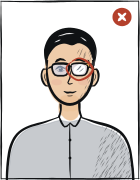
Glasses are not allowed unless you cannot remove them for medical reasons — and poor eyesight alone is not such a reason. If they stay on, the frames must not cover the eyes and the lenses must not reflect.
Distance matters: the Geneva embassy says the picture must be taken from at least 1.2 m, because a close-up widens the distance between the eyes and the nose and hides the ears; portrait mode blur is also listed as a reason for rejection.
On a paper form the guarantor signs the back of one of the two photos with «This is a true photo of [your full name]» in black pen; with the online form a referee signs nothing.
How passport photos are verified
Australian passport photographs are set by the Australian Passport Office (Department of Foreign Affairs and Trade) and checked when the application is lodged and again during assessment; if a photo does not meet the guidelines, the office may ask for a new one. The guideline asks for two photos, each 35–40 mm wide and 45–50 mm high, with the face from chin to crown 32–36 mm, less than 6 months old, as good-quality colour prints made by dye sublimation (not inkjet) on heavy-weight glossy paper of at least 200 gsm.
Read more
The background must be plain white or light and contrast with the face, the lighting uniform with no shadows or reflections, the head straight, the face centred with its edges visible, and the picture unretouched. Anyone over 3 must have a neutral expression with eyes open and mouth closed; no glasses unless they cannot be removed for medical reasons.
The Australian embassy in Geneva lists the commonest causes of rejection: poor print quality, blur from portrait mode, uneven light, distortion from standing too close, edited backgrounds and faces, damaged prints, expression, pose, glasses and old photos.
Examples and mistakes
What makes Australia passport photos accepted
One compliant example next to the six most common rejection causes for Australia passport applications. These are the differences that most often determine whether a document photo is accepted.
Accepted
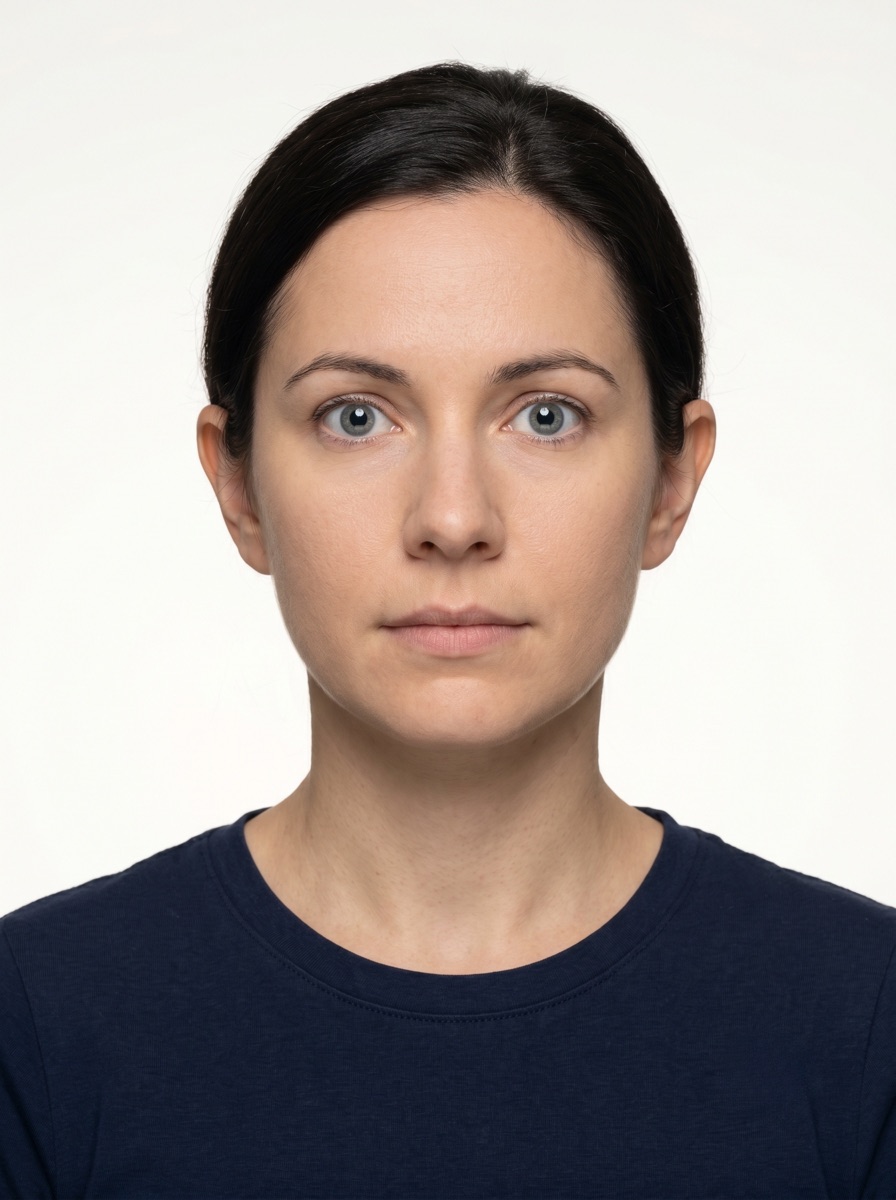
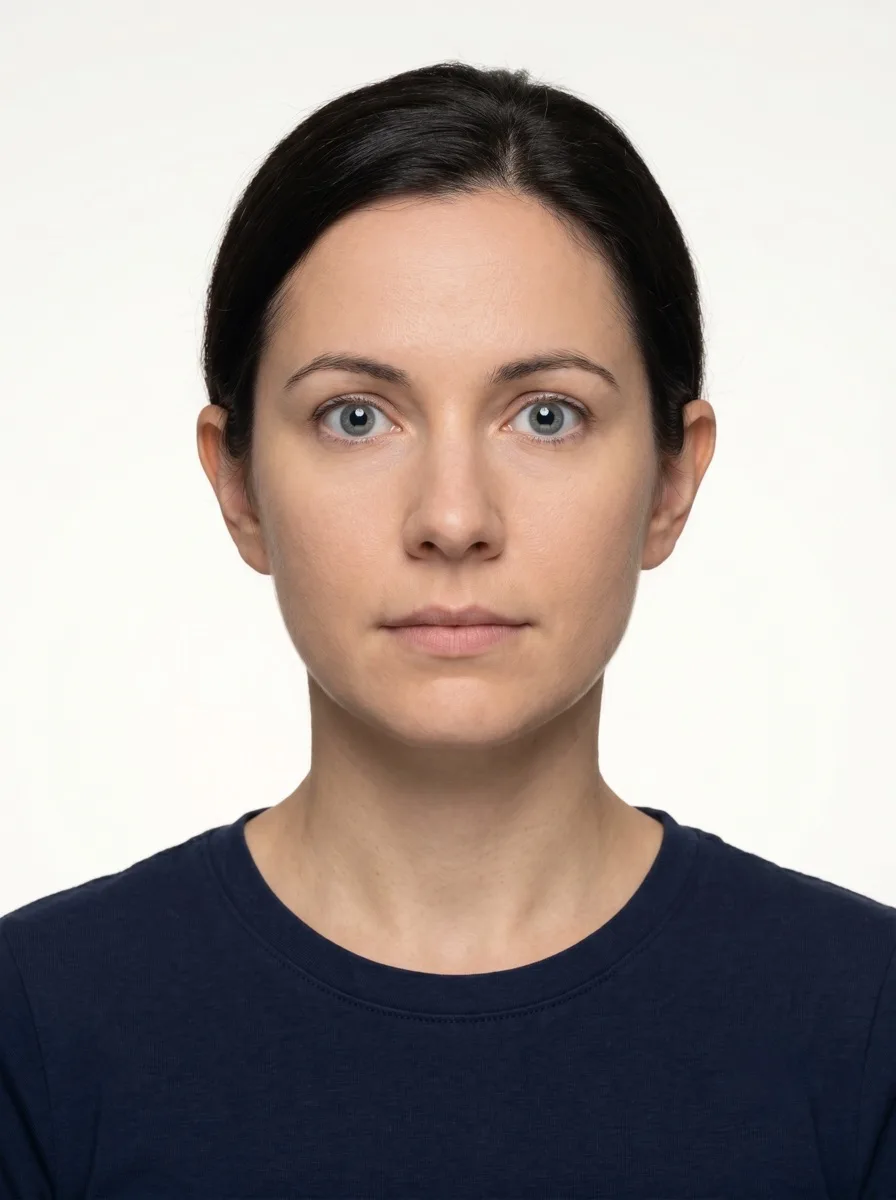
Compliant Australia passport example (35 × 45 mm)
Face centred, looking directly into the lens
Plain background — no shadow, pattern or texture
Neutral expression, eyes open, mouth closed
No glasses, no hair across the face
Top 6 Australia passport rejection causes
Background shadowShadow on the wall behind the head, or background with a visible pattern or gradient
Smile / open mouthVisible smile with teeth or open mouth instead of a neutral expression
Glasses with glareGlasses with a clearly visible light reflection covering part of the eye
Hair across the faceLoose hair strands covering the eyes, eyebrows or part of the face
Eyes off-cameraEyes looking to the side instead of directly into the camera lens
Head tiltedHead tilted so the eye line is no longer horizontal
Typical rejection reasons and how to fix them
Typical reasons a photo is rejected under the rules Australian Passport Office publishes: what is wrong and what to change.
Reason
Fix
Poor print quality: inkjet print or matte or thin paper
Have the photos printed by dye sublimation on heavy-weight glossy colour photo paper (200 gsm minimum) at a photo lab or post office.
Uneven light, shadows or reflections; edges of the face, head or ears not visible against the background
Light the face evenly with no flash on the background, keep the background plain white or light so it contrasts with the face, and make sure ears and the outline of the head show.
Distortion from standing too close, or portrait-mode blur
Shoot from at least 1.2 m with the camera at eye level and turn portrait mode off so the whole face and the surrounds stay sharp.
Edited photo: background removed or lightened, skin smoothed, marks or creases removed
Do not retouch: leave moles, wrinkles and scars as they are and use a real plain background rather than one that was cut out or lightened afterwards.
Expression or pose not neutral, head tilted or turned, ears not visible
Relax the face with the mouth closed, no smile or frown and eyes open; look straight at the camera with the head level and both ears clearly visible.
Glasses, photo older than 6 months, a photo used in an earlier application, or a damaged print
Take a new photo without glasses (unless a medical reason prevents it) within 6 months before you apply, and bring clean prints with no scratches, ink, paperclip marks or printing lines.
How to take your Australia passport photo correctly
Background and light
Background: white or light
The tool puts in the required background. Stand half a metre from a plain light wall, face a window and shoot without flash — then there are no shadows on your face or on the wall.
Framing
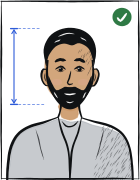
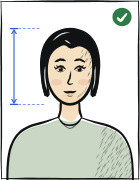
Head: 71–80 % of the photo height (32–36 mm)
Camera at eye level, about a metre away; head and shoulders in the shot. The tool crops it to 35 × 45 mm.
Glasses
Glasses prohibited
Take them off before the shot.
Expression and gaze
Neutral expression, mouth closed, eyes open
Look straight into the lens with your head level; keep hair away from your eyes and eyebrows.
Print at 100% scale, borderless, and turn off fit-to-page so each photo keeps its exact size.
Where to submit your passport application
An Australian passport application is lodged in person at a participating post office in Australia, or at an Australian embassy, high commission or consulate abroad. Bring two printed photos and the original identity documents; some applications must always be lodged in person.
Participating Australia Post office (in Australia)online form + in-person
Complete the online form in the application portal (print it) or take a paper form from a post office
Processing
Allow at least 6 weeks from lodging; faster processing is available on request
Cost
Fee set by the Passport Office; see its Fees page
Two photos, original identity documents and the form. Paper form: a guarantor signs the back of one photo; online form: a referee confirms your identity if contacted. Staff of Australia Post cannot be your referee or guarantor.
Australian embassy, high commission or consulate abroad (example: Geneva)in-person (by appointment)
The mission that covers your country — see its passport page
Processing
Set by the mission and the Passport Office
Cost
Fee as published for overseas applications
Geneva asks for two printed photos and says poor-quality photos are the most common reason for rejection or delay; it advises sending an unedited digital image by email before lodging. Some applications, such as a first adult passport, must be lodged in person.
Australian Passport Office: photos 35–40 mm wide and 45–50 mm high; the face from chin to crown 32–36 mm; less than 6 months old; 2 photos for every application.
Print quality: good-quality colour prints produced using dye sublimation (not an inkjet printer) on heavy-weight glossy paper of at least 200 gsm; clear, in focus, no marks or red-eye.
Background and light: a plain white or light background that contrasts with the face; uniform lighting with natural skin tone; face centred, looking straight at the camera, edges of the face clearly visible; no retouching, shadows, reflections or head tilt; hair must not obscure the edges of the face.
Expression and accessories: over 3 years old — neutral expression, eyes open, mouth closed (under 3 the mouth may be open, but nobody else may be visible); no glasses unless they cannot be removed for medical reasons (vision impairment alone is not a reason); plain religious head coverings showing the whole face from chin to forehead; hearing aids allowed.
Lodging: apply on the online form (print it) or a paper form and lodge at a participating post office with 2 photos and original identity documents; on the paper form a guarantor signs the back of one photo with «This is a true photo of [full name]», on the online form a referee confirms identity if contacted. Allow at least 6 weeks.
Questions
Frequently asked questions
Between 35 and 40 mm wide and between 45 and 50 mm high, with the height of the face from chin to crown 32–36 mm. A 35 × 45 mm print fits that range. You need two prints, each less than 6 months old.
Two colour prints made by dye sublimation on heavy-weight glossy paper (200 gsm minimum), clear and in focus. A plain white or light background that contrasts with the face, even lighting with no shadows or reflections, the face centred and looking straight at the camera with the edges of the face visible, no retouching, no tilt. Anyone over 3: neutral expression, eyes open, mouth closed. No glasses unless they cannot be removed for medical reasons.
No, unless you cannot remove them for medical reasons. The Passport Office states that vision impairment alone is not an acceptable reason. If you do have a medical reason, the frames must not obscure your eyes and the lenses must not reflect; you may also need a medical certificate or a B-11 form explaining why you cannot meet the guideline.
No. The Australian Passport Office asks for colour prints produced using dye sublimation, not from an inkjet printer, on heavy-weight glossy paper of at least 200 gsm. The Australian embassy in Geneva lists poor print quality — inkjet or matte paper — first among the reasons passport photos are rejected. Order the prints from a lab that uses dye sublimation.
Two passport-sized photos. On the paper application form, your guarantor signs the back of one photo with a black pen and writes «This is a true photo of [your full name]». On the online form you need a referee instead; the referee signs nothing and only has to confirm your identity if the office contacts them. Neither may be a relative, a partner, someone living with you, or an Australia Post employee.
The Australia passport photo must be 35 × 45 mm. The head must occupy 71–80% of the photo height.
White or light uniform background. No gradients, textures, shadows or objects behind the subject are permitted. The tool removes background shadows automatically, but starting with a flat, evenly lit wall gives the best result.
Yes. Stand in front of a flat, plain wall in good natural light, face the light source and use the rear camera of your phone with a 3-second timer. The tool handles the crop, background normalisation and compliance check against the Australia biometric standard.
Most passport authorities require the photo to be taken within the last six months. Do not reuse an older portrait even if your appearance has not changed.
Anfas.Pro provides a 14-day full refund if the photo is rejected by the Australia authority and you supply the official rejection notice. See the refund policy page for the exact process.
Glasses prohibited, except for rare medical exceptions. In practice, the biometric scanner at submission points flags even minor lens glare that looks fine to the naked eye. Removing glasses before shooting is the only option that eliminates the risk entirely.
35 × 45 mm = 3.5 × 4.5 cm = 1.38 × 1.77 inches. At 300 dpi that is 413 × 531 pixels; at 600 dpi, 827 × 1063 pixels.
Religious reasons only; must not cover the facial oval. The face must stay fully visible from chin to forehead and on both sides, with no shadow across it.
Yes. The same 35 × 45 mm format and head size apply to: citizenship application, refugee travel document, visa.