SourceMigration Department under the Ministry of the Interior of Lithuania
Verified
Quick answer: A Lithuania passport photo must be 35 × 45 mm. Plain light background without shadows or foreign objects. Head occupies 70–80% of photo height. Neutral expression, clear lenses only, no glare. Last verified .
Lithuania passport photo: size in mm, cm, inches and pixels
Millimetres
35 × 45 mm
Centimetres
3.5 × 4.5 cm
Inches
1.38 × 1.77″
Pixels at 300 dpi
413 × 531 px
Pixels at 600 dpi
827 × 1063 px
Lithuania-specific things to know
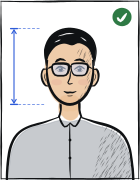
The Lithuanian rule: the 35 × 45 mm photographs are cut from a 40 × 60 mm sheet, with exact margins (2–4 mm above the crown, 31–35 mm crown to chin, 8–10 mm below the chin) — more precise than a percentage.
A monochrome photograph is recommended for the engraved documents (passport, ID card, residence permit, driving licence), and the background should be very light, but darker (about 18 % grey) for very fair hair so the face stays distinct in the monochrome image.
The six-month age is only «recommended», and one set of rules covers every personal document; Lithuanian citizens abroad apply in person at a consular post or migration office.
How passport photos are verified
The Lithuanian Migration Department publishes one set of photo rules for all personal documents — ID card, passport, service passport, foreigner's passport, driving licence and residence permit — set by the Interior Minister's order No. 1V-340 of 24 August 2006. The photograph is printed on good-quality thin photographic paper with a smooth surface, photographed so that 35 × 45 mm photographs are cut from one 40 × 60 mm sheet, with «the face from chin to crown 70–80 % of the photograph height»: 2–4 mm from the top edge to the crown, 31–35 mm from the crown to the chin, 8–10 mm from the chin to the bottom edge, and the face equidistant from the left and right edges.
Read more
Depending on the document at least three identical photographs may be required. The photo is recommended to be taken no earlier than six months before submission and, because laser engraving forms only monochrome images, «is recommended to be monochrome» for the ID card, passport and other engraved documents.
The pose is from the front, sitting straight, shoulders level, head not turned or tilted, pupils on a line parallel to the top edge, with a natural expression — no grimace, laughing or open mouth — and hair off the face. Glasses worn permanently are kept, with no tinted or coloured lenses, frames not covering the eyes and no reflections in the lenses; no headwear, except for members of religious communities recognised by the state, with the eyes, eyebrows, cheeks and chin visible. The background is «very light, single-colour and even», with no shadows — darker (about 18 % grey) if the hair is very light — under diffuse light, with no flash in the eyes and no red-eye, and no computer retouching of the face or hair colour.
Examples and mistakes
What makes Lithuania passport photos accepted
A photo that will be accepted, next to the six most common reasons Lithuania passport photos get rejected.
Accepted
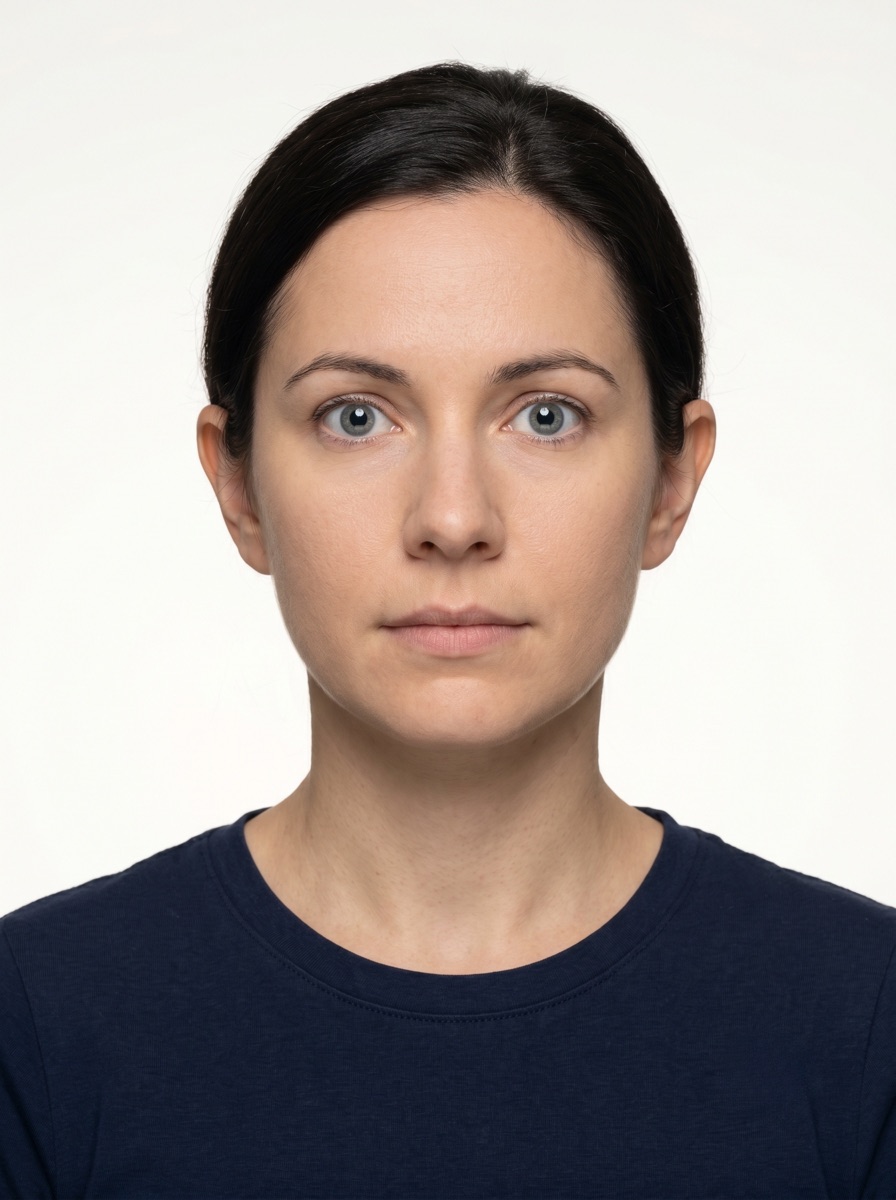
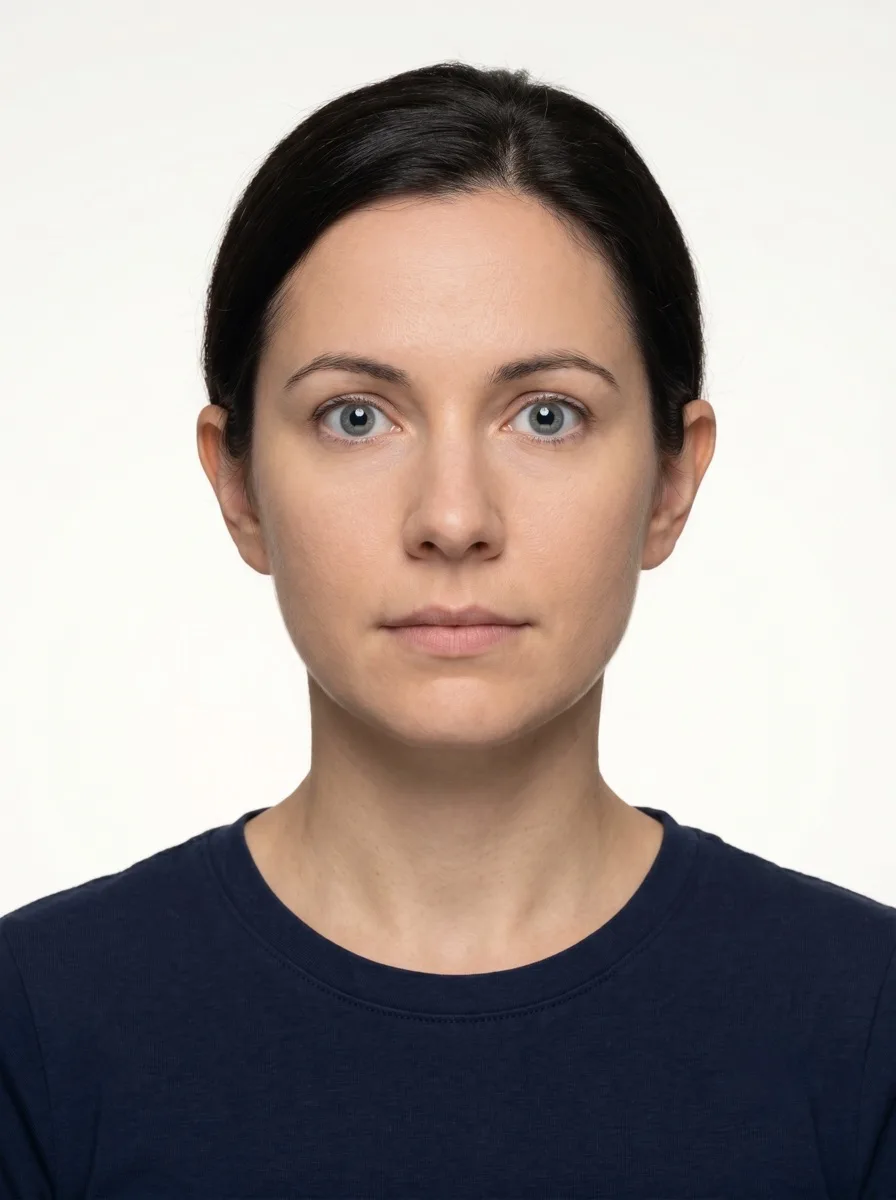
Compliant Lithuania passport example (35 × 45 mm)
Face centred, looking directly into the lens
Plain background — no shadow, pattern or texture
Neutral expression, eyes open, mouth closed
No glasses, no hair across the face
Top 6 Lithuania passport rejection causes
Background shadowShadow on the wall behind the head, or background with a visible pattern or gradient
Smile / open mouthVisible smile with teeth or open mouth instead of a neutral expression
Glasses with glareGlasses with a clearly visible light reflection covering part of the eye
Hair across the faceLoose hair strands covering the eyes, eyebrows or part of the face
Eyes off-cameraEyes looking to the side instead of directly into the camera lens
Head tiltedHead tilted so the eye line is no longer horizontal
Typical rejection reasons and how to fix them
Typical reasons a photo is rejected under the rules Migration Department under the Ministry of the Interior of Lithuania publishes: what is wrong and what to change.
Reason
Fix
A face outside 70–80 % of the photograph height, or margins outside 2–4 mm above the crown, 31–35 mm crown to chin and 8–10 mm below the chin
Frame so that the cut 35 × 45 mm photo has the stated margins and the face at 70–80 %.
A print on the wrong paper, or with white corners, stains, scratches, creases or marks from the back
Print on good-quality thin photographic paper with a smooth surface and keep it unmarked.
A dark, patterned or shadowed background, or a background that does not contrast with fair hair
Use a very light, single-colour, even background — about 18 % grey if the hair is very light.
A grimace, laughing, an open mouth, hair over the face, a turned or tilted head
Natural expression, mouth closed, hair off the face, head straight and level.
Tinted or coloured lenses, frames over the eyes, reflections in the lenses, headwear, retouching
Use clear lenses without reflections, no headwear (religious exceptions with a letter), and an unretouched photo.
How to take your Lithuania passport photo correctly
Background and light
Background: plain light
The tool puts in the required background. Stand half a metre from a plain light wall, face a window and shoot without flash — then there are no shadows on your face or on the wall.
Framing
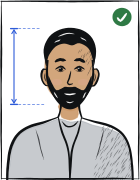
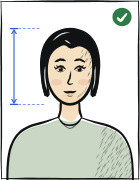
Head: 70–80 % of the photo height
Camera at eye level, about a metre away; head and shoulders in the shot. The tool crops it to 35 × 45 mm.
Glasses
Clear lenses only, no glare
If you wear glasses, check the shot: no glare on the lenses, eyes clearly visible.
Expression and gaze
Neutral expression, mouth closed, eyes open
Look straight into the lens with your head level; keep hair away from your eyes and eyebrows.
Print at 100% scale, borderless, and turn off fit-to-page so each photo keeps its exact size.
Where to submit your passport application
A Lithuanian passport is applied for in person at a Migration Department office or, for citizens abroad, at a consular post; the photographs follow the Migration Department's rules for personal documents, three identical ones on one sheet where the document requires.
Migration Department office, or a Lithuanian consular post abroadin person
migracija.lrv.lt — personal documents; the consular page of the Ministry of Foreign Affairs for citizens abroad
Processing
See the Migration Department; a same-day passport service exists
Cost
See the state fee list
40 × 60 mm sheet cut to 35 × 45 mm, face 70–80 %, monochrome recommended, light single-colour background.
Migration Department of Lithuania, photographs for personal documents (requirements of the Interior Minister's order No. 1V-340 of 24 August 2006, translated from the Lithuanian): the requirements say which photographs are suitable for the ID card, the passport, the service passport, the foreigner's passport, the driving licence, the residence permit and other documents; the main purpose is to improve the identification of holders, as in biometric passports the digital image of the face is stored on an electronic medium and used for visual and automated face recognition.
Same page, paper and general requirements: the photograph is printed on good-quality thin photographic paper with a smooth surface, not on chemically active, self-developing paper reacting to light or heat; no white corners, stains, scratches, emulsion damage, drips or lines, and no marks from the other side of the photo; photographs must match the person's age (recommended: taken no earlier than six months before submission) and be undamaged; because laser engraving forms only monochrome images, a photograph for the ID card, passport, service passport, foreigner's passport, driving licence and residence permit is recommended to be monochrome, while one for other documents may be colour or monochrome.
Same page, size and cutting: depending on the document, at least 3 identical photographs may be required, supplied on one sheet; the size of the photograph must be 40 × 60 mm, taken so that it can be cut from the sheet as 35 × 45 mm rectangles with the face from chin to crown at 70–80 % of the photograph height, 2–4 mm from the top edge to the crown, 31–35 mm from the crown to the chin and 8–10 mm from the chin to the bottom edge, and the face equally distant from the left and right edges.
Same page, pose, expression, clothing and glasses: the person is photographed from the front, sitting straight in front of the lens and looking at it, shoulders level, head not turned or tilted, the line through the pupils parallel to the top edge, the whole face, both eyes and the tops of both shoulders clearly visible; a natural expression (grimaces, laughing, a parted or gaping mouth and frowning are not suitable); hair must not cover the face; civilian clothes and no headwear — in exceptional cases the eyes, eyebrows, cheeks and chin must show, and members of religious communities recognised by the state may supply a photo with a non-covering headwear with a mediation letter; glasses worn permanently are kept, with no tinted or coloured lenses, frames not covering the eyes (not thick, if possible) and no light reflections in the lenses.
Same page, background, lighting, children and retouching: the background must keep the contrast with the face, hair and clothing even in the monochrome image — very light, single-colour and even, no shadows, and darker (about 18 % grey) if the person's hair is very light; lighting must not be a focused high-intensity single source (diffuse light from many lamps is recommended), the face evenly lit from the front, top and sides, sharp, no flash in the eyes, no red-eye, natural colours; the face must not be retouched or corrected by computer so that features or hair colour change; for small children the face image may be smaller but the distance from chin to crown must in any case exceed 25 mm; children under one year may be photographed held, lying or in a seat, but the background must be light, single-colour and even; only the applicant may be in the photo; some deviations are allowed for persons with disabilities.
Questions
Frequently asked questions
A print on good-quality thin photographic paper, taken (recommended) within six months, 35 × 45 mm cut from a 40 × 60 mm sheet with the face from chin to crown 70–80 % of the height and margins of 2–4 mm above the crown and 8–10 mm below the chin, a very light single-colour even background, a natural expression, no headwear and no retouching; a monochrome photo is recommended for engraved documents.
35 × 45 mm, supplied as photographs cut from a 40 × 60 mm sheet; the crown-to-chin distance is 31–35 mm.
It is «recommended to be monochrome» for the ID card, passport and other laser-engraved documents, because laser engraving forms only monochrome images; other documents may use a colour or monochrome photo.
Yes if you wear them permanently: no tinted or coloured lenses, frames not covering the eyes and no reflections in the lenses.
The Lithuania passport photo must be 35 × 45 mm. The head must occupy 70–80% of the photo height.
Plain light background without shadows or foreign objects. Behind you there should be only a plain wall: no pattern, shadows or objects. Any light wall at home will do — the tool sets the exact background colour.
Yes. A phone and a light wall near a window are enough. The rear camera is sharper than the front one, so ask someone to take the photo or use a 3-second timer. The tool crops it to size, fixes the background and checks it against the Lithuania passport photo rules.
Most passport offices ask for a photo taken within the last six months. It should look like you today: after a new haircut or beard, take a new one.
We refund the payment in full. Email us within 14 days of purchase with your order number and the rejection notice from the Lithuania authority — the refund policy page has the details.
35 × 45 mm = 3.5 × 4.5 cm = 1.38 × 1.77 inches. At 300 dpi that is 413 × 531 pixels; at 600 dpi, 827 × 1063 pixels.
Religious reasons only; must not cover the facial oval. The face must stay fully visible from chin to forehead and on both sides, with no shadow across it.
Yes. The same 35 × 45 mm format and head size apply to: EU blue card, EU long-term residence permit, ID card, national visa (Type D), residence card for family member of an EU citizen, Schengen visa.