SourceGovernment of the Netherlands (RvIG photo matrix) and the RDW (Netherlands Vehicle Authority)
Verified
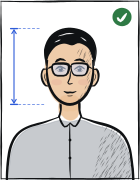
Quick answer: A Netherlands driver's license photo must be 35 × 45 mm. Even light background without patterns. Head occupies 58–67% of photo height (26–30 mm chin to crown). Neutral expression, glasses only if no glare. Last verified .
Netherlands driver's license photo: size in mm, cm, inches and pixels
Millimetres
35 × 45 mm
Centimetres
3.5 × 4.5 cm
Inches
1.38 × 1.77″
Pixels at 300 dpi
413 × 531 px
Pixels at 600 dpi
827 × 1063 px
Netherlands-specific things to know
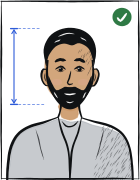
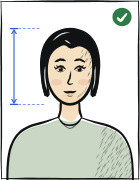
The Netherlands measures the face twice — 16–20 mm wide without the ears and 26–30 mm from the chin to the crown — rather than as a percentage of the photo.
For the driving licence there are two routes: a printed photo at the municipality, or a digital photo taken by an RDW photographer or approved booth for the online renewal — an ordinary printed photo cannot be used online.
The background may be light grey, light blue or white, and a head covering for religion or belief must be plain, one colour and contrast with the background.
How driver's license photos are verified
The Dutch government says «photos for passports, identity cards and driving licences must meet certain requirements» — the RvIG photo matrix: 35 mm × 45 mm (width × height), the face 16–20 mm wide (ears excluded) and, from 11 years, 26–30 mm from the chin to the crown (19–30 mm under 11); in colour, a true likeness, not more than six months old at the date of application, sharp with enough contrast and detail, undamaged, not a copy, not altered by computer software, printed on high-quality smooth photo paper at at least 400 dpi; even light, not over- or underexposed, no shadow on the face or the background, no reflections; a plain background of one colour and shade — light grey, light blue or white — that contrasts with the head; the head uncovered, the face and eyes fully visible, glasses fully transparent without reflection or shadow; a neutral expression, looking straight at the camera, the mouth closed; a religious head covering is allowed if it is plain, of one colour and contrasts with the background; children under 6 are exempt from the position and expression rules. For the driving licence there is a second route: the RDW lets you renew online — after «a digital passport photo» is taken «at an RDW photographer or an approved photo booth», which sends the photo and signature securely to the RDW and gives you an application code by e-mail or SMS, valid for 6 months — because ordinary passport photos cannot be used for the online application.
Read more
The photographer's file is 901 × 1158 pixels, JPEG, 24-bit, at most 170 KB, in 35 × 45 mm proportions. Online renewal needs a Dutch licence issued after 1 October 2006 (expired is fine), an address registered in the Netherlands and the DigiD app; otherwise you go to the municipality where you are registered with a printed photo.
Examples and mistakes
What makes Netherlands driver's license photos accepted
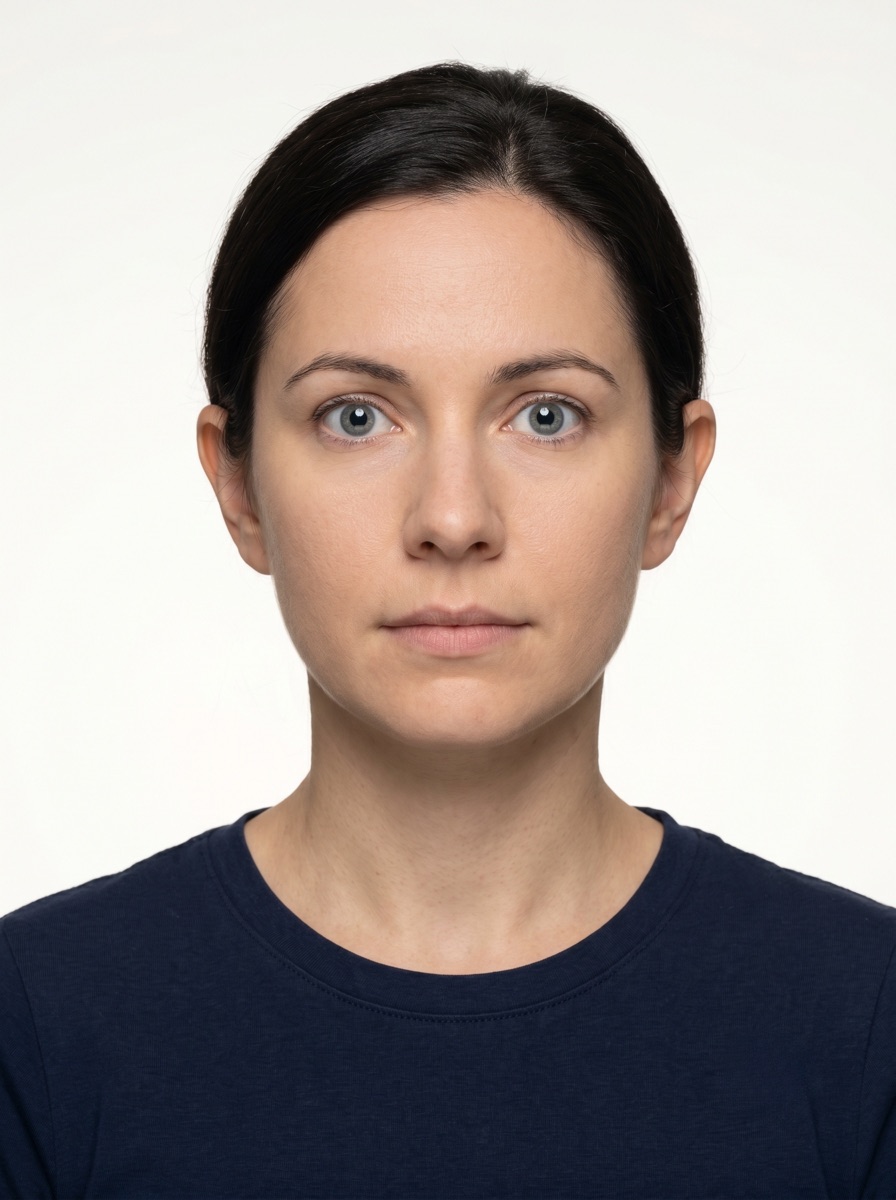
A photo that will be accepted, next to the six most common reasons Netherlands driver's license photos get rejected.
Accepted
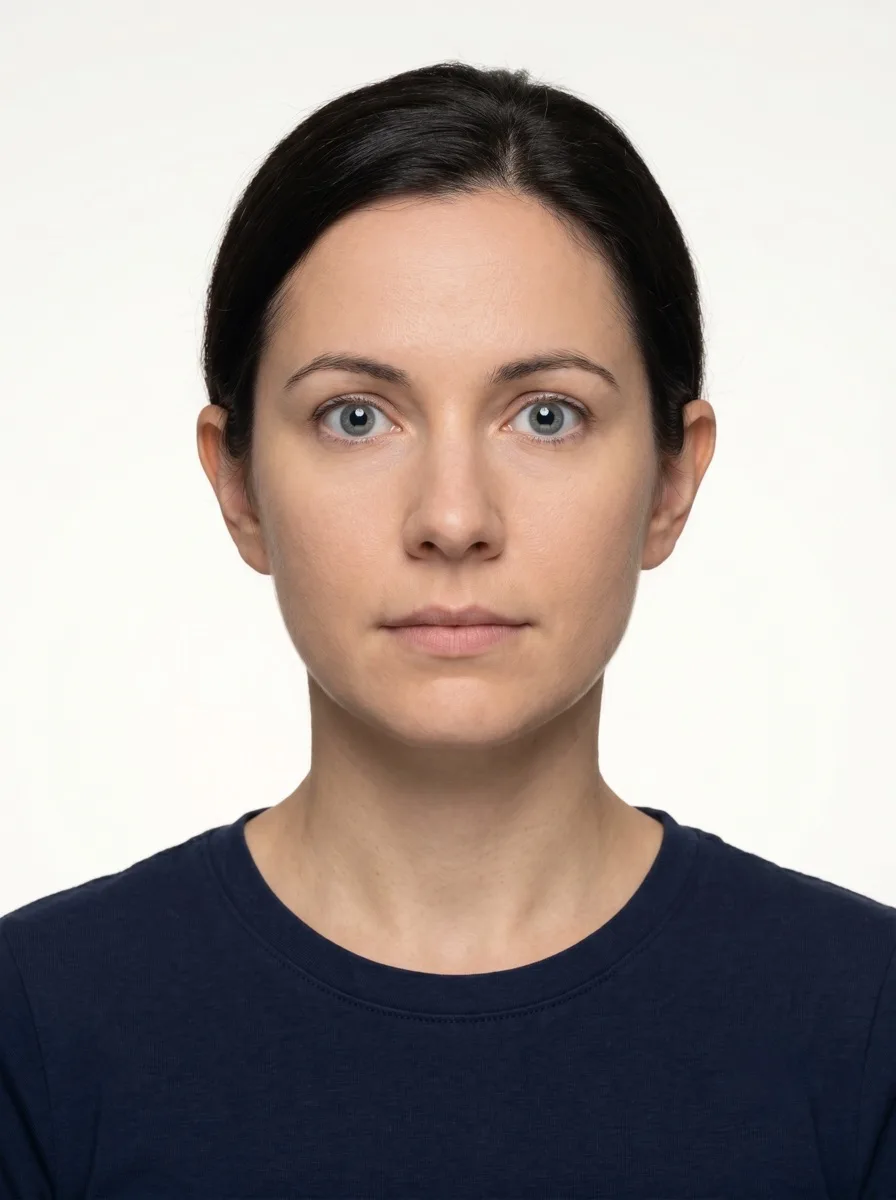
Compliant Netherlands driver's license example (35 × 45 mm)
Face centred, looking directly into the lens
Plain background — no shadow, pattern or texture
Neutral expression, eyes open, mouth closed
No glasses, no hair across the face
Top 6 Netherlands driver's license rejection causes
Background shadowShadow on the wall behind the head, or background with a visible pattern or gradient
Smile / open mouthVisible smile with teeth or open mouth instead of a neutral expression
Glasses with glareGlasses with a clearly visible light reflection covering part of the eye
Hair across the faceLoose hair strands covering the eyes, eyebrows or part of the face
Eyes off-cameraEyes looking to the side instead of directly into the camera lens
Head tiltedHead tilted so the eye line is no longer horizontal
Typical rejection reasons and how to fix them
Typical reasons a photo is rejected under the rules Government of the Netherlands (RvIG photo matrix) and the RDW (Netherlands Vehicle Authority) publishes: what is wrong and what to change.
Reason
Fix
A face outside 16–20 mm wide or 26–30 mm from chin to crown, a head not centred or not shown in full
Print 35 × 45 mm with the face 16–20 mm wide and 26–30 mm high, centred and shown in full.
A photo that is not in colour, is older than six months, is a copy, is altered by software, or is printed below 400 dpi
A colour photo taken in the last six months, unaltered, printed on smooth photo paper at 400 dpi or more.
A background that is not plain light grey, light blue or white, or has a shadow; shadows or reflections on the face
A plain one-colour background (light grey, light blue or white) and even light.
An ordinary printed photo used for the online renewal, or a digital file that is not 901 × 1158 pixels, JPEG, at most 170 KB
For the online renewal have a digital photo taken by an RDW photographer or an approved booth and use the application code.
How to take your Netherlands driver's license photo correctly
Background and light
Background: plain light
The tool puts in the required background. Stand half a metre from a plain light wall, face a window and shoot without flash — then there are no shadows on your face or on the wall.
Framing
Head: 58–67 % of the photo height (26–30 mm)
Camera at eye level, about a metre away; head and shoulders in the shot. The tool crops it to 35 × 45 mm.
Glasses
Glasses only if no glare
If you wear glasses, check the shot: no glare on the lenses, eyes clearly visible.
Expression and gaze
Natural neutral expression
Look straight into the lens with your head level; keep hair away from your eyes and eyebrows.
Print at 100% scale, borderless, and turn off fit-to-page so each photo keeps its exact size.
Where to submit your driver's license application
A Dutch driving licence is renewed online at the RDW with a digital photo from an RDW photographer or an approved booth (application code valid six months), or applied for at the municipality where you are registered with a printed photo.
RDW online renewal, or the municipality (gemeente) where you are registeredonline with DigiD and an application code; or in person at the municipality
rdw.nl — apply for or renew a driving licence; your municipality's counter
Processing
E-mail that the licence is ready 2 working days after the online application (3 over a weekend)
Cost
The photographer or booth sets its own price; see the RDW fee page
Printed 35 × 45 mm at the municipality; digital 901 × 1158 px JPEG ≤170 KB online.
Government.nl, requirements for ID photos (translated where needed): the size is 35 mm × 45 mm (width × height); the width of the face between 16 mm and 20 mm (excluding ears); the length of the face from 11 years between 26 mm and 30 mm (chin to crown), under 11 between 19 mm and 30 mm; the head shown in full and centred; the photo in colour, a true likeness, no more than 6 months old at the date of application, natural, sharp with sufficient contrast and detail, undamaged, not a reproduction, unaltered by computer software, printed on high-quality smooth photo paper at a minimum resolution of 400 dpi.
Government.nl, lighting, position, background, glasses and expression: even lighting, not over- or underexposed, no shadow on the face or in the background, no reflection on the face or caused by accessories; the head facing forward, the eyes horizontally aligned, the head not tilted, the shoulders straight; the background light grey, light blue or white, plain, all one colour and shade, contrasting sufficiently with the head; the eyes fully visible and the glasses fully transparent without distortion by reflection or shadow; the head uncovered, the face and the eyes fully visible (the ears need not be visible if the full width of the face shows); a neutral expression, looking straight at the camera, the mouth closed; a head covering for religious reasons or belief is allowed if plain, in one colour and contrasting with the background; children under 6 need not meet the position and expression requirements.
RDW, renewing a driving licence online (translated from the Dutch): the application has two steps — have a digital passport photo taken, then apply for the licence online; the conditions are a Dutch driving licence issued after 1 October 2006 (it may have expired), not lost or reported stolen, an address registered in the Netherlands (BRP), the DigiD app with an ID check, and a valid application code; the digital photo is taken by an RDW photographer or an approved photo booth, and ordinary passport photos cannot be used for the online application; the application code arrives by e-mail or SMS within a few minutes and is valid for 6 months; the new licence is collected within 3 months and the current licence is handed in.
RDW, photographers: the photo must meet the acceptance criteria of the photo matrix model 2020 and be 901 × 1158 pixels, quality 80 %, 24-bit depth, a JPEG of at most 170 kilobytes, in the proportion 35 mm × 45 mm; the signature must be in the proportion 3:1, 777 × 262 pixels, 24-bit, a JPEG of about 15 kilobytes, without a white frame around the signature; the photographer's software deletes the photo and the signature after sending them, and the customer gets the application code within 5 minutes.
Questions
Frequently asked questions
35 mm × 45 mm in colour, not older than six months, the face 16–20 mm wide and 26–30 mm from chin to crown, a plain light grey, light blue or white background, even light, a neutral expression with the mouth closed, the head uncovered, printed on smooth photo paper at 400 dpi or more.
No: the RDW says ordinary passport photos cannot be used for the online application — have a digital photo taken by an RDW photographer or an approved photo booth.
901 × 1158 pixels, JPEG, 24-bit, at most 170 KB, in 35 × 45 mm proportions; the application code is valid for 6 months.
Yes if the eyes are fully visible and the glasses are fully transparent, without reflection or shadow.
The Netherlands driver's license photo must be 35 × 45 mm. The head must occupy 58–67% of the photo height. The photo is printed on the card and stays there for years, so use one that looks like you every day.
Even light background without patterns. Light should fall evenly on your face from the front, without shadows: face a window and turn off the flash.
Most offices ask for a photo taken within the last six months. Use an everyday photo rather than a styled portrait — the licence stays valid for years.
No. The rules are the same as for a passport: neutral expression, mouth closed, eyes open, looking straight into the camera.
We refund the payment in full. Email us within 14 days of purchase with your order number and the rejection notice from the Netherlands licensing office.
35 × 45 mm = 3.5 × 4.5 cm = 1.38 × 1.77 inches. At 300 dpi that is 413 × 531 pixels; at 600 dpi, 827 × 1063 pixels.
Religious reasons only; must not cover the facial oval. The face must stay fully visible from chin to forehead and on both sides, with no shadow across it.
Yes. The same 35 × 45 mm format and head size apply to: ID card, passport, visa.