SourceMinistry of the Interior and Kingdom Relations of the Netherlands (government.nl)
Verified
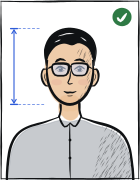
Quick answer: A Netherlands passport photo must be 35 × 45 mm. Even light background without patterns. Head occupies 58–67% of photo height (26–30 mm chin to crown). Neutral expression, glasses only if no glare. Last verified .
Netherlands passport photo: size in mm, cm, inches and pixels
Millimetres
35 × 45 mm
Centimetres
3.5 × 4.5 cm
Inches
1.38 × 1.77″
Pixels at 300 dpi
413 × 531 px
Pixels at 600 dpi
827 × 1063 px
Netherlands-specific things to know
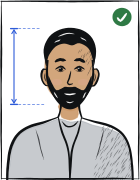
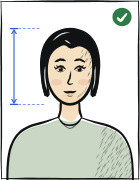
The face is measured in millimetres — 16–20 mm wide, 26–30 mm from chin to crown — on a 35 × 45 mm photo, so the head looks smaller (about 58–67 % of the height) than the 70–80 % of many other lists.
White is allowed along with light grey and light blue, and glasses are optional; a one-colour religious head covering that contrasts with the background is accepted.
The same photo as in the previous document is discouraged, and a copy is not accepted: the print must be a fresh photographic print at 400 dpi.
How passport photos are verified
The Dutch government sets one photo standard for passports, identity cards and driving licences: a 35 mm × 45 mm photo (width × height), in colour, a true likeness, no more than 6 months old at the date of application, sharp, undamaged, not a copy, unaltered by computer software, printed on high-quality, smooth photo paper at a minimum resolution of 400 dpi. The face is 16–20 mm wide (ears excluded) and 26–30 mm long from chin to crown for people of 11 and over (19–30 mm under 11), with the head shown in full and centred.
Read more
The background is plain light grey, light blue or white, all one colour and one shade, contrasting enough with the head. Lighting is even, with no shadow on the face or the background and no reflections; the head faces forward, eyes horizontal, head not tilted, shoulders straight, expression neutral, looking at the camera, mouth closed. Glasses are the applicant's choice, but they must be fully transparent with the eyes fully visible and no reflection or shadow; the head must be uncovered, with exceptions for religion or belief (plain, one-colour covering that contrasts with the background) or hair loss after medical treatment.
Beards, wigs, long fringes (not too long), earrings and make-up are allowed; a cap or hat is not. Children under 6 are exempt from the position and expression criteria.
Examples and mistakes
What makes Netherlands passport photos accepted
A photo that will be accepted, next to the six most common reasons Netherlands passport photos get rejected.
Accepted
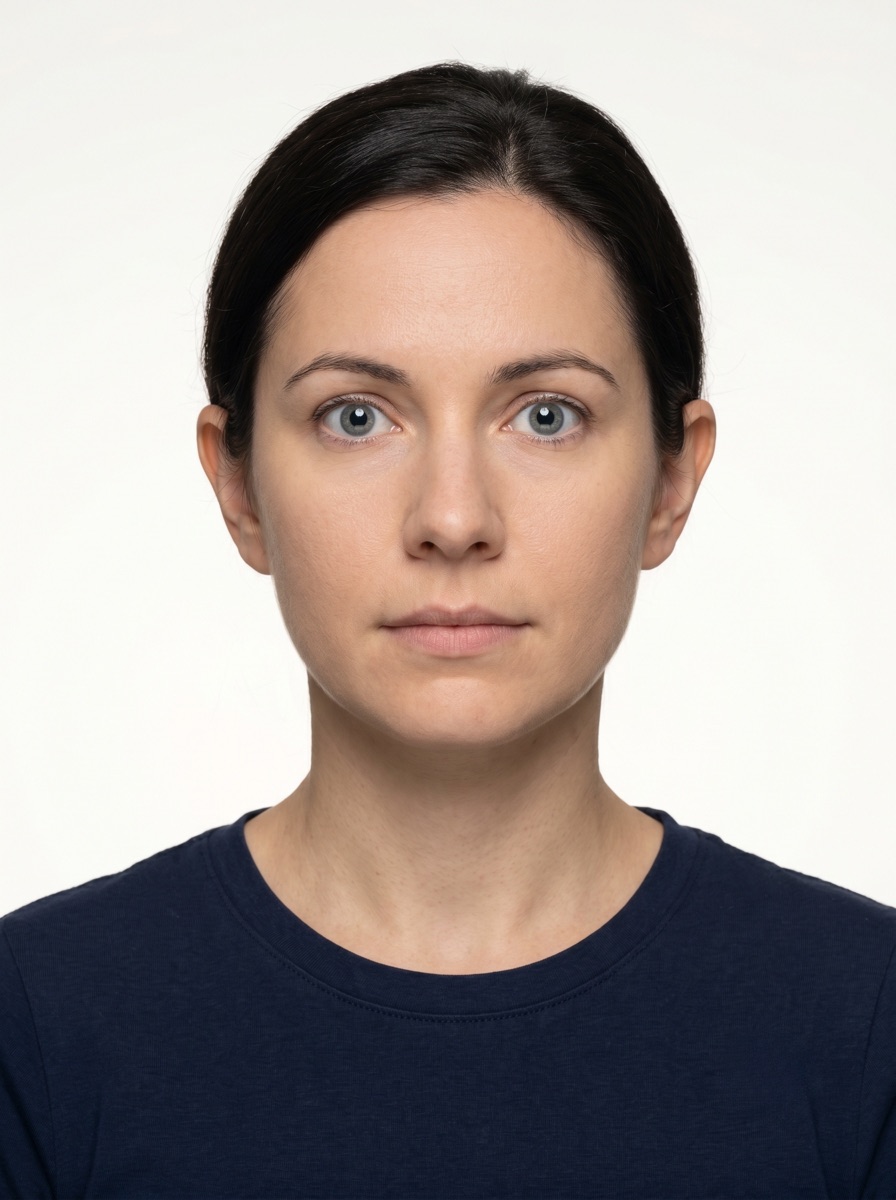
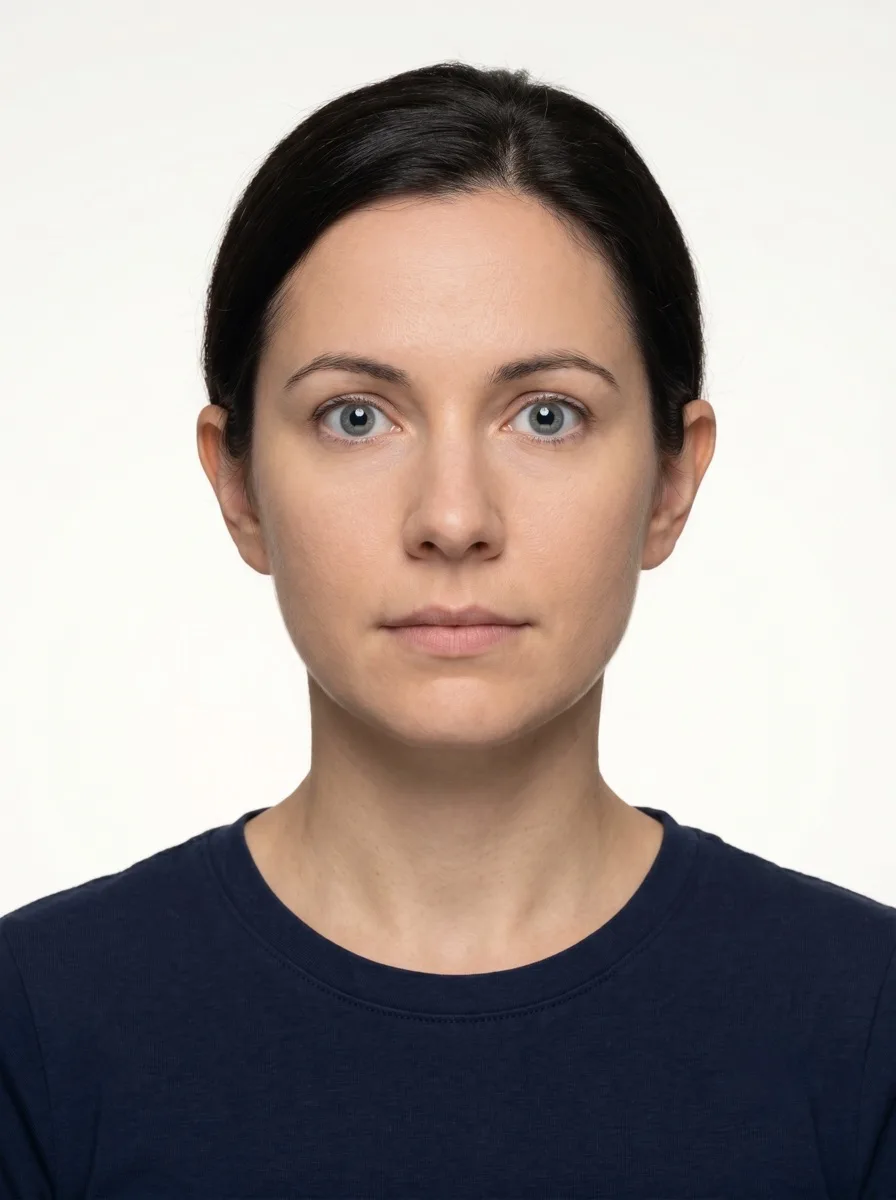
Compliant Netherlands passport example (35 × 45 mm)
Face centred, looking directly into the lens
Plain background — no shadow, pattern or texture
Neutral expression, eyes open, mouth closed
No glasses, no hair across the face
Top 6 Netherlands passport rejection causes
Background shadowShadow on the wall behind the head, or background with a visible pattern or gradient
Smile / open mouthVisible smile with teeth or open mouth instead of a neutral expression
Glasses with glareGlasses with a clearly visible light reflection covering part of the eye
Hair across the faceLoose hair strands covering the eyes, eyebrows or part of the face
Eyes off-cameraEyes looking to the side instead of directly into the camera lens
Head tiltedHead tilted so the eye line is no longer horizontal
Typical rejection reasons and how to fix them
Typical reasons a photo is rejected under the rules Ministry of the Interior and Kingdom Relations of the Netherlands (government.nl) publishes: what is wrong and what to change.
Reason
Fix
A face outside 26–30 mm long or 16–20 mm wide, or a head not shown in full and centred
Frame the whole head centred with the face 26–30 mm from chin to crown on a 35 × 45 mm photo.
A blurred or low-contrast photo, a copy, an altered image, or a photo older than 6 months
Use a sharp unaltered colour print on smooth photo paper at 400 dpi, taken within 6 months.
Shadows or reflections on the face or background, or an uneven background
Use even light and a plain light grey, light blue or white background of one shade.
Eyes not fully visible (glasses with reflection or shadow), head tilted or open mouth
Use fully transparent lenses or none; keep the head straight with a neutral expression and the mouth closed.
A cap or hat, or a head covering that hides the face
Keep the head uncovered unless for religion or medical hair loss, in one plain colour with the face fully visible.
How to take your Netherlands passport photo correctly
Background and light
Background: plain light
The tool puts in the required background. Stand half a metre from a plain light wall, face a window and shoot without flash — then there are no shadows on your face or on the wall.
Framing
Head: 58–67 % of the photo height (26–30 mm)
Camera at eye level, about a metre away; head and shoulders in the shot. The tool crops it to 35 × 45 mm.
Glasses
Glasses only if no glare
If you wear glasses, check the shot: no glare on the lenses, eyes clearly visible.
Expression and gaze
Natural neutral expression
Look straight into the lens with your head level; keep hair away from your eyes and eyebrows.
Print at 100% scale, borderless, and turn off fit-to-page so each photo keeps its exact size.
Where to submit your passport application
A Dutch passport is applied for with a photo that meets the 2020 specification guidelines of the ministry; the organisation that issues the document may ask for a medical certificate if you cannot meet all the requirements for physical or medical reasons. This page covers the photograph only.
The organisation that issues the Dutch passportin person
government.nl — identification documents
Processing
See government.nl
Cost
See government.nl
Photo 35 × 45 mm, face 26–30 mm, no more than 6 months old.
government.nl, dimensions: «Size of photo — The size must be 35 mm x 45 mm (width x height). Width of face — Between 16 mm and 20 mm (excluding ears). Length of face — 11 years and over: between 26 mm and 30 mm (chin to crown). Under 11: between 19 mm and 30 mm (chin to crown).» The head must be shown in full and centred.
government.nl, quality: photos must be in colour; a true likeness; no more than 6 months old at the date of application; a natural representation; sharp, with sufficient contrast and detail; undamaged; not reproductions (copies); unaltered by computer software; printed on high-quality, smooth photo paper; a minimum resolution of 400 dpi. Lighting: even; not over- or underexposed; no shadow on the face or in the background; no reflection on the face or caused by accessories.
government.nl, position and background: head facing forward; eyes horizontally aligned; head not tilted; shoulders straight. The background light grey, light blue or white; plain; all one colour; all one shade; contrasting sufficiently with the head.
government.nl, glasses, appearance and expression: glasses — eyes fully visible, glasses fully transparent, no distortion due to reflection and no shadow; head uncovered, face and eyes fully visible (ears need not be visible as long as the full width of the face is shown); neutral expression, looking straight at the camera, mouth closed. Exception for religious reasons: a plain, one-colour head covering that contrasts with the background and leaves the face fully visible. Children under 6 need not meet the position and expression requirements, and any support must not be visible.
government.nl, what is and is not allowed: a beard, a wig, a different hairstyle, a long fringe (but not too long — the eyes and face must be fully visible), an oxygen or feeding tube, make-up and earrings are allowed; a child with the eyes shut is not; applicants may decide themselves whether to wear glasses; a cap or hat is not allowed, only head coverings for religion or belief or after hair loss from medical treatment, in one colour and an even shade; the same photo as in the previous document: «Preferably not, and the photo may not be over 6 months old».
Questions
Frequently asked questions
A 35 × 45 mm colour photo (width × height) no more than 6 months old, a true likeness, sharp and unaltered, on smooth photo paper at least 400 dpi; the face 16–20 mm wide and 26–30 mm from chin to crown (11 and over), a plain light grey, light blue or white background, head uncovered, neutral expression, mouth closed.
35 mm wide by 45 mm high, with the face 16–20 mm wide (without the ears) and 26–30 mm long from chin to crown for people of 11 and over (19–30 mm under 11).
Yes, it is your choice, if the glasses are fully transparent with the eyes fully visible, without reflection, distortion or shadow.
Light grey, light blue or white — plain, all one colour and shade, contrasting enough with the head.
The Netherlands passport photo must be 35 × 45 mm. The head must occupy 58–67% of the photo height.
Yes. A phone and a light wall near a window are enough. The rear camera is sharper than the front one, so ask someone to take the photo or use a 3-second timer. The tool crops it to size, fixes the background and checks it against the Netherlands passport photo rules.
Most passport offices ask for a photo taken within the last six months. It should look like you today: after a new haircut or beard, take a new one.
We refund the payment in full. Email us within 14 days of purchase with your order number and the rejection notice from the Netherlands authority — the refund policy page has the details.
35 × 45 mm = 3.5 × 4.5 cm = 1.38 × 1.77 inches. At 300 dpi that is 413 × 531 pixels; at 600 dpi, 827 × 1063 pixels.
Religious reasons only; must not cover the facial oval. The face must stay fully visible from chin to forehead and on both sides, with no shadow across it.
Yes. The same 35 × 45 mm format and head size apply to: driver's license, ID card, visa.