SourceService-Public.fr and France Titres (ANTS), France
Verified
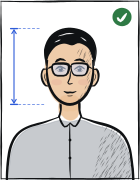
Quick answer: The recommended France driver's license photo size is 35 × 45 mm. Plain light background. Head occupies 70–80% of photo height. Neutral expression, clear lenses only, no glare. Last verified .
France driver's license photo: size in mm, cm, inches and pixels
Millimetres
35 × 45 mm
Centimetres
3.5 × 4.5 cm
Inches
1.38 × 1.77″
Pixels at 300 dpi
413 × 531 px
Pixels at 600 dpi
827 × 1063 px
France-specific things to know
The French licence photograph is a «photo-signature numérique» — an e-photo code from an approved photographer or booth, valid once — not a print to hand in; the paper form FPS is the fallback.
A French national with a digital identity can use the single-use photograph generated by the France Identité application.
An under-stamped envelope with the paper form is destroyed, so the postage must be right.
How driver's license photos are verified
For a French driving licence the photograph is supplied «digitally» — as a «photo-signature numérique»: «1 passport-size photo or 1 digital photo-signature» to register for the driving test, and «1 digital photo-signature» for a first licence or the addition of category B, applied for online on the France Titres (ANTS) site. «If you do not have access to a digital photo and signature service, you are offered to fill in and send by post a photo-signature form (FPS) during the online procedure»; «any envelope containing the photo-signature form without sufficient postage will not be processed and will be destroyed». The ANTS site lists «a passport-size photo less than six months old (in paper or digital format)»; an e-photo code «is only valid once»; and a French national with a digital identity can use «the single-use photo ID generated during the process from the France Identité application». The pages give no measurements, head size or background colour.
Examples and mistakes
What makes France driver's license photos accepted
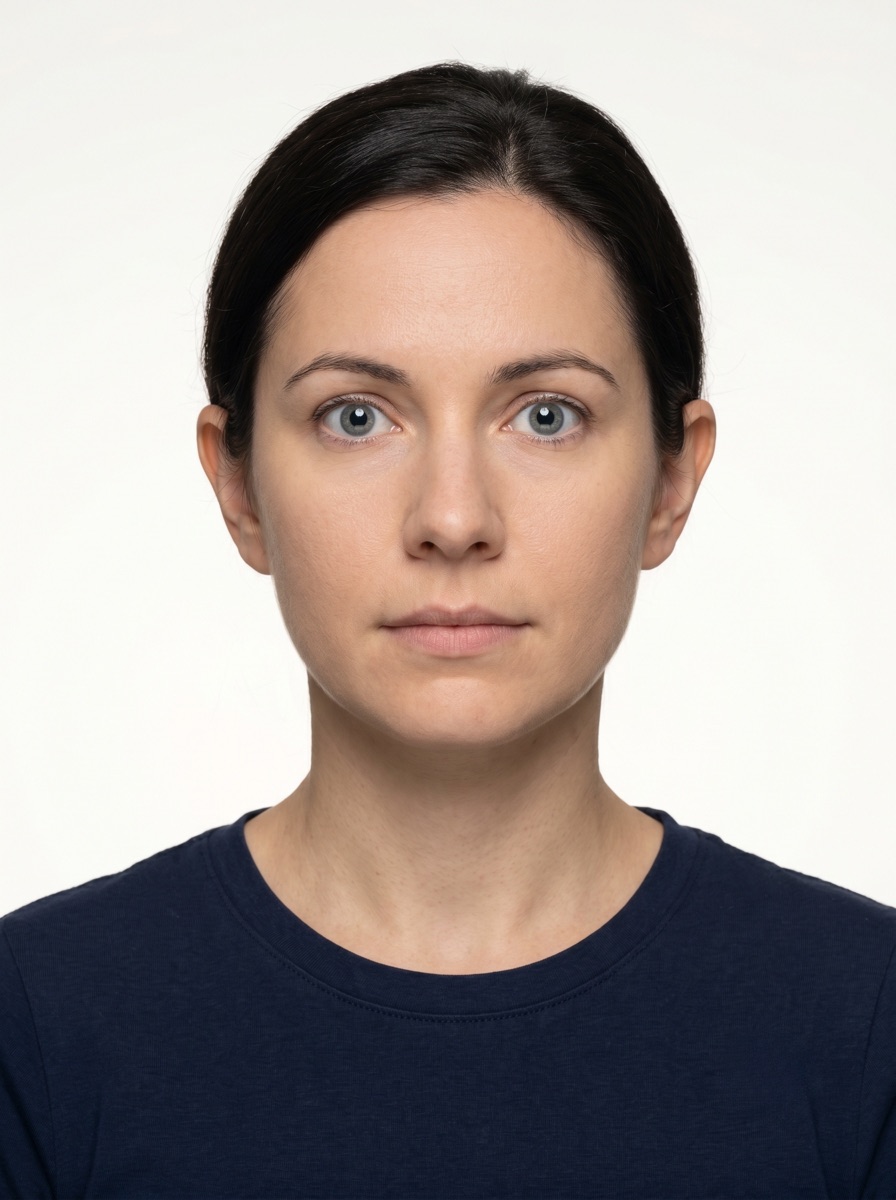
A photo that will be accepted, next to the six most common reasons France driver's license photos get rejected.
Accepted
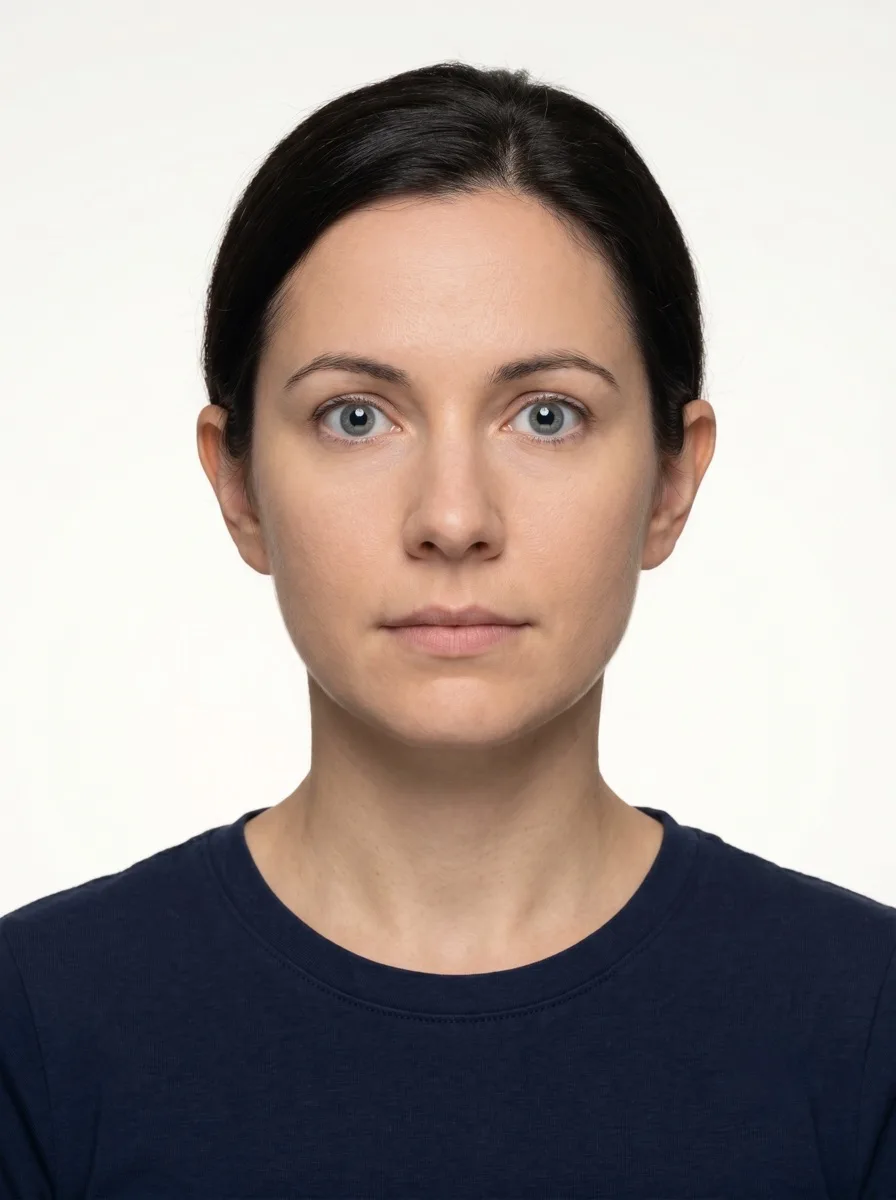
Compliant France driver's license example (35 × 45 mm)
Face centred, looking directly into the lens
Plain background — no shadow, pattern or texture
Neutral expression, eyes open, mouth closed
No glasses, no hair across the face
Top 6 France driver's license rejection causes
Background shadowShadow on the wall behind the head, or background with a visible pattern or gradient
Smile / open mouthVisible smile with teeth or open mouth instead of a neutral expression
Glasses with glareGlasses with a clearly visible light reflection covering part of the eye
Hair across the faceLoose hair strands covering the eyes, eyebrows or part of the face
Eyes off-cameraEyes looking to the side instead of directly into the camera lens
Head tiltedHead tilted so the eye line is no longer horizontal
Typical rejection reasons and how to fix them
Typical reasons a photo is rejected under the rules Service-Public.fr and France Titres (ANTS), France publishes: what is wrong and what to change.
Reason
Fix
An e-photo code that has already been used (it is valid only once)
A new e-photo code for each application.
A photograph older than six months
A passport-size photograph taken within the last six months.
How to take your France driver's license photo correctly
Background and light
Background: plain light
The tool puts in the required background. Stand half a metre from a plain light wall, face a window and shoot without flash — then there are no shadows on your face or on the wall.
Framing
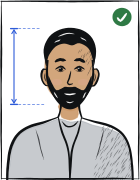
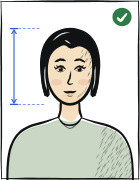
Head: 70–80 % of the photo height
Camera at eye level, about a metre away; head and shoulders in the shot. The tool crops it to 35 × 45 mm.
Glasses
Clear lenses only, no glare
If you wear glasses, check the shot: no glare on the lenses, eyes clearly visible.
Expression and gaze
Neutral expression, mouth closed, eyes open
Look straight into the lens with your head level; keep hair away from your eyes and eyebrows.
Print at 100% scale, borderless, and turn off fit-to-page so each photo keeps its exact size.
Where to submit your driver's license application
A French driving licence is applied for online on the France Titres (ANTS) driving-licence site; the photograph is added as a digital photo-signature (e-photo code) or sent on the paper form FPS.
France Titres (ANTS) driving-licence siteonline
permisdeconduire.ants.gouv.fr
Processing
See the ANTS site
Cost
See the ANTS site
An e-photo code (valid once) or the paper form FPS; a photo less than six months old.
Service-Public.fr (F2825), registering for the driving test: online on the France titres - ANTS site, with documents prepared as photographed or scanned copies — proof of identity, proof of address less than six months old, 1 identity photo or 1 digital photo-signature, a copy of the ASSR or ASR for those under 21, a medical opinion where necessary, and the documents relating to the defence and citizenship day for French nationals of 17 to 25.
Service-Public.fr (F2825), first licence or the addition of category B: the application is made online on the ANTS site with the identity document, the proof of address and 1 digital photo-signature; if the applicant has no access to a digital photo and signature service, a photo-signature form (FPS) is filled in and posted during the online procedure.
France Titres (ANTS), driving-licence site (invalidation or cancellation of a licence), documents: a proof of identity (for French nationals with a digital identity, the single-use photo ID generated during the process from the France Identité application is accepted), a proof of address less than six months old, a passport-size photo less than six months old in paper or digital format — on paper, the photo-signature submission form available at the end of the application is downloaded and posted, and an under-stamped envelope is destroyed; an e-photo code is valid only once.
Questions
Frequently asked questions
A digital photo-signature (an e-photo code) or, without access to it, a paper photo with the photo-signature form FPS; a passport-size photo less than six months old.
No: the ANTS says the e-photo code is only valid once.
French nationals with a digital identity can use the single-use photo ID generated during the process from the France Identité application.
The recommended size for the France driver's license photo is 35 × 45 mm. The head occupies 70–80% of the photo height. The photo is printed on the card and stays there for years, so use one that looks like you every day.
Plain light background. Light should fall evenly on your face from the front, without shadows: face a window and turn off the flash.
Eyes must be visible without reflections or tinting. Many offices allow the glasses you need for driving, as long as your eyes are clearly visible and there are no reflections on the lenses. Tinted or darkened lenses are not accepted.
Most offices ask for a photo taken within the last six months. Use an everyday photo rather than a styled portrait — the licence stays valid for years.
No. The rules are the same as for a passport: neutral expression, mouth closed, eyes open, looking straight into the camera.
We refund the payment in full. Email us within 14 days of purchase with your order number and the rejection notice from the France licensing office.
35 × 45 mm = 3.5 × 4.5 cm = 1.38 × 1.77 inches. At 300 dpi that is 413 × 531 pixels; at 600 dpi, 827 × 1063 pixels.
Religious reasons only; must not cover the facial oval. The face must stay fully visible from chin to forehead and on both sides, with no shadow across it.
Yes. The same 35 × 45 mm format and head size apply to: asylum application, EU blue card, EU long-term residence permit, provisional residence authorisation (APS), refugee travel document, residence card for family member of an EU citizen.