 EU
EU Poland
Healthcare in the EU under temporary protection: how coverage works in 2026
Ukrainians with temporary protection have access to the public healthcare of the EU country where they are registered. The status is extended until 4 March 2027. EHIC covers only necessary state care during a temporary stay in another EU country, not private treatment. In Poland, from 5 March 2026, non-working adults outside vulnerable groups lose automatic free NFZ coverage and must arrange insurance; emergency care remains free.
Key points
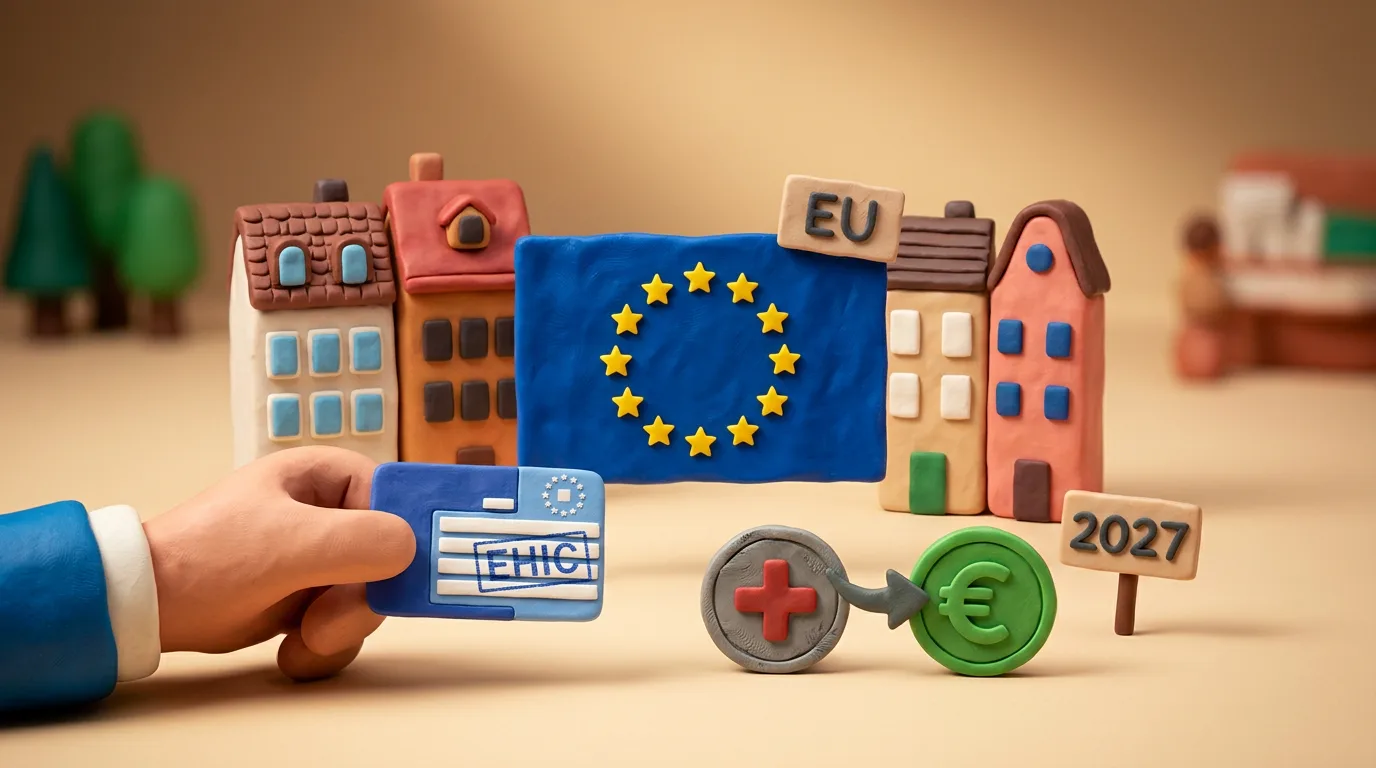
5 points- Temporary protection has been extended until 4 March 2027 by Council Implementing Decision (EU) 2025/1460 of 15 July 2025; the extension is automatic, with no separate application required.
- Access to healthcare opens after registration and obtaining a temporary protection permit in the country of residence; treatment is provided by that country's public system.
- If you are considered fully insured in the public system, you are entitled to a free European Health Insurance Card (EHIC).
- EHIC covers only necessary state medical care during a temporary stay in another EU country; it does not cover private treatment and does not guarantee that the service will be free of charge.
- In Poland the special law on assistance to Ukrainian citizens is being phased out: from 5 March 2026 non-working adults outside vulnerable groups lose automatic free NFZ coverage and must arrange insurance to keep planned treatment; emergency care remains free.
If you are a Ukrainian with temporary protection in the European Union, access to healthcare remains one of your basic rights. But in 2026 it is important to understand exactly how this coverage works, because the conditions differ from country to country, and some states are beginning to shift part of the costs onto patients.
The status has been extended until 4 March 2027
The EU Council has extended the temporary protection regime for displaced persons from Ukraine by another year. This is enshrined in Council Implementing Decision (EU) 2025/1460, adopted on 15 July 2025. Article 1 of this decision expressly provides that protection is extended "for an additional period of one year, until 4 March 2027".
The extension applies automatically: no separate application to renew the status is required. Along with the status, all related rights are retained — residence, access to the labour market, housing, education and healthcare.
How access to healthcare works
According to the European Commission's official explanation, access to healthcare opens once you have registered and obtained a temporary protection permit in the country of residence. After that you use the public healthcare system of that state.
The Commission stresses that people who have arrived from Ukraine should receive "broad access to care in case of illness and be connected to the public healthcare system of the country of residence". In practice, basic care — emergency care, a family-doctor consultation, treatment of acute conditions — is usually provided on the same terms as for local insured persons.
Separately provided for are:
- mental health support and assistance with traumatic experience;
- a mechanism of solidarity-based medical transfers between EU countries for complex hospital cases;
- diagnosis and treatment of rare diseases through the network of European Reference Networks.
What EHIC is and what it does not cover
If the public system of the country of residence considers you fully insured, you are entitled to a European Health Insurance Card (EHIC). This is a free card issued by your national insurer in the country of residence.
EHIC entitles you to necessary state medical care during a temporary stay in another EU country, as well as in Iceland, Liechtenstein, Norway, Switzerland and the United Kingdom. Care is provided on the same terms and at the same cost as for local residents.
Important limitations that the Commission officially warns about:
- EHIC does not cover private treatment;
- the card does not guarantee that the service will be free — if a procedure is paid for locals, it will be paid for you too;
- EHIC does not apply if you travel to another country specifically for treatment;
- for a permanent move to another country you need not an EHIC but an S1 form.
Why conditions differ from country to country
Temporary protection sets a common minimum, but the actual provision of healthcare is financed and organised by national systems. That is why the specific conditions — what is free and what you will have to pay extra for (private consultations, dentistry, part of the medicines) — differ from country to country and are changing in 2025-2026.
A telling example is Poland. The special law on assistance to Ukrainian citizens is being gradually phased out (a number of provisions apply with transition periods, in particular the status — until 4 March 2027). From 5 March 2026 non-working adults outside vulnerable groups lose automatic free coverage by the National Health Fund (NFZ). To continue receiving planned treatment, they need to have NFZ insurance — through official employment, as a family member of an insured person, or through a voluntary NFZ contribution (check the current amount directly with the NFZ). Emergency care remains free for everyone. Automatic free coverage is retained by vulnerable groups: minors (under 18); pregnant women and women in the post-partum period; victims of torture or violence; those wounded as a result of hostilities; people living in collective accommodation centres. The details are determined by national law, so the conditions should be checked directly in the country of residence.
What you should do
- Make sure you are registered and hold a valid temporary protection permit in the country of residence — without it, access to public healthcare does not open.
- Find out from your local insurer or health authority whether you are considered "fully insured", and obtain an EHIC if needed.
- In Poland, if you are a non-working adult outside vulnerable groups, check your status with the NFZ and, if needed, arrange insurance (through work, a family member or a voluntary contribution) to keep planned treatment.
- Before travelling to another EU country, carry your EHIC, but allow for possible surcharges — the card does not make all services free.
- If you plan to move to another country permanently, clarify the procedure and the S1 form rather than relying on EHIC.
- Keep track of national changes: the conditions in your country of residence may differ from the general EU framework.
PolandResidence Permit · requirements
06Questions
6 answers01Until what date does temporary protection in the EU apply?
The EU Council extended temporary protection until 4 March 2027 by Implementing Decision (EU) 2025/1460 of 15 July 2025. The extension applies automatically — no separate application is required.
02Can I use healthcare free of charge?
Basic care — emergency care, a family-doctor consultation, treatment of acute conditions — is usually provided on the same terms as for local insured persons. But the specific conditions depend on the country of residence, and some services (private consultations, dentistry, certain medicines) may require a surcharge. In some countries, such as Poland, part of non-working adults must arrange insurance themselves.
03What is EHIC and why do you need it?
The European Health Insurance Card (EHIC) is a free card that entitles you to necessary state medical care during a temporary stay in another EU country, as well as in Iceland, Liechtenstein, Norway, Switzerland and the United Kingdom. You need it when you temporarily leave the country where you are registered.
04Does EHIC cover private treatment?
No. EHIC covers only necessary state (public) medical care and does not guarantee that the service will be free. If a procedure is paid for local residents, it will be paid for you too. The card does not cover private treatment.
05What changed in Poland from 5 March 2026?
The special law on assistance to Ukrainian citizens in Poland is being gradually phased out. From 5 March 2026 non-working adults outside vulnerable groups lose automatic free NFZ coverage and, to keep planned treatment, must arrange insurance — through work, a family member or a voluntary NFZ contribution. Emergency care remains free for everyone. Automatic free coverage is retained by vulnerable groups: minors (under 18), pregnant women and women in the post-partum period, victims of torture or violence, those wounded as a result of hostilities, and residents of collective accommodation centres. Check the current details and the amount of the voluntary contribution directly with the NFZ.
06Do I need an EHIC if I am moving to another EU country permanently?
No. EHIC is intended for a temporary stay. For a permanent move to another EU country you need an S1 form, not an EHIC. Clarify the procedure with the national health authority.
07Official sources
- European Commission — Fleeing Ukraine: Healthcare
commission.europa.eu - EUR-Lex — Council Implementing Decision (EU) 2025/1460
eur-lex.europa.eu - European Commission — European Health Insurance Card (EHIC)
employment-social-affairs.ec.europa.eu - Council of the EU — Member states agree to extend temporary protection (press release)
consilium.europa.eu - European Commission (Migration and Home Affairs) — Changes to procedures for migrants in Poland
home-affairs.ec.europa.eu
Author: Yevhen Kravchenko. Published . Checked against official sources on .
EU Ukraine
EU Temporary Protection: New Exit-Stamp Requirement for Men of Military Age
Alongside extending temporary protection to March 2028, EU countries agreed on a new condition: men of military age applying for the first time must prove they left Ukraine legally.
 EUPoland
 Hungary+2
Old residence cards and ID cards in the EU expire on August 3, 2026
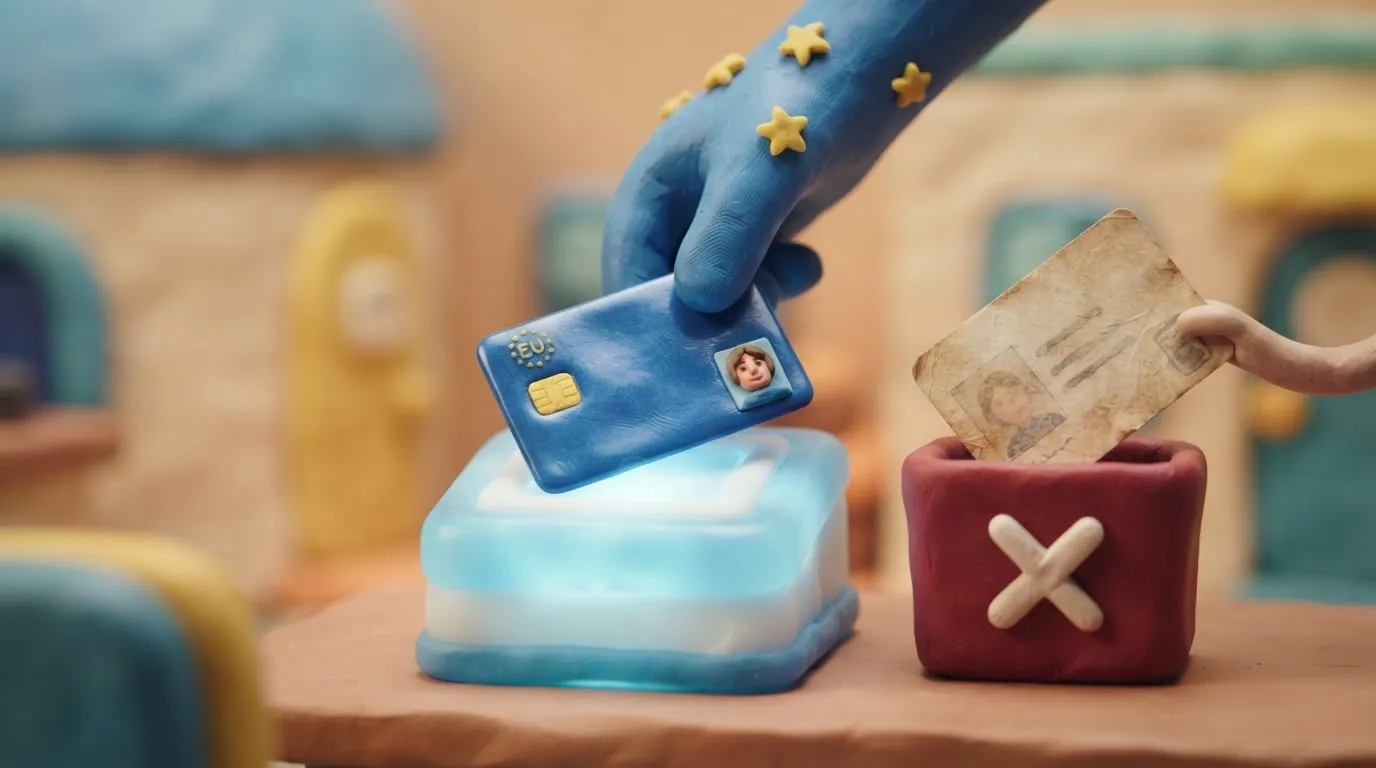
In accordance with EU Regulation 2019/1157, from August 3, 2026, all old formats of residence permits for family members of EU citizens and national ID cards that do not contain biometric data will become invalid. This applies to documents issued in Poland, Denmark, Hungary, Greece, and other EU countries. Holders of such documents must contact migration authorities in advance to replace them with new biometric cards. In addition, in Poland, the application procedure changes from April 27, 2026 — it becomes fully electronic via the MOS 2.0 portal.
 EU
EUEU 'Travel to Europe' App: Passport Scan and Selfie Guide for EES
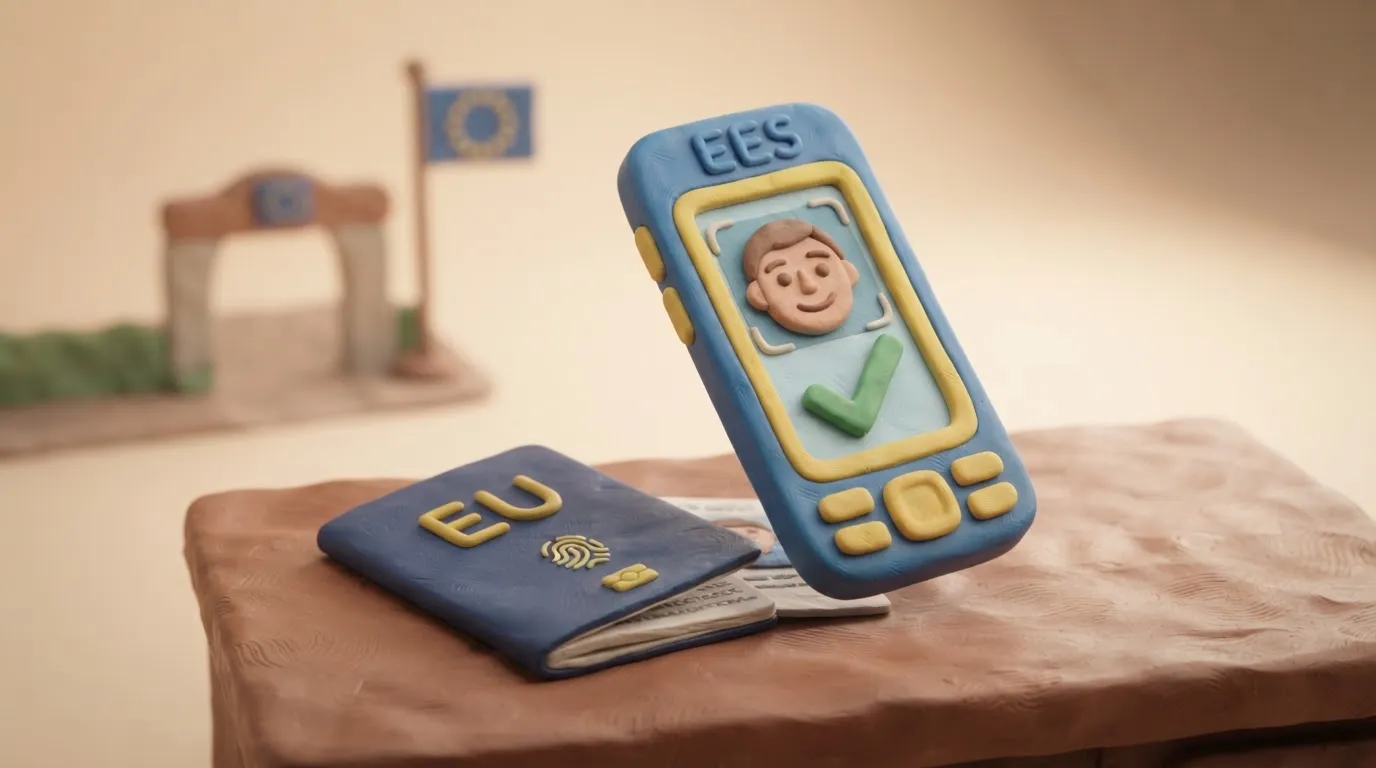
A comprehensive guide on how to use the new Frontex 'Travel to Europe' mobile app for the EU Entry/Exit System (EES). Learn the step-by-step process for scanning your biometric passport's NFC chip, the strict requirements for taking a compliant facial recognition selfie, and how to avoid common errors before your Schengen border crossing.
Make the photo for this document
Upload a selfie — we crop it to 35 × 45 mm, replace the background and check it against the document rules. Free.
Residence Permit · PolandUpload