 Ukraine
RNOKPP (tax ID) abroad: "e-Konsul", Diia, the Electronic Cabinet and the consulate — a step-by-step guide
For children under 18 — fully remote via "e-Konsul" (from 14.05.2026, free of charge). A digital e-Card with a QR code is available in "Diia" from age 14 (Diia.Signature) and has the same force as the paper one. For adults without a QES registering for the first time abroad — via the consulate (form 1DR/5DR, signature certified by the consul) or by post to the STS address in Kyiv. Foreign documents — with an apostille and translation into Ukrainian. Processing time — 3 working days (up to 5 if not at the place of registration); the STS document is issued free of charge.
In this article · 2 sections
Key points
8 points- The RNOKPP (tax ID) is a 10-digit tax number (formerly the "identification code"); abroad it is needed for a passport, pension, inheritance, a bank account and notarial acts
- "e-Konsul" is the first fully remote consular service (launched 14.05.2026): issuing an RNOKPP to children under 18 using form 1DR, free of charge, without a visit to the embassy
- From 14.05.2026, a taxpayer e-Card with a QR code can be ordered in "Diia" (from age 14, signed with Diia.Signature) — it has the same legal force as the paper one; parents can arrange an RNOKPP and card for a child
- Adults registering abroad for the first time without a QES go via the consulate: form 1DR (first time) or 5DR (changes), the signature is certified by the consul, then the documents go to the STS
- Online via the Electronic Cabinet (cabinet.tax.gov.ua) you need a valid QES or BankID, and these usually cannot be obtained without an existing RNOKPP — so for first-timers this route rarely works
- Foreign documents are accepted only with an apostille (or legalisation) and an officially certified translation into Ukrainian; an apostille is affixed only in the country that issued the document
- Processing time — 3 working days (up to 5 if not at the place of registration, up to 10 in complex cases); the STS document is issued free of charge, but the consulate may charge a separate fee for paper submission
- By post — registered letter to the STS: pl. Lvivska, 8, Kyiv, 04053; all documents in Ukrainian, without corrections, the signature on the card certified by a consul or notary
01Questions
6 answers01Can you obtain an RNOKPP through "Diia" if you have never had one before?
Yes, from 14.05.2026 the taxpayer e-Card works in "Diia": a citizen from age 14 orders a digital card with a QR code on their own by signing the application with Diia.Signature, and parents can arrange an RNOKPP and card for a child. The card has the same force as the paper one. For children abroad, this registration goes through "e-Konsul". Anyone registering for the first time abroad who does not yet have login credentials for "Diia" starts with the consulate or the post.
02How much does obtaining an RNOKPP abroad cost?
Issuance of the State Register registration document by the STS itself is free of charge. The remote service for children via "e-Konsul" and the e-Card in "Diia" are also free. However, for paper submission to the consul, individual consular establishments may charge a fee for certifying the signature or processing the documents — check the amount on the specific embassy's website.
03How long does it take to issue an RNOKPP?
The registration document is issued within 3 working days from the date the application is submitted. If you apply not at your place of registered residence — up to 5 working days, and in complex cases (errors or inaccurate data) — up to 10. Postal forwarding to Kyiv and back adds time.
04Which form to fill in — 1DR or 5DR?
Form No. 1DR (Record Card) — if you are registering in the State Register for the first time; it is also the application for assignment of an RNOKPP. Form No. 5DR — if you already have an RNOKPP but need to make changes (for example, a change of surname or place of residence).
05What are the requirements for foreign documents?
Documents issued abroad are accepted only with an apostille (or consular legalisation if the country is not a party to the Hague Convention) and an officially certified translation into Ukrainian. The apostille is affixed only in the country that issued the document — diplomatic missions do not do this.
06Can documents be submitted by post from abroad?
Yes. By registered letter with tracking, you send the completed form and a clear photocopy of your passport to the STS address: pl. Lvivska, 8, Kyiv, 04053. The documents must be in Ukrainian, without corrections (foreign ones — with an apostille and translation), and the signature on the record card must be certified by a consul or notary.
02Official sources
- State Tax Service of Ukraine — submitting form 5DR through the electronic taxpayer account
cabinet.tax.gov.ua - Гід онлайн «Дія» — видача картки платника податків (РНОКПП), форми 1ДР/5ДР
guide.diia.gov.ua - State Tax Service of Ukraine — obtaining a tax number for a child abroad
tax.gov.ua - sud.ua — Ukrainians abroad will be able to register children's tax numbers remotely through e-Consul
sud.ua - LB.ua — MFA launches fully remote tax number registration for children abroad
lb.ua - Посольство України в Республіці Австрія — РНОКПП (консульська процедура)
austria.mfa.gov.ua
Author: Yevhen Kravchenko. Published . Checked against official sources on .
UkraineUkraine's 2026 exit rules: new categories allowed to leave under martial law
Throughout 2026, Ukraine's Cabinet of Ministers expanded the grounds for exiting the country under martial law through separate resolutions: since January 1, media and information workers may exit with a Derzhkomteleradio letter (up to 60 days); since May 11, women in state positions are no longer limited to business trips; reserved men saw no major easing as of August.

 EUUkraine
EU Temporary Protection: New Exit-Stamp Requirement for Men of Military Age
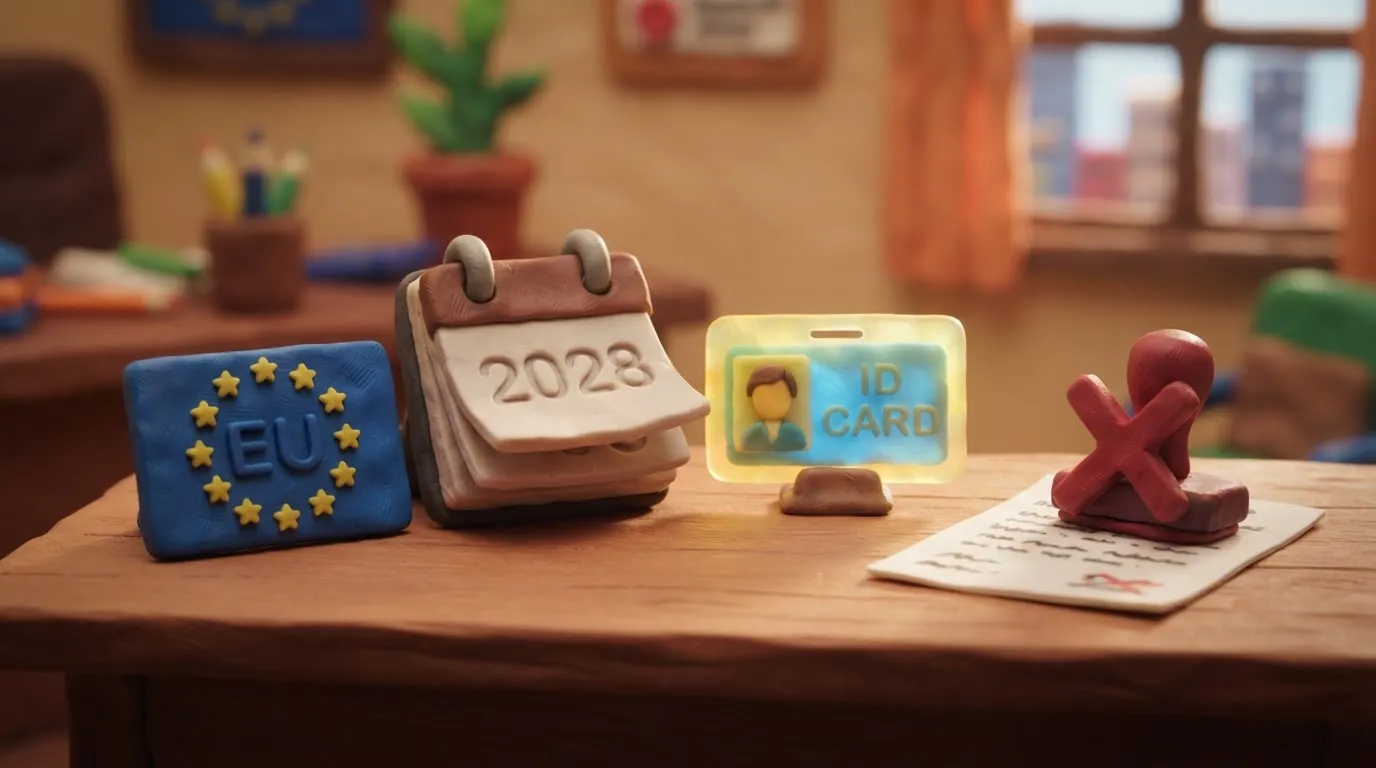
Alongside extending temporary protection to March 2028, EU countries agreed on a new condition: men of military age applying for the first time must prove they left Ukraine legally.
 EUUkraine
EU proposes extending temporary protection to 2028 with restrictions for men
On June 26, 2026, the European Commission officially proposed extending the Temporary Protection Directive for Ukrainians for another year — until March 4, 2028. At the same time, an important exception is proposed: newly arrived military-liable individuals who do not have legal permission to leave Ukraine will no longer receive this status automatically. Those Ukrainians, including men, who have already received temporary protection earlier will retain their status. The proposal still needs final approval by the Council of the EU.
Make your photo to the current rules
Pick your document and upload a selfie — we crop it to size, replace the background and check it. Free. The sizes come from the same official sources as the news.