Egypt visa photo: size in mm, cm, inches and pixels
Millimetres
51 × 51 mm
Centimetres
5.1 × 5.1 cm
Inches
2 × 2″
Pixels at 300 dpi
602 × 602 px
Pixels at 600 dpi
1205 × 1205 px
Egypt-specific things to know
The size depends on the channel: 2 × 2 in (51 × 51 mm) at the Washington embassy, 3.5 × 4.5 cm at VFS and BLS in India, nothing published for the e-Visa. A 3.5 × 4.5 cm print with the face at 70–80 % is the one that satisfies the only full specification we found.
The age limit is 6 months at the Washington embassy but 1 month at VFS India, so for a paper application take the photo just before you apply.
Stapling is contradictory: Washington staples ONE photo to the form, while VFS India says the photograph should not have staple marks and asks for two.
The face share is written twice at VFS: 60 % in the document list, 70–80 % in the photo specification. Aim for 70–80 %, which also satisfies 60 %.
How visa photos are verified
There is no single Egypt visa photo size, because the photo is set by the channel you apply through. The Embassy of Egypt in Washington asks for one recent, high-definition 2 × 2 inch photo on a white background, not older than six months, stapled to the signed application form.
Read more
The visa centres that take applications for the Embassy in New Delhi — VFS Global and BLS International — list two colour photos of 3.5 × 4.5 cm on a white background with no border, the face taking up 70–80 % of the picture, taken not more than one month before, looking straight at the camera, with chin, nose, eyes, ears and eyebrows uncovered and teeth not showing. The Egypt e-Visa portal (visa2egypt.gov.eg), which most Western, Indian and Gulf nationals now use, does not state a photo size on its home, how-to-apply or FAQ pages.
Some sources — third-party sites — quote figures such as «40 × 60 mm, 1 MB»; we could not tie them to an official page.
Examples and mistakes
What makes Egypt visa photos accepted
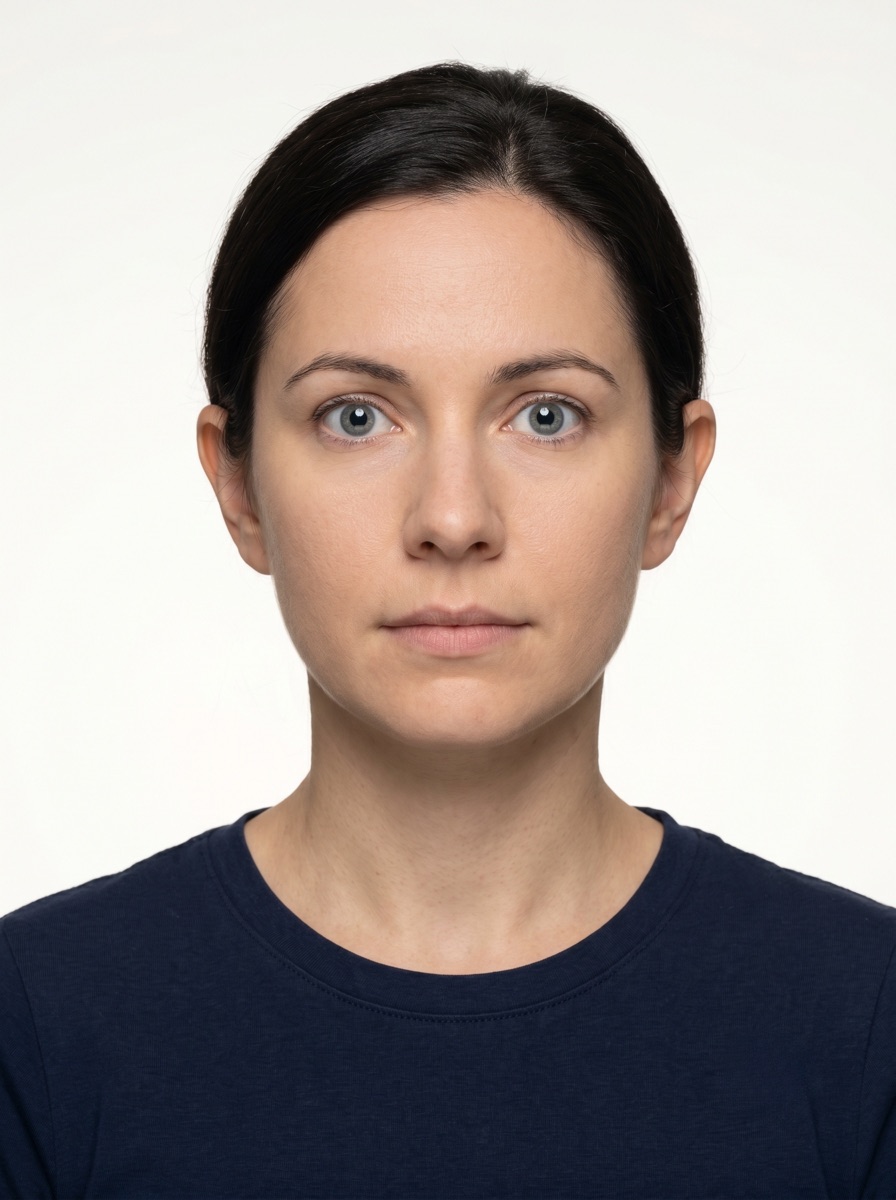
A photo that will be accepted, next to the six most common reasons Egypt visa photos get rejected.
Accepted
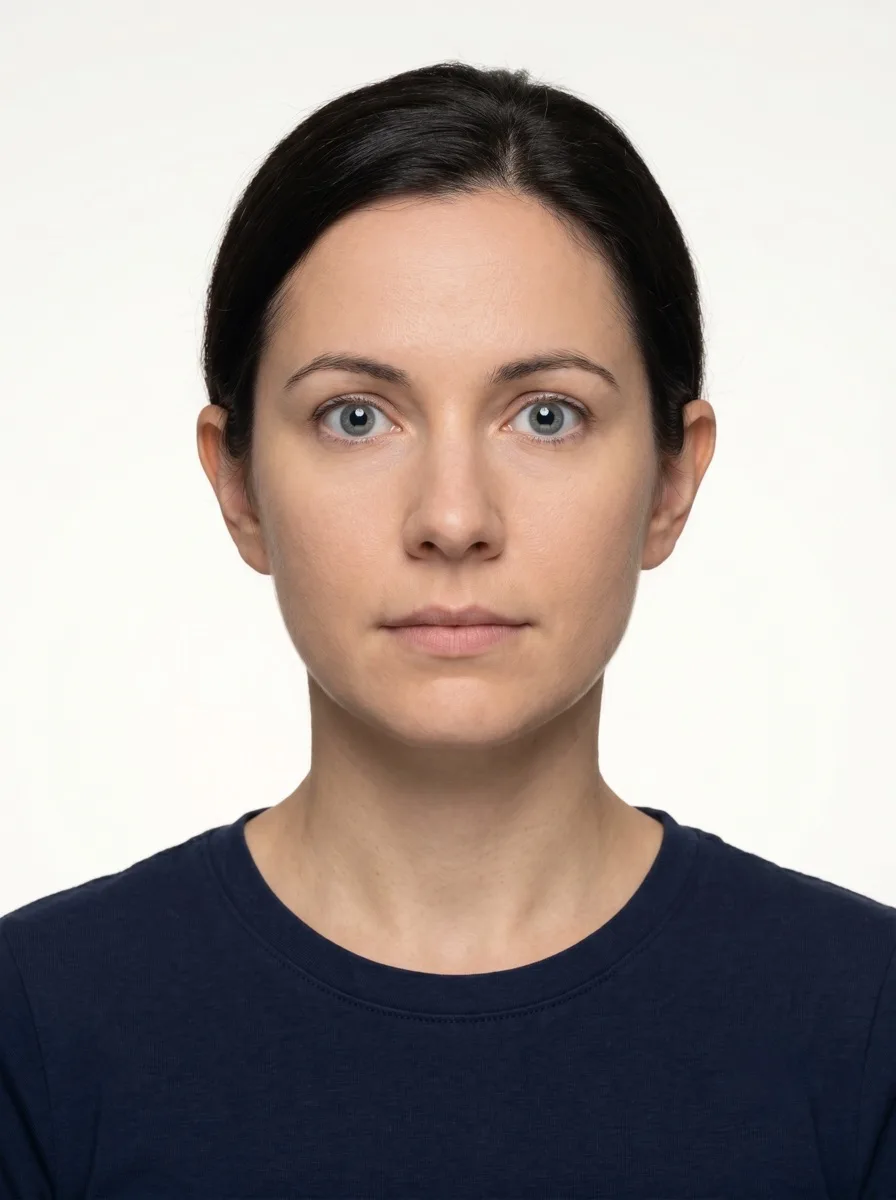
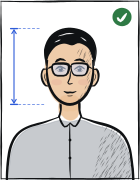
Compliant Egypt visa example (51 × 51 mm)
Face centred, looking directly into the lens
Plain background — no shadow, pattern or texture
Neutral expression, eyes open, mouth closed
No glasses, no hair across the face
Top 6 Egypt visa rejection causes
Background shadowShadow on the wall behind the head, or background with a visible pattern or gradient
Smile / open mouthVisible smile with teeth or open mouth instead of a neutral expression
Glasses with glareGlasses with a clearly visible light reflection covering part of the eye
Hair across the faceLoose hair strands covering the eyes, eyebrows or part of the face
Eyes off-cameraEyes looking to the side instead of directly into the camera lens
Head tiltedHead tilted so the eye line is no longer horizontal
Typical rejection reasons and how to fix them
Typical reasons a photo is rejected under the rules Embassy of Egypt in Washington, D.C. and the visa centres VFS Global / BLS International publishes: what is wrong and what to change.
Reason
Fix
Size not the one of your channel (2 × 2 in, or 3.5 × 4.5 cm)
Print 3.5 × 4.5 cm with the face at 70–80 % for VFS or BLS, and 2 × 2 in only where the embassy asks for it.
Background not white, or a border around the picture
Use a plain white background with no border or shadow.
Hat, cap or other headgear; chin, nose, eyes, ears or eyebrows covered; teeth showing
Take off hats, keep the face and ears clear, keep the mouth closed; religious headgear is judged case by case.
Creases, ink marks, staple marks, a scan or a colour photocopy
Hand in a clean original print on photo paper and carry it flat.
Photo older than the limit (1 month at VFS India, 6 months at the Washington embassy), blurred or badly lit
Take a new, sharp photo in even light shortly before you apply.
The tool puts in the required background. Stand half a metre from a plain light wall, face a window and shoot without flash — then there are no shadows on your face or on the wall.
Framing
Size: 51 × 51 mm
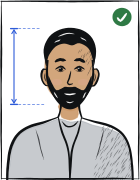
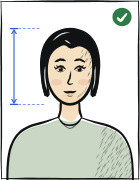
Camera at eye level, about a metre away; head and shoulders in the shot. The tool crops it to the required size.
Glasses
Clear lenses only, no glare
If you wear glasses, check the shot: no glare on the lenses, eyes clearly visible.
Expression and gaze
Neutral expression, mouth closed, eyes open
Look straight into the lens with your head level; keep hair away from your eyes and eyebrows.
Print at 100% scale, borderless, and turn off fit-to-page so each photo keeps its exact size.
Where to submit your visa application
Most nationals now apply for the Egypt e-Visa online; a paper visa is applied for at an Egyptian embassy or consulate, or through the visa centre it names (VFS Global or BLS International in India). The photo is handed in with the form on paper at the embassy and the centres; nothing is published about the e-Visa upload.
Egypt e-Visa portalonline
visa2egypt.gov.eg — open to the nationalities listed on the FAQ page; the e-Visa download link is sent after payment
Embassy or consulate of Egypt (paper visa)in person or by mail, per mission
Example read: the Washington, D.C. embassy and consulate page for American passport holders
Processing
Set by each mission
Cost
Set by each mission and by nationality
Washington: one recent high-definition 2 × 2 in photo on a white background, not older than 6 months, stapled to the signed form; Tunisia, per the government portal Idaraty: 2 identity photos, format not stated.
Embassy of Egypt in Washington, tourist visa (American passport holders, in person): one fully completed and signed form with ONE photo stapled to it, and one copy of the form with a photo; ONE 2″ × 2″ recent high-definition personal passport photo on a white background, not more than 6 months old.
VFS Global Egypt (India), photo specifications: in colour, without border, white background only; a close-up of head and top of the shoulders so that the face takes up 70–80 % of the photograph; sharp focus, no ink marks or creases; looking directly at the camera; 3.5 cm × 4.5 cm; skin tone natural, appropriate brightness and contrast; not more than 1 month old.
Same page, the person: no headgear (headgear on religious grounds is considered case by case); chin, nose, eyes, ears and eyebrows must not be covered, the forehead uncovered enough for the shape of the face to show; teeth should not be visible; no hat or cap; no staple marks; scanned and colour-photocopied photos are not accepted.
VFS Global and BLS International checklist for a tourist visa in India: original passport valid at least 6 months, copy of the first and last pages, completed visa form, «(2) passport size colored photographs on white background with 60% face size» (the specification above says 70–80 %), request letter, itinerary from an Egyptian travel agent, return ticket, hotel booking, six months of bank statements. VFS gives the processing time as at least 10–12 working days in Delhi and 12–15 elsewhere in India.
Egypt e-Visa portal (visa2egypt.gov.eg), FAQ: the e-Visa is obtained online after entering the required information and paying by card, and a link to download it is sent; tourism fees USD 30 (single entry) and USD 65 (multiple entries). Requirements on arrival: passport valid at least 6 months, e-Visa printout, travel itinerary, supporting letter where relevant, hotel booking details. No photograph and no photo size is listed on the Home, How to Apply or FAQ pages.
Tunisian administration portal Idaraty, citing the Embassy of Egypt in Tunisia: a visa application form, «2 photos d'identité» (format not stated), a copy of the passport valid at least 6 months, proof of accommodation or an invitation letter, an employment certificate and three months of bank statements.
Questions
Frequently asked questions
It depends on where you apply. The Embassy of Egypt in Washington asks for 2 × 2 inches (51 × 51 mm); the visa centres VFS Global and BLS International in India ask for 3.5 × 4.5 cm; the Egypt e-Visa portal publishes no size on its information pages. A 3.5 × 4.5 cm colour print on a white background, face at 70–80 %, fits the most detailed specification.
Two colour photographs of 3.5 cm × 4.5 cm on a white background only, without border, the face taking up 70–80 % of the picture, taken not more than one month before, looking at the camera, with chin, nose, eyes, ears and eyebrows uncovered and teeth not visible. The same checklist is on the VFS Global and BLS International pages for the Embassy of Egypt in New Delhi; no staple marks, and scans or photocopies are not accepted.
White. Both the Washington embassy («on a white background») and VFS India («a white background only», no border) say white. Use a plain white background lit evenly, with no shadow and no border around the picture.
Not more than 6 months old at the Washington embassy, and not more than 1 month old at VFS Global in India, so take it just before you apply. Washington wants one photo stapled to the form (plus a copy of the form with a photo); VFS and BLS list two photographs.
The e-Visa pages we read (Home, How to Apply, FAQ) do not list a photograph or a size; the requirements on arrival are the passport, the e-Visa printout, an itinerary and hotel details. Sizes such as 40 × 60 mm and 1 MB circulate online but we could not tie them to an official page.
The Egypt visa photo must be 51 × 51 mm.
Often yes, but not always: tourist, student, work and transit visas can have different size or background rules. Compare the requirements of each Egypt visa — if they match, one photo will do.
We refund the payment in full. Email us within 14 days of purchase with your order number and the consulate’s rejection notice.
Eyes must be fully visible; no tinted lenses or strong reflections. If you keep them on, tilt them slightly downwards by lifting the arms a little above your ears: this usually moves reflections of a window or lamp off the lenses.
51 × 51 mm = 5.1 × 5.1 cm = 2 × 2 inches. At 300 dpi that is 602 × 602 pixels; at 600 dpi, 1205 × 1205 pixels.
Yes. The same 51 × 51 mm format and head size apply to: passport.