What is a biometric photo?
Definition
biometric photo
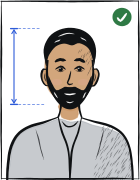
A biometric photo is a portrait that meets a defined geometric standard — head height, eye position, expression, lighting and background — so an automated facial-recognition system can match it to a live face during border control. Modern passport, visa and national ID photos are all biometric.
Key facts
| Purpose | Allow an automated system to match the document photo against a live face at a border, airport e-gate or service desk. |
|---|---|
| Defined by | ICAO 9303 internationally, plus national standards that add country-specific size and background rules. |
| Typical age limit | Photo must be no older than 6 months in most countries. |
| Required features | Eyes open and visible, mouth closed, plain light background, even lighting, no shadows. The head-to-frame ratio is set nationally: about 70–80% for Schengen, but 50–69% for the United States. Always take the number from your own country page. |
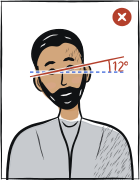
| Common cause of failure | Background colour, eye-line position and head-tilt are the three most frequent automated-rejection causes. |
| Checked against primary sources. | |
Biometric vs traditional passport photo
A traditional pre-2003 passport photo was just a portrait. A biometric photo adds a strict geometric specification: the face must occupy a fixed percentage of the frame, the eye line must sit at a fixed height, the expression must be neutral and the background must be uniform. These rules exist so an automated face-matching algorithm can compare the photo against a live face reliably.
How the biometric check actually works
When you submit a photo through a modern passport or visa portal, the system runs a face-detection algorithm to find the face, measures the head-to-frame ratio, locates the eye line, checks background uniformity by sampling corner pixels, and verifies exposure. A photo that fails any of these checks is rejected at upload before a human reviewer sees it.
Why biometric photos seem so strict
The strictness is not about looks — it is about machine readability. A photo that is "nice" by photography standards can fail because the head is tilted three degrees, or because the background reads as cream rather than white to an automated colour-segmentation algorithm. The Anfas.Pro tool applies the same checks before payment.
Frequently asked questions
01Is every modern passport photo biometric?
Yes. Every country issuing biometric chip-based passports (193 ICAO member states) requires a biometric photo. The size and background rules vary, but the geometric specification is consistent.
02Can I take a biometric photo with my phone?
Yes, if the photo meets the geometric specification. Use natural daylight, a plain wall behind you, the rear camera and a stable surface. The Anfas.Pro tool handles the crop, background normalisation and biometric check automatically.
03What is the difference between a biometric photo and a passport photo?
In current practice they are the same thing. Every modern passport photo follows a biometric standard. The phrase "passport photo" is the older term; "biometric photo" is the technical term used by issuing authorities.