 USA
USA United Kingdom
 Canada
 Australia
 India
IndiaGlasses, Smiling and Head Coverings in Passport Photos: US, UK, Canada, Australia and India Compared
Australia bans glasses (since July 2018), the US only allows documented medical cases, the UK and Canada allow them with no glare; smiles: only the US accepts one.
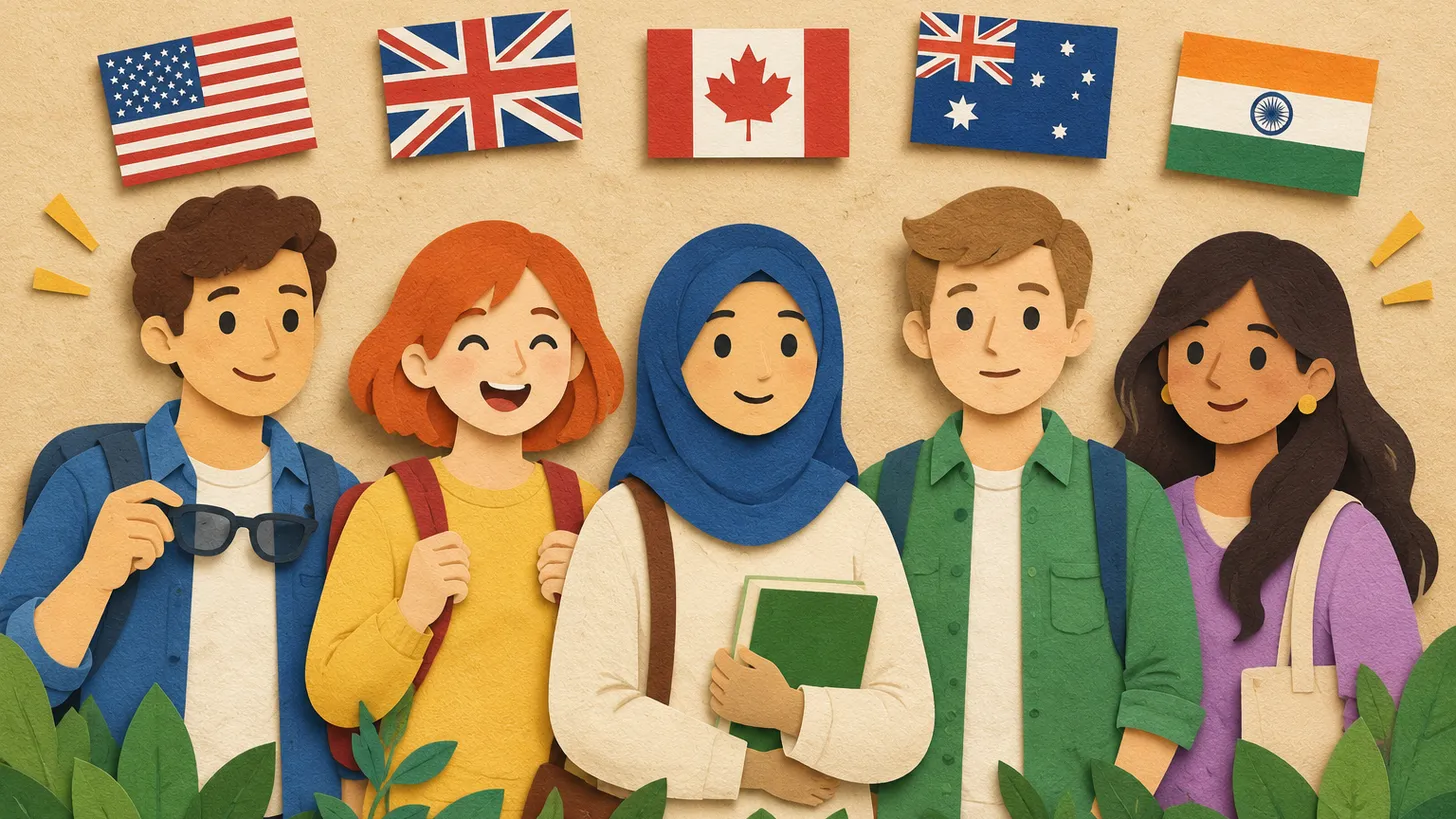
Key points
4 points- Glasses: Australia has banned them since 1 July 2018 (medical certificate exemption); the US removes them except documented medical cases; the UK says do not wear them unless you have to; Canada allows them only if eyes are clearly visible with no glare; India says take them off to avoid reflections.
- Smiling: the US allows a neutral expression or a natural smile; the UK, Canada and Australia want a plain, closed-mouth expression; India asks for a natural expression with the mouth not open.
- Head coverings: allowed in all five only for religious (and in the UK, Canada and Australia also medical) reasons, and the face must stay fully visible.
- The safest approach for a multi-country application is glasses off, neutral expression, mouth closed.
Three questions come up before almost every passport photo: can I keep my glasses on, can I smile, and can I wear my head covering. The honest answer is “it depends on the country” — and the differences are bigger than people expect. Here are the rules of five major issuing authorities side by side.
Glasses
| Country | Glasses rule |
|---|---|
| United States | Eyeglasses must be removed, except for documented medical cases |
| United Kingdom | “Do not wear glasses in your photo unless you have to do so”; no sunglasses or tinted glasses; eyes not covered by frames, glare, reflection or shadow |
| Canada | Allowed only if the eyes are clearly visible; no glare on the lenses; frames must not cover the eyes; sunglasses or tinted glasses are rejected |
| Australia | No glasses since 1 July 2018; limited medical exemption with a medical certificate, frames must not obscure the eyes and no reflections |
| India | No reflections from glasses; glasses to be taken off to avoid reflections |
The pattern is clear: the direction of travel is towards no glasses. The reasons given are reflections and glare and, in Australia's case, that glasses adversely affect facial matching. If you can take them off for the picture, do. If you cannot, choose lenses without a tint, hold the light source to avoid glare and check that the frames do not cross the eyes.
Smiling and expression
| Country | Expression rule |
|---|---|
| United States | Neutral expression or a natural smile, both eyes open |
| United Kingdom | A plain expression with the mouth closed, eyes open and visible |
| Canada | Neutral, mouth closed, eyes open; for citizenship applications, no smiling or frowning |
| Australia | Neutral expression, mouth closed, eyes open |
| India | Natural expression; mouth should not be open; eyes open and clearly visible |
If you are shooting one photo for several countries, a neutral expression with a closed mouth satisfies all five. The one place a smile is welcome is the US, and even there a neutral face is safe.
Head coverings
- United Kingdom: not allowed unless it is for religious or medical reasons.
- Canada: only when worn daily for religious beliefs or medical reasons, with the full face clearly visible.
- India: not permitted except for religious reasons, but the facial features from the bottom of the chin to the top of the forehead and both edges of the face must be clearly shown.
- United States and Australia: permitted for religious reasons only, without covering the face oval.
The common rule: the whole face from chin to forehead and both edges must be visible, with no shadows on it from the covering.
Hair, ears and other small things
- The UK and India both require that hair does not cover the eyes.
- India asks for both edges of the face to be visible.
- Shadows on the face or behind the head are a rejection reason in every one of these countries.
A one-photo checklist that works almost everywhere
- Glasses off (unless you have a medical reason and, for Australia, a certificate).
- Neutral expression, mouth closed, eyes open.
- Hair away from the eyes and off the face.
- Plain, evenly lit background with no shadow behind your head.
- Frame the photo separately for each country’s size and head-size rule.
Frame and background for each country are one click away in our photo format catalogue.
06Questions
5 answers01Can I wear glasses in a US passport photo?
Eyeglasses must be removed, except for documented medical cases.
02Since when are glasses banned in Australian passport photos?
Since 1 July 2018, according to the Australian Passport Office guidelines, with a limited medical exemption that needs a medical certificate.
03Can I smile in a passport photo?
The US allows a neutral expression or a natural smile. The UK, Canada and Australia want a plain, neutral face with the mouth closed, and India a natural expression with the mouth not open.
04Are head coverings allowed?
Yes for religious reasons (and medical ones in the UK, Canada and Australia), provided the whole face from chin to forehead and both edges of the face stay visible.
05What is the safest look for a multi-country application?
Glasses off, neutral expression, mouth closed, hair off the eyes, plain background with no shadows.
07Official sources
- GOV.UK — Photos for passports
gov.uk - U.S. Department of State — passport photo requirements
travel.state.gov - IRCC — Citizenship application photograph specifications
canada.ca - Australian Passport Office — camera operator guidelines (PDF)
passports.gov.au - Passport Seva — ICAO-compliant photograph guidelines (PDF)
mportal.passportindia.gov.in
Author: Yevhen Kravchenko. Published . Checked against official sources on .
USAFirst U.S. Passport Online: America.gov Will Let You Take the Passport Photo at Home
Rubio, 29 Sept 2026: first passports fully online on America.gov from next year, photo taken on your phone.
 USA
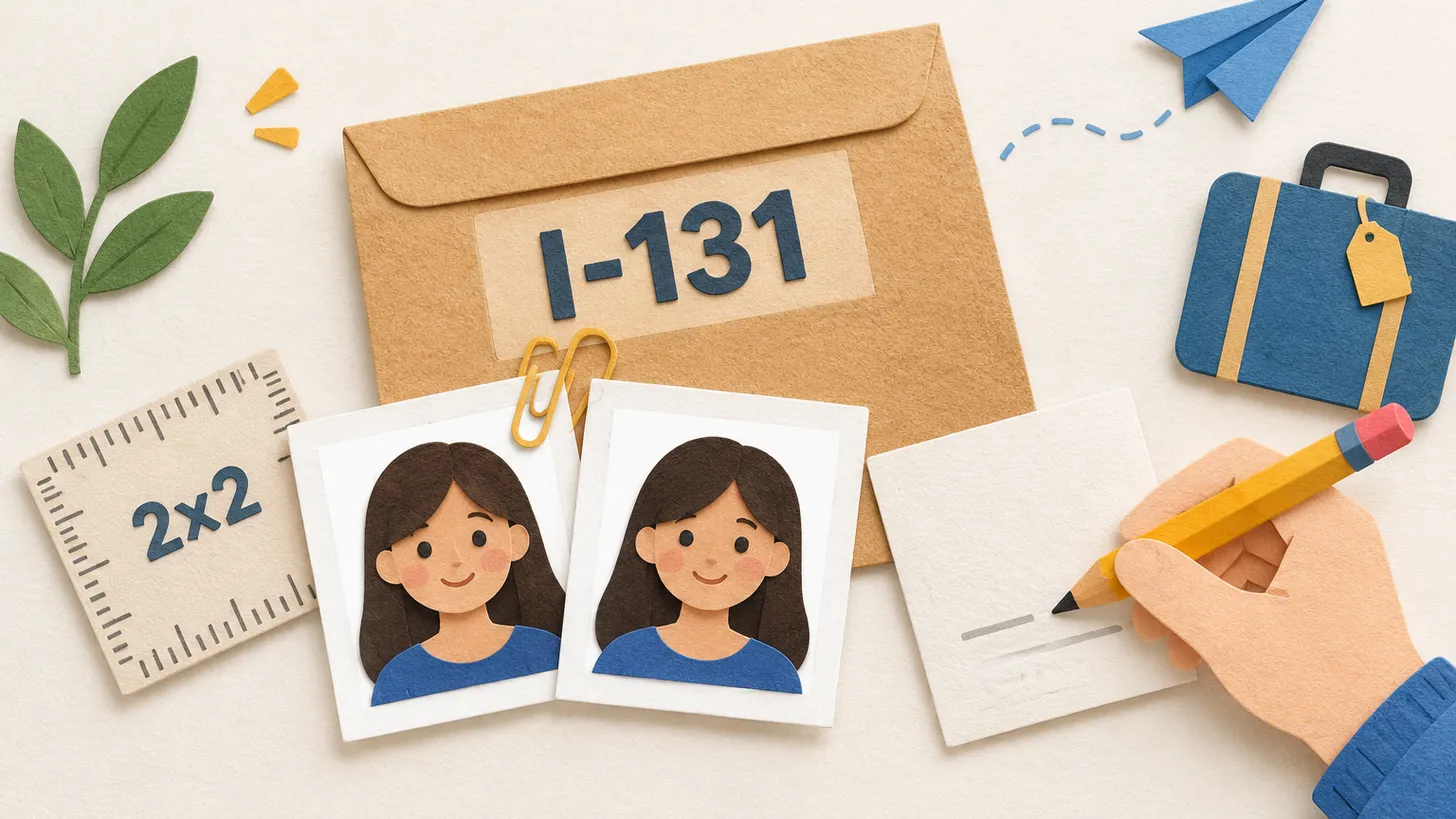
USATPS Travel Authorization Photo Requirements (Form I-131): Two 2x2 Photos, White Background, Head 1–1 3/8 Inch
For a TPS Travel Authorization on Form I-131 you send two identical 2x2 inch colour photos on a white to off-white background, head 1–1 3/8 inch.
 USA
USAForm I-130 Photos for a Spouse Petition: Two 2x2 Inch Prints, Who Needs Them and the Head-Height Rule
USCIS asks for two identical 2x2 inch colour photos of the petitioner and of the spouse (if in the US), taken within 30 days.
Make your photo to the current rules
Pick your document and upload a selfie — we crop it to size, replace the background and check it. Free. The sizes come from the same official sources as the news.