 Netherlands
Netherlands Schengen Visa Photo: 35 x 45 mm, Face 26–30 mm, and When the Visa Centre Takes It for You
Dutch Schengen visa: a colour 3.5 x 4.5 cm photo under 6 months old on a white or light background — unless you apply via a visa centre, which takes it.
Key points
5 points- NetherlandsWorldwide checklist: a colour photo, no more than 6 months old, 3.5 cm by 4.5 cm, white or light-coloured background.
- Applying through an external service provider? You do not need to bring a photo — a digital photo is taken at the appointment.
- The photo must meet Dutch passport requirements: face 26–30 mm from chin to crown (ages 11+), 16–20 mm wide from ear to ear.
- No black-and-white photos, no editing software, printed on smooth photo paper at 400 dpi or more.
- Glasses are allowed if the eyes are fully visible and there is no glare; a hat is not.
The Netherlands Schengen visa photo follows the Dutch passport photo rules. The official NetherlandsWorldwide checklist for a tourist Schengen visa asks for a colour photo, no more than six months old, 3.5 cm by 4.5 cm, with a white or light-coloured background. One line in the same checklist saves many applicants a trip to the photographer: if you apply through an external service provider, you do not need to submit a photo — a digital photo is taken at your appointment.
Do you need to bring a photo?
| Where you apply | Photo |
|---|---|
| Through an external service provider (visa application centre) | Not needed — a digital photo is taken at the appointment (NetherlandsWorldwide) |
| Where a printed photo is asked for | A photo that meets Dutch passport requirements, not taken more than 6 months ago, with a clear resemblance (Dutch visa application centre checklist, USA) |
The checklist of the Dutch visa application centre in the USA puts it this way: “A passport photo that meets Dutch passport requirements. This photo cannot have been taken more than 6 months ago and must bear a clear resemblance.”
Size and face: the Dutch passport standard
- Format: 35 mm x 45 mm (width x height).
- Width of the face: 16–20 mm from ear to ear.
- Length of the face from chin to crown: 26–30 mm for ages 11 and above; 19–30 mm for ages 10 and under.
- Colour only — black-and-white photos are not allowed.
- Sharp, with enough contrast, undamaged, not a copy and not altered by computer software; printed on high-quality smooth photo paper at a minimum of 400 dpi.
Light, pose and background
- Even lighting, no shadows on the face or in the background, no reflections.
- Head facing forward, eyes level, head not tilted, shoulders straight.
- Background light grey, light blue or white — plain, one uniform colour with no fade, contrasting with the head. (The visa checklist itself says “white or light-coloured”.)
- Neutral expression, looking straight at the camera, mouth closed.
Glasses, hair and head coverings
- Glasses are allowed if the eyes are fully visible, the lenses fully transparent and there is no glare or shadow.
- The ears do not have to be visible, as long as the width of the face is visible.
- A beard, a wig, make-up, piercings, tattoos and earrings are permitted; a hat is not.
- A head covering worn for religion or belief must be plain, one colour and contrast with the background.
- Babies and children under 6 are exempt from the position and expression requirements.
The Dutch rules are set out in the government’s “Photo specification guidelines 2020”: a photo is accepted only if it meets all the criteria, unless an exception applies.
Need the size? See our Netherlands Schengen visa photo page.
05Questions
5 answers01What size is the Netherlands Schengen visa photo?
3.5 cm by 4.5 cm (35 x 45 mm), in colour, no more than 6 months old, on a white or light-coloured background.
02Do I need a photo if I apply at a visa application centre?
No. NetherlandsWorldwide says that if you apply through an external service provider you do not need to submit a photo; a digital photo is taken at your appointment.
03How big must the face be?
Under the Dutch passport rules, 26–30 mm from chin to crown for ages 11 and above, and 16–20 mm wide from ear to ear.
04Can I wear glasses?
Yes, if the eyes are fully visible, the lenses are fully transparent and there is no glare or shadow.
05Is a black-and-white photo accepted?
No. The Dutch photo requirements say black-and-white photos are not allowed.
06Official sources
- NetherlandsWorldwide — Checklist: applying for a Schengen visa for tourism
netherlandsworldwide.nl - NetherlandsWorldwide — Photo requirements for Dutch passports and identity cards
netherlandsworldwide.nl - Government.nl — Photo specification guidelines 2020
government.nl - Netherlands visa checklist — Tourism (Dutch visa application centre, USA; PDF)
vfsglobal.com
Author: Yevhen Kravchenko. Published . Checked against official sources on .
 Schengen Area
 Germany
 Spain+6
EU ID card photo requirements: sizes and rules by country
The size for an ID card photo in EU countries is not uniform: Spain requires 32 × 26 mm, France needs 35 × 45 mm, and in Lithuania, the initial print must be 40 × 60 mm.
 Netherlands
Netherlands introduces new country policy on asylum for Ukrainians without TPD
From 1 July 2026 the Dutch government has, for the first time since the war began, adopted a separate country policy for assessing asylum applications from Ukrainians who do not fall under the Temporary Protection Directive (TPD). The IND can refuse status by pointing to relatively "safe" regions of Ukraine, but anyone who already holds TPD is unaffected: their status has been automatically extended until 4 March 2027.
 Netherlands
Photo for a Netherlands residence permit (verblijfsvergunning), MVV and passport in 2026: IND requirements for Ukrainians
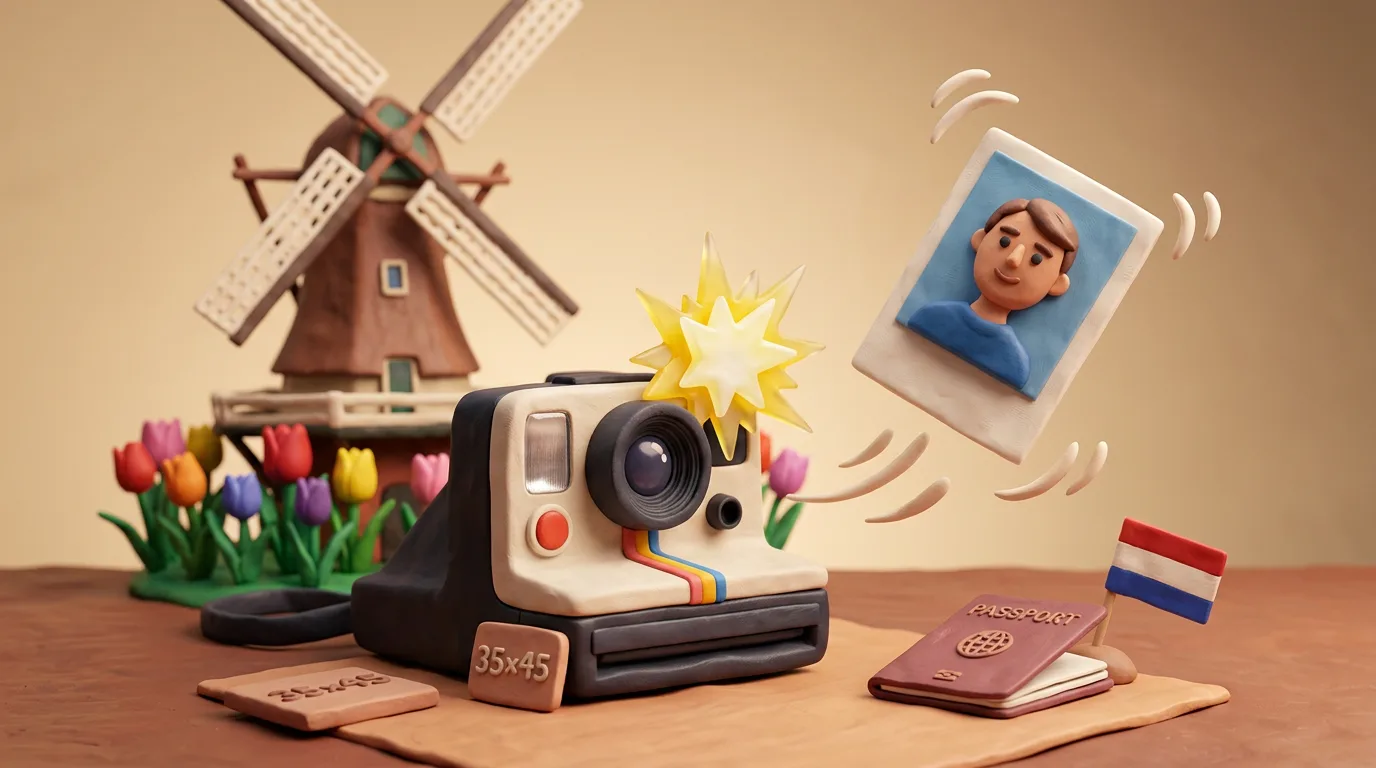
A photo for a Netherlands residence permit, MVV visa and passport must be colour, 35×45 mm, with the head (from chin to crown) measuring 26–30 mm for people aged 11 and over, a light grey/light blue/white background, no glasses, a neutral expression, and no older than 6 months.
Make your photo to the current rules
Pick your document and upload a selfie — we crop it to size, replace the background and check it. Free. The sizes come from the same official sources as the news.