Passport Photo Size by Country: 18 Passports, 8 Different Formats — and Why One Photo Never Fits All
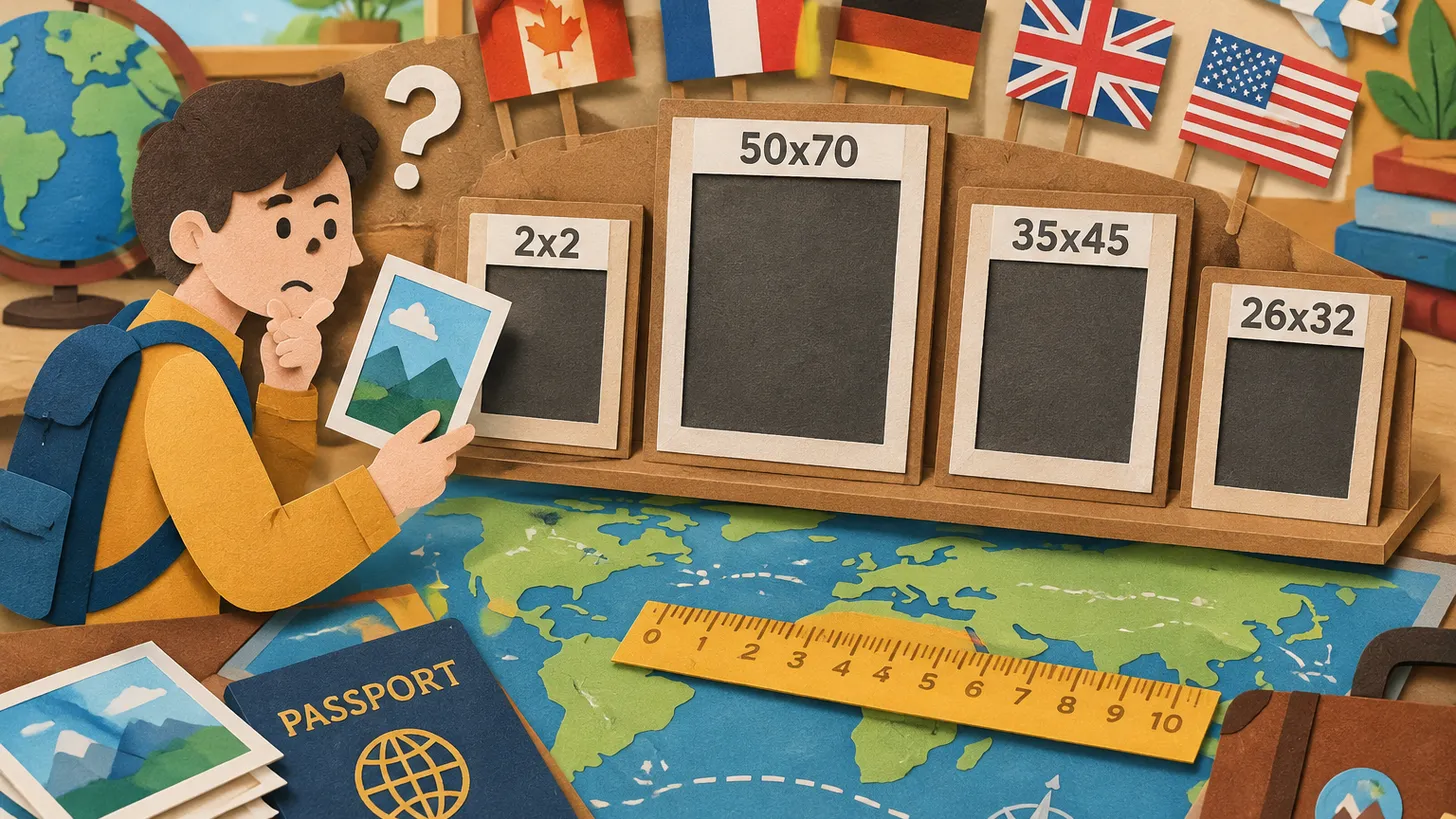
Of 18 passports we compared, 8 use 35x45 mm — but the US, Canada, Turkey, China, Spain and others don't, and head size ranges from 26 to 36 mm.
News and guides · 339 articles
What changed in passport, visa and residence photo rules — every update dated and sourced.
Of 18 passports we compared, 8 use 35x45 mm — but the US, Canada, Turkey, China, Spain and others don't, and head size ranges from 26 to 36 mm.
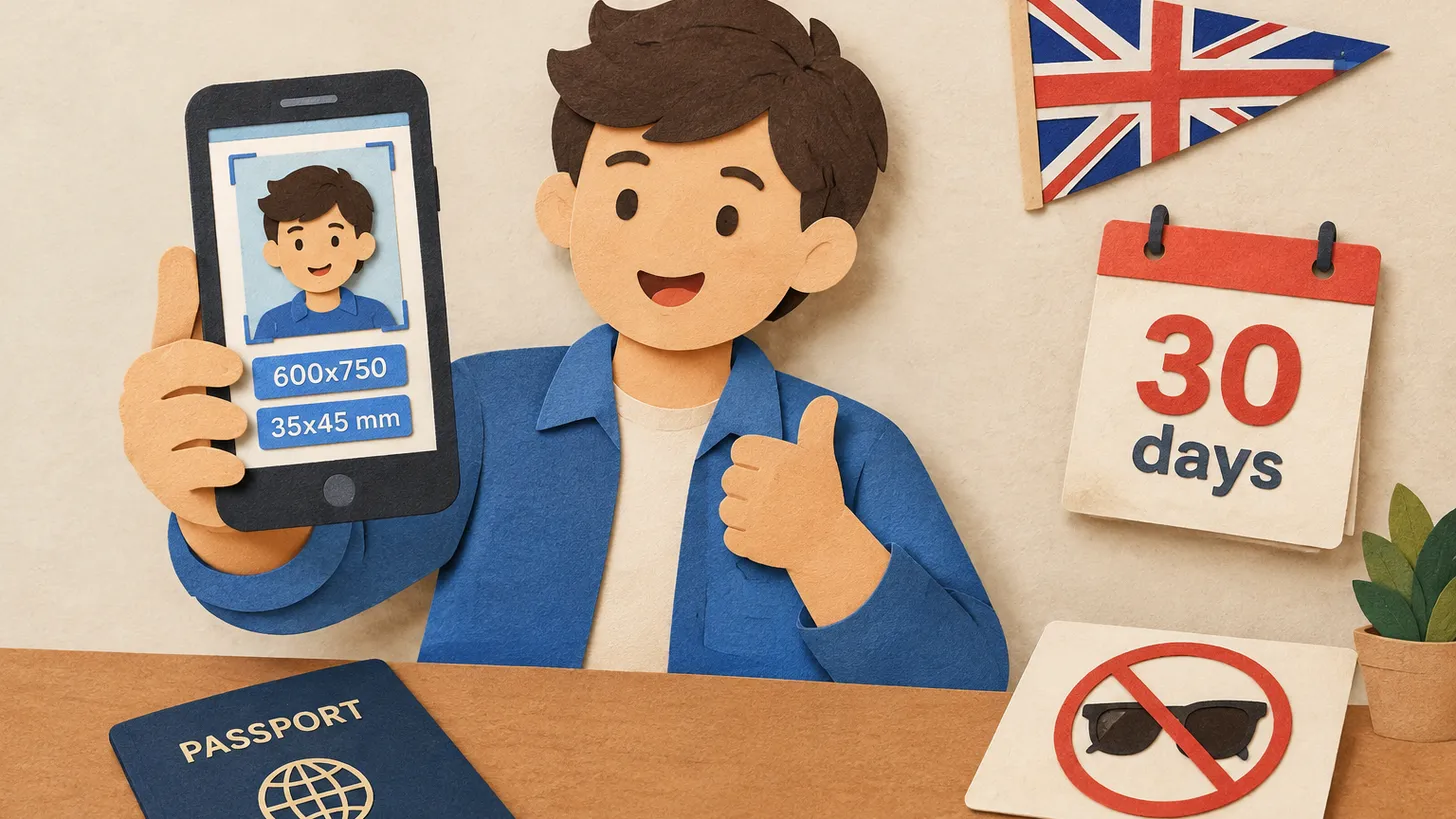
Online, your UK passport photo must be at least 600x750 px, 50KB–10MB and taken in the last month; printed photos are 35x45 mm on cream or light grey.
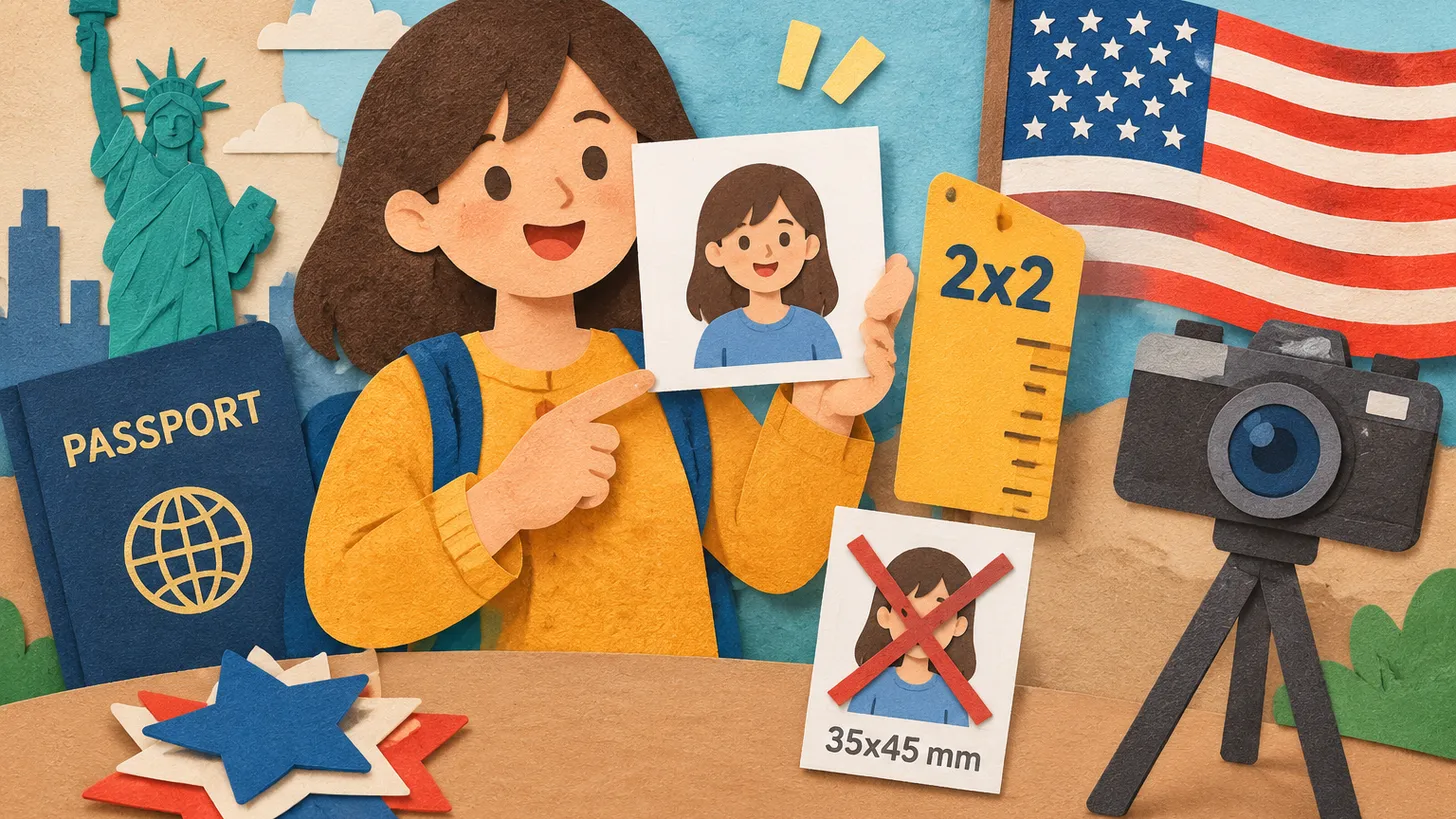
One colour 2x2 inch (51x51 mm) photo, taken in the last 6 months, head 1 to 1 3/8 inches from chin to top, plain white or off-white background.
Russian Federation Government Decree No. 335 of 06/09/2003 sets the visa photo size at 3 × 4 cm.
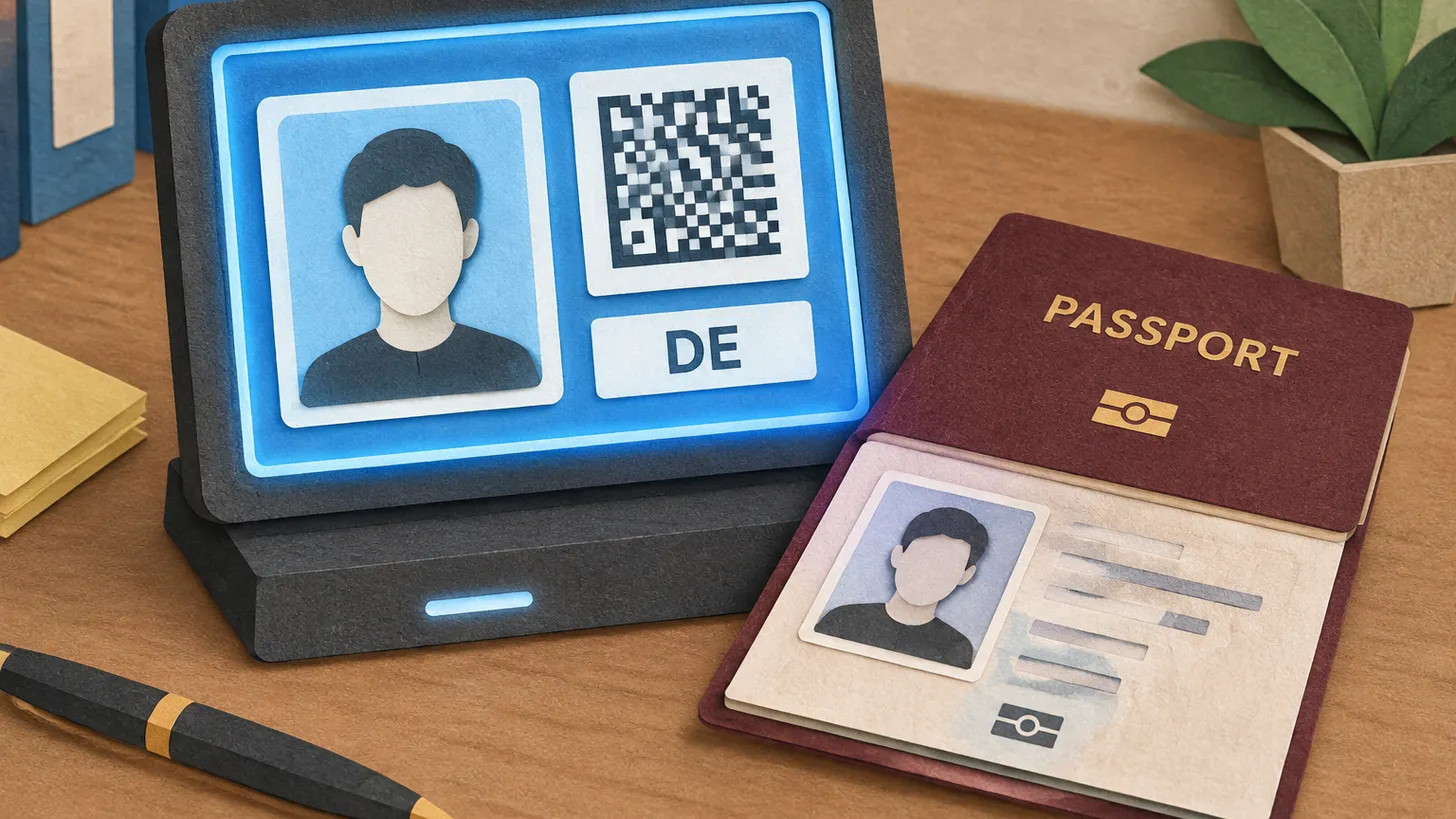
For a German electronic residence permit, you need a digital photo (DataMatrix code) or a photo taken at the agency terminal for 6 euros, but a paper photo is still required for driving licenses and refugee residence permit stickers.
Starting April 1, 2026, Indian PAN card applications (Form 93 or 95) require two 4.5 × 3.5 cm photos glued to the paper, while Aadhaar photos are only captured in person at an enrolment center.
The authority might not publish the photo size for various reasons: EU residence permit specifications are secret, a German regulation refers to a technical directive, and the UK publishes file limits and crops the image itself for online passports.
The UAE's ICP does not publish exact photo sizes for resident visas, only requiring a recent photo on a white background that meets ICAO standards.
The size for an ID card photo in EU countries is not uniform: Spain requires 32 × 26 mm, France needs 35 × 45 mm, and in Lithuania, the initial print must be 40 × 60 mm.
EU regulations mandate the ID-1 format and a microchip, leaving the exact photo size to individual member states, while biometric data is stored for a maximum of 90 days.
To get a Vietnam temporary residence card (thẻ tạm trú), you must provide two 2x3 cm photos: one is pasted into the NA8 form, and the second is submitted separately.
Council Regulation (EC) No 2252/2004 requires a highly secure storage medium containing a facial image, but pan-European rules regarding the exact dimensions of the printed photo are not published in accessible sources.
The requirements for a passport card match the book: a color 51x51 mm square no older than 6 months.
A color 33 × 48 mm photo on a white background is required for a Chinese residence permit.
The photo for a Japanese driver's license must measure 30 × 24 mm.
To apply for an ikamet, you must bring 4 biometric photos on a white background, taken within the last 6 months, to your appointment; the authority does not publish the exact size in millimeters.
For a TPS Travel Authorization Document from inside the US, the Form I-131 instructions require two 2x2 inch paper photos; for a Refugee Travel Document, paper photos are required when applying from abroad.
A type D visa photo is governed by the national laws of the specific country, not the EU Visa Code: the Czech Ministry of Foreign Affairs, for example, requires a 35x45 mm size with a 32–36 mm face height.
On 19 June 2026, Switzerland's Federal Council launched a consultation on the future of protection status S after 4 March 2027. It considers a possible exclusion of Ukrainian men of conscription age and greater cantonal control over social assistance levels.
From 1 July 2026 the Dutch government has, for the first time since the war began, adopted a separate country policy for assessing asylum applications from Ukrainians who do not fall under the Temporary Protection Directive (TPD). The IND can refuse status by pointing to relatively "safe" regions of Ukraine, but anyone who already holds TPD is unaffected: their status has been automatically extended until 4 March 2027.
Throughout 2026, Ukraine's Cabinet of Ministers expanded the grounds for exiting the country under martial law through separate resolutions: since January 1, media and information workers may exit with a Derzhkomteleradio letter (up to 60 days); since May 11, women in state positions are no longer limited to business trips; reserved men saw no major easing as of August.
Poland has ended the wartime Special Act system: Ukrainians who already held a valid residence document before 24 February 2022 and are not temporary protection beneficiaries had their stay extended only until 4 March 2027. After that date, they need a separate legal basis to stay.
From January 1, 2026, border control systems are switching to the new ISO/IEC 39794-5 biometric photo encoding standard; the full transition across ICAO's 193 member states finishes by 2030, while a growing number of countries are separately cracking down on AI-edited photos.
Ireland is cutting the Accommodation Recognition Payment for hosts from €600 to €400 a month from October 2026, tightening eligibility for new applications, and launching a Temporary Protection Transition Scheme for Ukrainians who want to stay after temporary protection ends.
Pick your document and upload a selfie — we crop it to size, replace the background and check it. Free. The sizes come from the same official sources as the news.