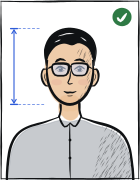
Quick answer: The recommended Schengen area EU blue card photo size is 35 × 45 mm. Plain light background. Head occupies 70–80% of photo height. Neutral expression, clear lenses only, no glare. Last verified .
Schengen area EU blue card photo: size in mm, cm, inches and pixels
Millimetres
35 × 45 mm
Centimetres
3.5 × 4.5 cm
Inches
1.38 × 1.77″
Pixels at 300 dpi
413 × 531 px
Pixels at 600 dpi
827 × 1063 px
Schengen area-specific things to know
EU Blue Card available in 25 member-states (DK + IE opt-out)
Highly-qualified workers with min 1.5× average salary threshold
Same EU residence permit biometric standard
Each member-state issues — harmonized photo workflow
How EU blue card photos are verified
EU Blue Card photos follow the EU residence permit biometric standard (Regulation 1030/2002 amended). Common format: 35×45mm, head 32-36mm, ICAO 9303 compliant, biometric chip card.
Read more
EU Blue Card is the EU-wide work and residence permit for highly-qualified third-country nationals — minimum salary threshold typically 1.5× member-state average. Available in 25 EU member-states (Denmark and Ireland opt-out).
Each member-state issues its own EU Blue Card following harmonized photo + biometric workflow.
Examples and mistakes
What makes Schengen area EU blue card photos accepted
A photo that will be accepted, next to the six most common reasons Schengen area EU blue card photos get rejected.
Accepted
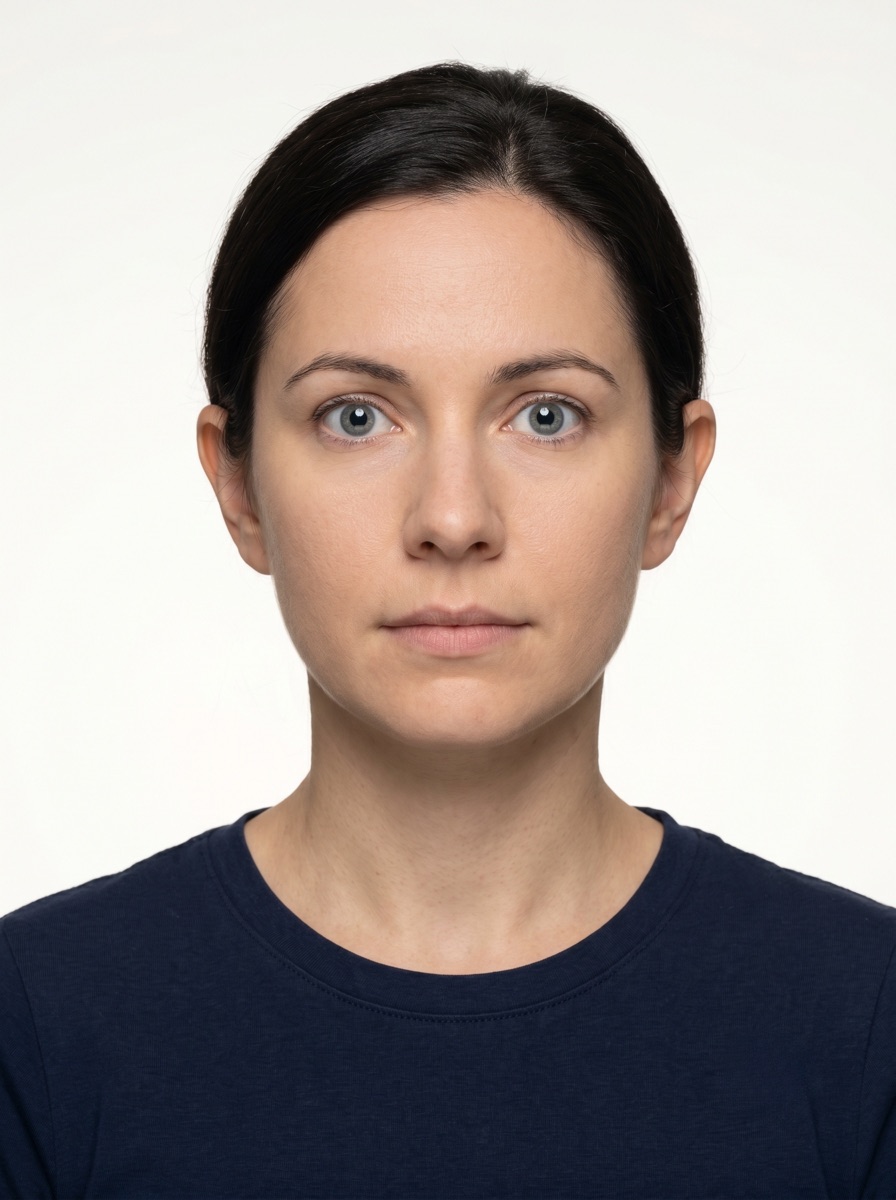
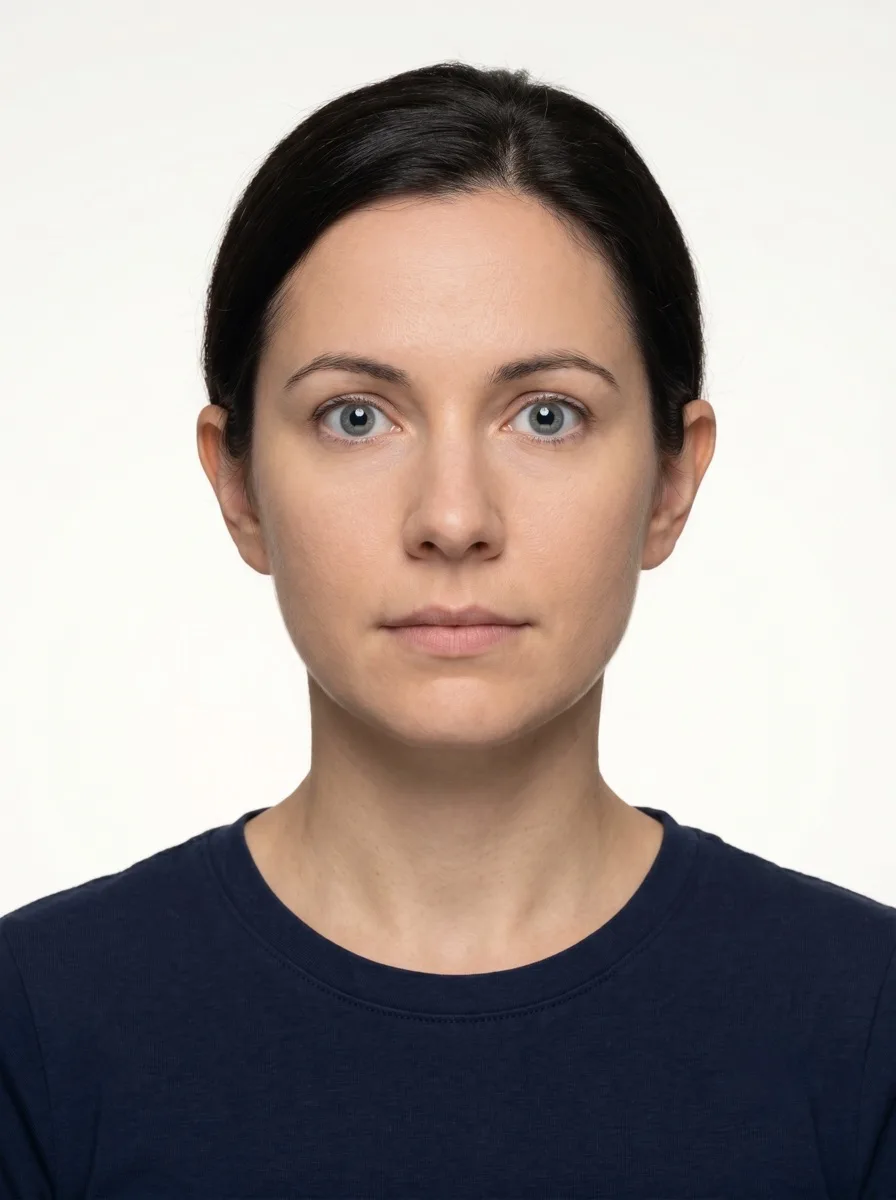
Compliant Schengen area EU blue card example (35 × 45 mm)
Face centred, looking directly into the lens
Plain background — no shadow, pattern or texture
Neutral expression, eyes open, mouth closed
No glasses, no hair across the face
Top 6 Schengen area EU blue card rejection causes
Background shadowShadow on the wall behind the head, or background with a visible pattern or gradient
Smile / open mouthVisible smile with teeth or open mouth instead of a neutral expression
Glasses with glareGlasses with a clearly visible light reflection covering part of the eye
Hair across the faceLoose hair strands covering the eyes, eyebrows or part of the face
Eyes off-cameraEyes looking to the side instead of directly into the camera lens
Head tiltedHead tilted so the eye line is no longer horizontal
Typical rejection reasons and how to fix them
Common reasons a document photo is rejected, checked against the requirements European Union / Schengen authorities publishes: what is wrong and what to change.
How to take your Schengen area EU blue card photo correctly
Background and light
Background: plain light
The tool puts in the required background. Stand half a metre from a plain light wall, face a window and shoot without flash — then there are no shadows on your face or on the wall.
Framing
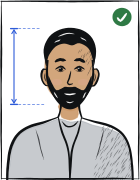
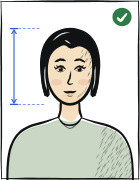
Head: 70–80 % of the photo height
Camera at eye level, about a metre away; head and shoulders in the shot. The tool crops it to 35 × 45 mm.
Glasses
Clear lenses only, no glare
If you wear glasses, check the shot: no glare on the lenses, eyes clearly visible.
Expression and gaze
Neutral expression, mouth closed, eyes open
Look straight into the lens with your head level; keep hair away from your eyes and eyebrows.
The European Commission says only EU Member States can issue EU Blue Cards.
The EU Blue Card page tells applicants to use the official national authority links for country-specific procedures.
The Commission lists a valid travel document among core Blue Card requirements.
Where required, the applicant must also provide a visa, valid residence permit or valid long-stay visa.
The EU Blue Card page does not publish one shared photo-size matrix.
Questions
Frequently asked questions
The recommended size for the Schengen area EU blue card photo is 35 × 45 mm. The head occupies 70–80% of the photo height.
Yes, if it was taken within the last six months and meets the size and background rules of the work permit. If not, take a new one.
Plain light background. A plain, evenly lit wall without shadows or pattern is enough — the tool sets the required background colour.
Most offices accept a photo taken within the last six months. Use one that shows how you look now.
No. For Schengen area work permit photos, wear ordinary clothes: no uniform or camouflage, nothing that hides your neck or shoulders. Religious head coverings are usually allowed if the face is fully visible.
We refund the payment in full. Email us within 14 days of purchase with your order number and the rejection notice from the Schengen area authority.
35 × 45 mm = 3.5 × 4.5 cm = 1.38 × 1.77 inches. At 300 dpi that is 413 × 531 pixels; at 600 dpi, 827 × 1063 pixels.
Religious reasons only; must not cover the facial oval. The face must stay fully visible from chin to forehead and on both sides, with no shadow across it.
Yes. The same 35 × 45 mm format and head size apply to: EU ID card, EU passport, national visa (Type D), residence card, Schengen visa.