United States · Work authorization (EAD)Photo requirements
Size
51 × 51 mm
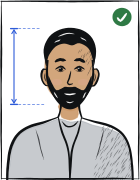
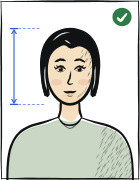
Head
49–69 % of the photo height
Background
White or off-white
Glasses
Glasses prohibited
Expression
Neutral, mouth closed
SourceUSCIS
Verified
Quick answer: A USA work authorization (EAD) photo must be 51 × 51 mm. White or off-white background. Head occupies 49–69% of photo height. Neutral expression, glasses prohibited. Last verified .
USCIS does not accept glasses, apart from rare medical cases confirmed by documents; under the 2016 rule a photo the applicant submits in glasses is rejected. See full rules →
Lighting
Shadows and reflections not permitted.
Head covering
Religious reasons only; must not cover the facial oval.
USA work authorization (EAD) photo: size in mm, cm, inches and pixels
Millimetres
51 × 51 mm
Centimetres
5.1 × 5.1 cm
Inches
2 × 2″
Pixels at 300 dpi
602 × 602 px
Pixels at 600 dpi
1205 × 1205 px
USA-specific things to know
Square 2×2 inch (51×51mm) — same as Green Card / passport
Since Dec 12, 2025: the photo on the card comes from a biometrics appointment — a photo you send in is not used on the card
Form I-765 instructions still require 2 paper photos with name + A-number on back in pencil/felt-tip
Glasses never allowed (no medical exception per I-765 spec)
Ukrainians reach the EAD through the re-parole process — USCIS publishes that page in Ukrainian too
Do not file Form I-765 before the approval notice for Form I-131 arrives
Re-parole is requested no earlier than 180 days before the current parole period expires
How work authorization (EAD) photos are verified
US Employment Authorization Document (EAD) photos are administered by USCIS for Form I-765 applications. The format is 2×2 inches (51×51mm square) with head 25-35mm.
Read more
Background plain white or off-white. Photo must be color, high-resolution, even soft lighting. Critical update: USCIS policy alert PA-2025-29 of 12 December 2025 provides that USCIS will not use or reuse self-submitted photographs.
Form I-765 is not on that alert’s exception list, so USCIS may reuse a photograph collected at a biometrics appointment within the last 36 months, and otherwise schedules a new appointment at an Application Support Center (ASC). The Form I-765 instructions have not been amended and still require 2 photos with name + A-number written on the back in pencil or felt-tip. For Ukrainians the EAD is reached through the re-parole process. USCIS runs a page — published in Ukrainian as well as English — called «Re-Parole Process for Certain Ukrainian Citizens and Their Immediate Family Members».
It states that if re-parole is granted you can apply for an Employment Authorization Document by submitting Form I-765, online or on paper, and that you must not file Form I-765 before you receive an approval notice for your Form I-131. The re-parole request itself is filed no earlier than 180 days before the current period of parole expires.
The photograph rules do not change: the I-765 instructions never mention Ukraine and apply the same way to everyone.
Examples and mistakes
What makes USA work authorization (EAD) photos accepted
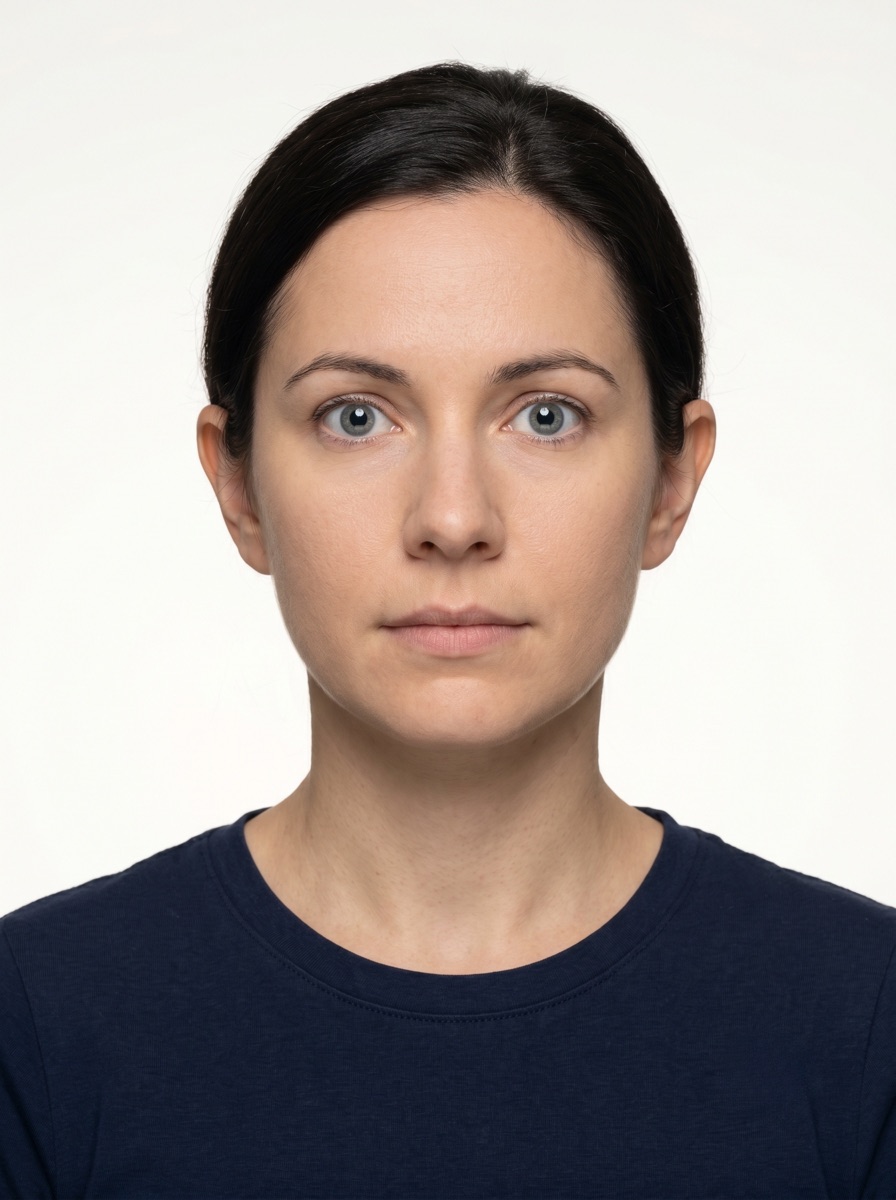
A photo that will be accepted, next to the six most common reasons USA work authorization (EAD) photos get rejected.
Accepted
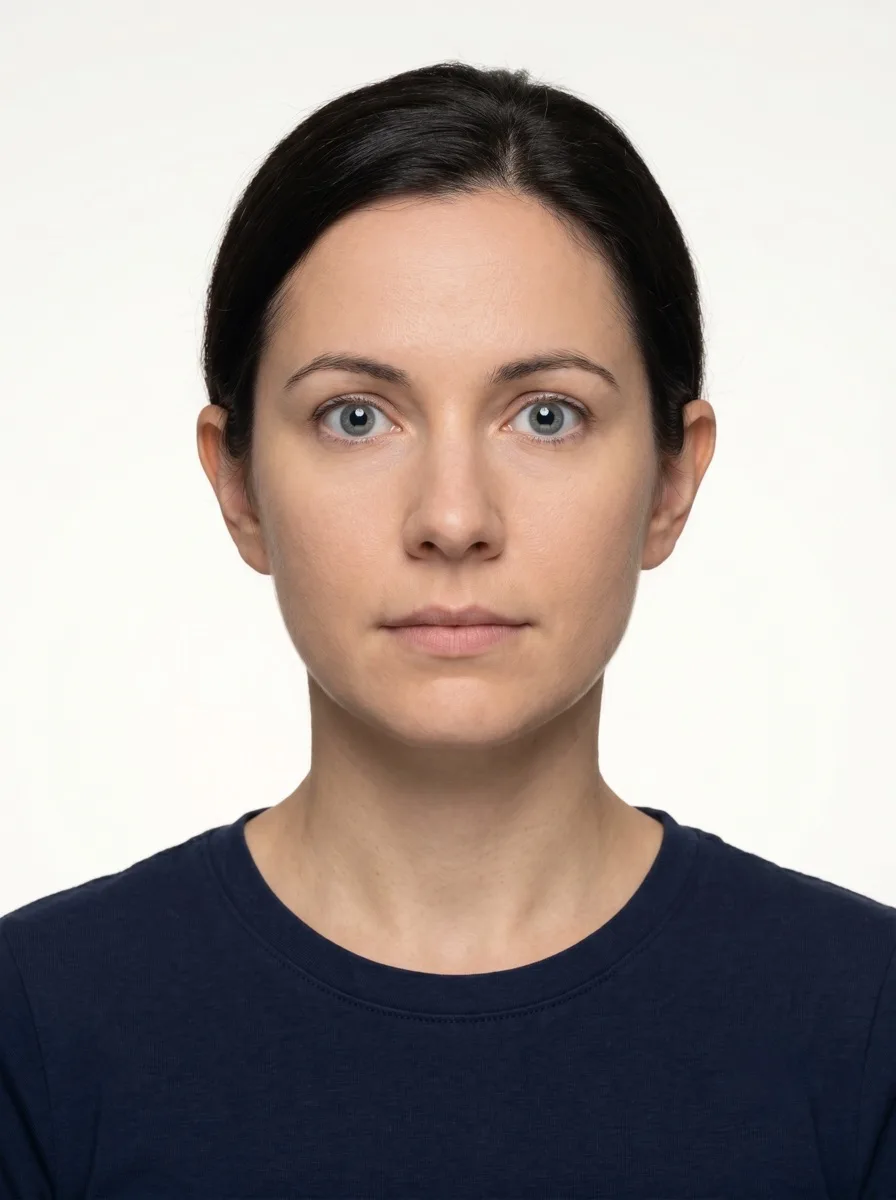
Compliant USA work authorization (EAD) example (51 × 51 mm)
Face centred, looking directly into the lens
Plain background — no shadow, pattern or texture
Neutral expression, eyes open, mouth closed
No glasses, no hair across the face
Top 6 USA work authorization (EAD) rejection causes
Background shadowShadow on the wall behind the head, or background with a visible pattern or gradient
Smile / open mouthVisible smile with teeth or open mouth instead of a neutral expression
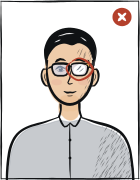
Glasses with glareGlasses with a clearly visible light reflection covering part of the eye
Hair across the faceLoose hair strands covering the eyes, eyebrows or part of the face
Eyes off-cameraEyes looking to the side instead of directly into the camera lens
Head tiltedHead tilted so the eye line is no longer horizontal
Typical rejection reasons and how to fix them
Common reasons a document photo is rejected, checked against the requirements USCIS publishes: what is wrong and what to change.
How to take your USA work authorization (EAD) photo correctly
Background and light
Background: white or off-white
The tool puts in the required background. Stand half a metre from a plain light wall, face a window and shoot without flash — then there are no shadows on your face or on the wall.
Framing
Head: 49–69 % of the photo height
Camera at eye level, about a metre away; head and shoulders in the shot. The tool crops it to 51 × 51 mm.
Glasses
Glasses prohibited
Take them off before the shot.
Expression and gaze
Neutral expression, eyes open
Look straight into the lens with your head level; keep hair away from your eyes and eyebrows.
Print at 100% scale, borderless, and turn off fit-to-page so each photo keeps its exact size.
Where to submit your work authorization (EAD) application
US Employment Authorization Document (EAD) applications are administered by USCIS through Form I-765. Since December 12, 2025 the portrait printed on the document is captured at an ASC biometrics appointment, while the Form I-765 instructions in force (edition 08/21/25) still require two 2×2 inch photographs with the filing.
Form I-765 (online or paper)online + ASC visit
uscis.gov/i-765
Processing
4-12 months (category dependent)
Cost
$520 (online) / $470 (paper) + ASC fee
USCIS captures the portrait at the ASC biometric appointment and does not reuse a self-submitted photograph; the Form I-765 instructions still require two 2×2 inch photographs in the package. Glasses must be removed at the ASC.
USCIS online-filing materials for employment authorization describe a 2 × 2 inch passport-style photograph upload.
The USCIS material identifies JPG, JPEG or PNG as accepted upload file types for that online-photo step.
The U.S. Department of State passport-style photo standard is 2 × 2 inches (51 × 51 mm).
State Department passport-photo rules require a white or off-white background.
USCIS handling can depend on the current form instructions, filing channel or notice, so the applicant should follow the latest USCIS request first.
Form I-765 instructions require two identical colour passport-style photographs, 2 by 2 inches, full face and frontal, on a white to off-white background, printed on thin glossy paper and unmounted.
From 12 December 2025 USCIS will not use or reuse self-submitted photographs: only photos taken by USCIS or another authorised entity are used.
Form I-765 is not among the forms that policy alert PA-2025-29 excludes from photograph reuse, so a photograph collected at a biometrics appointment no more than 36 months earlier may be reused.
USCIS page «Re-Parole Process for Certain Ukrainian Citizens and Their Immediate Family Members»: «If you are granted re-parole, you can apply for an Employment Authorization Document (EAD)… To do so, submit Form I-765… You may file Form I-765 either online or on paper».
Same page: «Do not file Form I-765 before you receive an approval notice for your Form I-131», and re-parole is requested «no earlier than 180 days (6 months) before the expiration of their current period of parole». The page is published in Ukrainian as well as English.
The word «Ukrain» does not appear anywhere in the Form I-765 instruction PDF — the Ukrainian route is documented on the re-parole page, not in the form instructions.
Questions
Frequently asked questions
The USA work authorization (EAD) photo must be 51 × 51 mm. The head must occupy 49–69% of the photo height. For digital upload, use 600 × 600 px.
Yes, if it was taken within the last six months and meets the size and background rules of the work permit. If not, take a new one.
White or off-white background. A plain, evenly lit wall without shadows or pattern is enough — the tool sets the required background colour.
Most offices accept a photo taken within the last six months. Use one that shows how you look now.
No. For USA work permit photos, wear ordinary clothes: no uniform or camouflage, nothing that hides your neck or shoulders. Religious head coverings are usually allowed if the face is fully visible.
We refund the payment in full. Email us within 14 days of purchase with your order number and the rejection notice from the USA authority.
51 × 51 mm = 5.1 × 5.1 cm = 2 × 2 inches. At 300 dpi that is 602 × 602 pixels; at 600 dpi, 1205 × 1205 pixels.
Religious reasons only; must not cover the facial oval. The face must stay fully visible from chin to forehead and on both sides, with no shadow across it.
Yes. The same 51 × 51 mm format and head size apply to: green card, naturalization certificate, passport.