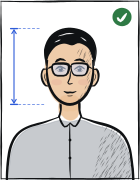
Quick answer: A Austria ID card photo must be 35 × 45 mm. Plain background without shadows per official Austrian Passbildkriterien. Head occupies 71–80% of photo height (32–36 mm chin to crown). Neutral expression, clear lenses only, no glare. Last verified .
Austria ID card photo: size in mm, cm, inches and pixels
Millimetres
35 × 45 mm
Centimetres
3.5 × 4.5 cm
Inches
1.38 × 1.77″
Pixels at 300 dpi
413 × 531 px
Pixels at 600 dpi
827 × 1063 px
Austria-specific things to know
Same biometric spec as Austrian passport (35×45, head 31.5-36)
Issued at Magistrat/Gemeindeamt (municipal office)
Valid as EU/EEA + Schengen travel document
How ID card photos are verified
Austria national ID card (Personalausweis) photos are administered by BMEIA and BMI with applications submitted at municipal offices (Magistrat / Gemeindeamt). The format is 35×45mm portrait, ICAO 9303 compliant, head 31.5-36mm chin-to-crown, neutral expression, mouth closed.
Read more
Same biometric standard as Austrian passport. No uniforms, no hats (except religious). The Austrian Personalausweis is a credit-card-sized biometric chip card valid as travel document within EU/EEA and Schengen.
Examples and mistakes
What makes Austria ID card photos accepted
A photo that will be accepted, next to the six most common reasons Austria ID card photos get rejected.
Accepted
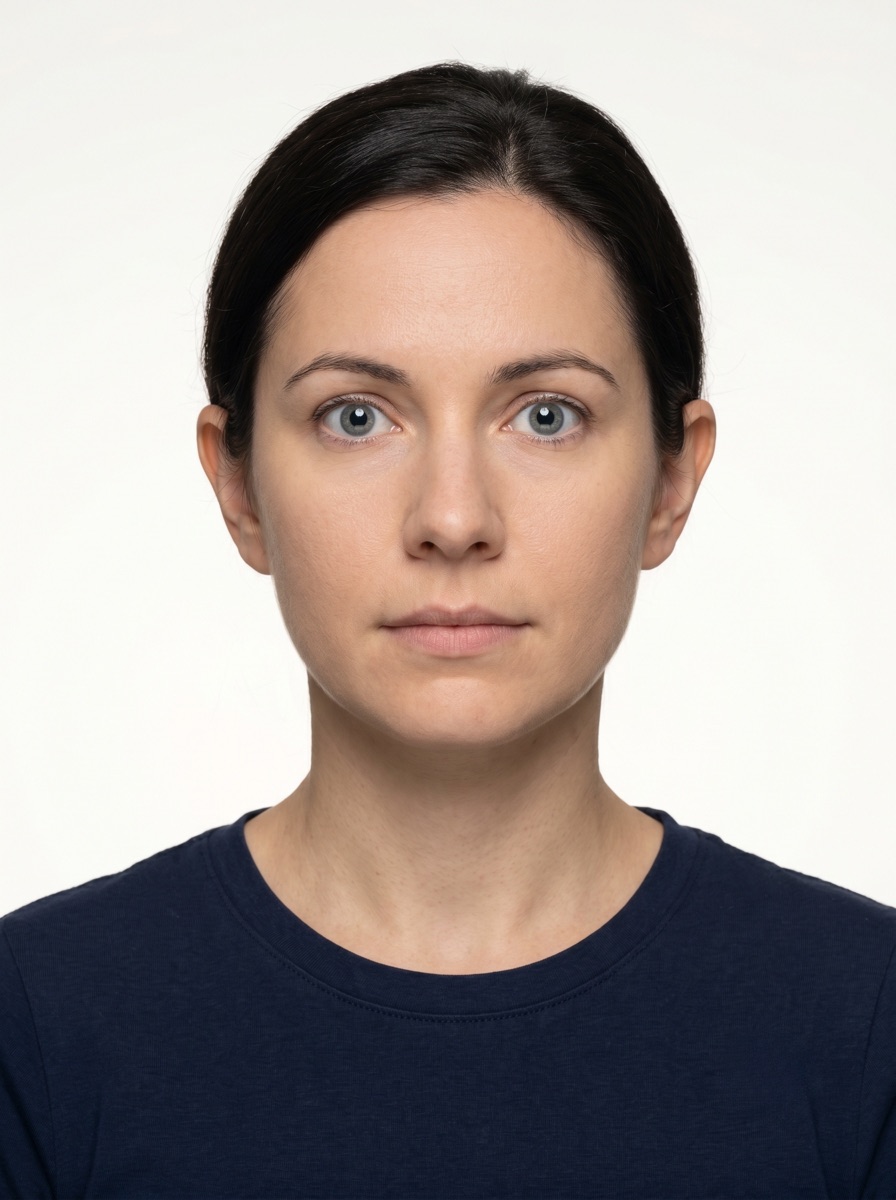
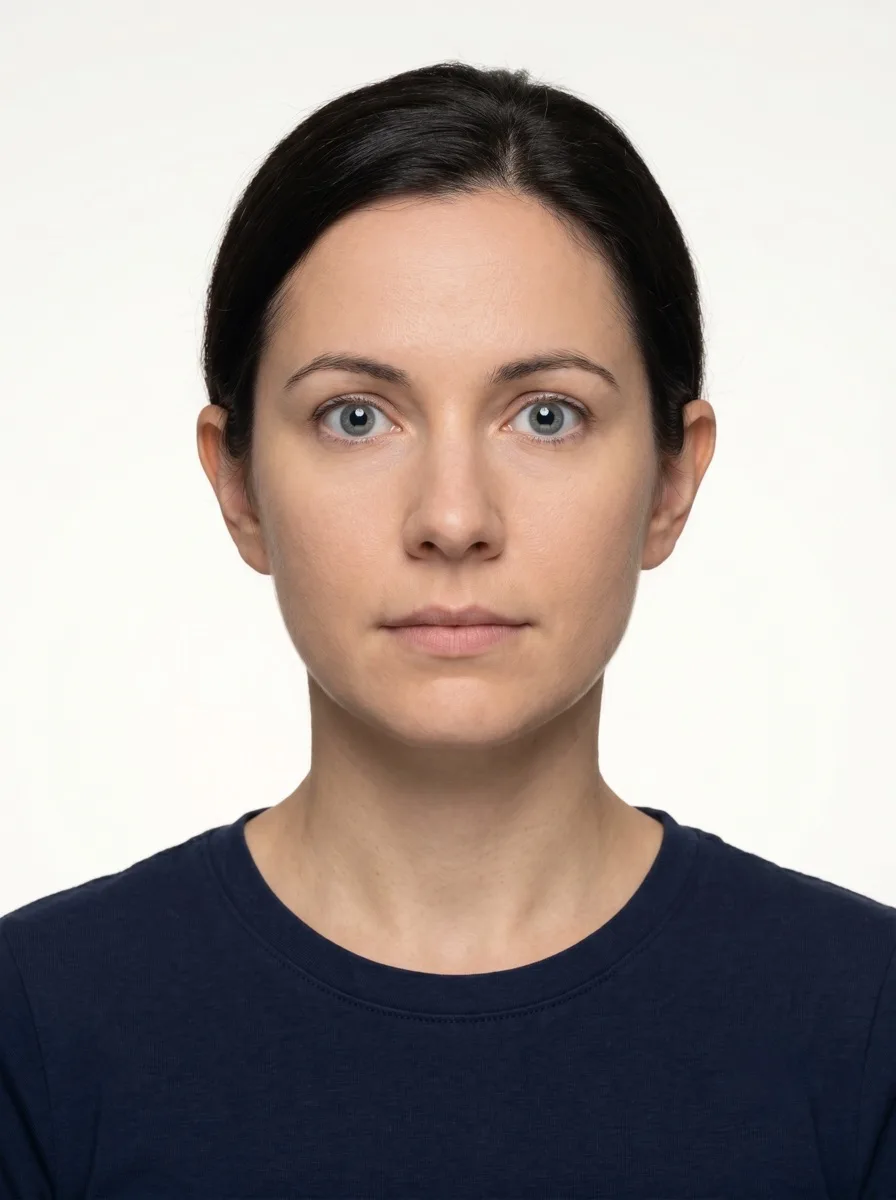
Compliant Austria ID card example (35 × 45 mm)
Face centred, looking directly into the lens
Plain background — no shadow, pattern or texture
Neutral expression, eyes open, mouth closed
No glasses, no hair across the face
Top 6 Austria ID card rejection causes
Background shadowShadow on the wall behind the head, or background with a visible pattern or gradient
Smile / open mouthVisible smile with teeth or open mouth instead of a neutral expression
Glasses with glareGlasses with a clearly visible light reflection covering part of the eye
Hair across the faceLoose hair strands covering the eyes, eyebrows or part of the face
Eyes off-cameraEyes looking to the side instead of directly into the camera lens
Head tiltedHead tilted so the eye line is no longer horizontal
Typical rejection reasons and how to fix them
Common reasons a document photo is rejected, checked against the requirements oesterreich.gv.at / BMI publishes: what is wrong and what to change.
The tool puts in the required background. Stand half a metre from a plain light wall, face a window and shoot without flash — then there are no shadows on your face or on the wall.
Framing
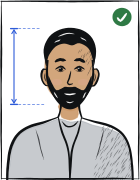
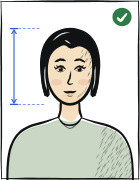
Head: 71–80 % of the photo height (32–36 mm)
Camera at eye level, about a metre away; head and shoulders in the shot. The tool crops it to 35 × 45 mm.
Glasses
Clear lenses only, no glare
If you wear glasses, check the shot: no glare on the lenses, eyes clearly visible.
Expression and gaze
Neutral expression, mouth closed, eyes open
Look straight into the lens with your head level; keep hair away from your eyes and eyebrows.
Austrian identity-card applications require one colour passport photo in portrait format 35 × 45 mm.
The identity-card photo must not be older than 6 months.
BMI criteria say the head should occupy about two thirds of the image and must not be higher than 36 mm.
The eye distance must be at least 8 mm.
The photo must show a front-facing neutral expression with closed mouth, evenly lit face and plain light background.
Questions
Frequently asked questions
The Austria ID card photo must be 35 × 45 mm. The head must occupy 71–80% of the photo height. The photo should look like you do day to day.
Plain background without shadows per official Austrian Passbildkriterien. A plain, evenly lit wall without shadows or pattern is enough — the tool sets the required background colour.
Yes. Stand against a plain light wall facing a window, and take the photo with a timer or ask someone to help. The tool crops it to size, fixes the background and checks the framing.
Most offices accept a photo taken within the last six months. If your hair, beard or face has changed noticeably since then, take a new one.
Eyes must be fully visible; no tinted lenses or strong reflections. If you keep them on, tilt them slightly downwards by lifting the arms a little above your ears: this usually moves reflections of a window or lamp off the lenses.
We refund the payment in full. Email us within 14 days of purchase with your order number and the rejection notice from the Austria authority.
35 × 45 mm = 3.5 × 4.5 cm = 1.38 × 1.77 inches. At 300 dpi that is 413 × 531 pixels; at 600 dpi, 827 × 1063 pixels.
Religious reasons only; must not cover the facial oval. The face must stay fully visible from chin to forehead and on both sides, with no shadow across it.
Yes. The same 35 × 45 mm format and head size apply to: national visa (Type D), passport, Schengen visa.