SourceService-Public.fr (DILA) and the French Ministry of the Interior
Verified
Quick answer: A France ID card photo must be 35 × 45 mm. The background must be plain and light — light grey or light blue; a white background is not allowed. Head occupies 71–80% of photo height (32–36 mm chin to crown). Neutral expression, clear lenses only, no glare. Last verified .
France ID card photo: size in mm, cm, inches and pixels
Millimetres
35 × 45 mm
Centimetres
3.5 × 4.5 cm
Inches
1.38 × 1.77″
Pixels at 300 dpi
413 × 531 px
Pixels at 600 dpi
827 × 1063 px
France-specific things to know
White is forbidden as a background — the opposite of the usual rule: choose light blue or light grey, and have the photo taken by an approved professional or booth.
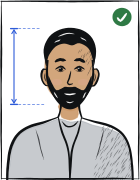
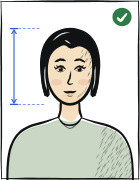
Only one photo is supplied for an identity card or passport application; the face is 3.2–3.6 cm in a 4.5 cm photo (70–80 %).
Earrings and piercings are explicitly allowed if the features stay clear, and the ears must be uncovered; glasses are optional but not with thick frames, tint or reflection.
How ID card photos are verified
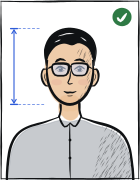
For a French national identity card, Service-Public.fr (Ministry of the Interior) says one photo is enough, taken within the last 6 months, a good likeness, and taken by an approved professional or in a booth using a system approved by the Ministry of the Interior. The standard is 3.5 cm wide by 4.5 cm high, with the face 3.2–3.6 cm from the bottom of the chin to the top of the skull, hair excluded — 70 to 80 % of the photo.
Read more
The background must be plain and light-coloured — light blue or light grey, for example — and white is forbidden. The head is bare and straight, the face towards the lens, the expression neutral and the mouth closed, the eyes perfectly visible and open, hair off the face (a fringe is accepted if it leaves the eyes uncovered) and ears uncovered.
Earrings and piercings are allowed if the features stay clear; glasses are optional, but if worn the frame must not be thick or hide the eyes and the lenses must be neither tinted nor coloured and without reflection. The photo must be sharp, without folds or marks, with no over- or underexposure and no cast shadow; colour is strongly recommended. A photo that does not comply is rejected and the identity document is not issued.
Examples and mistakes
What makes France ID card photos accepted
A photo that will be accepted, next to the six most common reasons France ID card photos get rejected.
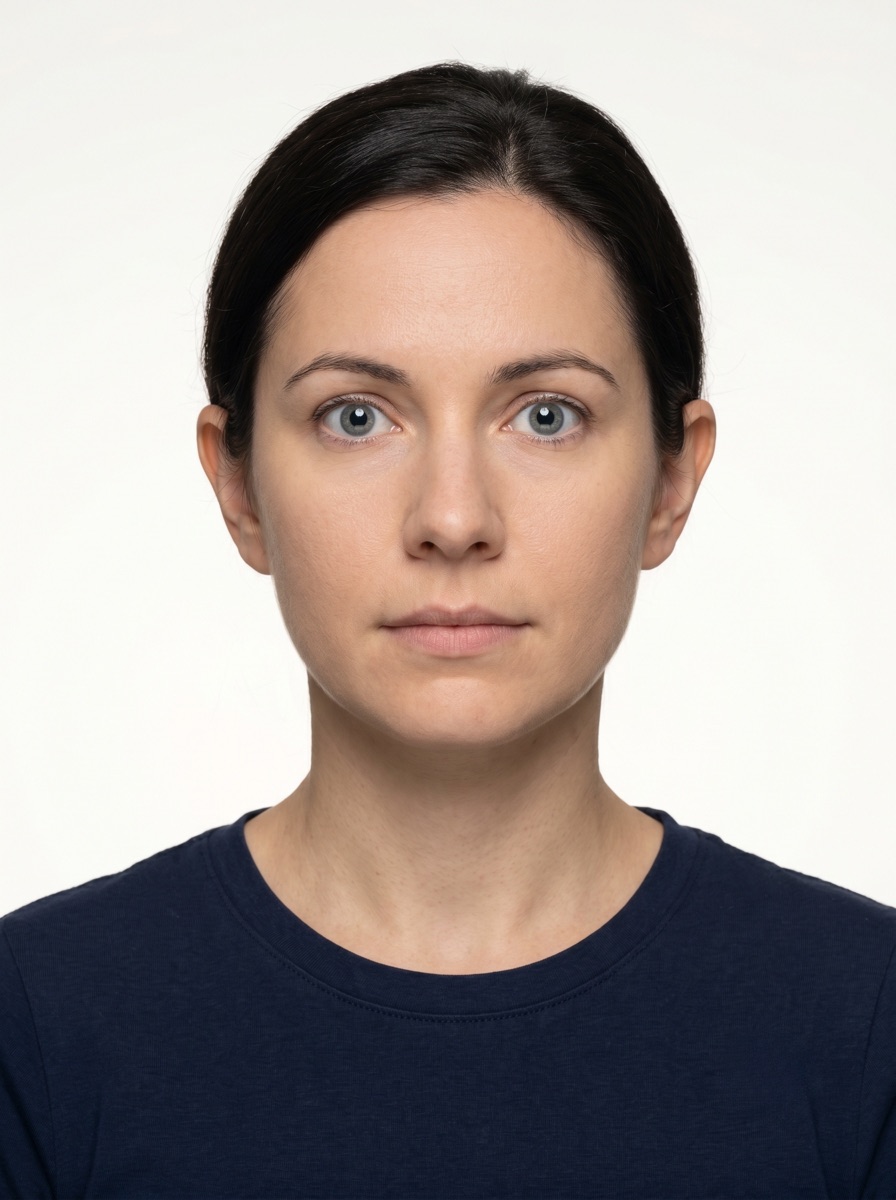
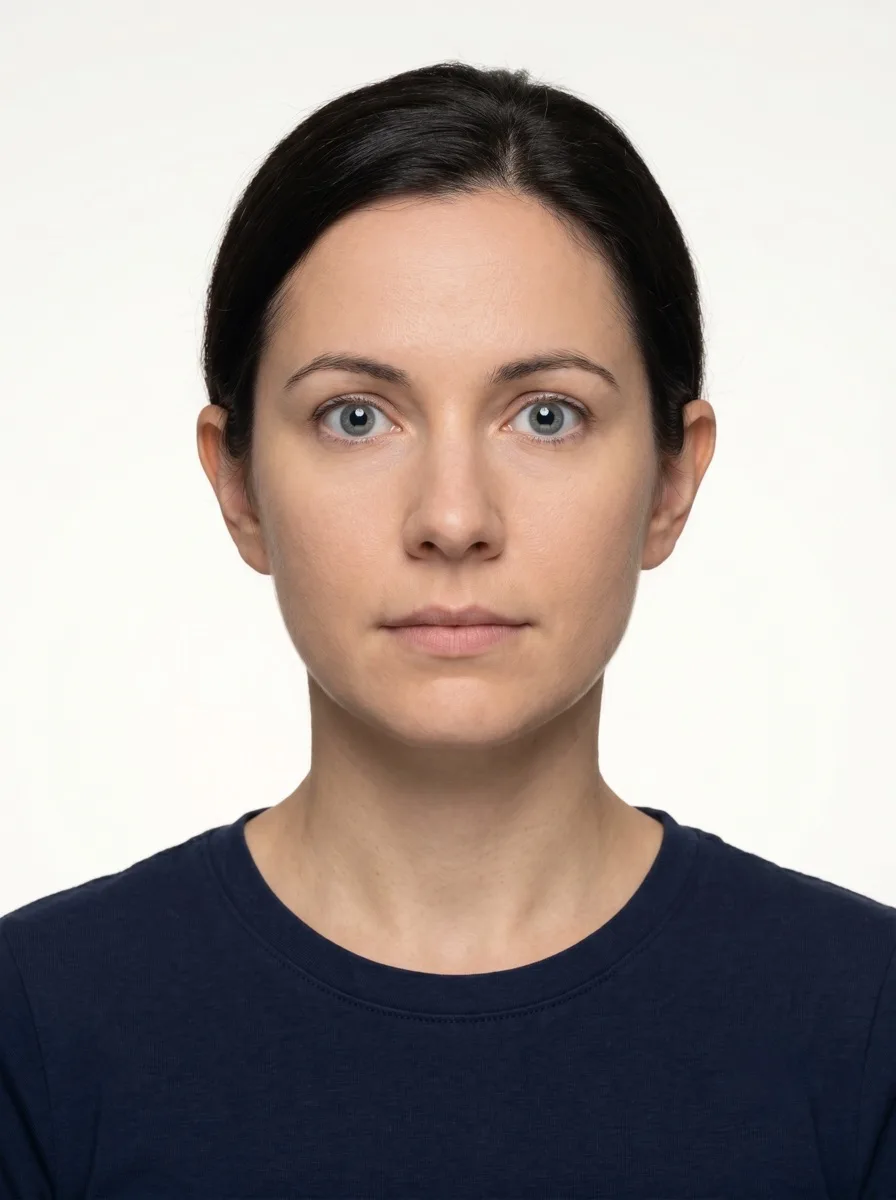
Accepted
Compliant France ID card example (35 × 45 mm)
Face centred, looking directly into the lens
Plain background — no shadow, pattern or texture
Neutral expression, eyes open, mouth closed
No glasses, no hair across the face
Top 6 France ID card rejection causes
Background shadowShadow on the wall behind the head, or background with a visible pattern or gradient
Smile / open mouthVisible smile with teeth or open mouth instead of a neutral expression
Glasses with glareGlasses with a clearly visible light reflection covering part of the eye
Hair across the faceLoose hair strands covering the eyes, eyebrows or part of the face
Eyes off-cameraEyes looking to the side instead of directly into the camera lens
Head tiltedHead tilted so the eye line is no longer horizontal
Typical rejection reasons and how to fix them
Typical reasons a photo is rejected under the rules Service-Public.fr (DILA) and the French Ministry of the Interior publishes: what is wrong and what to change.
Reason
Fix
A white background
Use a plain light blue or light grey background.
A photo older than 6 months, or not a good likeness
Have a new photo taken within 6 months that looks like you.
A face outside 3.2–3.6 cm (70–80 %), or a photo that is not 3.5 × 4.5 cm
Keep the photo 3.5 cm × 4.5 cm with the face 3.2–3.6 cm.
A covered head, hair over the face or ears, or an open mouth
Bare head, ears uncovered, neutral expression and mouth closed.
Thick frames, tinted or coloured lenses, reflections, or cast shadows
Take the glasses off or use thin frames with clear lenses and no reflection.
The tool puts in the required background. Stand half a metre from a plain light wall, face a window and shoot without flash — then there are no shadows on your face or on the wall.
Framing
Head: 71–80 % of the photo height (32–36 mm)
Camera at eye level, about a metre away; head and shoulders in the shot. The tool crops it to 35 × 45 mm.
Glasses
Clear lenses only, no glare
If you wear glasses, check the shot: no glare on the lenses, eyes clearly visible.
Expression and gaze
Neutral expression, mouth closed, eyes open
Look straight into the lens with your head level; keep hair away from your eyes and eyebrows.
Print at 100% scale, borderless, and turn off fit-to-page so each photo keeps its exact size.
Where to submit your ID card application
A French identity card is applied for through the Ministry of the Interior's usual procedure; for the photo, one photograph taken by an approved professional or in an approved booth is enough. This page covers the photograph only.
Approved photographer or approved boothin person
Use the ANTS tool to find approved photographers and booths near you
Processing
See Service-Public.fr
Cost
Set by the photographer or booth
One photo, 3.5 × 4.5 cm, face 3.2–3.6 cm, plain light background (white forbidden).
Service-Public.fr, identity photo standards: the photo must have been taken less than 6 months ago and be a good likeness; for an identity card or passport application only one photo is to be supplied; it must be taken by an approved professional or in a booth using a system approved by the Ministry of the Interior; the ANTS provides a tool to find approved photographers and booths near you.
Same page, table of standards — quality: sharp, without folds or marks. Format: width 3.5 cm, height 4.5 cm; face size between 3.2 and 3.6 cm (70 to 80 % of the photo), from the bottom of the chin to the top of the skull (excluding hair). Brightness, contrast and colour: no over- or underexposure, properly contrasted, no cast shadow on the face or the background; a colour photo is strongly recommended.
Same table — background and head: the background must be plain and light-coloured (light blue or light grey, for example), and a white background is forbidden; the head bare (no hat, scarf or headband), straight, the face towards the lens; look at the lens with a neutral expression and the mouth closed; the face clear, earrings and piercings allowed if the features can be seen clearly; the eyes perfectly visible and open.
Same table — hair and glasses: hair must not cover the face, a fringe may be accepted if it does not cover the eyes, and the ears must be uncovered; if you have glasses you need not wear them, but if you do, the frame must not be thick or hide the eyes and the lenses must be neither tinted nor coloured and without reflection. «If the photo does not meet the characteristics, it will be rejected and the identity document will not be issued.» Legal references: the order of 10 April 2007 on photos for identity documents and decree no. 55-1397 of 22 October 1955, article 4-3 (identity card).
Questions
Frequently asked questions
One photo taken within the last 6 months by an approved professional or booth, 3.5 × 4.5 cm with the face 3.2–3.6 cm (70–80 %), on a plain light-coloured background (white forbidden), bare head, neutral expression, mouth closed, eyes open, ears uncovered, sharp and without shadows.
No: Service-Public.fr says the background must be plain and light-coloured, light blue or light grey for example, and that a white background is forbidden.
You need not; if you do, the frame must not be thick or hide the eyes, and the lenses must be neither tinted nor coloured and without reflection.
One only, for an identity card or a passport.
The France ID card photo must be 35 × 45 mm. The head must occupy 71–80% of the photo height. The photo should look like you do day to day.
Yes. Stand against a plain light wall facing a window, and take the photo with a timer or ask someone to help. The tool crops it to size, fixes the background and checks the framing.
Most offices accept a photo taken within the last six months. If your hair, beard or face has changed noticeably since then, take a new one.
We refund the payment in full. Email us within 14 days of purchase with your order number and the rejection notice from the France authority.
35 × 45 mm = 3.5 × 4.5 cm = 1.38 × 1.77 inches. At 300 dpi that is 413 × 531 pixels; at 600 dpi, 827 × 1063 pixels.
Yes. The same 35 × 45 mm format and head size apply to: passport.