SourceImmigration, Refugees and Citizenship Canada (IRCC) — Passport Program
Verified
Quick answer: The recommended Canada refugee travel document photo size is 50 × 70 mm. Plain white background. Head occupies 44–51% of photo height (31–36 mm chin to crown). Neutral expression, clear lenses only, no glare. Last verified .
Canada refugee travel document photo: size in mm, cm, inches and pixels
Millimetres
50 × 70 mm
Centimetres
5 × 7 cm
Inches
1.97 × 2.75″
Pixels at 300 dpi
591 × 827 px
Pixels at 600 dpi
1181 × 1654 px
Canada-specific things to know
The refugee travel document has its own photograph sheet and says outright that it differs from the permanent resident card: two identical prints of 50 × 70 mm taken in person by a commercial photographer, none printed at home.
The photos may be in colour or black and white, and the back of one print carries the studio's name, address and date plus the guarantor's «true likeness» statement and signature.
Natural-looking wigs are accepted, prescription glasses only without glare, and tinted glasses or sunglasses make the photos unacceptable.
How refugee travel document photos are verified
The Canadian refugee travel document (and the certificate of identity) is applied for on IRCC form PPTC 190, and its section N says that «photo specifications for the travel document are different from those for a permanent resident card». Two identical, unaltered photo prints go with each application, «taken in person by a commercial photographer» and «professionally printed on plain, high quality photographic paper — photos printed at home are not acceptable». The frame is 50 mm wide and 70 mm high, with a face height between 31 mm and 36 mm, «a neutral facial expression (no smiling, mouth closed), looking straight at the camera, eyes open and clearly visible», uniform lighting — «no shadows, glare or flash reflections», «a full front view of the face and top of the shoulders squared to the camera, head not tilted or turned», a plain white or light-coloured background with enough contrast, and «taken within the last six months from the date the application is submitted». The photos may be in colour or black and white. On the back of one photo the studio puts its name, full address (no P.O. Box) and the date, and the guarantor writes «I certify this to be a true likeness of» the applicant and signs. Prescription glasses are allowed without glare; tinted glasses, sunglasses and red eye make the photos unacceptable; head coverings only for religious or medical reasons with the full face visible and no shadows.
Examples and mistakes
What makes Canada refugee travel document photos accepted
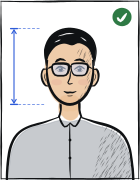
One compliant example next to the six most common rejection causes for Canada refugee travel document applications. These are the differences that most often determine whether a document photo is accepted.
Accepted
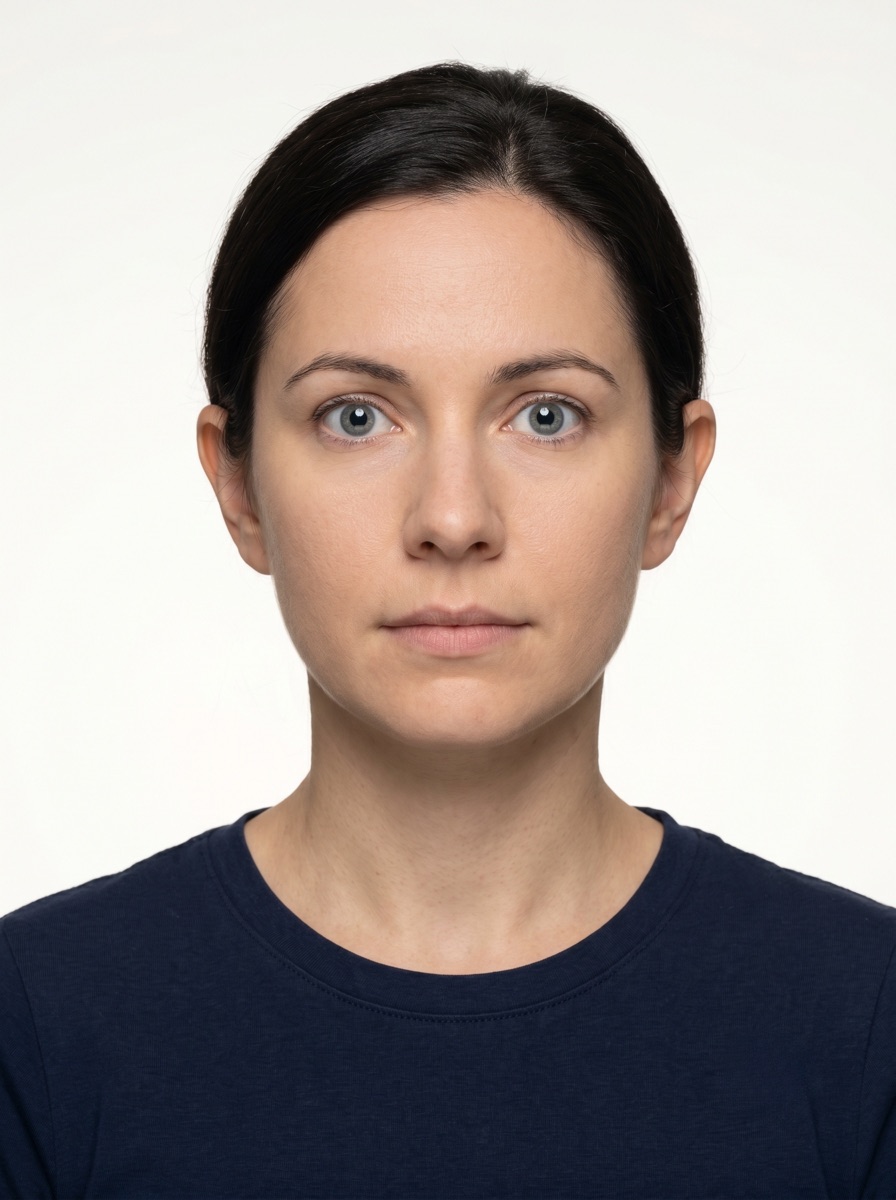
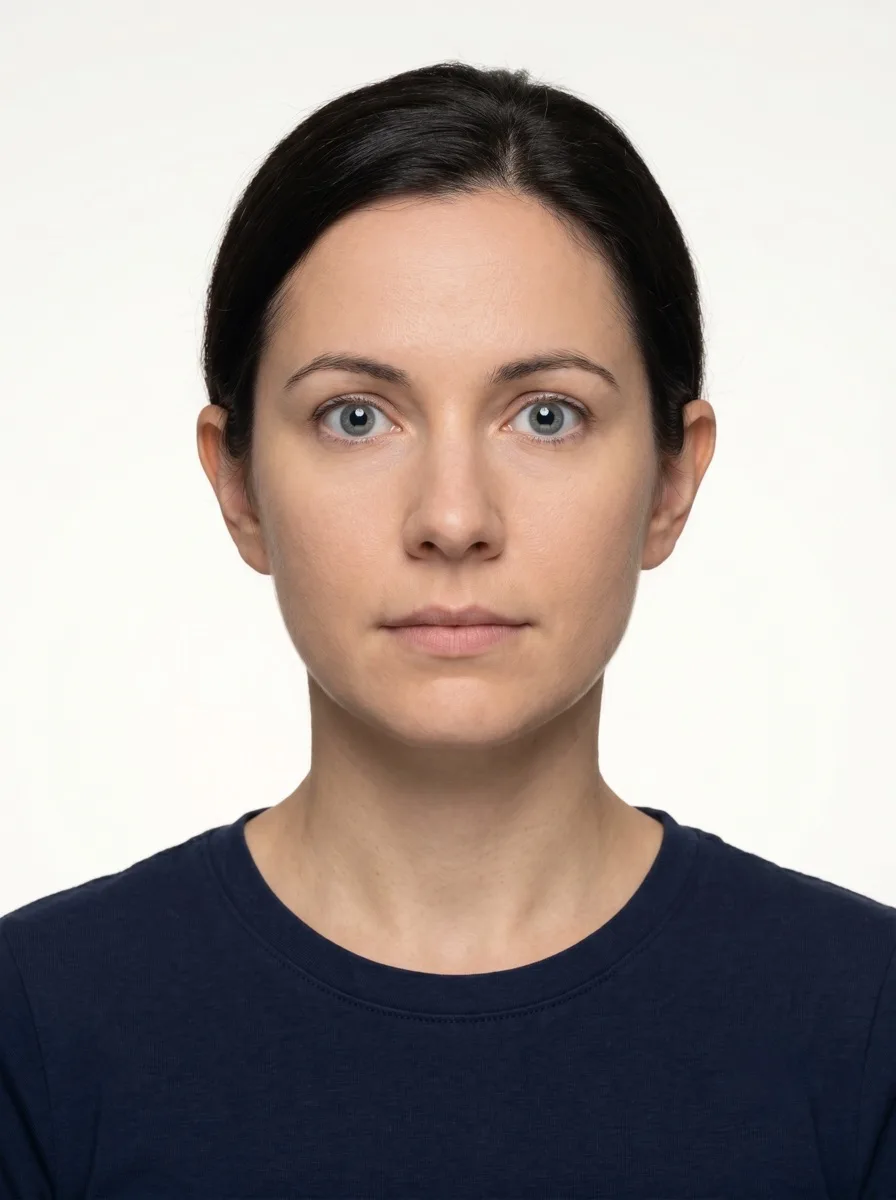
Compliant Canada refugee travel document example (50 × 70 mm)
Face centred, looking directly into the lens
Plain background — no shadow, pattern or texture
Neutral expression, eyes open, mouth closed
No glasses, no hair across the face
Top 6 Canada refugee travel document rejection causes
Background shadowShadow on the wall behind the head, or background with a visible pattern or gradient
Smile / open mouthVisible smile with teeth or open mouth instead of a neutral expression
Glasses with glareGlasses with a clearly visible light reflection covering part of the eye
Hair across the faceLoose hair strands covering the eyes, eyebrows or part of the face
Eyes off-cameraEyes looking to the side instead of directly into the camera lens
Head tiltedHead tilted so the eye line is no longer horizontal
Typical rejection reasons and how to fix them
Typical reasons a photo is rejected under the rules Immigration, Refugees and Citizenship Canada (IRCC) — Passport Program publishes: what is wrong and what to change.
Reason
Fix
Photos printed at home, taken by oneself, altered with photo software or copied from an existing photo
Two identical, unaltered prints made by a commercial photographer on photographic paper.
Photos older than six months before the application, or a face height outside 31–36 mm of the 70 mm frame
Photos from the last six months with a 31–36 mm face in a 50 × 70 mm frame.
A smile or open mouth, a head tilted or turned, shoulders not squared to the camera, eyes not clearly visible
A neutral expression, mouth closed, a straight head, shoulders square, eyes open and clear.
Shadows, glare or flash reflections, red eye, tinted glasses or sunglasses, a background that is not plain white or light
Uniform lighting, a plain white or light background with contrast, no tinted lenses.
No studio details, «true likeness» statement or guarantor signature on the back of one photo
Studio name, full address and date, and the guarantor's statement and signature on the back of one print.
How to take your Canada refugee travel document photo correctly
Background and light
Background: plain white
The tool puts in the required background. Stand half a metre from a plain light wall, face a window and shoot without flash — then there are no shadows on your face or on the wall.
Framing
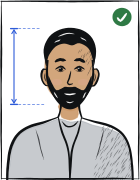
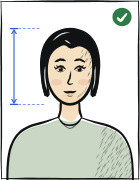
Head: 44–51 % of the photo height (31–36 mm)
Camera at eye level, about a metre away; head and shoulders in the shot. The tool crops it to 50 × 70 mm.
Glasses
Clear lenses only, no glare
If you wear glasses, check the shot: no glare on the lenses, eyes clearly visible.
Expression and gaze
Neutral expression, mouth closed, eyes open
Look straight into the lens with your head level; keep hair away from your eyes and eyebrows.
Print at 100% scale, borderless, and turn off fit-to-page so each photo keeps its exact size.
Where to submit your refugee travel document application
A Canadian refugee travel document or certificate of identity is applied for with form PPTC 190 and a guarantor who has known the applicant for at least six months; two photo prints from a commercial photographer go in the envelope.
IRCC Passport Program — travel document applicationby mail or by courier
The mail and courier addresses of the PPT-COI Humanitarian and Identity Operations Branch in section D of the form instructions
Processing
See the IRCC Passport Program page
Cost
The form of 11-2025 lists CAN$120 for a refugee travel document and CAN$260 for a certificate of identity (CAN$25 consular fee included)
Two identical 50 × 70 mm prints from a commercial photographer; the guarantor signs the back of one.
IRCC form PPTC 190 (11-2025), section N: the photograph specifications for the travel document are different from those for a permanent resident card; two identical and unaltered photo prints must be submitted with each Canadian travel document application; third-party photo software and digital photo-altering applications are not acceptable.
Same section, the photos must be taken in person by a commercial photographer and professionally printed on plain, high-quality photographic paper (photos printed at home are not acceptable); clear, sharp and in focus; in colour or black and white; originals that have not been altered in any way and not taken from an existing photo; taken within the last six months from the date the application is submitted and reflecting the current appearance.
Same section, the picture: a neutral facial expression (no smiling, mouth closed), looking straight at the camera, eyes open and clearly visible; uniform lighting with no shadows, glare or flash reflections; a full front view of the face and the top of the shoulders squared to the camera, centred, head not tilted or turned; natural skin tone against a plain white or light-coloured background with enough contrast between the background, the facial features and the clothing; if these requirements cannot be met for medical reasons, a written explanation is provided.
Same section, the diagram (not actual size): frame height 70 mm (2¾ in.), frame width 50 mm (2 in.), maximum face height 36 mm (1 7/16 in.), minimum face height 31 mm (1¼ in.).
Same section, the back of one photo: the name and complete address of the photo studio (not a P.O. Box) and the date the photo was taken, by stamp or handwriting (stick-on labels are not acceptable); the statement «I certify this to be a true likeness of (name of applicant, written by guarantor)»; and the guarantor's signature. The declaration of the guarantor on the form says the guarantor has signed the back of one of the photos to certify the image is a true likeness of the applicant.
Same section, additional information: prescription glasses may be worn as long as there is no glare and the eyes are clearly visible; the red-eye effect, tinted glasses and sunglasses make the photos unacceptable; hats and head coverings must not be worn except for religious beliefs or medical reasons, and the head covering and hair must not cast shadows on the face and the full face must be clearly visible; natural-looking wigs are acceptable.
Questions
Frequently asked questions
The frame is 50 mm wide and 70 mm high with a face height of 31–36 mm; two identical, unaltered prints go with the application.
No. The form says the photos must be taken in person by a commercial photographer and professionally printed on photographic paper; photos printed at home are not acceptable.
On one photo: the studio's name and full address (no P.O. Box) and the date, the statement «I certify this to be a true likeness of» the applicant, written by the guarantor, and the guarantor's signature.
Yes. The form says the photos are in colour or black and white, with a plain white or light-coloured background.
All requirements are in the table above. Format: 50 × 70 mm. Head height: 44–51%. Plain white background.
Yes. Use a flat white wall, natural daylight from a window in front of you, and the rear camera of a phone with a 3-second timer. The tool handles the crop, background normalisation and compliance check.
Eyes must be fully visible; no tinted lenses or strong reflections. Removing glasses for the photo eliminates the risk of glare causing rejection, especially in automated pre-screening systems.
Most document authorities require the photo to be taken within the last six months. Use a fresh photo even if the rules technically allow older ones — recency reduces the risk of appearance-mismatch rejection.
Anfas.Pro provides a 14-day full refund if the authority rejects the photo and you supply the rejection notice.
50 × 70 mm = 5 × 7 cm = 1.97 × 2.75 inches. At 300 dpi that is 591 × 827 pixels; at 600 dpi, 1181 × 1654 pixels.
Religious reasons only; must not cover the facial oval. The face must stay fully visible from chin to forehead and on both sides, with no shadow across it.
Yes. The same 50 × 70 mm format and head size apply to: PR card, PR travel document (PRTD).