SourceMinistry of Foreign Affairs and International Cooperation of Libya — Embassy in Pretoria and Consulate General in Manchester
Verified
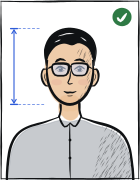
Quick answer: The recommended Libya passport photo size is 40 × 60 mm. Plain white background. Head occupies 70–80% of photo height. Neutral expression, clear lenses only, no glare. Last verified .
Libya passport photo: size in mm, cm, inches and pixels
Millimetres
40 × 60 mm
Centimetres
4 × 6 cm
Inches
1.57 × 2.36″
Pixels at 300 dpi
472 × 709 px
Pixels at 600 dpi
945 × 1417 px
Libya-specific things to know
The Embassy in Pretoria photographs the applicant itself — «the background of the photograph will be white» — and asks the applicant not to wear a white shirt.
Libya asks for two photographs of «personal» (ID) type and publishes no size; the return travel document explicitly asks for a white background.
How passport photos are verified
For a Libyan passport applied for at a Libyan mission abroad the Embassy in Pretoria lists «2 personal photographs» among the documents to bring, and «hopes that a white shirt will not be worn on the day of the photography, since the background of the photograph will be white»; for the return travel document it asks for «two personal photographs on a white background, for passports». The Consulate General in Manchester likewise asks for «two personal photographs». The other documents are a recent electronic birth certificate and family status certificate (and, in Pretoria, the father's electronic birth certificate with the national number), the nationality certificate if there is one, the old passport if it is expired or damaged, the completed passport application form, proof of payment of the fee and the form for registering the Libyan community; a lost passport needs a police report translated into Arabic and certified. The pages give no size, head size or glasses rule.
Examples and mistakes
What makes Libya passport photos accepted
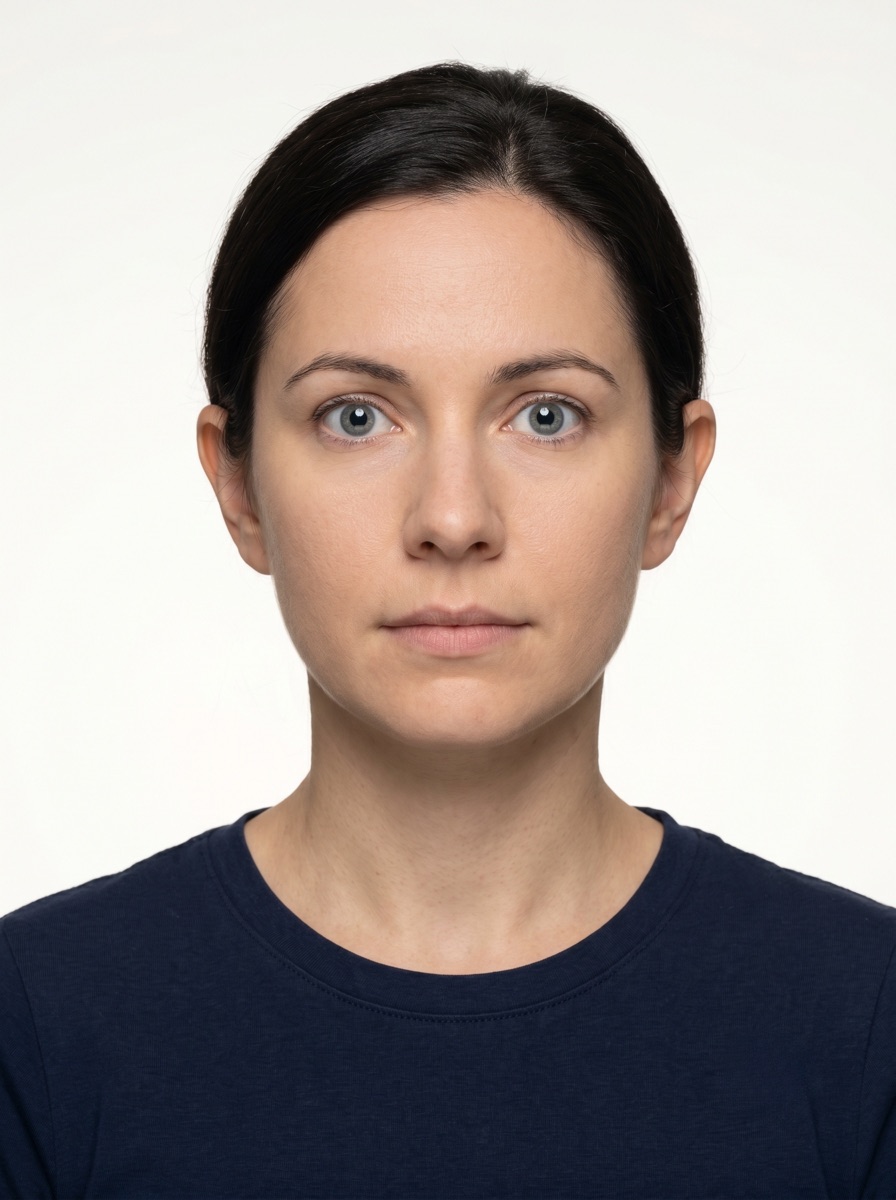
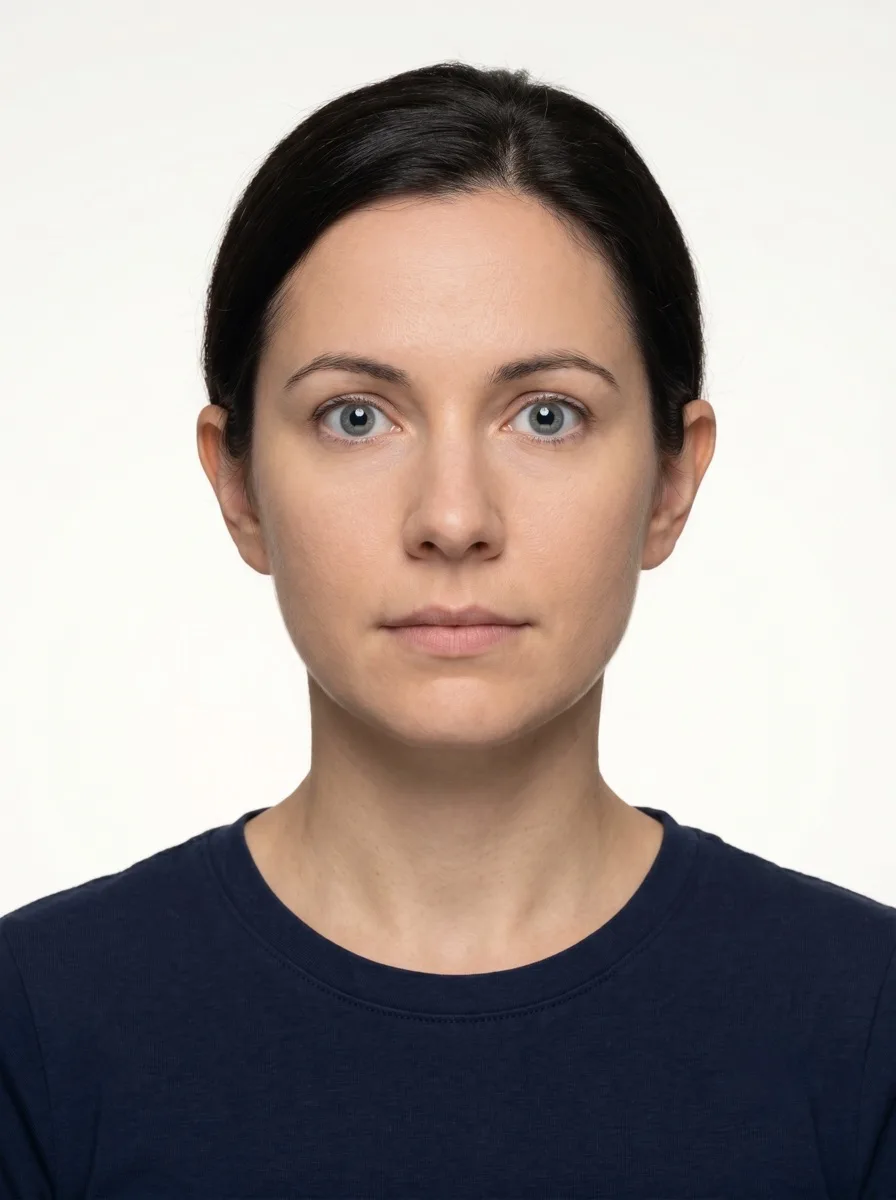
One compliant example next to the six most common rejection causes for Libya passport applications. These are the differences that most often determine whether a document photo is accepted.
Accepted
Compliant Libya passport example (40 × 60 mm)
Face centred, looking directly into the lens
Plain background — no shadow, pattern or texture
Neutral expression, eyes open, mouth closed
No glasses, no hair across the face
Top 6 Libya passport rejection causes
Background shadowShadow on the wall behind the head, or background with a visible pattern or gradient
Smile / open mouthVisible smile with teeth or open mouth instead of a neutral expression
Glasses with glareGlasses with a clearly visible light reflection covering part of the eye
Hair across the faceLoose hair strands covering the eyes, eyebrows or part of the face
Eyes off-cameraEyes looking to the side instead of directly into the camera lens
Head tiltedHead tilted so the eye line is no longer horizontal
Typical rejection reasons and how to fix them
Typical reasons a photo is rejected under the rules Ministry of Foreign Affairs and International Cooperation of Libya — Embassy in Pretoria and Consulate General in Manchester publishes: what is wrong and what to change.
Reason
Fix
Fewer than two personal photographs
Two personal photographs.
A white shirt on the day of the photography at the Embassy in Pretoria (the background will be white)
A shirt that is not white.
A photograph for the return travel document that is not on a white background
The tool puts in the required background. Stand half a metre from a plain light wall, face a window and shoot without flash — then there are no shadows on your face or on the wall.
Framing
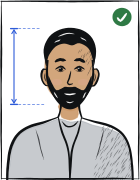
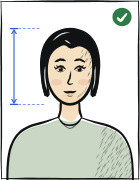
Head: 70–80 % of the photo height
Camera at eye level, about a metre away; head and shoulders in the shot. The tool crops it to 40 × 60 mm.
Glasses
Clear lenses only, no glare
If you wear glasses, check the shot: no glare on the lenses, eyes clearly visible.
Expression and gaze
Neutral expression, mouth closed, eyes open
Look straight into the lens with your head level; keep hair away from your eyes and eyebrows.
Print at 100% scale, borderless, and turn off fit-to-page so each photo keeps its exact size.
Where to submit your passport application
A Libyan passport is applied for at a Libyan embassy or consulate (an appointment first, at Pretoria), with the application form, two personal photographs, the civil-status certificates and the fee.
Embassy of Libya in Pretoria (or another Libyan mission)in person on an appointment; the photograph is taken at the visit
embassies.foreign.gov.ly — the page of the mission for your country
Processing
See the mission
Cost
The passport fee, paid before the visit
Two personal photographs; no white shirt (the background will be white).
Embassy of Libya in Pretoria, «Passports and return travel documents» (8 August 2024), the documents for a passport (Arabic, translated): a recent birth certificate and family status certificate of the person to be photographed and the birth certificate of the father (electronic, with the national number); the certificate of nationality, if any; «2 personal photographs»; the passport if expired or damaged; for a lost passport a copy of it with the police report translated into Arabic and certified by the Ministry of Foreign Affairs; the completed passport application form; the form for registering the Libyan community; proof of payment of the fee on the day of the photography.
Same page, the notes: «We hope that a white shirt will not be worn on the day of photography, since the background of the photograph will be white»; whoever holds a passport with full pages or a damaged one submits a request addressed to the consular section of the embassy with a colour copy of all the pages of the passport.
Same page, the return travel document: «two personal photographs with a white background, for passports»; a recent electronic family status birth certificate; the passport if expired or damaged; for a lost passport a copy with the police report translated into Arabic and certified; a completed and signed declaration with a fingerprint; for children the passports of the father and the mother or copies and their consent; travel on the document only on direct flights to Libya.
Consulate General of Libya in Manchester, «Issuing a passport» (29 January 2025): the requirements — «two personal photographs», a recent electronic birth certificate and family status certificate, a copy of the residence card in the United Kingdom, the passport and a copy, the completed passport application form, the police report for a lost passport translated into Arabic and certified, the receipt of the fee and the form for counting the Libyan community.
Questions
Frequently asked questions
Two personal photographs, according to the Embassy in Pretoria and the Consulate General in Manchester.
Not a white shirt — the Embassy in Pretoria says the background of the photograph will be white.
White; the Embassy in Pretoria says the background of the photograph will be white, and asks for white-background photographs for the return travel document.
The recommended size for the Libya passport photo is 40 × 60 mm. The head occupies 70–80% of the photo height.
Plain white background. No gradients, textures, shadows or objects behind the subject are permitted. The tool removes background shadows automatically, but starting with a flat, evenly lit wall gives the best result.
Yes. Stand in front of a flat white wall in good natural light, face the light source and use the rear camera of your phone with a 3-second timer. The tool handles the crop, background normalisation and compliance check against the Libya biometric standard.
Most passport authorities require the photo to be taken within the last six months. Do not reuse an older portrait even if your appearance has not changed.
Anfas.Pro provides a 14-day full refund if the photo is rejected by the Libya authority and you supply the official rejection notice. See the refund policy page for the exact process.
Clear glasses only, no reflections; sunglasses prohibited. In practice, the biometric scanner at submission points flags even minor lens glare that looks fine to the naked eye. Removing glasses before shooting is the only option that eliminates the risk entirely.
40 × 60 mm = 4 × 6 cm = 1.57 × 2.36 inches. At 300 dpi that is 472 × 709 pixels; at 600 dpi, 945 × 1417 pixels.
2 identical photographs, 40 × 60 mm each.
Religious reasons only; must not cover the facial oval. The face must stay fully visible from chin to forehead and on both sides, with no shadow across it.