SourceCentre for Hygiene and Epidemiology in the Moscow Region (Rospotrebnadzor)
Verified
Quick answer: The recommended Russia medical book photo size is 30 × 40 mm. Plain light background without textures, shadows, or foreign objects. Neutral expression, eyes fully visible. Last verified .
Russia medical book photo: size in mm, cm, inches and pixels
Millimetres
30 × 40 mm
Centimetres
3 × 4 cm
Inches
1.18 × 1.57″
Pixels at 300 dpi
354 × 472 px
Pixels at 600 dpi
709 × 945 px
Russia-specific things to know
One 3 × 4 cm photograph for a paper book — both the Moscow Region and the Moscow centres ask for one
No colour, background or head-size rule is published for this photo
Paper books on the previous forms are allowed until 1 September 2027 (Order No. 90n, п. 1(1))
The electronic medical book, applied for through Gosuslugi, carries no photograph
How medical book photos are verified
The Russian personal medical book (LMK) is issued by federal institutions subordinate to Rospotrebnadzor — the Centres for Hygiene and Epidemiology. For a paper book the applicant brings one 3 × 4 cm photograph (30 × 40 mm) together with the application and the passport: the Moscow Region centre lists it on its procedure page, and Order No. 314 of 28.12.2017 of the Moscow centre (п. 4.1) asks for the same.
Read more
Neither source sets a colour, background, head size or paper finish for the photo. Paper books on the previous forms may be issued and kept until 1 September 2027 (Ministry of Health Order No. 90n, п. 1(1), as amended by Order No. 705n of 29.07.2026); the electronic medical book, applied for through Gosuslugi, has no photograph field.
Examples and mistakes
What makes Russia medical book photos accepted
One compliant example next to the six most common rejection causes for Russia medical book applications. These are the differences that most often determine whether a document photo is accepted.
Accepted
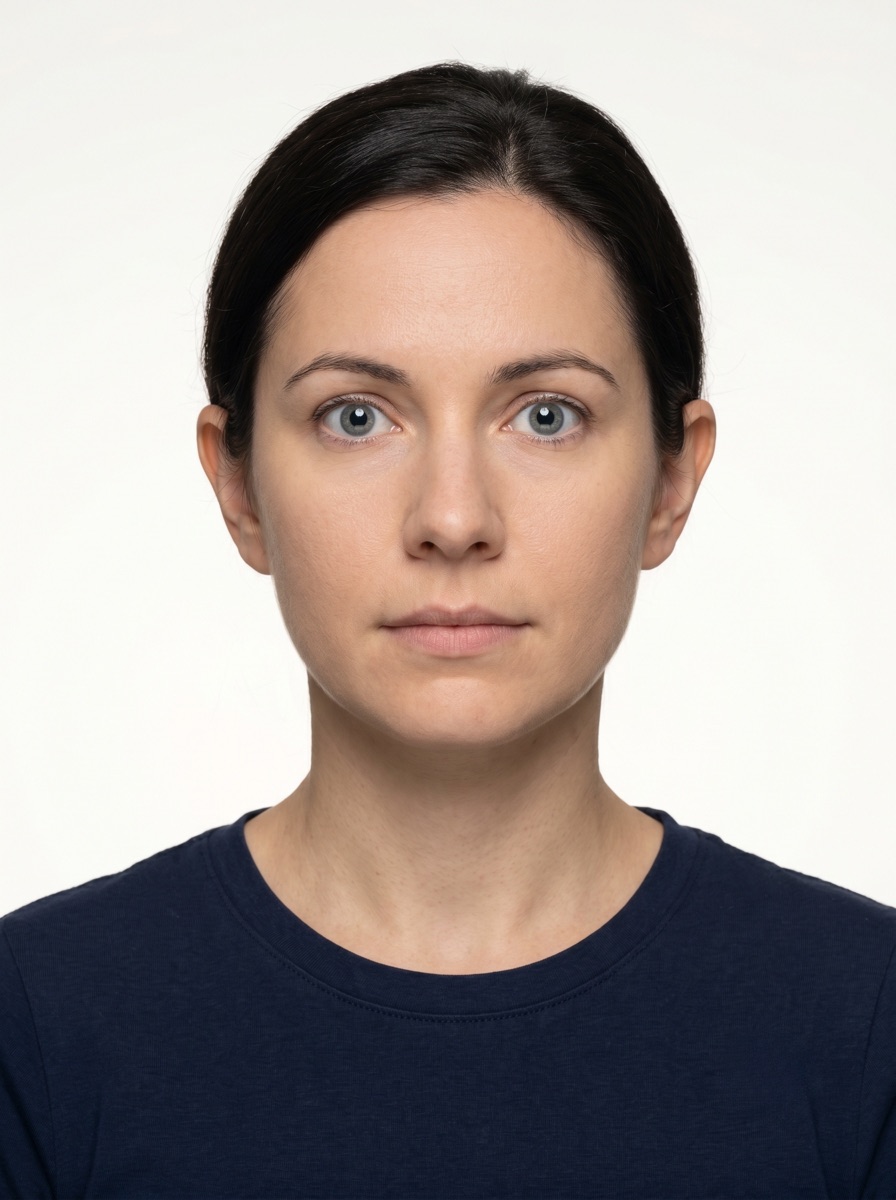
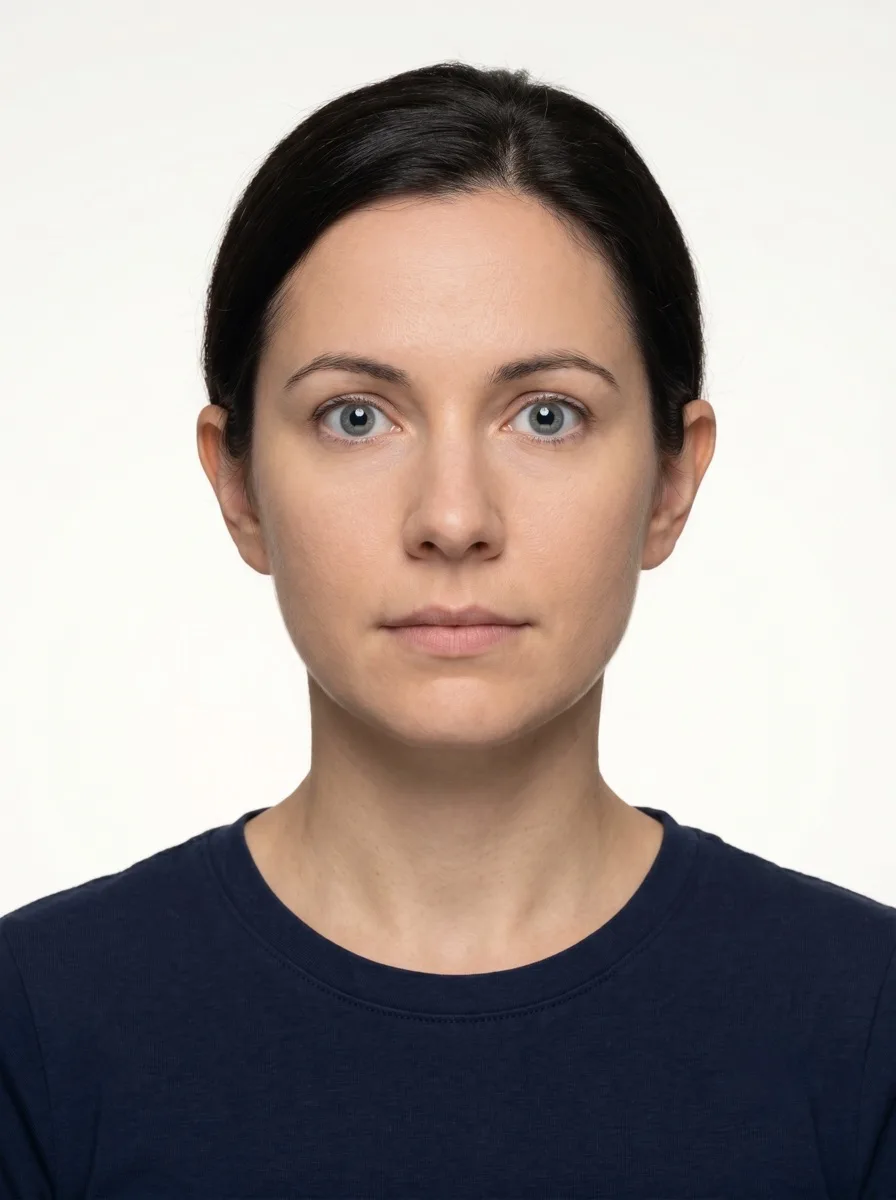
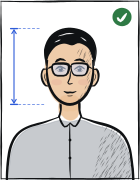
Compliant Russia medical book example (30 × 40 mm)
Face centred, looking directly into the lens
Plain background — no shadow, pattern or texture
Neutral expression, eyes open, mouth closed
No glasses, no hair across the face
Top 6 Russia medical book rejection causes
Background shadowShadow on the wall behind the head, or background with a visible pattern or gradient
Smile / open mouthVisible smile with teeth or open mouth instead of a neutral expression
Glasses with glareGlasses with a clearly visible light reflection covering part of the eye
Hair across the faceLoose hair strands covering the eyes, eyebrows or part of the face
Eyes off-cameraEyes looking to the side instead of directly into the camera lens
Head tiltedHead tilted so the eye line is no longer horizontal
How to take your Russia medical book photo correctly
Background and light
Background: plain light
The tool puts in the required background. Stand half a metre from a plain light wall, face a window and shoot without flash — then there are no shadows on your face or on the wall.
Framing
Size: 30 × 40 mm
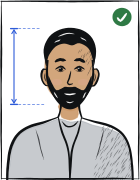
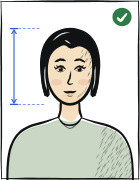
Camera at eye level, about a metre away; head and shoulders in the shot. The tool crops it to the required size.
Glasses
Eyes fully visible
If you wear glasses, check the shot: no glare on the lenses, eyes clearly visible.
Expression and gaze
Neutral expression
Look straight into the lens with your head level; keep hair away from your eyes and eyebrows.
Centre for Hygiene and Epidemiology in the Moscow Region (Rospotrebnadzor), page on issuing the personal medical book: a paper book is issued on the application, the original passport, one 3 × 4 cm photograph and the employer's referral, all submitted in person.
Order No. 314 of 28.12.2017 of the Centre for Hygiene and Epidemiology in Moscow, п. 4.1: a worker submits the application, the passport and one 3 × 4 cm photograph.
Ministry of Health Order No. 90n of 18.02.2022, п. 1(1), as amended by Order No. 705n of 29.07.2026: paper medical books on the previous forms may be issued and kept until 1 September 2027.
The electronic medical book form (Order No. 90n, Appendix No. 1) has no photograph field.
Neither source sets a colour, background, head size or paper finish for the 3 × 4 cm photograph.
Questions
Frequently asked questions
All requirements are in the table above. Format: 30 × 40 mm. Plain light background without textures, shadows, or foreign objects.
Yes. Use a flat, plain wall, natural daylight from a window in front of you, and the rear camera of a phone with a 3-second timer. The tool handles the crop, background normalisation and compliance check.
Eyes must be fully visible. Removing glasses for the photo eliminates the risk of glare causing rejection, especially in automated pre-screening systems.
Most document authorities require the photo to be taken within the last six months. Use a fresh photo even if the rules technically allow older ones — recency reduces the risk of appearance-mismatch rejection.
Anfas.Pro provides a 14-day full refund if the authority rejects the photo and you supply the rejection notice.
30 × 40 mm = 3 × 4 cm = 1.18 × 1.57 inches. At 300 dpi that is 354 × 472 pixels; at 600 dpi, 709 × 945 pixels.