United Kingdom · Driver's licensePhoto requirements
Size
35 × 45 mm
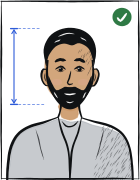
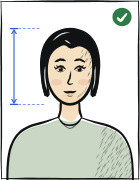
Head
64–76 % of the photo height (29–34 mm)
Background
Cream or light grey
Glasses
Better without glasses
Expression
Neutral, mouth closed
SourceHM Passport Office
Verified
Quick answer: The recommended UK driver's license photo size is 35 × 45 mm. Plain light background in cream or grey tone without patterns. Head occupies 64–76% of photo height (29–34 mm chin to crown). Neutral expression, better without glasses. Last verified .
UK driver's license photo: size in mm, cm, inches and pixels
Millimetres
35 × 45 mm
Centimetres
3.5 × 4.5 cm
Inches
1.38 × 1.77″
Pixels at 300 dpi
413 × 531 px
Pixels at 600 dpi
827 × 1063 px
UK-specific things to know
Print size 35 × 45 mm; local name «driving licence»
Same photograph rules as United Kingdom: Passport
How driver's license photos are verified
UK driving licence photos are reviewed at the licence-issuing office, then printed onto the licence card and (in modern licences) embedded as a biometric template in the card chip. The review checks dimensions, background, lighting and that the applicant's face is unobstructed. Most modern licence systems run an automated ICAO alignment check before printing.
Driving licence photos are typically valid for the full document lifetime — five to ten years depending on the region. Choose a photo that will continue to match your appearance over that period, not a one-off styled portrait.
Eyewear is acceptable in many UK driving licence photos when required for driving, but tinted lenses are not allowed.
The photo will be referenced at roadside biometric checks — quality matters for the full validity period.
Examples and mistakes
What makes UK driver's license photos accepted
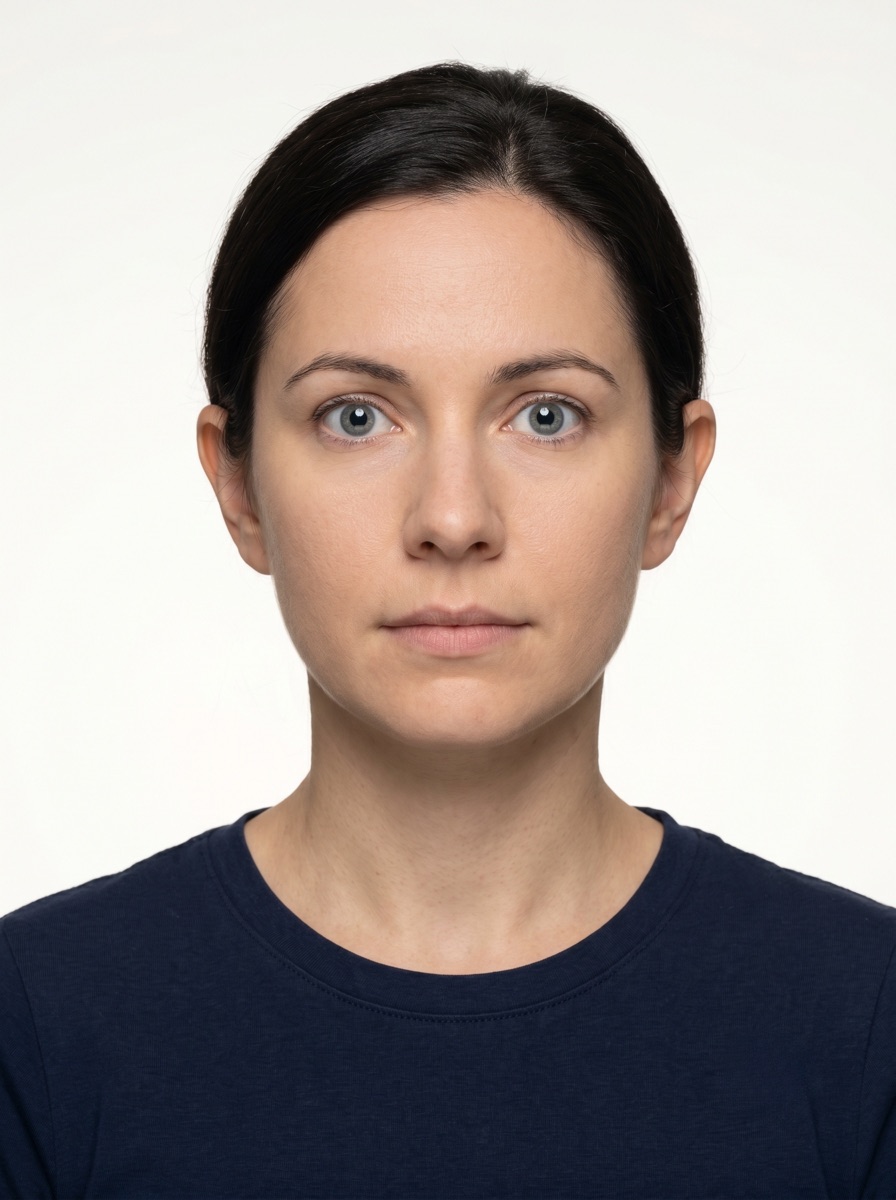
One compliant example next to the six most common rejection causes for UK driver's license applications. These are the differences that most often determine whether a document photo is accepted.
Accepted
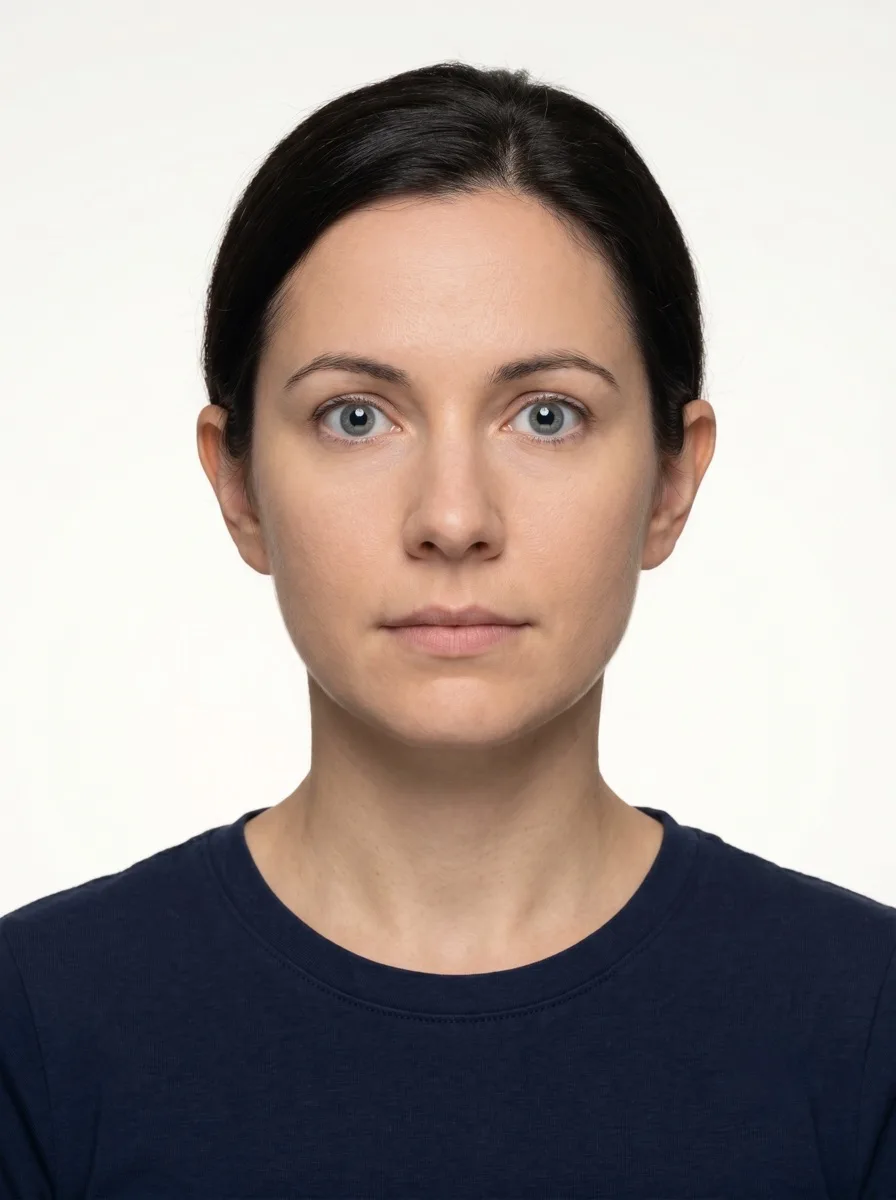
Compliant UK driver's license example (35 × 45 mm)
Face centred, looking directly into the lens
Plain background — no shadow, pattern or texture
Neutral expression, eyes open, mouth closed
No glasses, no hair across the face
Top 6 UK driver's license rejection causes
Background shadowShadow on the wall behind the head, or background with a visible pattern or gradient
Smile / open mouthVisible smile with teeth or open mouth instead of a neutral expression
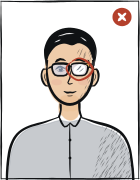
Glasses with glareGlasses with a clearly visible light reflection covering part of the eye
Hair across the faceLoose hair strands covering the eyes, eyebrows or part of the face
Eyes off-cameraEyes looking to the side instead of directly into the camera lens
Head tiltedHead tilted so the eye line is no longer horizontal
How to take your UK driver's license photo correctly
Background and light
Background: cream or light grey
The tool puts in the required background. Stand half a metre from a plain light wall, face a window and shoot without flash — then there are no shadows on your face or on the wall.
Framing
Head: 64–76 % of the photo height (29–34 mm)
Camera at eye level, about a metre away; head and shoulders in the shot. The tool crops it to 35 × 45 mm.
Glasses
Better without glasses
Take them off before the shot.
Expression and gaze
Neutral expression; the applicant must be recognisable
Look straight into the lens with your head level; keep hair away from your eyes and eyebrows.
Driver's License («driving licence») in United Kingdom: the profile reuses the photograph standard that HM Passport Office publishes for the same photo size on this site (Passport, 35 × 45 mm).
Questions
Frequently asked questions
The recommended size for the UK driver's license photo is 35 × 45 mm. The head occupies 64–76% of the photo height. The photo is printed on the licence card and must remain recognisable for the full validity period.
Plain light background in cream or grey tone without patterns. Even, frontal light without shadow gradients. Driving licence printers tend to compress contrast — starting with even lighting prevents underexposed areas from disappearing in the final print.
No reflections or tinting; remove glasses if there is a risk of reflections. Many authorities specifically allow eyewear when it is required for driving, but the eyes must remain fully visible and there must be no lens glare. Tinted lenses or transition lenses that have darkened are not accepted.
Most authorities require the photo to be taken within the last six months. The licence is typically valid for 5–10 years, so use a recent photo that reflects your everyday appearance — not a one-off styled portrait.
No. Driving licence photos use the same neutral expression standard as biometric passports — closed mouth, eyes open and looking directly at the camera, no raised eyebrows. Smiles distort facial geometry used in modern biometric checks.
Anfas.Pro provides a 14-day full refund if the UK licence authority rejects the photo and you supply the rejection notice.
35 × 45 mm = 3.5 × 4.5 cm = 1.38 × 1.77 inches. At 300 dpi that is 413 × 531 pixels; at 600 dpi, 827 × 1063 pixels.
Religious or medical reasons only; must not cover the facial oval. The face must stay fully visible from chin to forehead and on both sides, with no shadow across it.
Yes. The same 35 × 45 mm format and head size apply to: BN(O) passport, passport.