Crop a photo — New Zealand passport
Upload a photo — the frame is already set for a New Zealand passport. Ready to print or upload.
Document
No sign-up · no watermarks · your photo stays in your browser
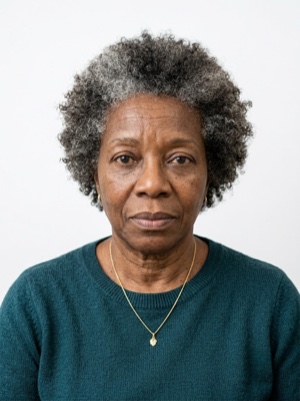
Want studio precision?AI correction fixes the light, shadows, clothing and pose — to the document's rules.€5.99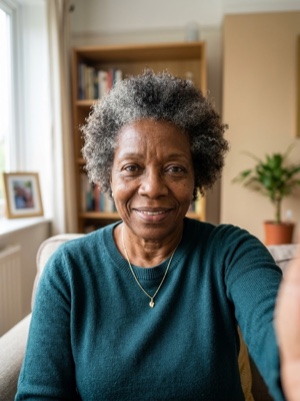
Exact numbers for this document
| Parameter | What it must be |
|---|---|
| Digital resolution | 900 × 1200 — 4500 × 6000 px |
| Background | Light plain background without shadows or extraneous objects; DIA explicitly rejects a pure white background (LIGHT but NOT WHITE). #E5E7EB |
| Glasses | Ordinary prescription glasses are allowed: untinted lenses, a thin frame that does not cover the eyes, no reflections; sunglasses are prohibited. |
| Head covering | Only for religious, medical or cultural reasons, without covering the facial oval. |
For upload the file must stay under 5 MB KB — after cropping, save as JPEG and check the size.
How to crop it, in three steps
- 01
Upload the photo you want to resize.
- 02
Pick the country and document — the exact size and head ratio come from that profile.
- 03
Download the result — cropped, resized and face-aligned entirely in your browser.
What we fix for free, and what AI fixes
Fixed for free
- Background. Replaced with the one this document asks for: light plain background without shadows or extraneous objects; DIA explicitly rejects a pure white background (LIGHT but NOT WHITE).
- Head tilt. Straightened if the head leans slightly to one side.
- A light shadow on one side of the face. Gently brightened.
- File and print sheet. A file to the document’s rules and a 10 × 15 or A4 sheet to print.
What can't be fixed for free, AI correction fixes
- Hard shadows and uneven light on the face.
- A smile, raised brows or a half-open mouth. Cropping keeps the face it was given.
- Clothing and pose. Shoulders out of frame, body turned away from the camera.
Glare on the lenses. Take the glasses off or turn away from the light source and shoot again.
Why these photos get rejected — and how to fix each one
New Zealand-specific things to know
- The New Zealand passport photo is a digital file, not a print: three numbers matter — the 3:4 or 4:3 shape, 250 KB to 5 MB, and 900–4500 × 1200–6000 pixels — and a scan of a printed photo is refused.
- The photograph is taken from about 1.5 m away with the camera at eye level, by someone else: selfies are rejected outright because the close lens distorts the face.
- A head covering for religious or medical reasons needs an endorsement in the passport; glasses must not be tinted or thick-framed and need a clear gap between eyes and frames.
Where these numbers come from
Source: Department of Internal Affairs of New Zealand — New Zealand Passports. Last checked against the official page on 1 Oct 2026.
What the source confirms
- New Zealand Passports, passport photos: the photo must be less than 6 months old and meet the requirements; you can use a photo service (a stationery chain, selected pharmacies, a professional photographer) that emails a digital copy, or ask someone you know; scans of physical photos are not accepted; selfies are not accepted — if the camera is too close the face looks distorted and the photo may be rejected when a passport officer checks it.
- New Zealand Passports, technical requirements: a portrait photo with a 4:3 aspect ratio, or 3:4 on a smartphone; digital; in colour; saved in .jpg or .jpeg format; between 250 KB and 5 MB; between 900 and 4500 pixels wide, and 1200 and 6000 pixels high. A photo smaller than 250 KB must be replaced with a larger one, and one larger than 5 MB compressed; the online photo checker tests the file and gives an error if it does not meet the requirements.
- New Zealand Passports, how to take a passport photo — the photographer: takes a portrait photo with a 4:3 aspect ratio (3:4 on a smartphone), stands about 1.5 m away and holds the camera at the subject's eye level, because a camera too close makes the nose and forehead appear larger and the ears less visible. The top reasons for rejection: the camera is too close or the photo is a selfie; shadows on the face or behind the head; a background that is not plain.
- Same page, background and position: a plain, light-coloured background — light blues, greys and creams work well — with a strong contrast between face and background, the subject at least half a metre from it and no people or objects; the head in the centre with a clear gap around the sides and top, part of the shoulders and upper chest included; the whole face in view, not tilted or turned, hair out of the eyes and away from the sides of the face; a neutral expression with the mouth closed.
- Same page, glasses, head coverings and edits: prescription glasses allowed if not tinted or thick-framed, no sunglasses, a clear gap between the eyes and the frames, no glare or flash reflection; no hats, hoods, headbands or head coverings unless worn for religious or medical reasons, in which case the face must be fully visible and the passport carries an endorsement; no filters or digital alteration; in colour, never black-and-white. Babies lie flat on a plain light-coloured sheet and are photographed from above with the eyes open and no people or objects in the background.
Questions people ask before cropping
What background does this document need?
Light plain background without shadows or extraneous objects; DIA explicitly rejects a pure white background (LIGHT but NOT WHITE).
What can’t be fixed here for free?
Hard shadows and uneven light on the face. A smile, raised brows or a half-open mouth. Cropping keeps the face it was given. Clothing and pose. Shoulders out of frame, body turned away from the camera. AI fixes this from the same photo — you see the result before paying.
How heavy may the file be for online upload?
For upload the file must stay under 5 MB KB — after cropping, save as JPEG and check the size.