SourceMinistry of Foreign Affairs of The Bahamas (eVISA Office)
Verified
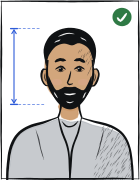
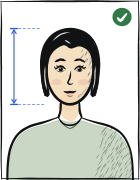
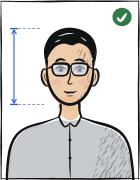
Quick answer: A Bahamas visa photo must be 51 × 51 mm. Plain white or off-white background. Head occupies 70–80% of photo height. Neutral expression, clear lenses only, no glare. Last verified .
Bahamas visa photo: size in mm, cm, inches and pixels
Bahamas visa photo: size in mm, cm, inches and pixels
Millimetres
51 × 51 mm
Centimetres
5.1 × 5.1 cm
Inches
2 × 2″
Pixels at 300 dpi
602 × 602 px
Pixels at 600 dpi
1205 × 1205 px
Bahamas-specific things to know
The Bahamas fix the photograph by its print size and resolution — 2 × 2 inches at 600 dpi — and accept an off-white background as well as white.
Selfies are banned outright, and the hairline and both ears must be visible.
A head covering needs a written request approved by the eVISA office in advance, and clothing must be in colour with the shoulders covered.
How visa photos are verified
The Ministry of Foreign Affairs of The Bahamas publishes a one-page eVISA photograph specification: «no more than six months old at the time of the application», «2 × 2 inches at 600 dpi», «in colour with a plain white or an off-white background», «no selfies», a neutral expression, «not smiling and mouth closed», «a full face view; the applicant facing the camera directly», «hairline and ears visible», neutral make-up and modest jewellery. «Covering of the head is prohibited unless for medical or religious purposes» — a formal written request must be submitted and approved by the visa office by e-mail. Clothing «should be in colour with the shoulders covered» and «must not bear any form of military or civil servant badges or ornaments». The Ministry notes that «all passport photographs are subject to the approval of the visa office».
Examples and mistakes
What makes Bahamas visa photos accepted
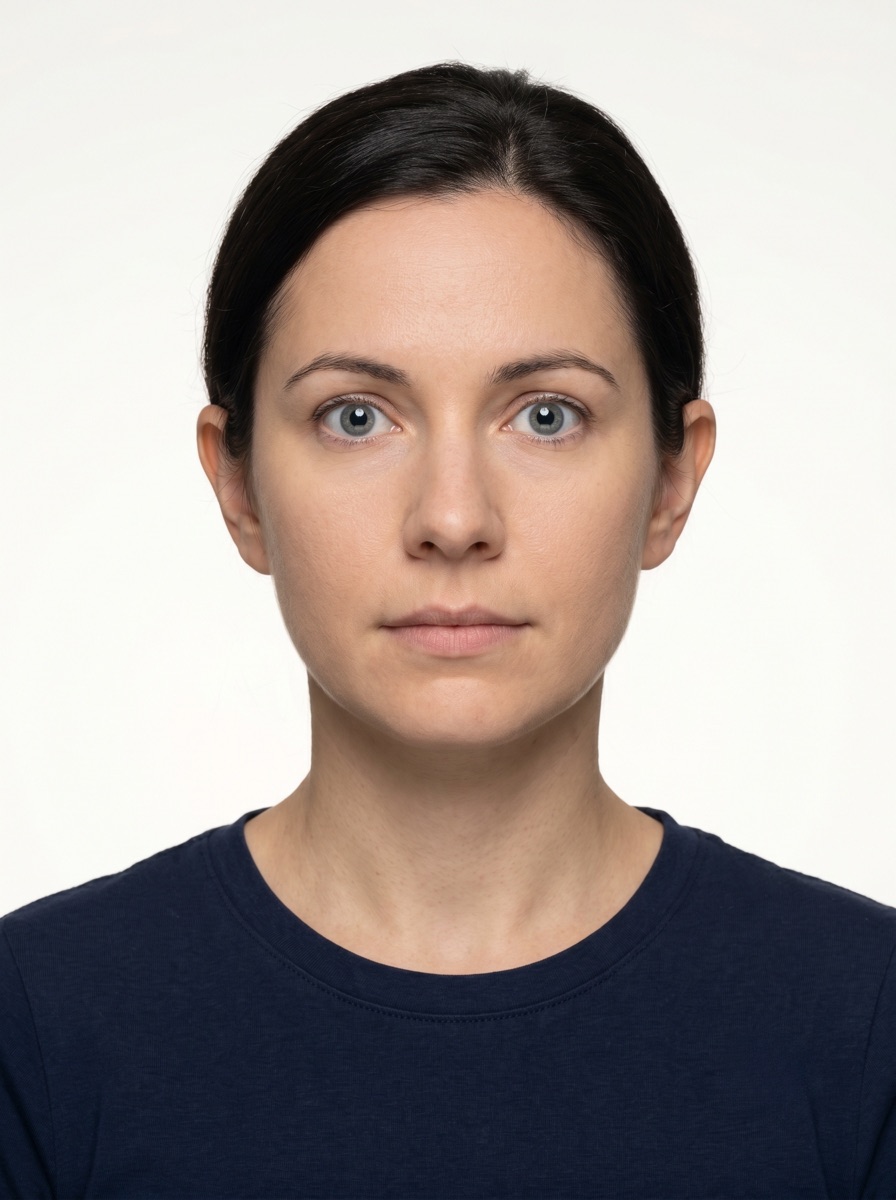
A photo that will be accepted, next to the six most common reasons Bahamas visa photos get rejected.
Accepted
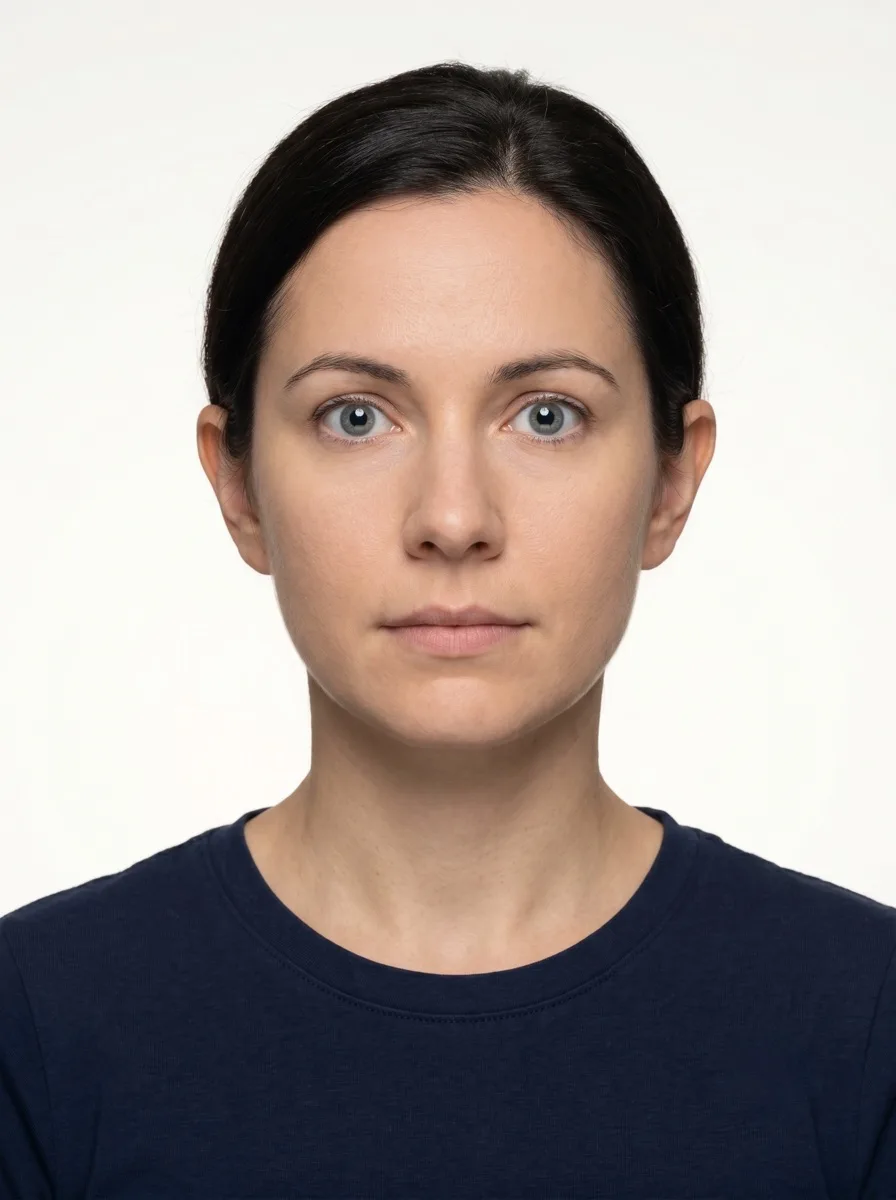
Compliant Bahamas visa example (51 × 51 mm)
Face centred, looking directly into the lens
Plain background — no shadow, pattern or texture
Neutral expression, eyes open, mouth closed
No glasses, no hair across the face
Top 6 Bahamas visa rejection causes
Background shadowShadow on the wall behind the head, or background with a visible pattern or gradient
Smile / open mouthVisible smile with teeth or open mouth instead of a neutral expression
Glasses with glareGlasses with a clearly visible light reflection covering part of the eye
Hair across the faceLoose hair strands covering the eyes, eyebrows or part of the face
Eyes off-cameraEyes looking to the side instead of directly into the camera lens
Head tiltedHead tilted so the eye line is no longer horizontal
Typical rejection reasons and how to fix them
Typical reasons a photo is rejected under the rules Ministry of Foreign Affairs of The Bahamas (eVISA Office) publishes: what is wrong and what to change.
Typical rejection reasons and how to fix them
Reason
Fix
A photo older than six months, not in colour, or not on a plain white or off-white background
A colour photo from the last six months on a plain white or off-white background.
A selfie, or a photo that is not 2 × 2 inches at 600 dpi
A 2 × 2 inch photo at 600 dpi taken by someone else.
A smile, an open mouth, a face turned away, a hairline or ears that are hidden
A neutral expression, a closed mouth, facing the camera, hairline and ears visible.
A head covering without a medical or religious reason and an approved written request
An uncovered head, or a covering approved in writing by the visa office.
Clothing that is not in colour, bare shoulders, military or civil-servant badges or ornaments
Coloured clothing covering the shoulders with no badges.
The tool puts in the required background. Stand half a metre from a plain light wall, face a window and shoot without flash — then there are no shadows on your face or on the wall.
Framing
Head: 70–80 % of the photo height
Camera at eye level, about a metre away; head and shoulders in the shot. The tool crops it to 51 × 51 mm.
Glasses
Clear lenses only, no glare
If you wear glasses, check the shot: no glare on the lenses, eyes clearly visible.
Expression and gaze
Neutral expression, mouth closed, eyes open
Look straight into the lens with your head level; keep hair away from your eyes and eyebrows.
Ministry of Foreign Affairs of The Bahamas, «BAHAMAS eVISA Photograph Specifications» (version 1.1, 14 April 2020): the photograph is no more than six months old at the time of the application; 2 × 2 inches at 600 dpi; in colour with a plain white or an off-white background; no selfies.
Same specification, the face: a neutral facial expression, not smiling, the mouth closed; a full face view with the applicant facing the camera directly; the hairline and ears visible; neutral make-up; modest jewellery.
Same specification, head covering and clothing: covering of the head is prohibited unless for medical or religious purposes, in which case a formal written request is submitted and approved by the visa office, sent by e-mail to the eVISA office; clothing in colour with the shoulders covered; no military or civil-servant badges or ornaments; all passport photographs are subject to the approval of the visa office.
Questions
Frequently asked questions
What size is a Bahamas eVISA photo?
2 × 2 inches at 600 dpi, in colour on a plain white or off-white background, taken within the last six months.
Can I use a selfie for the Bahamas eVISA?
No: the specification says «no selfies»; the photograph must be a full face view with the hairline and ears visible.
Can I wear a head covering in a Bahamas eVISA photo?
Only for medical or religious purposes, after a formal written request approved by the visa office.
What size is the Bahamas visa photo?
The Bahamas visa photo must be 51 × 51 mm. The head must occupy 70–80% of the photo height.
What background does the Bahamas visa require?
Plain white or off-white background. The wall should be evenly lit, with no shadow around the head and no pattern. You don’t need a studio backdrop: the tool sets the right background colour.
How recent must my visa photo be?
For this document the photo must be no older than 6 months. Take a new one that looks like you today.
Can I use the same photo for different Bahamas visa types?
Often yes, but not always: tourist, student, work and transit visas can have different size or background rules. Compare the requirements of each Bahamas visa — if they match, one photo will do.
What if the visa application is rejected because of the photo?
We refund the payment in full. Email us within 14 days of purchase with your order number and the consulate’s rejection notice.
Can I wear glasses in the Bahamas visa photo?
Clear glasses only, no reflections; sunglasses prohibited. If you keep them on, tilt them slightly downwards by lifting the arms a little above your ears: this usually moves reflections of a window or lamp off the lenses.
Bahamas visa photo: what is the size in cm, inches and pixels?
51 × 51 mm = 5.1 × 5.1 cm = 2 × 2 inches. At 300 dpi that is 602 × 602 pixels; at 600 dpi, 1205 × 1205 pixels.
Bahamas visa photo: can I wear a hijab or another religious head covering?
Only for religious or medical reasons, supported by documentation. The face must stay fully visible from chin to forehead and on both sides, with no shadow across it.