SourceMinistero degli Affari Esteri e della Cooperazione Internazionale
Verified
Quick answer: A Italy national visa (Type D) photo must be 35 × 45 mm. Even plain background without shadows. Head occupies 70–80% of photo height. Neutral expression, glasses only if no glare. Last verified .
Italy national visa (Type D) photo: size in mm, cm, inches and pixels
Millimetres
35 × 45 mm
Centimetres
3.5 × 4.5 cm
Inches
1.38 × 1.77″
Pixels at 300 dpi
413 × 531 px
Pixels at 600 dpi
827 × 1063 px
Italy-specific things to know
One recent ICAO-format photo, 35 × 45 mm, glued onto the type D application form
The embassy list quoted here is for a type D family-reunification visa
How national visa (Type D) photos are verified
Italy visa photos are reviewed by consular officers who compare the submitted photo against biometric standards set by the issuing country. For digital applications, an automated pre-screening step checks the background colour, head position and file dimensions before the image reaches a human reviewer. Photos that fail the automated check are rejected immediately, without manual review.
Visa photos carry a higher rejection risk than passport photos because requirements vary by visa category — tourist, work, student and transit visas can each specify different dimensions or background rules. Always use the exact profile for your specific visa type rather than assuming one photo fits all Italy visa categories.
Physical print submissions require precise physical dimensions — digital conversion at the wrong DPI is a common source of rejection.
The photo must be recent — most visa authorities require the image to be taken within the last three to six months.
Examples and mistakes
What makes Italy national visa (Type D) photos accepted
One compliant example next to the six most common rejection causes for Italy national visa (Type D) applications. These are the differences that most often determine whether a document photo is accepted.
Accepted
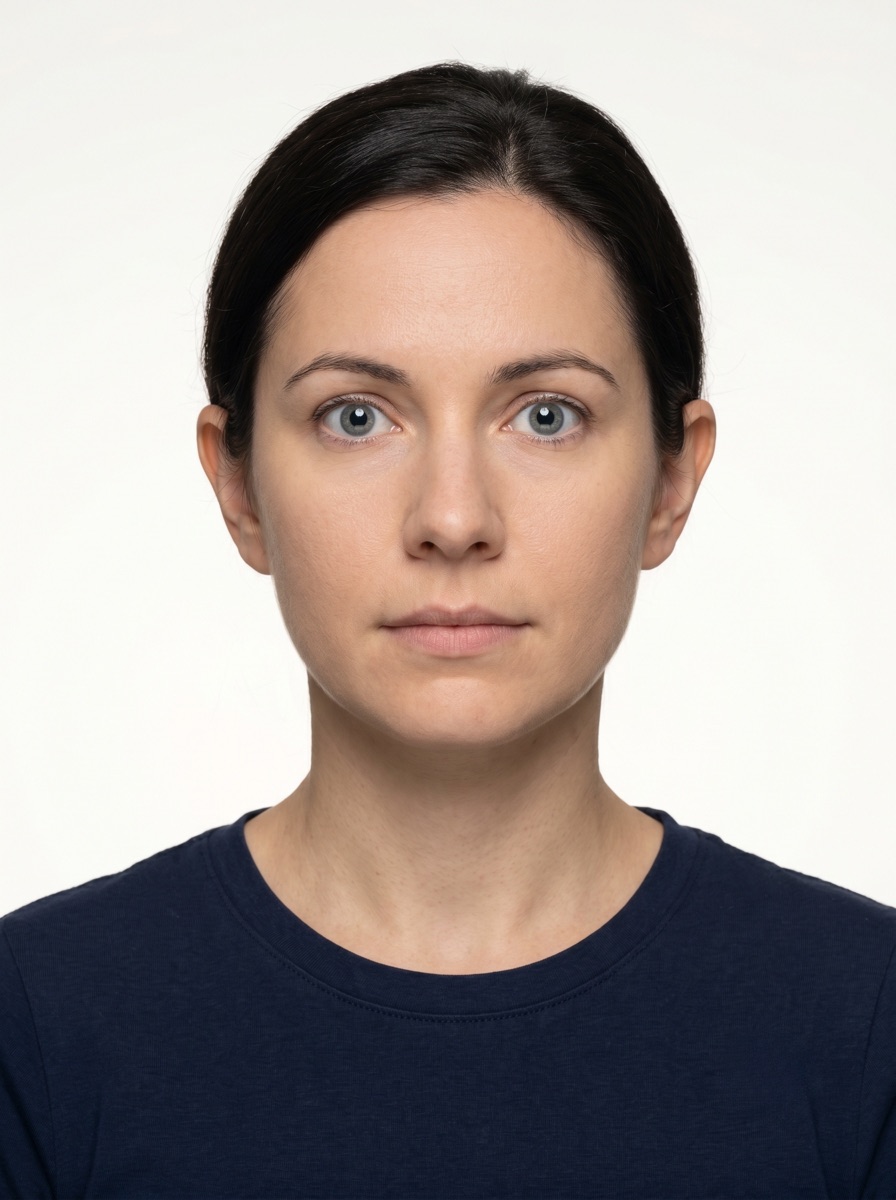
Compliant Italy national visa (Type D) example (35 × 45 mm)
Face centred, looking directly into the lens
Plain background — no shadow, pattern or texture
Neutral expression, eyes open, mouth closed
No glasses, no hair across the face
Top 6 Italy national visa (Type D) rejection causes
Background shadowShadow on the wall behind the head, or background with a visible pattern or gradient
Smile / open mouthVisible smile with teeth or open mouth instead of a neutral expression
Glasses with glareGlasses with a clearly visible light reflection covering part of the eye
Hair across the faceLoose hair strands covering the eyes, eyebrows or part of the face
Eyes off-cameraEyes looking to the side instead of directly into the camera lens
Head tiltedHead tilted so the eye line is no longer horizontal
How to take your Italy national visa (Type D) photo correctly
Background and light
Background: plain, one colour
The tool puts in the required background. Stand half a metre from a plain light wall, face a window and shoot without flash — then there are no shadows on your face or on the wall.
Framing
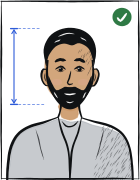
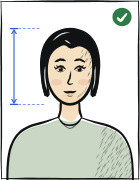
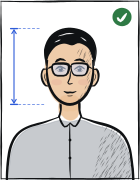
Head: 70–80 % of the photo height
Camera at eye level, about a metre away; head and shoulders in the shot. The tool crops it to 35 × 45 mm.
Glasses
Glasses only if no glare
If you wear glasses, check the shot: no glare on the lenses, eyes clearly visible.
Expression and gaze
Neutral expression, mouth closed, eyes open
Look straight into the lens with your head level; keep hair away from your eyes and eyebrows.
Embassy of Italy in Minsk, document list for a type D family-reunification visa (January 2026): «Formulario di domanda visto del tipo “D” compilato e firmato + 1 foto recente formato ICAO (35x45 mm) incollata sul modulo di domanda» — one recent ICAO-format 35 x 45 mm photo glued to the application form.
The list names only the size and the ICAO format; the ICAO proportions are published by the MAECI «Linee guida foto ICAO»: the face covering 70-80 % of the photo from the base of the chin, white evenly lit background, no older than 6 months, colour, neutral expression with the mouth closed, glasses only with clearly visible eyes and no reflections, head coverings only for religious reasons.
No source publishes pixel or file-size limits — the photo is glued to the paper form.
Questions
Frequently asked questions
The Italy national visa (Type D) photo must be 35 × 45 mm. The head must occupy 70–80% of the photo height. Many consulates also require a specific digital file size — see the spec table above for full details.
Even plain background without shadows. The background must be evenly lit with no shadow gradients, especially around the head. Consular automated pre-screening rejects photos with any wall texture before the human reviewer ever sees the application.
Visa authorities typically require the photo to be taken within the last three to six months. Submitting an older photo, even one that looks similar to your current appearance, is a frequent cause of immediate consular rejection.
Not always. Tourist, work, student and transit visa categories sometimes specify different dimensions or background rules. Follow the requirements for your specific visa type rather than assuming one photo fits all Italy visa applications.
Anfas.Pro provides a 14-day full refund if the photo is the cause of rejection and you supply the consular rejection notice. We recommend keeping the consular receipt with rejection reason as proof.
Eyes must be fully visible without strong reflections. Consular automated checks flag glasses glare even when it is invisible to the human eye. Removing glasses entirely is the safest choice unless a medical exception is documented in your visa application.
35 × 45 mm = 3.5 × 4.5 cm = 1.38 × 1.77 inches. At 300 dpi that is 413 × 531 pixels; at 600 dpi, 827 × 1063 pixels.
Yes. The same 35 × 45 mm format and head size apply to: electronic residence permit, EU blue card, refugee travel document, Schengen visa type C.