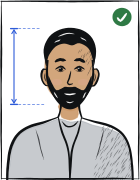
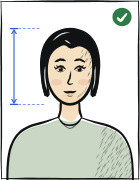
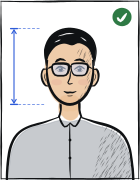
Quick answer: A Saudi Arabia visa photo must be 200 × 200 px. Plain white background. Head occupies 70–80% of photo height. Neutral expression, clear lenses only, no glare. Last verified .
Eyes must be fully visible; no tinted lenses or strong reflections. See full rules →
Lighting
Shadows on the face and background not permitted.
Head covering
For Hajj/Umrah visas, it is accepted automatically for religious reasons; for tourist visas, it is decided case by case. The face from chin to forehead must always be visible.
Attire
Clothing must not blend into the background; face and shoulder line must be clearly defined.
The Saudi spec is a small digital file: 200 × 200 pixels and 5–100 KB — a square thumbnail, not a 35 × 45 mm print.
The face share is given twice: 70–80 % of the picture, or 1.4 × 1.6 inches from chin to crown. On a 200 px square this leaves little margin — frame the head carefully.
Both ears and the cheeks must be clearly visible, so a hairstyle or head covering that hides them works against the rule; with a voluminous hairstyle the whole head should still be shown.
The portal describes a one-year multiple-entry tourist eVisa for up to 90 days for citizens of the countries it lists; Umrah is allowed on it, Hajj is not.
How visa photos are verified
The photograph for a Saudi tourist visa is set on the official Saudi eVisa portal (visa.visitsaudi.com), which describes a digital file rather than a print. One identical photograph is submitted, 200 × 200 pixels, with a file size of 5 to 100 KB.
Read more
It shows a close-up of the face and the top of the shoulders, with the face taking 70–80 % of the picture (the portal also gives 1.4 × 1.6 inches from chin to crown), centred, and taken no more than six months ago. The background is white, without any pattern and without shadows; only the applicant is in the photo.
The head is square to the camera, not angled or turned, so that both ears and cheeks are clearly visible. Head wear is generally not permitted; exceptions are possible, especially for religious reasons, with the face visible from the chin to the forehead and no shadows on it.
Examples and mistakes
What makes Saudi Arabia visa photos accepted
One compliant example next to the six most common rejection causes for Saudi Arabia visa applications. These are the differences that most often determine whether a document photo is accepted.
Accepted
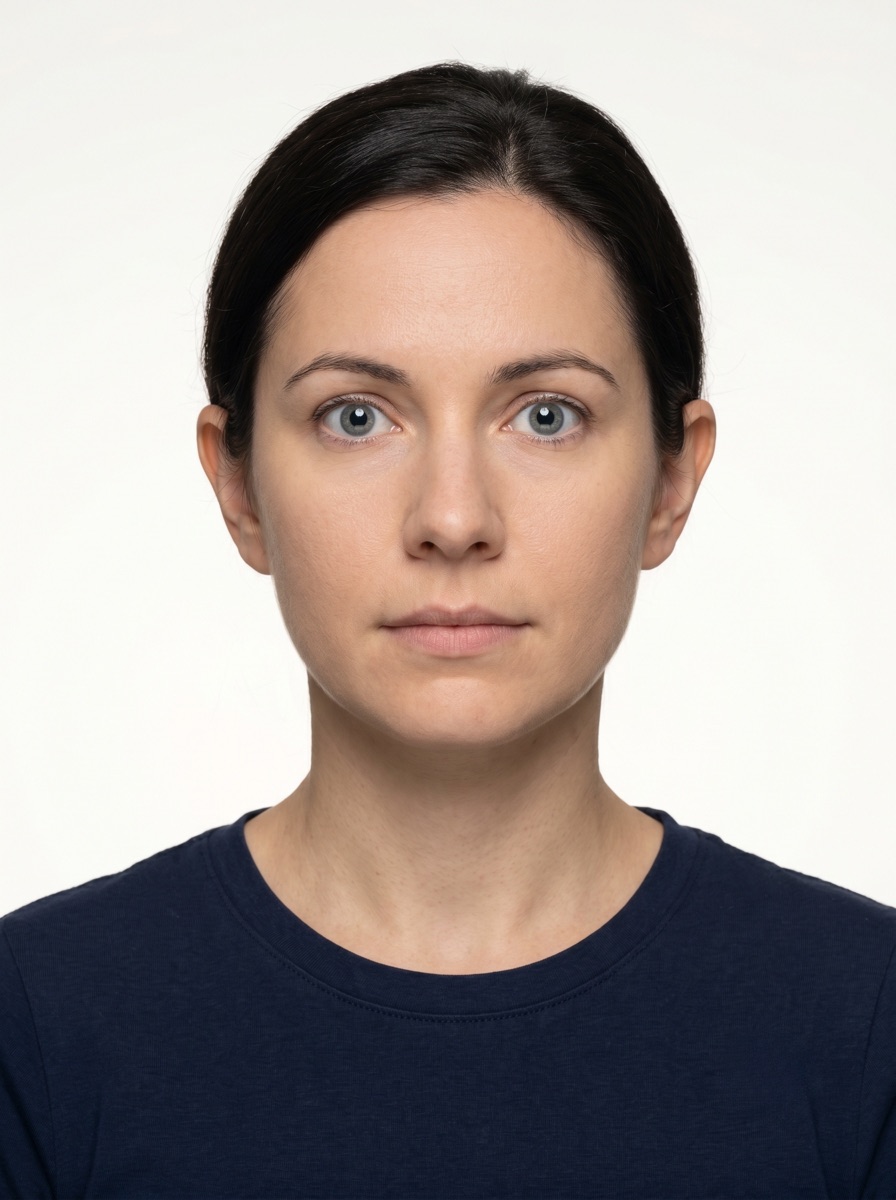
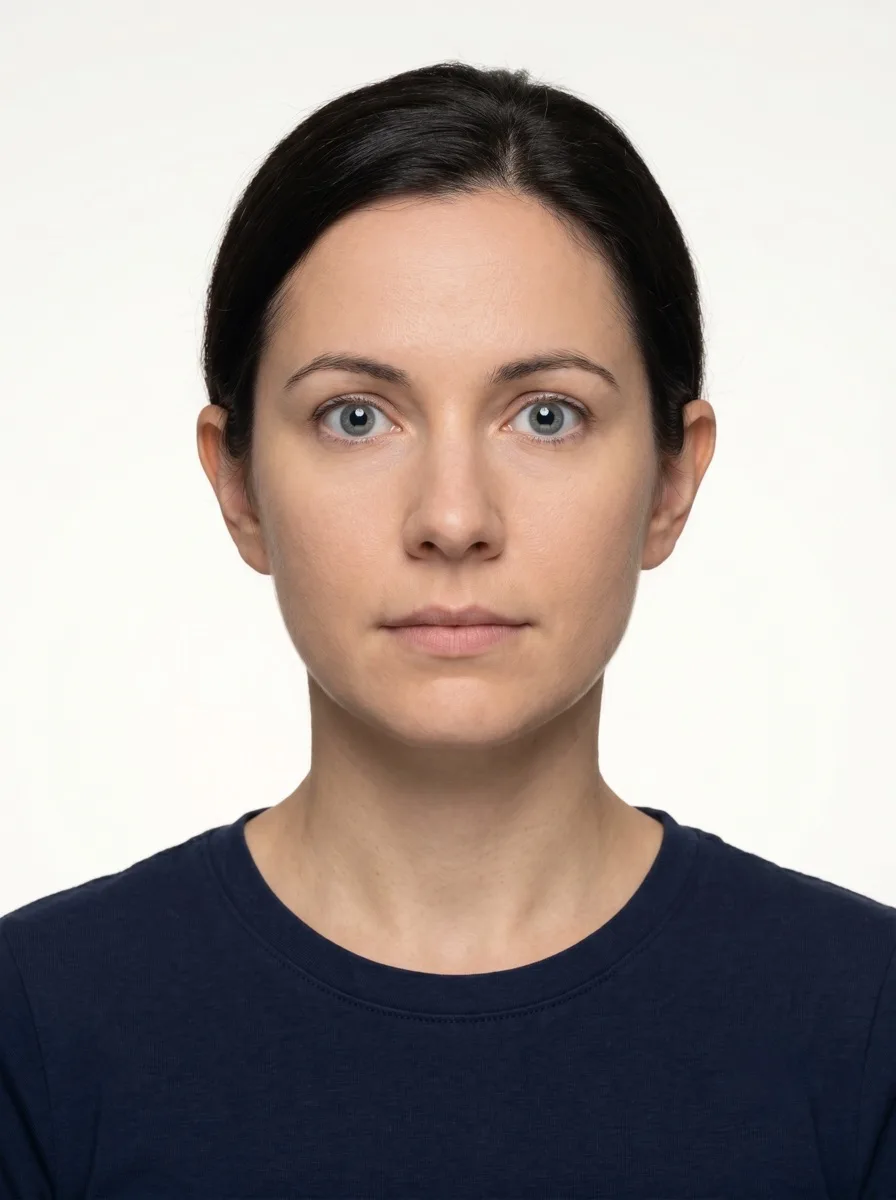
Compliant Saudi Arabia visa example
Face centred, looking directly into the lens
Plain background — no shadow, pattern or texture
Neutral expression, eyes open, mouth closed
No glasses, no hair across the face
Top 6 Saudi Arabia visa rejection causes
Background shadowShadow on the wall behind the head, or background with a visible pattern or gradient
Smile / open mouthVisible smile with teeth or open mouth instead of a neutral expression
Glasses with glareGlasses with a clearly visible light reflection covering part of the eye
Hair across the faceLoose hair strands covering the eyes, eyebrows or part of the face
Eyes off-cameraEyes looking to the side instead of directly into the camera lens
Head tiltedHead tilted so the eye line is no longer horizontal
Typical rejection reasons and how to fix them
Typical reasons a photo is rejected under the rules Saudi eVisa / Ministry of Tourism publishes: what is wrong and what to change.
Reason
Fix
Image not 200 × 200 pixels, or file smaller than 5 KB or larger than 100 KB
Resize the photo to exactly 200 × 200 pixels and save it as a JPEG whose weight is between 5 and 100 KB (a phone camera original is usually far heavier).
Face too small or too large for the frame, not centred, or older than six months
Crop so that the face takes 70–80 % of the picture and sits in the middle, include the top of the shoulders, and use a photo taken in the last six months.
Background not white, patterned, with shadows, or with other people or objects
Use a plain white background with no pattern and no shadows behind you, and make sure you are the only person in the photo.
Head turned or angled, ears or cheeks not clearly visible
Face the camera squarely with the head level so that both ears and both cheeks show; push hair back if it covers them.
Head wear without a religious reason, or a covering that hides the face between chin and forehead or casts shadows on it
Remove hats and caps; a religious covering must leave the face clearly visible from the lower tip of the chin to the forehead, with the light set so it casts no shadow on the face.
Top reasons Saudi Arabia visa photos get rejected
File is outside the 5–100 KB window Saudi eVisa checks file weight as well as crop. A visually correct photo can still fail if compression leaves it below 5 KB or above 100 KB.
Face does not fill 70–80% of the image The Saudi eVisa portal expects a close face-and-shoulders crop; a loose portrait usually fails even with a white background.
How to take your Saudi Arabia visa photo correctly
Background and light
Background: plain white
The tool puts in the required background. Stand half a metre from a plain light wall, face a window and shoot without flash — then there are no shadows on your face or on the wall.
Framing
Head: 70–80 % of the photo height
Camera at eye level, about a metre away; head and shoulders in the shot. The tool crops it to the required size.
Glasses
Clear lenses only, no glare
If you wear glasses, check the shot: no glare on the lenses, eyes clearly visible.
Expression and gaze
Neutral expression, mouth closed, eyes open
Look straight into the lens with your head level; keep hair away from your eyes and eyebrows.
The Saudi tourist eVisa is applied for online on the official portal, where the photo is uploaded as a small digital file. For other visa types, the Saudi embassy or consulate (or its visa service provider) publishes its own checklist.
Saudi eVisa (official portal)online
visa.visitsaudi.com — the list of eligible countries is on the portal
Processing
Shown on the portal
Cost
Visa fee shown on the portal before payment
One identical photo: 200 × 200 px, 5–100 KB, white background without pattern, face 70–80 %, centred, under six months old, only you in the picture.
Saudi eVisa portal: one identical photograph of 200 × 200 pixels (width and height) and a file size from 5 to 100 KB.
Framing: a close-up of the face and the top of the shoulders so that the face takes 70–80 % of the picture, or 1.4 × 1.6 inches from the chin to the crown; face centred; photo no more than six months old; facial features clear from chin tip to crown and on both sides, with a voluminous hairstyle fully shown where possible.
Background: white, without any pattern; no shadows on the background; only the person to be photographed in the picture, no other people (group pictures) or objects.
Pose: the head neither at an angle nor turned (portrait style), square to the camera, face and eyes straight towards it so that both ears and the cheeks are clearly visible.
Head wear is generally not permitted; exceptions are possible, especially for religious reasons — then the face must be visible from the lower tip of the chin to the forehead, with no shadows on the face.
Questions
Frequently asked questions
For the Saudi eVisa: one identical photograph of 200 × 200 pixels and 5–100 KB, a close-up of the face and the top of the shoulders with the face taking 70–80 % of the picture, centred, taken within the last six months. A white background without pattern or shadows, only you in the photo, the head square to the camera so both ears and cheeks are visible. Head wear is generally not permitted, with possible religious exceptions.
On the official Saudi eVisa portal it is a square digital file of 200 × 200 pixels with a weight of 5 to 100 KB; the portal names no print size, so a 4 × 6 print is not part of that specification. A mission or visa centre that wants a printed photo gives its own size on its own page.
Head wear is generally not permitted on the portal, but exceptions are possible, especially for religious reasons. In that case the face must be visible from the lower tip of the chin to the forehead, with no shadows on it, and the photo should still show both ears and cheeks clearly. Light the face evenly so the covering casts no shadow.
White. The Saudi eVisa portal says the background should be white, without any pattern, with no shadows on it, and with no other people or objects in the photo. Because the file is only 200 × 200 pixels, a clean white wall behind you matters more than usual.
The portal only asks for the finished file — 200 × 200 px, 5–100 KB, white background — and does not say where it must come from. The tool above crops, replaces the background and checks the photo for free, so you can see whether it meets the 70–80 % face share and the white background before you upload it.
The Saudi Arabia visa photo must meet the authority requirements shown in the table above. The head must occupy 70–80% of the photo height. Many consulates also require a specific digital file size — see the spec table above for full details.
Plain white background. The background must be evenly lit with no shadow gradients, especially around the head. Consular automated pre-screening rejects photos with any wall texture or off-white shade before the human reviewer ever sees the application.
Visa authorities typically require the photo to be taken within the last three to six months. Submitting an older photo, even one that looks similar to your current appearance, is a frequent cause of immediate consular rejection.
Not always. Tourist, work, student and transit visa categories sometimes specify different dimensions or background rules. Follow the requirements for your specific visa type rather than assuming one photo fits all Saudi Arabia visa applications.
Anfas.Pro provides a 14-day full refund if the photo is the cause of rejection and you supply the consular rejection notice. We recommend keeping the consular receipt with rejection reason as proof.
Eyes must be fully visible; no tinted lenses or strong reflections. Consular automated checks flag glasses glare even when it is invisible to the human eye. Removing glasses entirely is the safest choice unless a medical exception is documented in your visa application.
For Hajj/Umrah visas, it is accepted automatically for religious reasons; for tourist visas, it is decided case by case. The face from chin to forehead must always be visible. The face must stay fully visible from chin to forehead and on both sides, with no shadow across it.