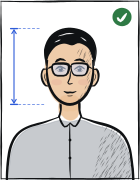
Quick answer: A Singapore passport photo must be 400 × 514 px. Plain white or light grey background. Neutral expression, clear lenses only, no glare. Last verified .
The print and the upload are different specifications: 35 × 45 mm without border for the paper form, 400 × 514 pixels (8 MB at most) for the e-Services. Prepare the file at 400 × 514 and print at 35 × 45 mm from the same shot.
The age limit is three months — shorter than the six months common elsewhere — and the background is white, but light grey if your hair is white.
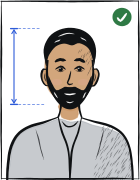
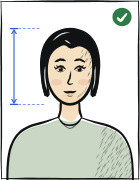
The face is specified at 25–35 mm from chin to crown on a 45 mm print, a wider range than the 32–36 mm of many other passports; a head near the middle of the range satisfies both.
ICA asks for a matte or semi-matte print and does not recommend a selfie; a photo must not be retouched, including birthmarks and moles.
How passport photos are verified
The Singapore passport photograph is set by the Immigration & Checkpoints Authority (ICA), and its two documents describe two forms of the same photo. The printed one — the passport application form IMM(E)11 — is a colour photograph of 35 mm × 45 mm without border, sharp and clear, taken within the last three months, on a plain white background (light grey if your hair is white), full face, head straight, eyes open and no hair across them, both edges of the face and the top of the shoulders visible, a neutral expression with the mouth closed, and the face measuring 25 to 35 mm from chin to crown.
Read more
The digital one — the ICA Photo Guidelines — is a 400 × 514 pixel file in JPG, JPEG, HEIC, HEIF or PNG of up to 8 MB uploaded through the e-Services. Both follow ISO and ICAO specifications; the photo must not be altered or enhanced in any way, and ICA does not recommend a selfie.
A printed photograph must be on a matte or semi-matte finish.
Examples and mistakes
What makes Singapore passport photos accepted
One compliant example next to the six most common rejection causes for Singapore passport applications. These are the differences that most often determine whether a document photo is accepted.
Accepted
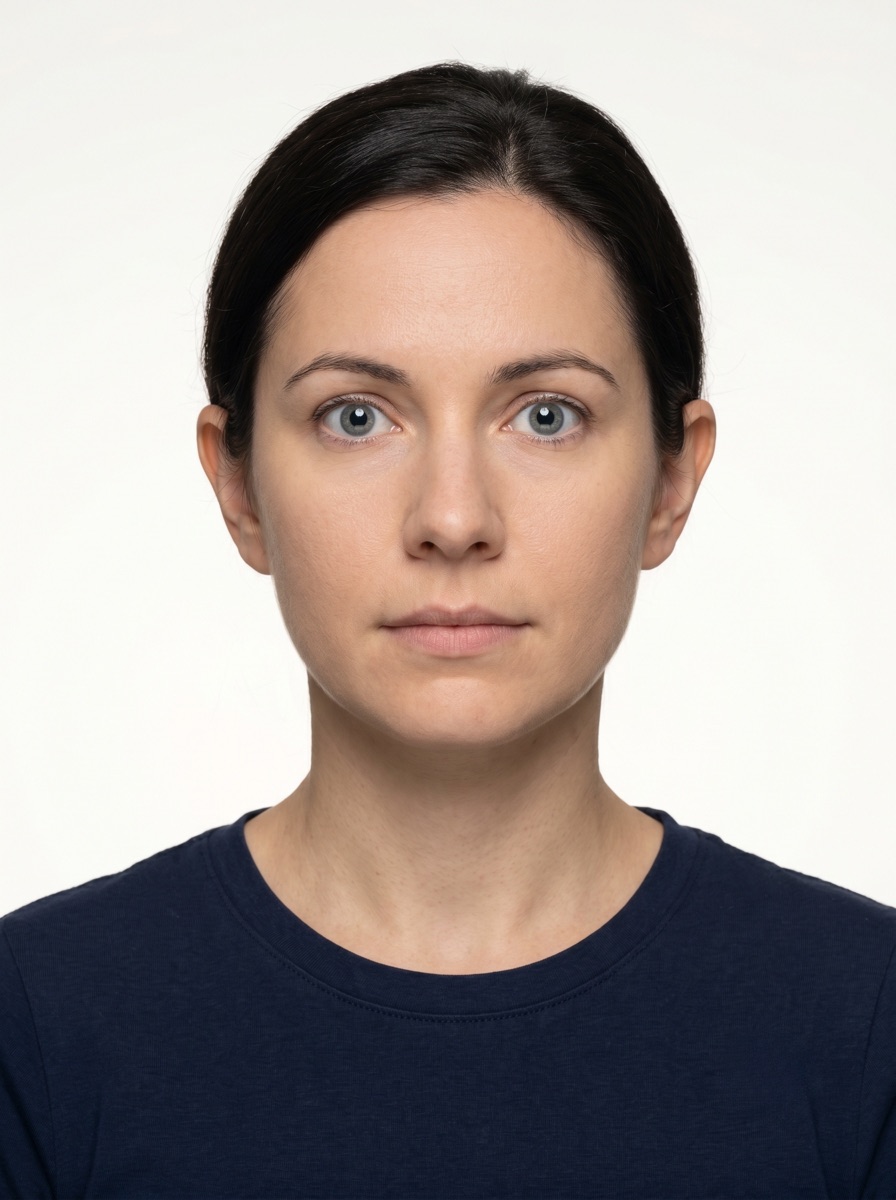
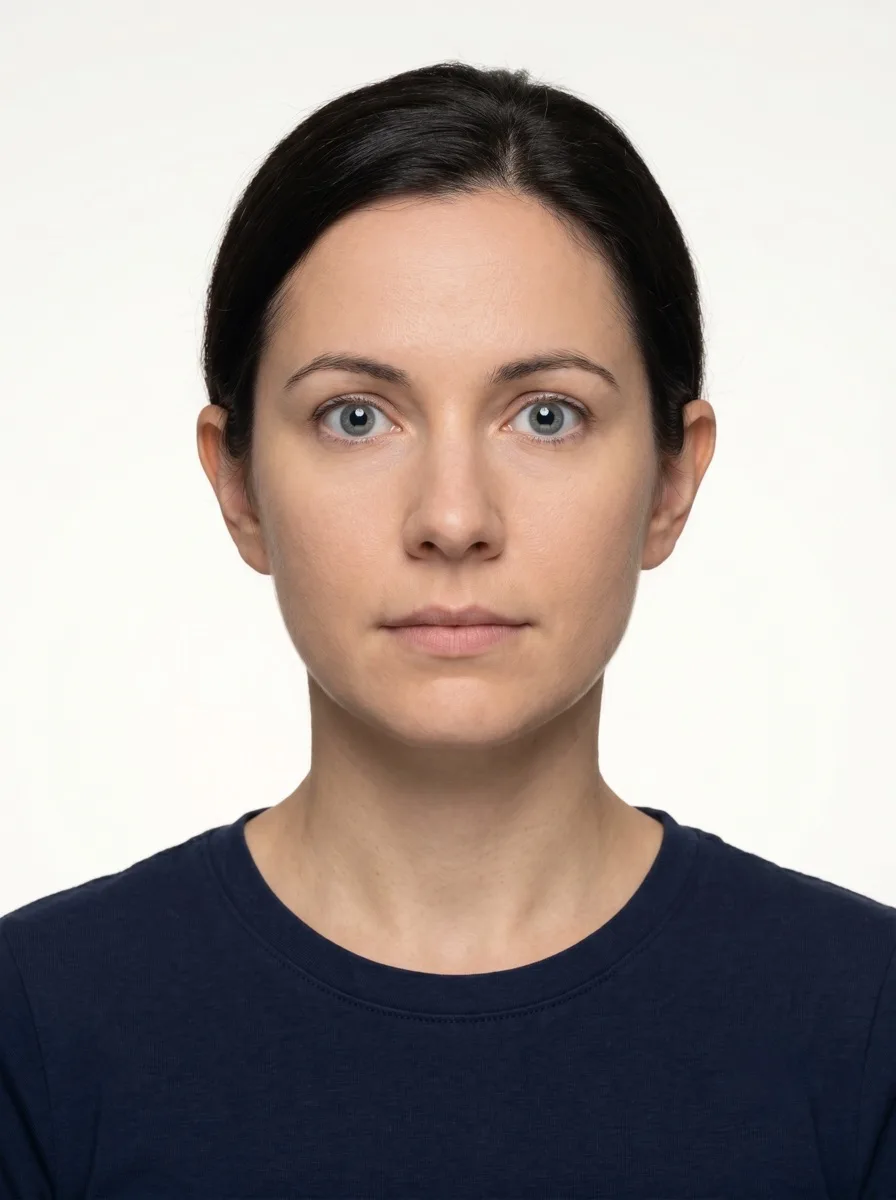
Compliant Singapore passport example
Face centred, looking directly into the lens
Plain background — no shadow, pattern or texture
Neutral expression, eyes open, mouth closed
No glasses, no hair across the face
Top 6 Singapore passport rejection causes
Background shadowShadow on the wall behind the head, or background with a visible pattern or gradient
Smile / open mouthVisible smile with teeth or open mouth instead of a neutral expression
Glasses with glareGlasses with a clearly visible light reflection covering part of the eye
Hair across the faceLoose hair strands covering the eyes, eyebrows or part of the face
Eyes off-cameraEyes looking to the side instead of directly into the camera lens
Head tiltedHead tilted so the eye line is no longer horizontal
Typical rejection reasons and how to fix them
Typical reasons a photo is rejected under the rules Immigration & Checkpoints Authority (ICA), Singapore publishes: what is wrong and what to change.
Reason
Fix
Print not 35 × 45 mm without border, or upload not 400 × 514 px
Print 35 × 45 mm without a border; prepare the e-Services file at 400 × 514 px.
Background not plain white (or light grey with white hair)
Use a plain white wall or screen, lit evenly with no shadow on the face or the background.
Photo older than three months
Take a new photo within three months of applying.
Tinted glasses or sunglasses, frames over the eyes, or flash reflected off the lenses
Wear no tinted lenses, keep the frames clear of the eyes and avoid flash on the glasses.
Hair across the eyes, head tilted, mouth open, or the shoulders and both edges of the face not shown
Hold the head straight, mouth closed, eyes open and clear; show both edges of the face and the top of the shoulders.
A retouched or enhanced picture, a selfie, or a glossy print
Use an unedited photo taken by someone else and print it matte or semi-matte.
How to take your Singapore passport photo correctly
Background and light
Background: white or light grey
The tool puts in the required background. Stand half a metre from a plain light wall, face a window and shoot without flash — then there are no shadows on your face or on the wall.
Framing
Camera at eye level, about a metre away; head and shoulders in the shot. The tool crops it to the required size.
Glasses
Clear lenses only, no glare
If you wear glasses, check the shot: no glare on the lenses, eyes clearly visible.
Expression and gaze
Neutral expression, mouth closed, eyes open
Look straight into the lens with your head level; keep hair away from your eyes and eyebrows.
In Singapore the passport is applied for online with SingPass; others, such as family members, can submit on your behalf. Overseas it is submitted on the paper form IMM(E)11 at a Singapore mission, with the photograph pasted in the box on the form.
ICA e-Services (online, with SingPass)online
go.gov.sg/passport — log in with SingPass; the photo is uploaded as a 400 × 514 px file
Processing
Not stated on the pages read
Cost
Not stated on the pages read
Digital photo: 400 × 514 px, JPG, JPEG, HEIC, HEIF or PNG, up to 8 MB.
ICA Photo Guidelines (updated 28 April 2026): a new coloured photograph must be submitted for a new application; a printed photograph for hardcopy submission must be on a matte or semi-matte (non-reflective) finish; the requirements are based on ISO and ICAO specifications, and failing them can delay or reject the application.
Same page, digital submission: the recommended dimension is 400 × 514 pixels for upload through the e-Services; accepted formats jpg, jpeg, heic, heif and png; maximum file size 8 MB.
Same page, phones: ICA recommends apps designed for passport or identity-card photos, and says the photograph must not be altered or enhanced in any way (no modification of facial features, no editing software); a selfie is not recommended because the result is usually not ideal and delays the application.
Form IMM(E)11 (passport submitted overseas), item 5: in colour; sharp and clear, 35 mm wide by 45 mm high without border; taken within the last 3 months; plain white background (light grey if the hair is white); full face, head straight, eyes open, no hair across the eyes, both edges of the face and the top of the shoulders shown.
Same item: a neutral facial expression with the mouth closed; the face between 25 mm and 35 mm from chin to crown; only headgear habitually worn in accordance with religious or racial custom, and not in white; glasses frames must not cover any part of the eyes, with no flash or light reflected off the glasses; tinted glasses and sunglasses are not allowed. The form puts the passport fee at SGD 80.
ICA APPLES help page (digital photo): choose a camera of at least 2.0 megapixels, a plain white wall or drop screen, light with no distracting shadows on the face or background, the camera at eye level about 0.5 to 2 metres away, no flash on the face (red-eye, half-closed eyes), a full front view with the whole head from top of hair to chin centred in the frame, and no alteration, removal or enhancement of the image, including birthmarks, moles or tattoos.
Questions
Frequently asked questions
A colour photo of 35 mm × 45 mm without border, sharp and clear, taken within the last three months, on a plain white background (light grey if your hair is white). Full face, head straight, eyes open with no hair across them, both edges of the face and the top of the shoulders visible, a neutral expression with the mouth closed, and the face 25–35 mm from chin to crown. It must not be altered or enhanced.
For the paper form, 35 mm wide by 45 mm high without border. For the online submission, 400 × 514 pixels, in jpg, jpeg, heic, heif or png, up to 8 MB. Both come from the same photo: take it once, upload it at 400 × 514 and print it at 35 × 45 mm.
Taken within the last three months, according to the passport application form, and a new coloured photograph is needed for each new application. Three months is shorter than the six months many countries accept, so do not reuse an older photo.
ICA does not recommend a selfie: the result is usually not ideal and delays the application. It suggests asking someone to take the photo, or using an app made for passport photos, and says the photo must not be altered or enhanced in any way, including the modification of facial features.
Glasses are allowed only if the frames do not cover any part of the eyes and there is no flash or light reflected off them; tinted glasses and sunglasses are not allowed. Only headgear habitually worn in accordance with your religious or racial custom is allowed, and it should not be white; the face must remain fully shown.
The Singapore passport photo must meet the authority requirements shown in the table above. For digital upload, use 400 × 514 px.
Plain white or light grey background. No gradients, textures, shadows or objects behind the subject are permitted. The tool removes background shadows automatically, but starting with a flat, evenly lit wall gives the best result.
Yes. Stand in front of a flat, plain wall in good natural light, face the light source and use the rear camera of your phone with a 3-second timer. The tool handles the crop, background normalisation and compliance check against the Singapore biometric standard.
Most passport authorities require the photo to be taken within the last six months. Do not reuse an older portrait even if your appearance has not changed.
Anfas.Pro provides a 14-day full refund if the photo is rejected by the Singapore authority and you supply the official rejection notice. See the refund policy page for the exact process.
Eyes must be fully visible; no tinted lenses or strong reflections. In practice, the biometric scanner at submission points flags even minor lens glare that looks fine to the naked eye. Removing glasses before shooting is the only option that eliminates the risk entirely.
Religious reasons only; must not cover the facial oval. The face must stay fully visible from chin to forehead and on both sides, with no shadow across it.