SourceDepartment for Registration of Persons, Sri Lanka
Verified
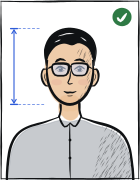
Quick answer: The recommended Sri Lanka ID card photo size is 35 × 45 mm. Plain light background without textures or noticeable gradients. Head occupies 70–80% of photo height. Neutral expression, clear lenses only, no glare. Last verified .
Sri Lanka ID card photo: size in mm, cm, inches and pixels
Millimetres
35 × 45 mm
Centimetres
3.5 × 4.5 cm
Inches
1.38 × 1.77″
Pixels at 300 dpi
413 × 531 px
Pixels at 600 dpi
827 × 1063 px
Sri Lanka-specific things to know
In Sri Lanka the National Identity Card photograph is taken at a registered ICAO studio that uses the Department's software — the applicant gets a Photo Reference Slip, not a print.
The photograph is valid for six months from the day the studio takes it, and a studio may charge at most Rs. 400 for it.
A studio that sends photographs below the ICAO standard is suspended by the system, so studios check the shot before taking it.
How ID card photos are verified
For the Sri Lankan National Identity Card the Department for Registration of Persons says «only photographs that comply with the ICAO standards should be used» — and they are taken at studios «registered with the department and given the necessary software and training to take photographs of individuals in accordance with ICAO standards». The photograph goes straight into the Department's data system through the Photo Studio software; «only the Photo Reference Slip issued by the software should be given to the applicant». «A photograph taken by the studio is valid only for a period of six months from the date of taking it», and the one-day-service application lists an «ICAO standard photograph obtained within a 06-month period» among its documents. The maximum fee a studio may charge for the photograph is «Rs. 400», by the gazette notification of 18 December 2023. A studio that takes photographs which do not meet the standard is suspended and, after repeated mistakes, can be blacklisted. The Department publishes no size, head size or background colour on these pages — it refers to the ICAO standard.
Examples and mistakes
What makes Sri Lanka ID card photos accepted
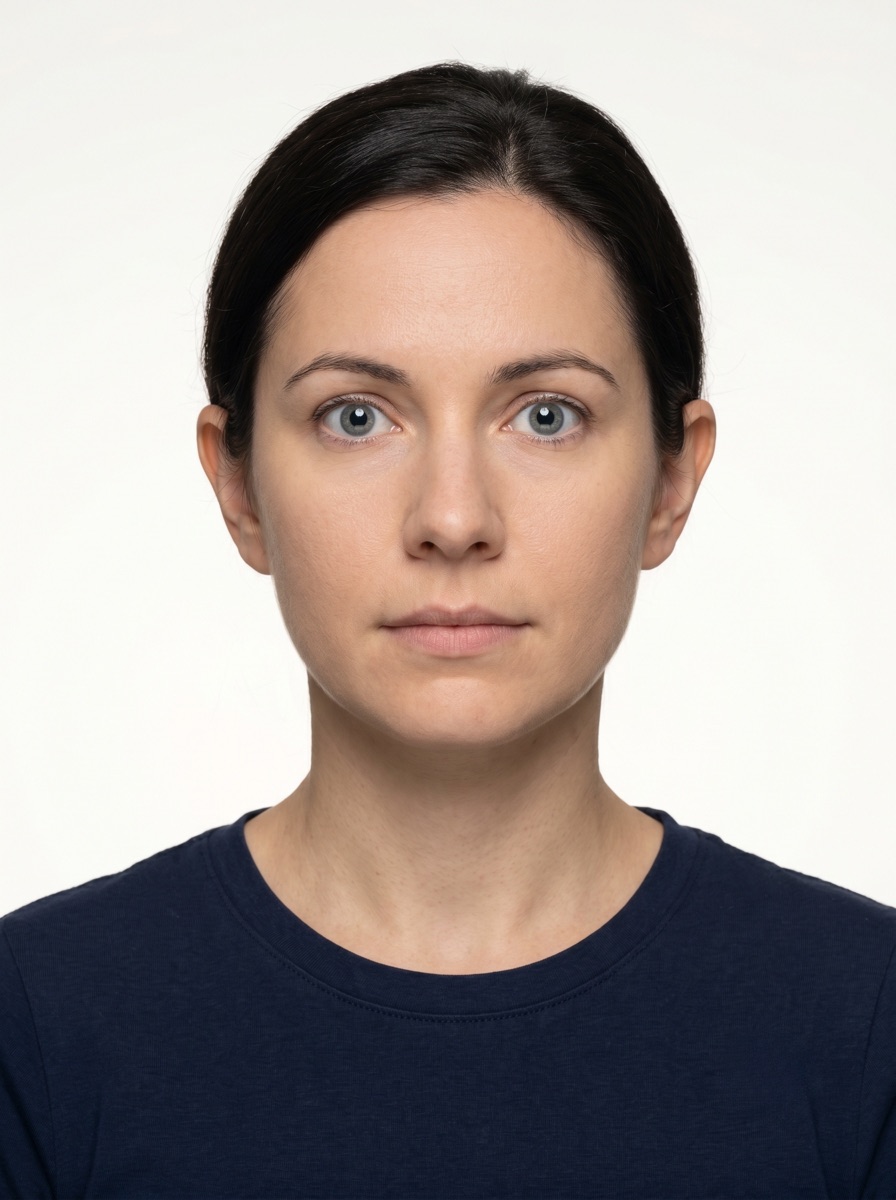
One compliant example next to the six most common rejection causes for Sri Lanka ID card applications. These are the differences that most often determine whether a document photo is accepted.
Accepted
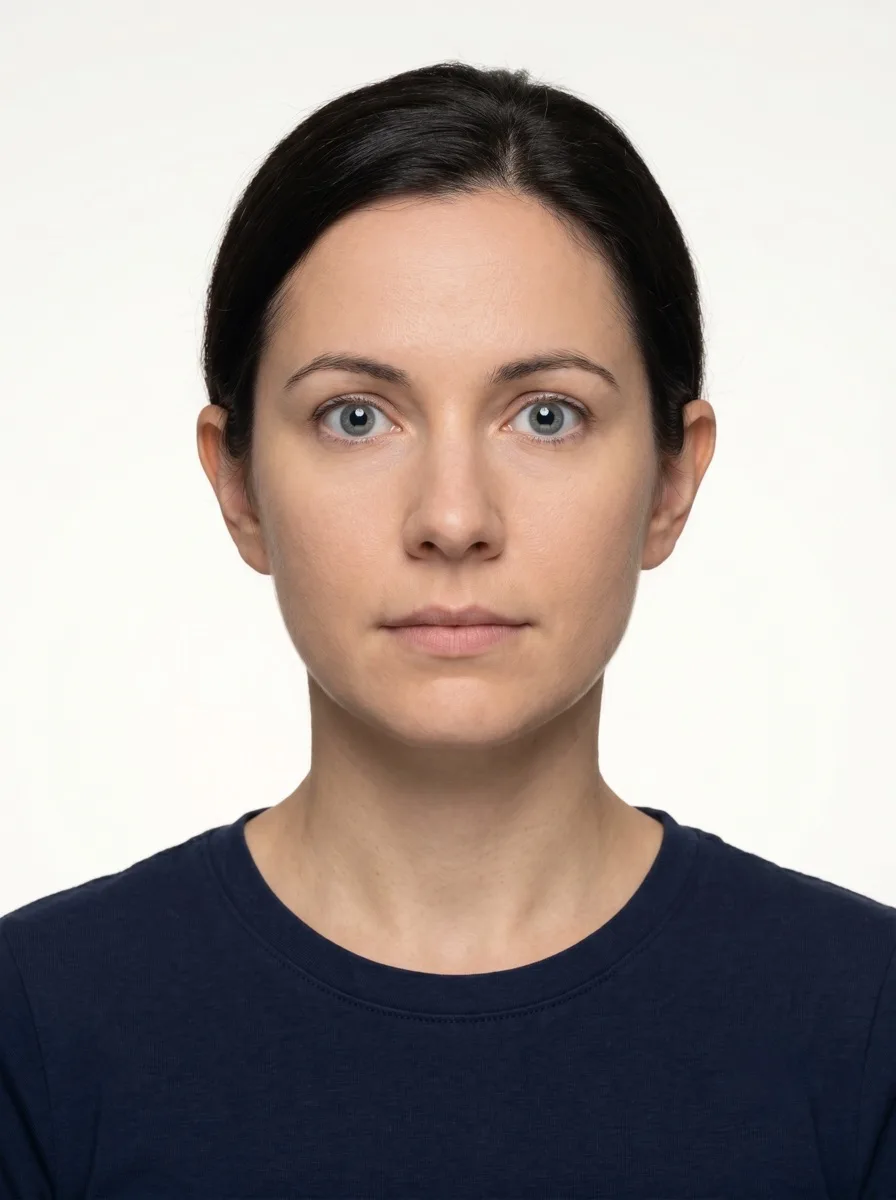
Compliant Sri Lanka ID card example (35 × 45 mm)
Face centred, looking directly into the lens
Plain background — no shadow, pattern or texture
Neutral expression, eyes open, mouth closed
No glasses, no hair across the face
Top 6 Sri Lanka ID card rejection causes
Background shadowShadow on the wall behind the head, or background with a visible pattern or gradient
Smile / open mouthVisible smile with teeth or open mouth instead of a neutral expression
Glasses with glareGlasses with a clearly visible light reflection covering part of the eye
Hair across the faceLoose hair strands covering the eyes, eyebrows or part of the face
Eyes off-cameraEyes looking to the side instead of directly into the camera lens
Head tiltedHead tilted so the eye line is no longer horizontal
Typical rejection reasons and how to fix them
Typical reasons a photo is rejected under the rules Department for Registration of Persons, Sri Lanka publishes: what is wrong and what to change.
Reason
Fix
A photograph that does not comply with the ICAO standard (it is not accepted for the National Identity Card)
An ICAO-standard photograph taken at a registered studio.
A photograph older than six months from the date the studio took it
A photograph taken within the last six months.
A photograph taken at a studio that is not registered with the Department for Registration of Persons, or handed over as a print instead of a reference slip
A photograph taken at a registered studio with the Photo Reference Slip issued by the software.
How to take your Sri Lanka ID card photo correctly
Background and light
Background: plain light
The tool puts in the required background. Stand half a metre from a plain light wall, face a window and shoot without flash — then there are no shadows on your face or on the wall.
Framing
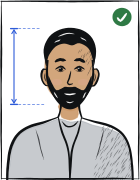
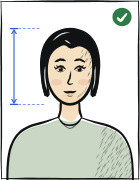
Head: 70–80 % of the photo height
Camera at eye level, about a metre away; head and shoulders in the shot. The tool crops it to 35 × 45 mm.
Glasses
Clear lenses only, no glare
If you wear glasses, check the shot: no glare on the lenses, eyes clearly visible.
Expression and gaze
Neutral expression, mouth closed, eyes open
Look straight into the lens with your head level; keep hair away from your eyes and eyebrows.
Print at 100% scale, borderless, and turn off fit-to-page so each photo keeps its exact size.
Where to submit your ID card application
A Sri Lankan National Identity Card is applied for with an ICAO-standard photograph taken at a studio registered with the Department for Registration of Persons, and the application is made through the Divisional Secretariat or the Department's one-day service.
Studio registered with the Department for Registration of Persons (ICAO standard studio)in person at the studio, then the NIC application
drp.gov.lk — ICAO Standard Studio Details (the list of registered studios)
Processing
See the Department's service pages
Cost
The photograph costs at most Rs. 400 at a registered studio
The studio gives a Photo Reference Slip; the photograph is valid six months.
Department for Registration of Persons, «ICAO Photographs»: only photographs that comply with the ICAO standards should be used for the issuance of National Identity Cards, in line with the amended Act No. 8 of 2006 (approved by Parliament on 10.02.2016) under the Registration of Persons Act No. 32 of 1968; photographers who own studios island-wide are registered with the Department and given the necessary software and training to take photographs in accordance with ICAO standards.
Same page, the process: after the photograph is taken, only the Photo Reference Slip issued by the software is given to the applicant; the photographs taken by registered studios are entered into the Department's data system using the Photo Studio software; a photograph taken by the studio is valid only for six months from the date of taking it; by the gazette notification of 18 December 2023 the maximum fee that can be charged from an applicant for a photograph is Rs. 400.
Same page, the studios: registration costs Rs. 15,000 and renewal Rs. 3,000 every two years for the software licence; when the system detects photographs without ICAO standards, the registration of the studio is temporarily cancelled and a message is sent; after three temporary cancellations a further repeat can lead to cancellation or blacklisting after a formal investigation.
Department for Registration of Persons, «Obtaining NIC under the one-day service»: the documents include the birth certificate or an extract of the birth registry certified by the Additional District Registrar, an ICAO standard photograph obtained within a 06-month period, and the receipt of payment of the application fee; the same photograph requirement appears for the other NIC procedures listed on the page.
Questions
Frequently asked questions
At a studio registered with the Department for Registration of Persons, which takes an ICAO-standard photograph with the Department's software and gives you a Photo Reference Slip.
Six months from the date the studio takes it.
By the gazette notification of 18 December 2023 a studio may charge at most Rs. 400.
The recommended size for the Sri Lanka ID card photo is 35 × 45 mm. The head occupies 70–80% of the photo height. The photo must reflect your current everyday appearance.
Plain light background without textures or noticeable gradients. Identity cards are used frequently in daily life — for banking, age verification and domestic travel — so the photo is scrutinised many times and minor background issues become more visible at print scale.
Yes. Stand against a flat light-coloured wall, face a window for even natural light, and use a phone with a timer. The tool handles the crop, background normalisation and ICAO alignment check automatically.
Identity card photos generally need to reflect your current appearance. Most authorities accept photos taken within the last six months, but significant changes to hair, beard or facial features since the photo was taken may require a new one.
Clear glasses only, no reflections; sunglasses prohibited. Removing glasses for the shoot is the safest option, especially given the long validity period of most identity cards. Glare that passes today may fail re-verification at a future biometric checkpoint.
Anfas.Pro provides a 14-day full refund if the Sri Lanka authority rejects the photo and you supply the rejection notice.
35 × 45 mm = 3.5 × 4.5 cm = 1.38 × 1.77 inches. At 300 dpi that is 413 × 531 pixels; at 600 dpi, 827 × 1063 pixels.
Religious reasons only; must not cover the facial oval. The face must stay fully visible from chin to forehead and on both sides, with no shadow across it.
Yes. The same 35 × 45 mm format and head size apply to: citizenship application, visa.