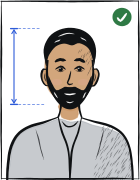
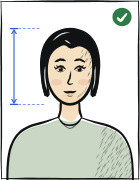
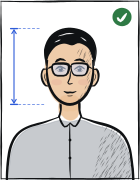
Quick answer: A Turkey passport photo must be 50 × 60 mm. Plain white background. Head occupies 53–60% of photo height (32–36 mm chin to crown). Neutral expression, clear lenses only, no glare. Last verified .
Turkey passport photo: size in mm, cm, inches and pixels
Millimetres
50 × 60 mm
Centimetres
5 × 6 cm
Inches
1.97 × 2.36″
Pixels at 300 dpi
591 × 709 px
Pixels at 600 dpi
1181 × 1417 px
Turkey-specific things to know
Türkiye publishes a 50 mm × 60 mm biometric photograph and says in so many words that it must not be cut to the 35 × 45 mm size used by most countries — the usual ICAO size is refused.
The passport instruction sets the face height at 32–36 mm (70–80 % of the photograph) and says the background is a mid-tone grey for light hair and preferably white for dark hair, while the NVİ page says a white background.
A headscarf is accepted with the face visible from chin to forehead, no shadows on the face and a scarf colour different from the background.
How passport photos are verified
The Turkish NVİ page on biometric photographs asks for a photograph that is «50 mm × 60 mm, on a white, patternless background», without shadows on the background, taken within the last six months, and warns that photographs of a different size or background can stop the application, and that photographers must be reminded not to cut the photograph to the 35 × 45 mm size used by most countries. The Ministry's second-generation passport instruction adds that the photograph is «taken within the last six months to ICAO standards and biometric», scanned into the system after it is attached to the application form, and that «photocopied or computer-reproduced and non-biometric photographs are not accepted»: face and hairstyle centred and fully visible, the height of the face «between 32 mm and 36 mm, covering 70–80 % of the photograph», eyes open and clear, hair not covering them, looking straight at the camera, head upright, mouth closed, the left and right face lines fully visible from the chin to the hairline, the background «patternless and shadowless — a mid-tone grey for light hair, preferably white for dark hair», even light with no reflection, shadow or red eye, no tinted lenses or sunglasses, frames not covering the eyes, and for a headscarf the face visible from chin to forehead, no shadows on the face and the scarf colour different from the background.
Examples and mistakes
What makes Turkey passport photos accepted
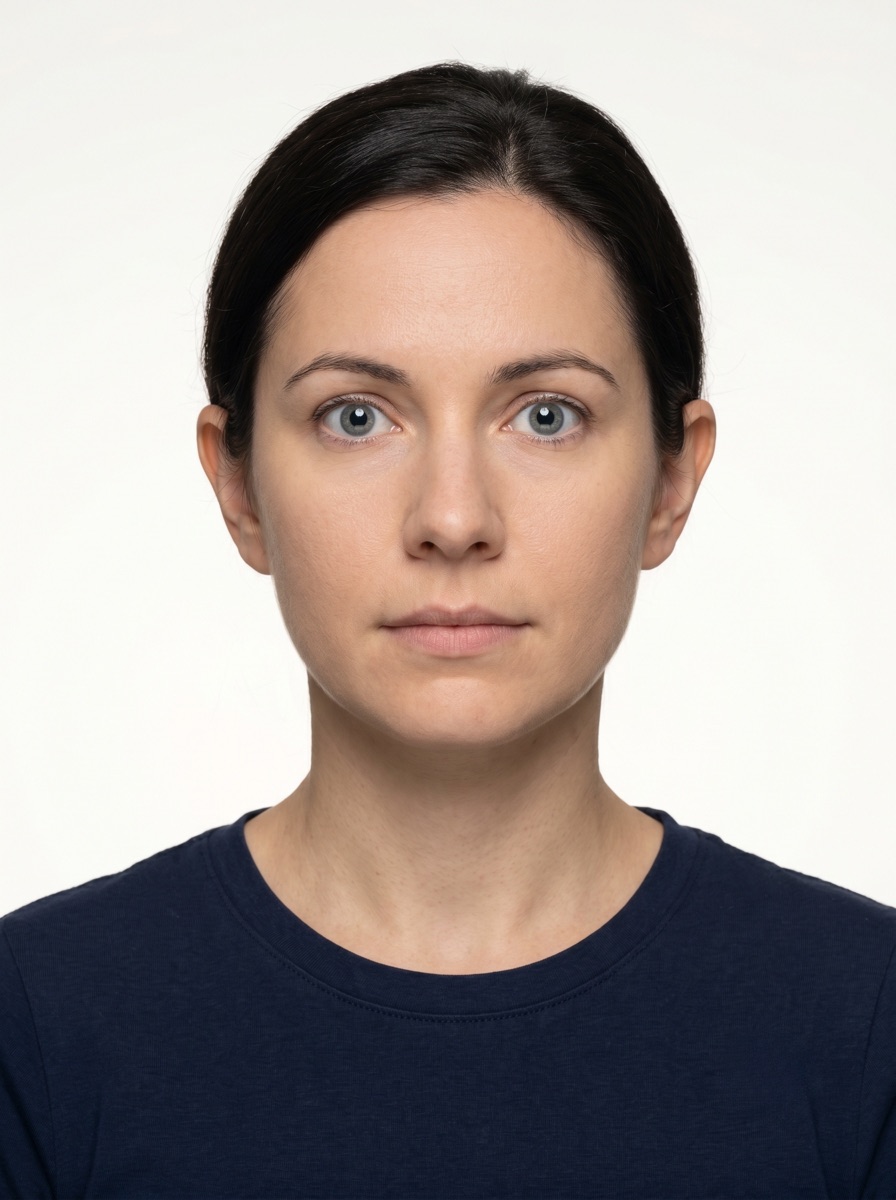
A photo that will be accepted, next to the six most common reasons Turkey passport photos get rejected.
Accepted
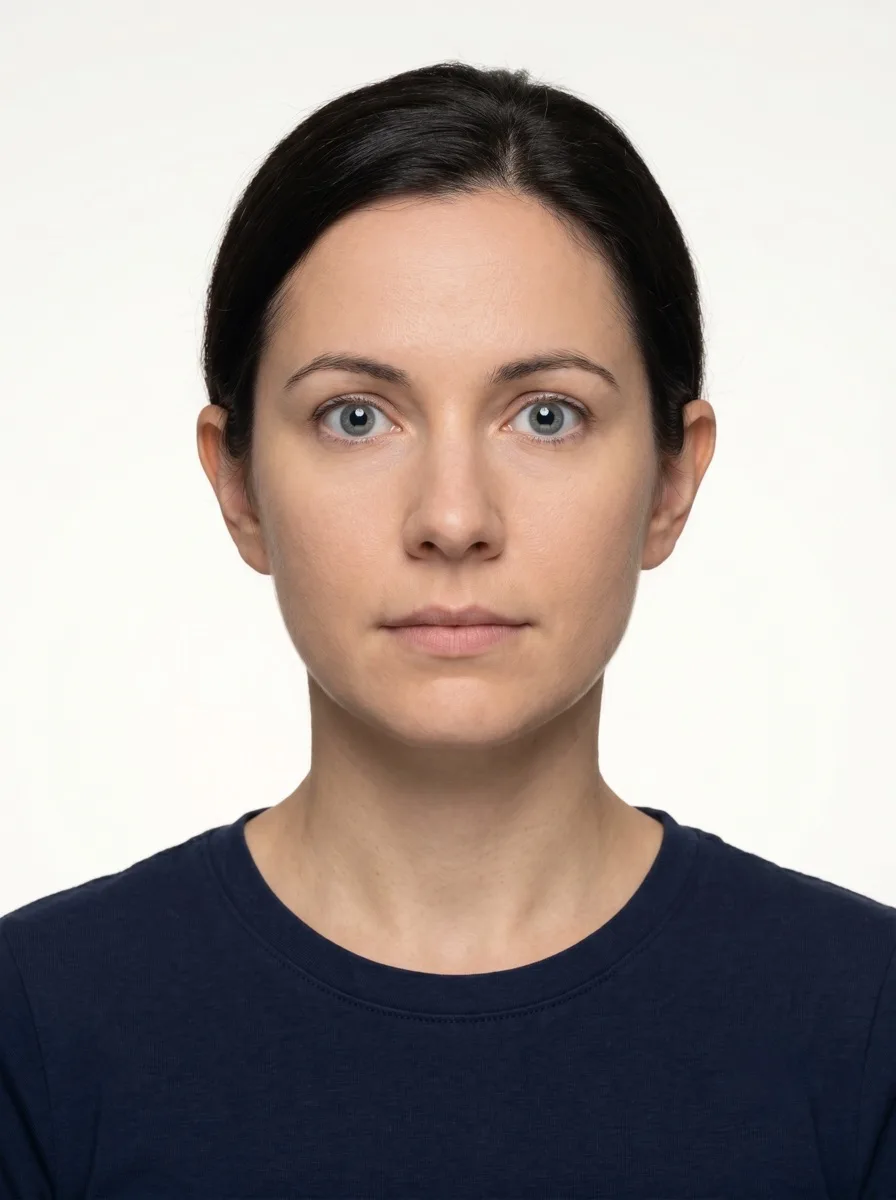
Compliant Turkey passport example (50 × 60 mm)
Face centred, looking directly into the lens
Plain background — no shadow, pattern or texture
Neutral expression, eyes open, mouth closed
No glasses, no hair across the face
Top 6 Turkey passport rejection causes
Background shadowShadow on the wall behind the head, or background with a visible pattern or gradient
Smile / open mouthVisible smile with teeth or open mouth instead of a neutral expression
Glasses with glareGlasses with a clearly visible light reflection covering part of the eye
Hair across the faceLoose hair strands covering the eyes, eyebrows or part of the face
Eyes off-cameraEyes looking to the side instead of directly into the camera lens
Head tiltedHead tilted so the eye line is no longer horizontal
Typical rejection reasons and how to fix them
Typical reasons a photo is rejected under the rules NVI / Ministry of Interior of Turkey publishes: what is wrong and what to change.
Reason
Fix
A photograph cut to 35 × 45 mm or of a size or background different from 50 × 60 mm on white
A 50 × 60 mm biometric photograph on a white, patternless background.
A photocopy, a computer reproduction, a non-biometric photograph or a photograph older than six months
A fresh original biometric photograph taken within the last six months.
A face height outside 32–36 mm, a face not centred, a turned or tilted head, a smile or an open mouth
A centred, upright head with the face 32–36 mm high, a neutral expression and a closed mouth.
Shadows, reflections or red eye, a patterned or shadowed background, tinted lenses or sunglasses, frames covering the eyes
Even light, a plain shadowless background, clear eyes with no tinted lenses.
A hat, headgear or object in the photograph, a headscarf that hides part of the face or has the colour of the background
Nothing on the head except a scarf with the face clear from chin to forehead, in a colour different from the background.
The tool puts in the required background. Stand half a metre from a plain light wall, face a window and shoot without flash — then there are no shadows on your face or on the wall.
Framing
Head: 53–60 % of the photo height (32–36 mm)
Camera at eye level, about a metre away; head and shoulders in the shot. The tool crops it to 50 × 60 mm.
Glasses
Clear lenses only, no glare
If you wear glasses, check the shot: no glare on the lenses, eyes clearly visible.
Expression and gaze
Neutral expression, mouth closed, eyes open
Look straight into the lens with your head level; keep hair away from your eyes and eyebrows.
Print at 100% scale, borderless, and turn off fit-to-page so each photo keeps its exact size.
Where to submit your passport application
A Turkish passport is applied for in person at a provincial or district population and citizenship directorate in Türkiye, or at a Turkish embassy or consulate abroad, with a printed biometric photograph that is attached to the form and scanned.
Provincial or district population and citizenship directorate (İl / İlçe Nüfus Müdürlüğü)in person with an appointment
nvi.gov.tr — the directorate of your province or district
Processing
See the NVİ page or the appointment system
Cost
See the NVİ fee table
50 mm × 60 mm biometric photograph on white, taken within six months; ask the photographer not to cut it to 35 × 45 mm.
NVİ, «Biometric Photograph Features» (17.01.2020): biometric photographs are high-quality photographs of defined size and properties in which face biometrics can be established, used on machine-readable cards whose standards are set by ICAO; the size is 50 mm × 60 mm, on a white, patternless background; no shadows on the background; taken within the last six months to show the latest appearance.
Same NVİ page: if photographs of a different size or background are brought, the application cannot be completed or, even if completed, the cards fail quality control at issuing and are cancelled, so the person must apply again; photographers must therefore be reminded not to cut biometric photographs to 35 mm × 45 mm; all photographers can take a biometric photograph.
Same NVİ page, the face: centred with the hairstyle and fully visible; no stains or folds; neutral colours reflecting the natural colours of the face; good contrast with sharp, clear detail; eyes open and clearly visible, hair not covering the eyes, looking directly at the camera; even light on the face without reflections, shadows or red eye; eyes clearly visible with no reflections on the lenses and no coloured lenses or sunglasses, the frame or the edge of the lens not covering the eyes; no other person or object in a small child's photograph; no hat, headgear or pipe except glasses used out of necessity; with a headscarf the face visible from chin to forehead and no shadows on the face.
Second-generation passport application instruction (edition of 11.05.2023), biometric photograph: the photograph to be used in passports is taken within the last six months to ICAO standards and is biometric; the photograph presented at the application is attached to the application form, then scanned and recorded in the system; photocopied or computer-reproduced and non-biometric photographs are not accepted; every age group gets a passport with a photograph; the photograph is judged against the instruction's pictures and accepted or rejected.
Same instruction, the criteria: the face and hairstyle centred and fully visible, good contrast, sharp detail; the height of the face between 32 mm and 36 mm and covering 70–80 % of the photograph; no stains or folds, neutral colours; looking straight at the camera, eyes clear and open, hair not covering the eyes; the head upright and not turned, no smile, mouth closed, the right and left face lines fully visible from the chin to the hairline.
Same instruction, background and extras: the background patternless and shadowless, a mid-tone grey for light hair and preferably white for dark hair; even light without reflection, shadow or red eye; no reflections on glasses, no coloured lenses or sunglasses, the frame not covering the eyes; no hat, headgear or pipe except necessary glasses; with a headscarf the face visible from chin to forehead, no shadows on the face and the scarf colour different from the background; a small child's photograph with no other person or object.
Questions
Frequently asked questions
The NVİ page gives 50 mm × 60 mm on a white, patternless background, taken within the last six months, and says it must not be cut to 35 × 45 mm.
The passport instruction says the height of the face is between 32 mm and 36 mm and covers 70–80 % of the photograph, with the head upright and centred.
The NVİ page says white; the passport instruction says patternless and shadowless, a mid-tone grey for light hair and preferably white for dark hair. White is the safe choice.
Yes, if the face is visible from the chin to the forehead with no shadows on the face and the scarf colour is different from the background.
The Turkey passport photo must be 50 × 60 mm. The head must occupy 53–60% of the photo height.
Yes. A phone and a light wall near a window are enough. The rear camera is sharper than the front one, so ask someone to take the photo or use a 3-second timer. The tool crops it to size, fixes the background and checks it against the Turkey passport photo rules.
Most passport offices ask for a photo taken within the last six months. It should look like you today: after a new haircut or beard, take a new one.
We refund the payment in full. Email us within 14 days of purchase with your order number and the rejection notice from the Turkey authority — the refund policy page has the details.
Sunglasses and heavily tinted glasses prohibited; eyes must be fully visible. If you keep them on, tilt them slightly downwards by lifting the arms a little above your ears: this usually moves reflections of a window or lamp off the lenses.
50 × 60 mm = 5 × 6 cm = 1.97 × 2.36 inches. At 300 dpi that is 591 × 709 pixels; at 600 dpi, 1181 × 1417 pixels.
Religious reasons only; must not cover the facial oval. The face must stay fully visible from chin to forehead and on both sides, with no shadow across it.
Yes. The same 50 × 60 mm format and head size apply to: driver's license, ID card (Kimlik).