 Australia
Australian Passport Photo Requirements: Size, the Glasses Ban and Why Inkjet Prints Fail
Two colour prints, 35–40 x 45–50 mm, face 32–36 mm, under 6 months old, on dye-sublimation glossy paper — and no glasses since 1 July 2018.
Key points
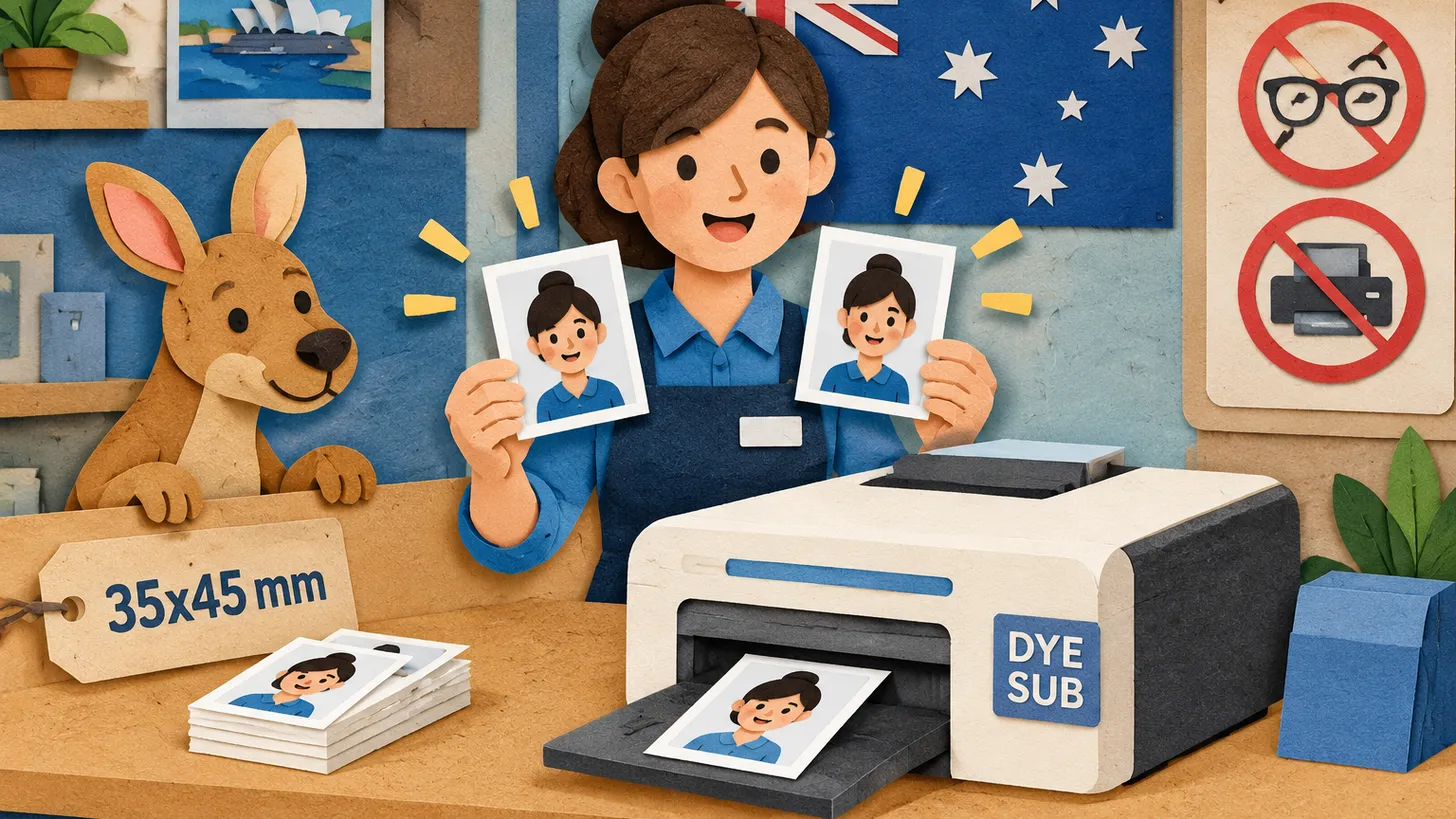
5 points- An Australian passport photo is 35–40 mm wide and 45–50 mm high, with the face 32–36 mm from chin to crown.
- You need two good-quality colour prints, less than 6 months old, clear and in focus, on a plain white or light background with uniform lighting.
- Prints must be produced by dye sublimation on heavy-weight glossy paper of at least 200 gsm — a home inkjet print does not meet the requirement.
- Glasses have not been allowed in Australian passport photos since 1 July 2018; a limited medical exemption needs a medical certificate.
- The camera should be at least 1.2 m from the subject so the face is not distorted; for home photos the Australian embassy in the US suggests 1.5 m and a second person taking the shot.
Australia’s passport photo rules are among the most specific about how the print is made, not just what is in the picture. That is why a photo that looks perfect on screen can still come back: it was printed on the wrong paper, or taken with glasses on. This guide sums up the requirements published by the Australian Passport Office and its embassies.
The numbers
| Requirement | Australian Passport Office |
|---|---|
| Size of each photo | 35–40 mm wide, 45–50 mm high |
| Face size | 32–36 mm from chin to crown |
| Number of photos | Two good-quality colour prints |
| Age | Less than 6 months old |
| Quality | Clear, in focus, no digital enhancement |
| Background | Plain white or light, uniform lighting |
| Paper and printing | Dye sublimation on heavy-weight glossy paper, at least 200 gsm; not an inkjet print |
AustraliaPassport · requirements
The print rule most people don’t know
The prints must be produced by dye sublimation rather than on an inkjet printer, on heavy-weight glossy photo paper of at least 200 gsm. In practice that means a lab or a kiosk that uses a dye-sublimation photo printer, not the inkjet on your desk and not a plain-paper laser printout. If you take the picture yourself, do the photographing at home and the printing at a photo lab that confirms it produces prints of this kind.
The glasses ban
The Australian Passport Office’s camera-operator guidelines say “No glasses (from 1 July 2018)”. The stated reason is that glasses adversely affect facial matching. A limited exemption may apply for people who need glasses for medical reasons, supported by a medical certificate; in that case the frames must not obscure the eyes and there must be no reflections on the lenses. Vision impairment alone is not enough.
Distance, light, and lens
- Distance: the camera-operator guidelines list a minimum of 1.2 metres from camera to subject, so that features are not distorted by a close-up lens.
- Home photos: the Australian embassy in the United States suggests staying at least 1.5 metres from the camera and having another person take the photo — no selfies.
- Lighting: even and free of shadows on the face and background.
- Retouching: none; a digitally enhanced photo is not accepted.
Why applications are delayed
- The prints are the problem, not the photo. Inkjet or plain-paper prints are the classic surprise for people who photographed themselves carefully.
- Glasses on. The ban has been in place since 1 July 2018; a photo with glasses and no medical certificate is not accepted.
- Old picture. Anything older than 6 months.
- Selfie distortion. A selfie taken at arm’s length is too close to satisfy the distance guideline and distorts the face.
- Wrong face size. The face has to be 32–36 mm on the finished print, so a print that was scaled after the crop can end up outside the range.
Our Australian passport photo tool lays out the correct frame and face size so that you can send the file to a lab that prints on dye-sublimation paper.
06Questions
5 answers01What size is an Australian passport photo?
35–40 mm wide and 45–50 mm high, with the face measuring 32–36 mm from chin to crown. Two prints are required.
02Can I print my Australian passport photo at home?
The prints must be produced by dye sublimation on heavy-weight glossy paper of at least 200 gsm, not on an inkjet printer, so a home inkjet print does not meet the requirement.
03Are glasses allowed in an Australian passport photo?
No, not since 1 July 2018. A limited medical exemption may apply with a medical certificate; frames must not obscure the eyes and there must be no reflections.
04How old can the photo be?
Less than 6 months old.
05How far away should the camera be?
The official camera-operator guidelines list a minimum of 1.2 metres. The Australian embassy in the US suggests at least 1.5 metres for photos taken at home, with someone else taking the picture.
07Official sources
- Australian Passport Office — Passport photos
passports.gov.au - Australian Passport Office — Passport photo capture guidelines for camera operators (PDF)
passports.gov.au - Australian Embassy, USA — Passport photos
usa.embassy.gov.au
Author: Yevhen Kravchenko. Published . Checked against official sources on .
AustraliaAustralian Citizenship Photo: JPEG 70 KB–3.5 MB Online, 32–36 mm Face on Paper, Glasses Off
Citizenship photo: online a JPEG of 70 KB–3.5 MB (1200 x 1600 px preferred); on paper 35–40 x 45–50 mm with a 32–36 mm face.
 Australia
Australia Visa Photo Requirements: JPEG 70 KB–3.5 MB, 1200 x 1600 px, Light Grey or Neutral Background
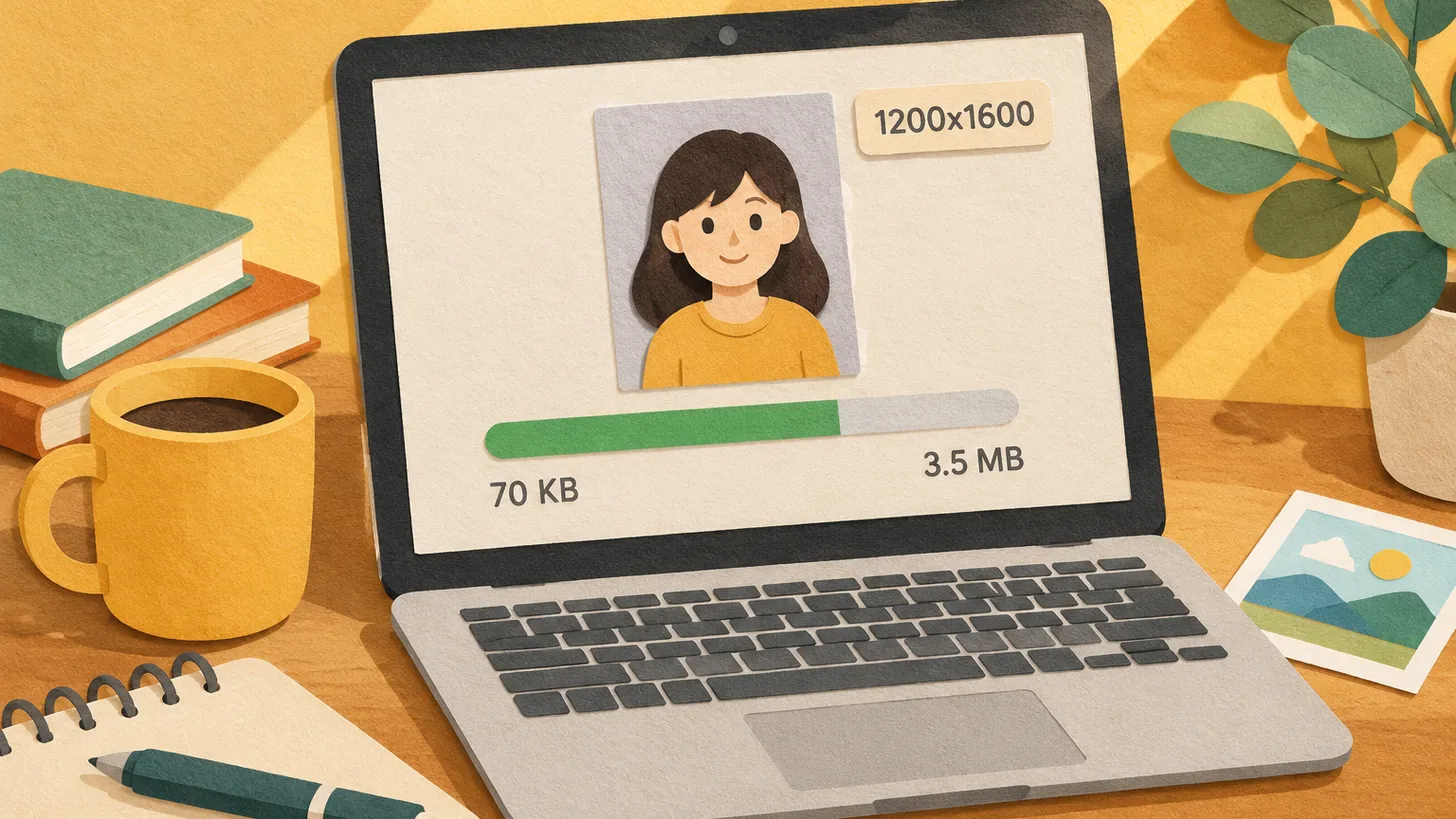
Home Affairs wants a digital JPEG for each applicant: 70 KB–3.5 MB, preferably 1200 x 1600 px, under 6 months, neutral or light grey background, unedited.
 USA
USA United Kingdom
 Canada+2
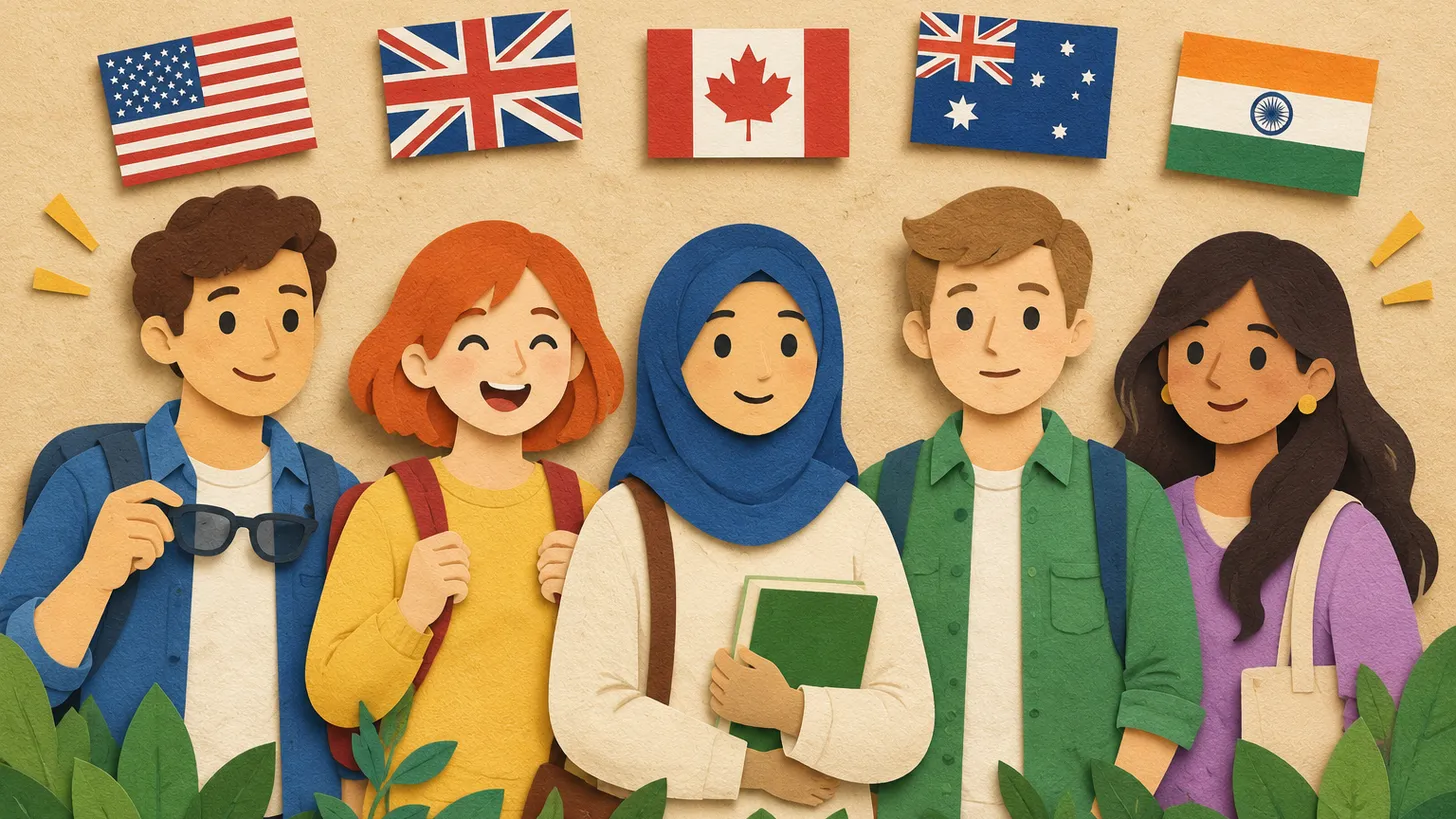
Glasses, Smiling and Head Coverings in Passport Photos: US, UK, Canada, Australia and India Compared
Australia bans glasses (since July 2018), the US only allows documented medical cases, the UK and Canada allow them with no glare; smiles: only the US accepts one.
Make the photo for this document
Upload a selfie — we crop it to 35 × 45 mm, replace the background and check it against the document rules. Free.
Passport · AustraliaUpload