SourceState identification institutes of Brazil (Polícia Científica de Santa Catarina; Polícia Civil do Paraná) for the National Identity Card (CIN)
Verified
Quick answer: The recommended Brazil ID card photo size is 30 × 40 mm. Plain white background. Head occupies 70–80% of photo height. Neutral expression, clear lenses only, no glare. Last verified .
Brazil ID card photo: size in mm, cm, inches and pixels
Millimetres
30 × 40 mm
Centimetres
3 × 4 cm
Inches
1.18 × 1.57″
Pixels at 300 dpi
354 × 472 px
Pixels at 600 dpi
709 × 945 px
Brazil-specific things to know
Brazil's identity card is a state document: the photograph is taken at the identification institute at the appointment, so adults usually bring no 3 × 4 print — only children of 0–2 and posts without biometric capture ask for one.
The states word the rules differently: Paraná bans glasses and asks for the forehead showing with no fringe, Santa Catarina asks to avoid white clothing and previous-ID photographs.
Lasting facial paintings of specific ethnic groups and ear gauges are named as allowed in the photograph; removable facial paint is not.
How ID card photos are verified
The Brazilian National Identity Card (CIN) is issued by the states, and two state pages say the photograph is taken for you: Santa Catarina — «a 3 × 4 photograph is no longer required for the issue of the identity card, except for children of 0 to 2 years»; Paraná — «the photograph will be captured by the Identification Institute at the in-person appointment, free of charge», and for an online request «the applicant must capture the photograph when sending it». Where a print is still asked for — at posts without digital biometric capture, always in Santa Catarina — it must be a «3 × 4» colour photograph «recent (90 days) and identical, without a date, on a white background, without retouching (printed on matte paper)», with no printed, dark, shaded or dotted background, showing «the bust — head, neck, both ears and the upper chest — in a frontal position» with «a neutral expression and closed lips»; «avoid white clothing»; photographs from the previous identity card are not accepted. Paraná's ICAO-based rules add a white background «without reflections, patterns, stains or shadows», the hair behind the shoulders and ears with the forehead showing (no fringe), and ban earrings, piercings, necklaces, glasses, coloured contact lenses, hats, caps, scarves and hoods — with exceptions for dark glasses in total visual impairment and a headscarf in a neutral light colour for a pathology, medical treatment or religious habit.
Examples and mistakes
What makes Brazil ID card photos accepted
One compliant example next to the six most common rejection causes for Brazil ID card applications. These are the differences that most often determine whether a document photo is accepted.
Accepted
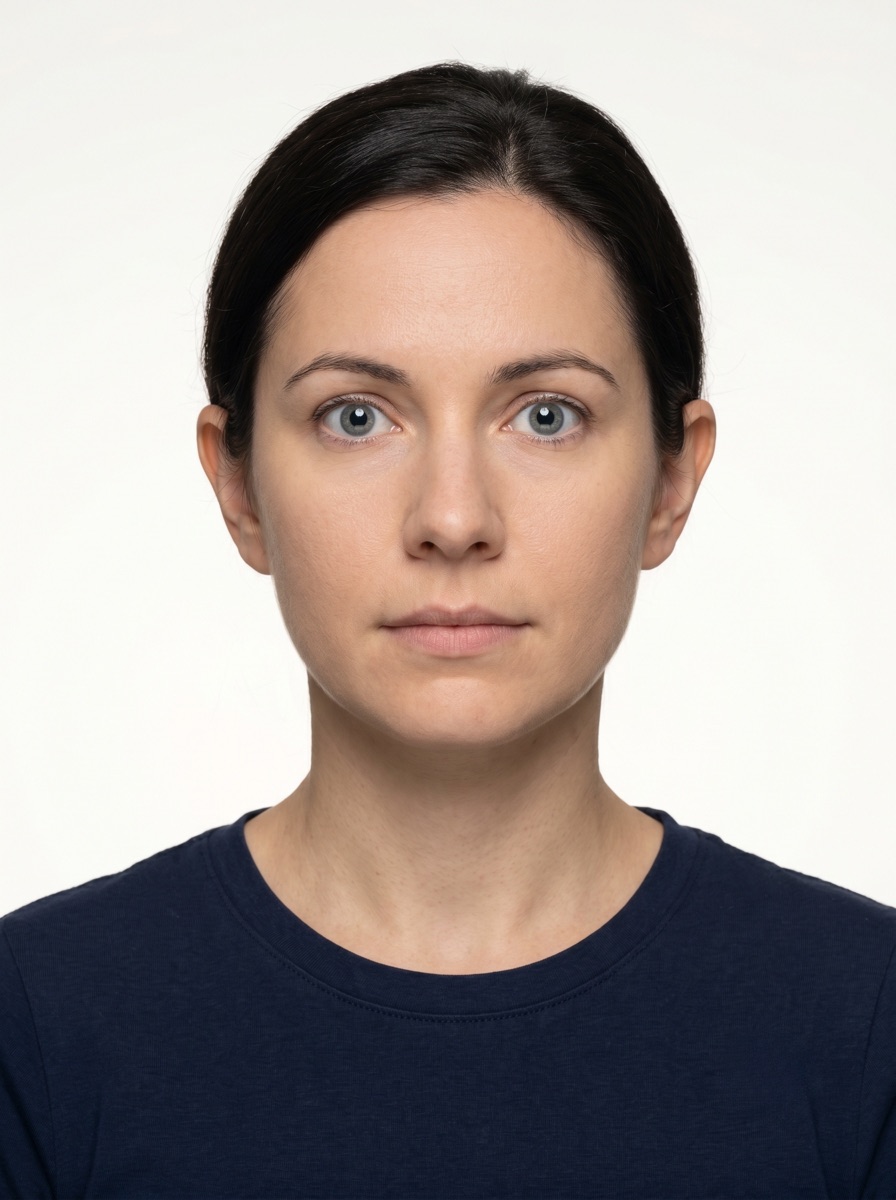
Compliant Brazil ID card example (30 × 40 mm)
Face centred, looking directly into the lens
Plain background — no shadow, pattern or texture
Neutral expression, eyes open, mouth closed
No glasses, no hair across the face
Top 6 Brazil ID card rejection causes
Background shadowShadow on the wall behind the head, or background with a visible pattern or gradient
Smile / open mouthVisible smile with teeth or open mouth instead of a neutral expression
Glasses with glareGlasses with a clearly visible light reflection covering part of the eye
Hair across the faceLoose hair strands covering the eyes, eyebrows or part of the face
Eyes off-cameraEyes looking to the side instead of directly into the camera lens
Head tiltedHead tilted so the eye line is no longer horizontal
Typical rejection reasons and how to fix them
Typical reasons a photo is rejected under the rules State identification institutes of Brazil (Polícia Científica de Santa Catarina; Polícia Civil do Paraná) for the National Identity Card (CIN) publishes: what is wrong and what to change.
Reason
Fix
A print that is not 3 × 4, not in colour, older than 90 days, not identical, not on matte paper, retouched or dated
Identical 3 × 4 colour photographs of the last 90 days on matte paper, undated and unretouched.
A background that is not white, or is printed, dark, shaded, dashed or dotted, with reflections or stains
A plain white background without patterns, reflections, stains or shadows.
A neutral expression missing (a smile or open lips), a head not frontal, both ears or the upper chest not shown
A frontal bust — head, neck, both ears, upper chest — with a neutral expression and closed lips.
Glasses, coloured contact lenses, hats, caps, scarves or hoods without a listed exception, hair or a veil covering the face
Face and neck outline clear; a headscarf only in a neutral light colour for a pathology, medical treatment or religious habit.
A photograph from the previous identity card, white clothing, prints or slogans on clothing, strapless tops
The tool puts in the required background. Stand half a metre from a plain light wall, face a window and shoot without flash — then there are no shadows on your face or on the wall.
Framing
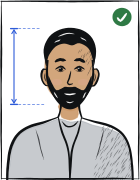
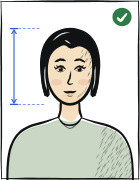
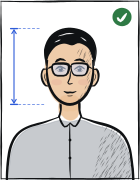
Head: 70–80 % of the photo height
Camera at eye level, about a metre away; head and shoulders in the shot. The tool crops it to 30 × 40 mm.
Glasses
Clear lenses only, no glare
If you wear glasses, check the shot: no glare on the lenses, eyes clearly visible.
Expression and gaze
Neutral expression, mouth closed, eyes open
Look straight into the lens with your head level; keep hair away from your eyes and eyebrows.
Print at 100% scale, borderless, and turn off fit-to-page so each photo keeps its exact size.
Where to submit your ID card application
The Brazilian National Identity Card (CIN) is applied for at the identification institute of your state, online or in person with an appointment, where the photograph is taken.
Instituto de Identificação do Paraná (Polícia Civil)in person with an appointment, or online
policiacivil.pr.gov.br — CIN: posts of the Instituto de Identificação
Processing
See the Paraná CIN page
Cost
See the Paraná CIN page (the photograph at the post is free)
The photograph is captured at the appointment, free of charge; online you capture it when sending.
Polícia Científica de Santa Catarina (Portaria 043/2024/PCI), «Fotografias»: a 3 × 4 photograph is no longer required for the issue of the identity card, except for children of 0 to 2 years, whose photographs are presented by the person present at the biographic and biometric registration in print (3 × 4) or digital form; at identification posts without digital biometric capture the 3 × 4 photograph remains compulsory in all cases.
Same page, the photographs: in colour, recent (90 days) and identical, allowing the perfect current identification of the person, without a date, on a white background, without retouching (printed on matte paper), with no printed, dark, shaded, dashed or dotted background; the bust of the applicant (head, neck, both ears and the upper chest) in a frontal position, in the 3 × 4 size set by Decree 9.278/2018; a neutral expression and closed lips; no facial paint that interferes with the view of the face, except permanent cultural paint of specific ethnic groups.
Same page, clothing and coverings: avoid white clothing; except for religious habits, hair loss due to pathologies, medical treatment or visual impairment, the face must not be covered by hair, a veil or dark glasses, nor a hat, cap, bandana or other object covering the head; no objects or prints that advocate drugs, racism, violence or political slogans; women should not wear a top, dress or strapless blouse that gives the false impression of no clothing, men no printed T-shirts with advertising or inappropriate slogans and no tank tops; religious orientations are respected (a habit, a turban and others that leave the face visible); photographs of the previous identity card are not accepted.
Polícia Civil do Paraná, «Informações sobre a CIN», photograph: it should be as recent as possible, so it is captured by the Identification Institute at the in-person appointment, free of charge; for an online request the applicant captures the photograph when sending it; to meet the ICAO standards under Federal Decree 10.977/22 the photograph shows the face, head, neck, both ears and the upper chest in a frontal position in the proportion of 3 × 4 cm, on a white background without reflections, patterns, stains or shadows, the hair behind the shoulders and ears with the forehead showing (no fringe), a neutral expression and closed lips.
Same Paraná page, prohibited items and exceptions: earrings, piercings, removable facial paint, necklaces, glasses, coloured contact lenses, hats, caps, berets, bands, scarves, beanies, hoods or any other item that hinders the identification of the face and the neck outline; ear gauges, as a continuously worn accessory, may be kept; dark glasses are optional only in total visual impairment; a headscarf is allowed for a pathology, medical treatment or religious habit if neutral and light in colour and the face and the neck outline are visible; lasting facial paintings of specific ethnic groups are allowed.
Questions
Frequently asked questions
Usually not: the identification institute takes the photograph at the appointment; a print is still asked for children of 0 to 2 years and at posts without digital biometric capture.
Colour, recent (90 days), identical, undated, on a white background, unretouched on matte paper, a frontal bust with both ears, a neutral expression and closed lips.
The Paraná page bans glasses (dark glasses are optional only for total visual impairment); the Santa Catarina page bans dark glasses and anything covering the face.
The recommended size for the Brazil ID card photo is 30 × 40 mm. The head occupies 70–80% of the photo height. The photo must reflect your current everyday appearance.
Plain white background. Identity cards are used frequently in daily life — for banking, age verification and domestic travel — so the photo is scrutinised many times and minor background issues become more visible at print scale.
Yes. Stand against a flat light-coloured wall, face a window for even natural light, and use a phone with a timer. The tool handles the crop, background normalisation and ICAO alignment check automatically.
Identity card photos generally need to reflect your current appearance. Most authorities accept photos taken within the last six months, but significant changes to hair, beard or facial features since the photo was taken may require a new one.
No dark glasses; eyes must be clearly visible. Removing glasses for the shoot is the safest option, especially given the long validity period of most identity cards. Glare that passes today may fail re-verification at a future biometric checkpoint.
Anfas.Pro provides a 14-day full refund if the Brazil authority rejects the photo and you supply the rejection notice.
30 × 40 mm = 3 × 4 cm = 1.18 × 1.57 inches. At 300 dpi that is 354 × 472 pixels; at 600 dpi, 709 × 945 pixels.
Only for religious or medical reasons, without covering the face. The face must stay fully visible from chin to forehead and on both sides, with no shadow across it.
Yes. The same 30 × 40 mm format and head size apply to: work permit.