SourceIncome Tax Department of India — PAN application forms and Protean eGov Technologies (PAN services)
Verified
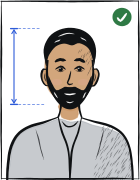
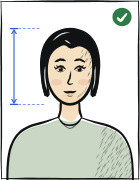
Quick answer: A India PAN card photo must be 35 × 45 mm. Plain white background. Head occupies 70–80% of photo height. Neutral expression, clear lenses only, no glare. Last verified .
India PAN card photo: size in mm, cm, inches and pixels
Millimetres
35 × 45 mm
Centimetres
3.5 × 4.5 cm
Inches
1.38 × 1.77″
Pixels at 300 dpi
413 × 531 px
Pixels at 600 dpi
827 × 1063 px
India-specific things to know
Paper and online routes use different sizes: two prints of 4.5 cm × 3.5 cm (35 mm wide, 45 mm high) on Form 93, but a 3.5 × 2.5 cm scan for the upload — the upload size is not the size of the print.
Protean's own pages disagree on the upload limit — 20 KB on the guidelines page, 50 KB in the photo-change article — so a file under 20 KB satisfies both.
The Aadhaar e-KYC route needs no photograph at all; the photo on the card then comes from Aadhaar, if you accept it.
How PAN card photos are verified
The PAN (Permanent Account Number) photo depends on how you apply. On the paper route the Income Tax Department's Form No. 93 (citizens of India; Form 95 for foreigners) asks you to «affix two recent colour photographs with white backgrounds (size 4.5 cm × 3.5 cm)» in the boxes on the form — not stapled or clipped — and warns that «the clarity of image on the PAN card will depend on the quality and clarity of the photograph affixed on the form».
Read more
You sign or put your left thumb impression across the photo on the left side, part on the photo and part on the form, and the photo on the right side must be clear and without any mark: Protean says that a mark which hinders the clear visibility of the face may mean the application is not processed. On the online route with scanned images (e-Sign or DSC) Protean's guidelines give a colour JPEG of 3.5 × 2.5 cm at 200 DPI, with a maximum of 20 KB on its guidelines page and 50 KB in its photo-change article, and the signature 2 × 4.5 cm up to 10 KB; the photo should be recent, in colour, with a clear light-coloured background and a neutral expression.
With the Aadhaar e-KYC route you are not asked to upload any photograph — the Aadhaar photograph is used if you agree. For a change of the photo, the correction application ticks the «Photo Mismatch» box and uploads a new photograph in the same format.
Examples and mistakes
What makes India PAN card photos accepted
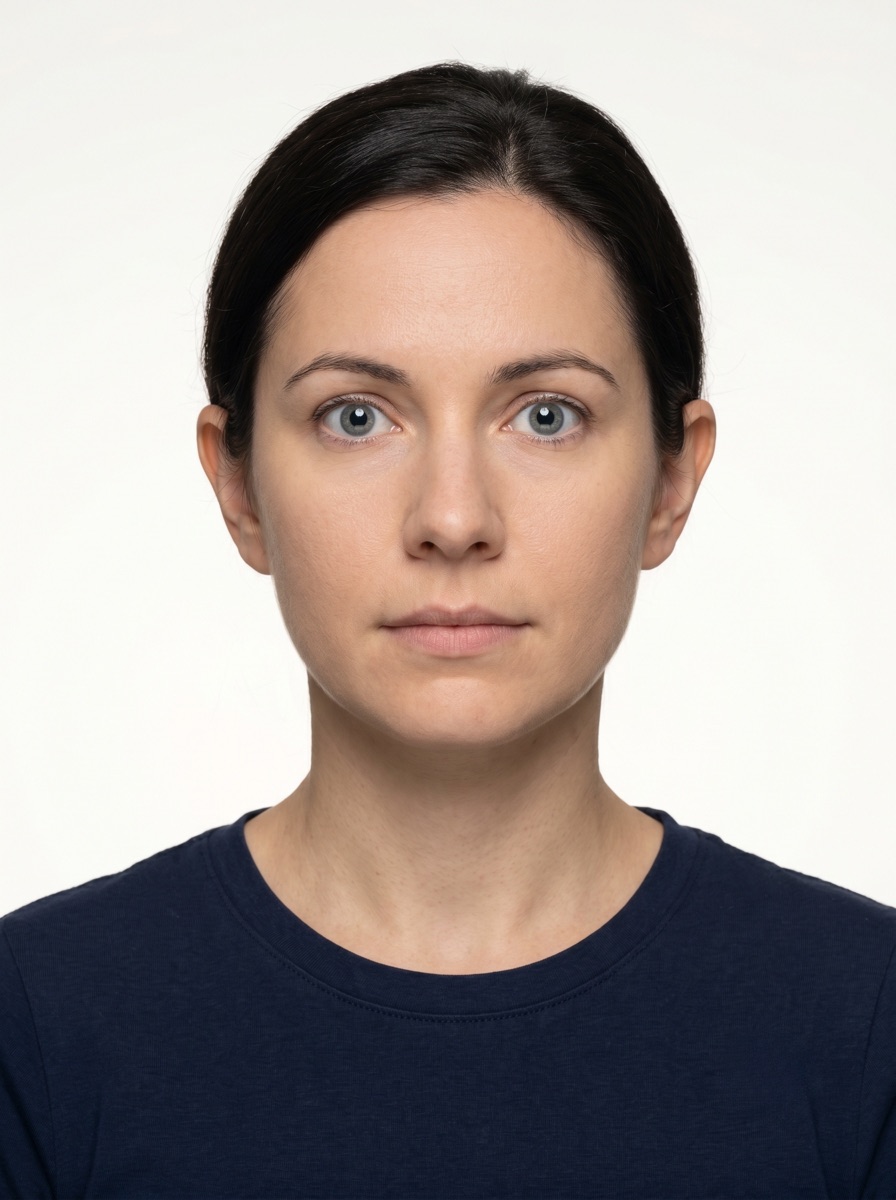
A photo that will be accepted, next to the six most common reasons India PAN card photos get rejected.
Accepted
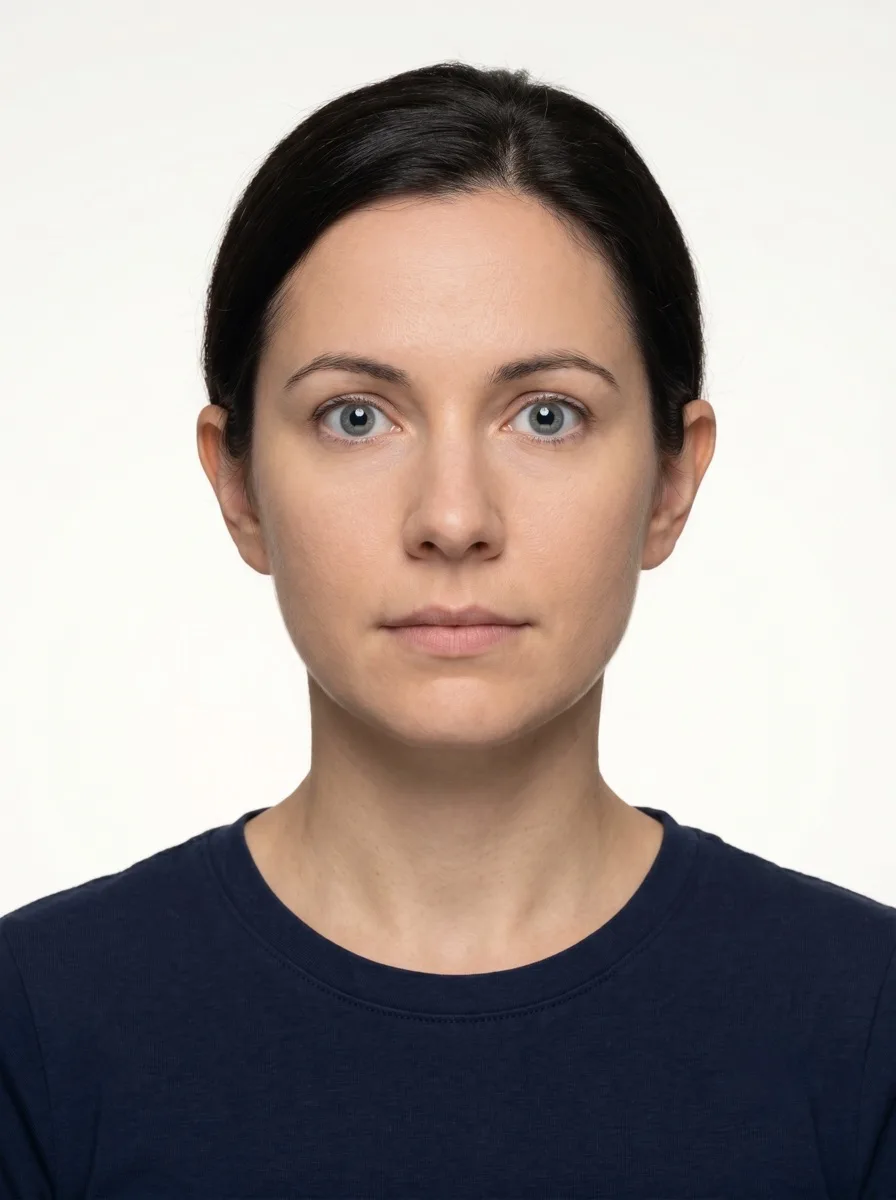
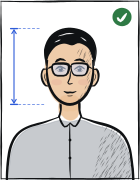
Compliant India PAN card example (35 × 45 mm)
Face centred, looking directly into the lens
Plain background — no shadow, pattern or texture
Neutral expression, eyes open, mouth closed
No glasses, no hair across the face
Top 6 India PAN card rejection causes
Background shadowShadow on the wall behind the head, or background with a visible pattern or gradient
Smile / open mouthVisible smile with teeth or open mouth instead of a neutral expression
Glasses with glareGlasses with a clearly visible light reflection covering part of the eye
Hair across the faceLoose hair strands covering the eyes, eyebrows or part of the face
Eyes off-cameraEyes looking to the side instead of directly into the camera lens
Head tiltedHead tilted so the eye line is no longer horizontal
Typical rejection reasons and how to fix them
Typical reasons a photo is rejected under the rules Income Tax Department of India — PAN application forms and Protean eGov Technologies (PAN services) publishes: what is wrong and what to change.
Reason
Fix
A mark on the photograph that hinders the clear visibility of the face (for example the signature or thumb impression on the right-hand photo)
Keep the right-hand photo clean; sign across the left-hand photo only.
Photographs that are not recent colour prints with a white background, or that are stapled or clipped to the form
Affix two recent colour 4.5 cm × 3.5 cm prints on a white background with glue, never a staple or clip.
A scanned photo that is not a JPEG, not 200 DPI, over the size limit, or not 3.5 × 2.5 cm
Save a colour JPEG of 3.5 × 2.5 cm at 200 DPI, under 20 KB to satisfy both Protean limits.
A blurred, dark or shadowed photo — the quality of the card image depends on it
Use a sharp, evenly lit photo with the face clearly visible and a neutral expression.
An old photo that no longer looks like you (for a change-of-photo application)
Apply for a correction with the «Photo Mismatch» box ticked and a new recent photograph.
The tool puts in the required background. Stand half a metre from a plain light wall, face a window and shoot without flash — then there are no shadows on your face or on the wall.
Framing
Head: 70–80 % of the photo height
Camera at eye level, about a metre away; head and shoulders in the shot. The tool crops it to 35 × 45 mm.
Glasses
Clear lenses only, no glare
If you wear glasses, check the shot: no glare on the lenses, eyes clearly visible.
Expression and gaze
Neutral expression, mouth closed, eyes open
Look straight into the lens with your head level; keep hair away from your eyes and eyebrows.
Print at 100% scale, borderless, and turn off fit-to-page so each photo keeps its exact size.
Where to submit your PAN card application
A new PAN is applied for on the Protean portal: with Aadhaar e-KYC no photograph is uploaded, with e-Sign or DSC scanned images are uploaded, and in the physical mode the signed acknowledgement with two photographs is posted to Protean.
Protean PAN services (online application, Form 93 / 94)online; paperless (e-KYC, e-Sign, DSC) or physical posting
tinpan.proteantech.in — PAN services; Income Tax PAN Services Unit, Pune, for the physical mode
Processing
See the Protean pages
Cost
See the Protean fee page
Paper: two recent colour 4.5 cm × 3.5 cm photos on white; scanned: JPEG 3.5 × 2.5 cm, 200 DPI.
Form No. 93 (application for allotment of PAN, individual citizen of India), guideline (c): all applicants (including a minor, a mentally ill person or a person of unsound mind) should affix two recent colour photographs with white backgrounds, size 4.5 cm × 3.5 cm, in the space provided on the form; the photographs should not be stapled or clipped to the form; the clarity of the image on the PAN card will depend on the quality and clarity of the photograph affixed on the form. The form prints the photo boxes as «Recent colour photograph of the applicant (4.5 cm x 3.5 cm)».
Form No. 93, guideline (d), and the Protean online-application page: the signature or left hand thumb impression is provided across the photo affixed on the left side of the form (or of the acknowledgement), part on the photo and part on the form; the photograph affixed on the right side should be clear and without any mark, and the signature should not be on it; if there is any mark on that photograph such that it hinders the clear visibility of the face of the applicant, the application may not be processed.
Protean, guidelines for filling the PAN application (scanned images): the photograph and signature are scanned to these specifications — photograph: 200 DPI, colour, JPEG, maximum 20 KB, dimension 3.5 × 2.5 cm; signature: 200 DPI, colour, JPEG, maximum 10 KB, dimension 2 × 4.5 cm; supporting documents: 200 DPI, black and white, PDF/A or JPEG, maximum 300 KB per page.
Protean article «Change PAN Card Photo», upload step: photograph — dimensions 3.5 cm × 2.5 cm, resolution 200 DPI, file type JPEG, file size maximum 50 KB, recent, in colour, with a clear light-coloured background and the face clearly visible with a neutral expression; to change the photograph the applicant chooses «Changes or Correction in existing PAN Data» and ticks the box «Photo Mismatch» (and, advisably, «Signature Mismatch»).
Protean, application modes: for e-KYC & e-Sign, e-Sign based or DSC based online PAN applications there is no need to send physical documents to Protean, as they are paperless; with the physical mode the signed acknowledgement affixed with photographs (for individuals) is posted with the proofs; on utilising the Aadhaar-based e-KYC the applicant is not asked to upload any photograph or supporting documents, and the applicant chooses whether the photograph in Aadhaar is printed on the PAN card.
Questions
Frequently asked questions
On the paper Form 93 two recent colour photographs with white backgrounds of 4.5 cm × 3.5 cm, glued not stapled or clipped, with the right-hand photo clear and unmarked; online with scanned images a colour JPEG of 3.5 × 2.5 cm at 200 DPI under the Protean size limit; with Aadhaar e-KYC no photograph is uploaded.
Paper: 4.5 cm × 3.5 cm. Upload: 3.5 × 2.5 cm at 200 DPI, JPEG, with a maximum of 20 KB on Protean's guidelines page and 50 KB in its photo-change article. Protean gives the size in centimetres and DPI, not in pixels.
Yes: apply for «Changes or Correction in existing PAN Data», tick «Photo Mismatch» (and «Signature Mismatch» if you want a new signature) and upload a new recent colour photograph in the same format.
Form 93 asks for white backgrounds on the paper photographs; Protean's upload guidance says a clear light-coloured background. A plain white background satisfies both.
The India PAN card photo must be 35 × 45 mm. The head must occupy 70–80% of the photo height. The photo should look like you do day to day.
Yes. Stand against a plain light wall facing a window, and take the photo with a timer or ask someone to help. The tool crops it to size, fixes the background and checks the framing.
Most offices accept a photo taken within the last six months. If your hair, beard or face has changed noticeably since then, take a new one.
Eyes must be fully visible; no tinted lenses or strong reflections. If you keep them on, tilt them slightly downwards by lifting the arms a little above your ears: this usually moves reflections of a window or lamp off the lenses.
We refund the payment in full. Email us within 14 days of purchase with your order number and the rejection notice from the India authority.
35 × 45 mm = 3.5 × 4.5 cm = 1.38 × 1.77 inches. At 300 dpi that is 413 × 531 pixels; at 600 dpi, 827 × 1063 pixels.
Religious reasons only; must not cover the facial oval. The face must stay fully visible from chin to forehead and on both sides, with no shadow across it.