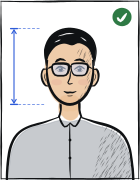
Quick answer: Background for the Indonesia visa photo: strictly white background. Head occupies 50–60% of photo height. Neutral expression, clear lenses only, no glare. Last verified .
The portal's own pages quote different file limits: 200 KB on the Visitor Visa page, 2 MB in the Ministry manual. Keeping the file under 200 KB satisfies both.
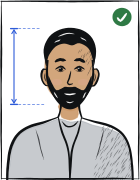
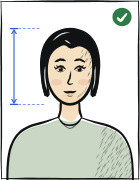
The framing is unusual: the head from the top of the hair to the chin takes only 50–60 % of the image height and the eyes sit 50–60 % up from the bottom — far from the 70–80 % of most passport photos.
The manual asks for formal clothes and a straight pose, and warns against blurry photos, pictures of anything but the face, and expressive faces.
Every traveller needs their own visa and photo, infants and children included, even when they travel on a parent's passport.
A mistake in a Visitor Visa request cannot be edited: the portal says you must create a new request, so check the photo before you pay.
How visa photos are verified
The photograph for an Indonesian visa is uploaded to the e-visa portal of the Directorate General of Immigration (evisa.imigrasi.go.id), so it is a digital file. The registration page asks for the latest colour photo with the face facing forward, 4 × 6 cm, at least 400 × 600 pixels, in JPEG, JPG or PNG.
Read more
The Visitor Visa (e-VOA) page lists a passport-size photograph in those formats with a maximum size of 200 KB; the Ministry's older user manual states 2 MB, so a file under 200 KB satisfies both. The manual describes the framing: facing straight to the camera in formal clothes, the head from the top of the hair to the chin taking 50–60 % of the image height and the eyes 50–60 % up from the bottom — not too close and not too far — and it does not recommend blurry photos, pictures of anything other than the face, or an expressive face.
Examples and mistakes
What makes Indonesia visa photos accepted
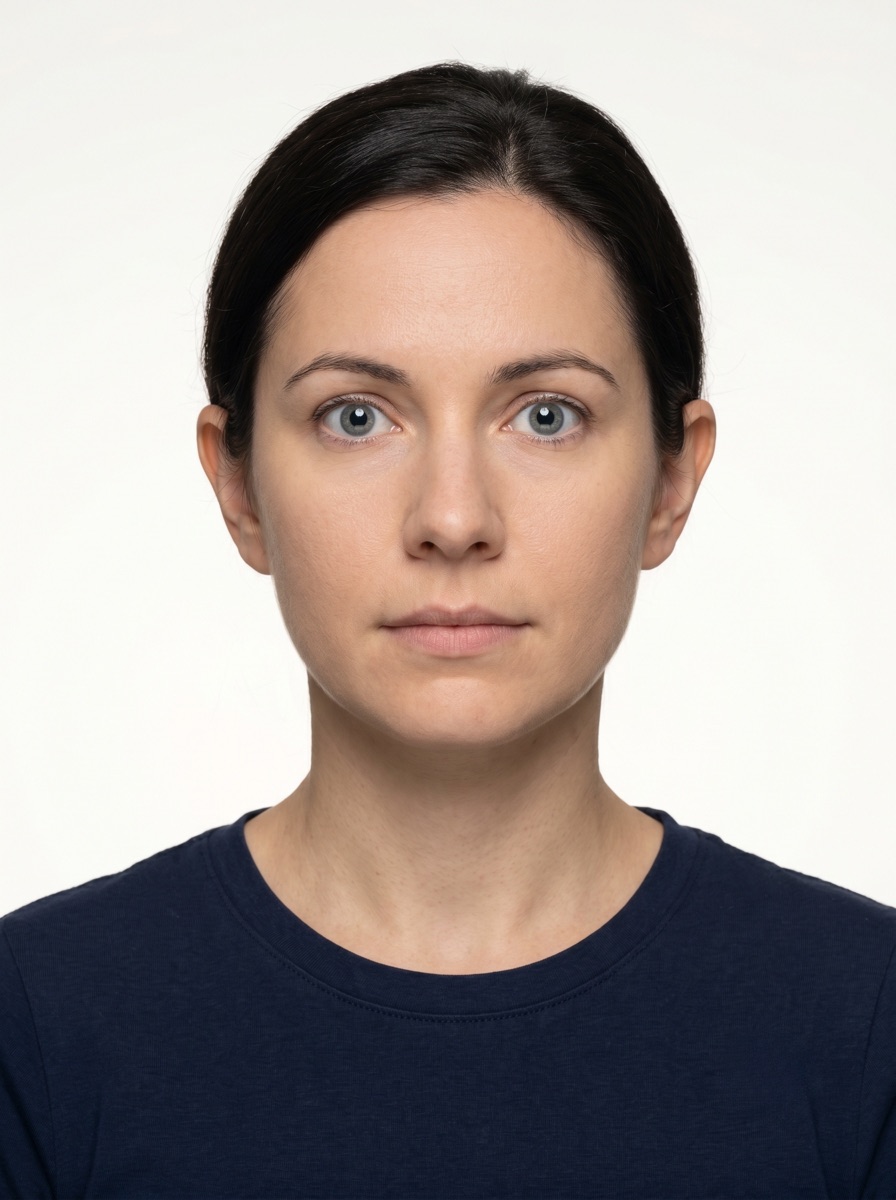
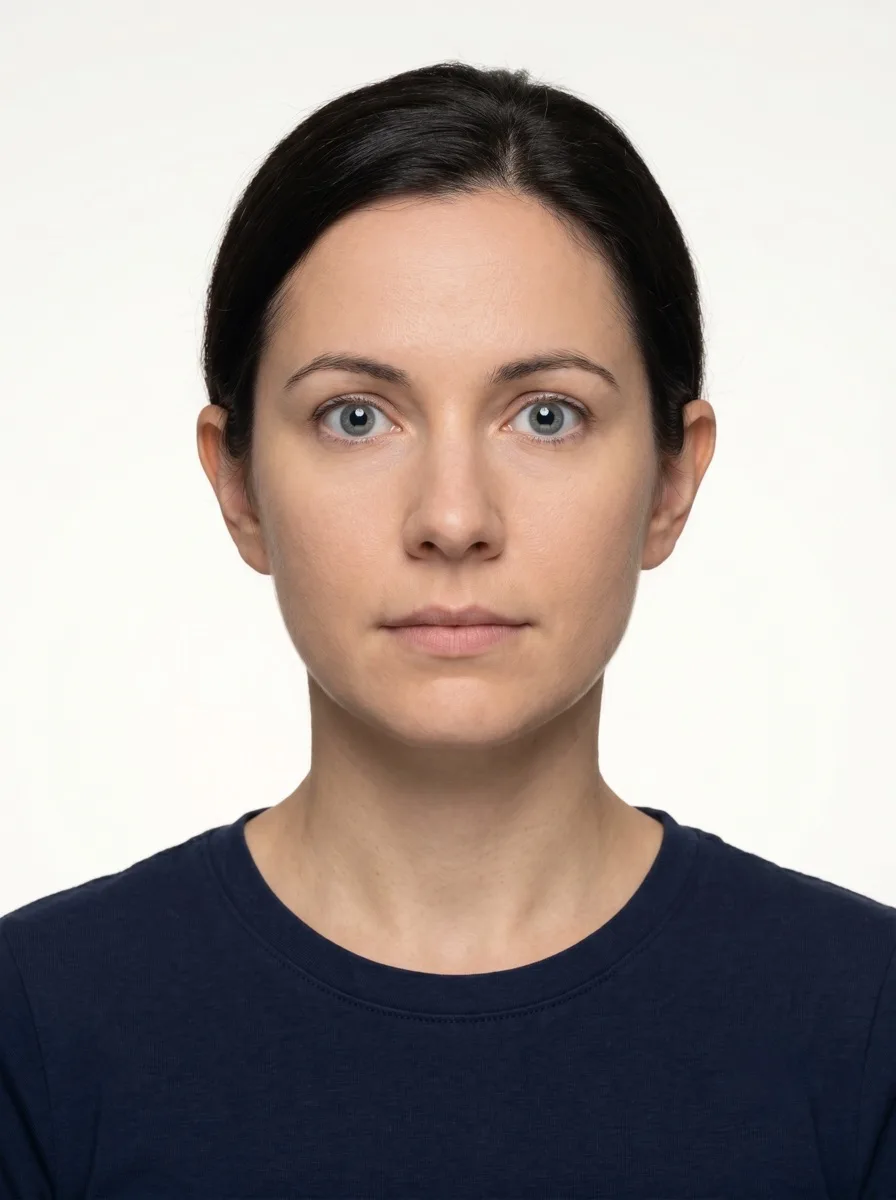
One compliant example next to the six most common rejection causes for Indonesia visa applications. These are the differences that most often determine whether a document photo is accepted.
Accepted
Compliant Indonesia visa example
Face centred, looking directly into the lens
Plain background — no shadow, pattern or texture
Neutral expression, eyes open, mouth closed
No glasses, no hair across the face
Top 6 Indonesia visa rejection causes
Background shadowShadow on the wall behind the head, or background with a visible pattern or gradient
Smile / open mouthVisible smile with teeth or open mouth instead of a neutral expression
Glasses with glareGlasses with a clearly visible light reflection covering part of the eye
Hair across the faceLoose hair strands covering the eyes, eyebrows or part of the face
Eyes off-cameraEyes looking to the side instead of directly into the camera lens
Head tiltedHead tilted so the eye line is no longer horizontal
Typical rejection reasons and how to fix them
Typical reasons a photo is rejected under the rules Indonesia eVisa / VFS eVisa publishes: what is wrong and what to change.
Reason
Fix
File over the size limit or in the wrong format
Save the photo as a JPEG, JPG or PNG under 200 KB (the Visitor Visa page limit; the manual allows up to 2 MB).
Image smaller than 400 × 600 pixels or not a 4 × 6 cm portrait
Export a portrait image in the 2:3 shape of 4 × 6 cm, at least 400 × 600 px, and still under the file limit.
Head too large or too small in the frame (not 50–60 % of the height), or eyes outside 50–60 % from the bottom
Crop so that the head from the top of the hair to the chin takes 50–60 % of the height and the eyes are 50–60 % up from the bottom; not too close and not too far.
Blurry photo, a picture of more than the face, or an expressive face
Use a sharp portrait of the face with a calm expression, facing the camera straight on.
Background not white, or shadows on the face or background
Shoot in front of a plain white wall with soft, even light so there are no shadows; the VFS Global guideline recorded for this visa asks for a white, shadowless photo.
The tool puts in the required background. Stand half a metre from a plain light wall, face a window and shoot without flash — then there are no shadows on your face or on the wall.
Framing
Head: 50–60 % of the photo height
Camera at eye level, about a metre away; head and shoulders in the shot. The tool crops it to the required size.
Glasses
Clear lenses only, no glare
If you wear glasses, check the shot: no glare on the lenses, eyes clearly visible.
Expression and gaze
Neutral expression, mouth closed, eyes open
Look straight into the lens with your head level; keep hair away from your eyes and eyebrows.
The Indonesian Visitor Visa (e-VOA) and e-visa are applied for online on the Directorate General of Immigration's portal, where the photo is uploaded as a file; each traveller has their own account request. Other routes are the visa on arrival at the port of entry and the visa at an Indonesian embassy or consulate.
Indonesia Visitor Visa (e-VOA) on the e-visa portalonline
evisa.imigrasi.go.id — Main Page > Apply; create and activate an account first
Processing
Shown on the portal; the visa then appears in your account
Cost
IDR 500,000 plus the card issuer's charges
Photo: 4 × 6 cm colour portrait, at least 400 × 600 px, JPEG/JPG/PNG up to 200 KB, face straight, head 50–60 % of the height. Single entry, 30 days of stay, valid 90 days; one request per traveller, infants included.
Indonesia e-visa application (other visa types)online
evisa.imigrasi.go.id — register as a foreigner and upload the passport page and the photo
Processing
Shown on the portal for the visa type
Cost
Fee of the chosen visa type, paid by card or via Simponi
The same photo upload on the registration page: 4 × 6 cm colour, at least 400 × 600 px, JPEG/JPG/PNG. The visa requirements list a recent colour photograph, a passport valid for six months and proof of living expenses of at least US$2,000.
Indonesia e-Visa portal (registration page): upload the latest colour softcopy photo, face facing forward, size 4 × 6 cm, resolution of at least 400 × 600 pixels, in JPEG, JPG or PNG format.
Visitor Visa (e-VOA) page: passport-size photograph in JPG, JPEG or PNG with a maximum size of 200 KB, plus the passport bio page (JPG, JPEG or PNG, also 200 KB), an email address and a valid Mastercard, Visa or JCB card.
Ministry user manual, framing: face straight to the camera in formal clothes; colour JPEG, JPG or PNG, at least 400 × 600 px, up to 2 MB; the top of the head including hair to the bottom of the chin 50–60 % of the image height; eye height from the bottom of the image 50–60 % of the height; not too close and not too far.
Same manual, photos not recommended: blurry photos, photos of something other than the face, and photos with an expressive face.
Visitor Visa terms: single entry; stay of 30 days from arrival; the visa is valid for 90 days from issue; fee IDR 500,000 plus card charges; each traveller, including infants and children, needs a separate visa; a mistake in the request means creating a new request.
Questions
Frequently asked questions
A recent colour photo, 4 × 6 cm, at least 400 × 600 pixels, as a JPEG, JPG or PNG file up to 200 KB. You face straight to the camera in formal clothes; the head from the top of the hair to the chin takes 50–60 % of the image height and the eyes are 50–60 % up from the bottom. The photo should be sharp and show only the face with a calm expression. Each traveller, infants included, has their own request.
Both — they describe the same portrait. The registration page gives 4 × 6 cm with a resolution of at least 400 × 600 pixels, and 400 × 600 is exactly a 2:3 portrait. Because the portal takes a file, the pixel size is what counts; use at least 400 × 600 px and keep the file weight under 200 KB.
The official pages disagree: the Visitor Visa page says a maximum of 200 KB for the photo and for the passport page, while the Ministry's older user manual says 2 MB. Keep the photo under 200 KB — it then passes either limit — and make sure it is still at least 400 × 600 px.
The portal pages and the Ministry manual do not name a background colour; they describe a sharp, straight-on photo of the face in formal clothes. The VFS Global guideline recorded for this visa asks for a white background without shadows, so a plain white wall with even light is the safe choice.
Yes. The portal states that each traveller must hold a separate Visitor Visa, including infants and children, even when they are included in a parent's passport. So every child gets their own request with their own photo, in the same 4 × 6 cm, 400 × 600 px, up-to-200 KB format.
The Indonesia visa photo requirements are in the table above. The head occupies 50–60% of the photo height. Many consulates also require a specific digital file size — see the spec table above for full details.
Strictly white background. The background must be evenly lit with no shadow gradients, especially around the head. Consular automated pre-screening rejects photos with any wall texture or off-white shade before the human reviewer ever sees the application.
Visa authorities typically require the photo to be taken within the last three to six months. Submitting an older photo, even one that looks similar to your current appearance, is a frequent cause of immediate consular rejection.
Not always. Tourist, work, student and transit visa categories sometimes specify different dimensions or background rules. Follow the requirements for your specific visa type rather than assuming one photo fits all Indonesia visa applications.
Anfas.Pro provides a 14-day full refund if the photo is the cause of rejection and you supply the consular rejection notice. We recommend keeping the consular receipt with rejection reason as proof.
Eyes must be fully visible; no tinted lenses or strong reflections. Consular automated checks flag glasses glare even when it is invisible to the human eye. Removing glasses entirely is the safest choice unless a medical exception is documented in your visa application.
Religious reasons only; must not cover the facial oval. The face must stay fully visible from chin to forehead and on both sides, with no shadow across it.