 Germany
Germany replaces Bürgergeld with Grundsicherung from July 1, 2026: what changes for Ukrainians
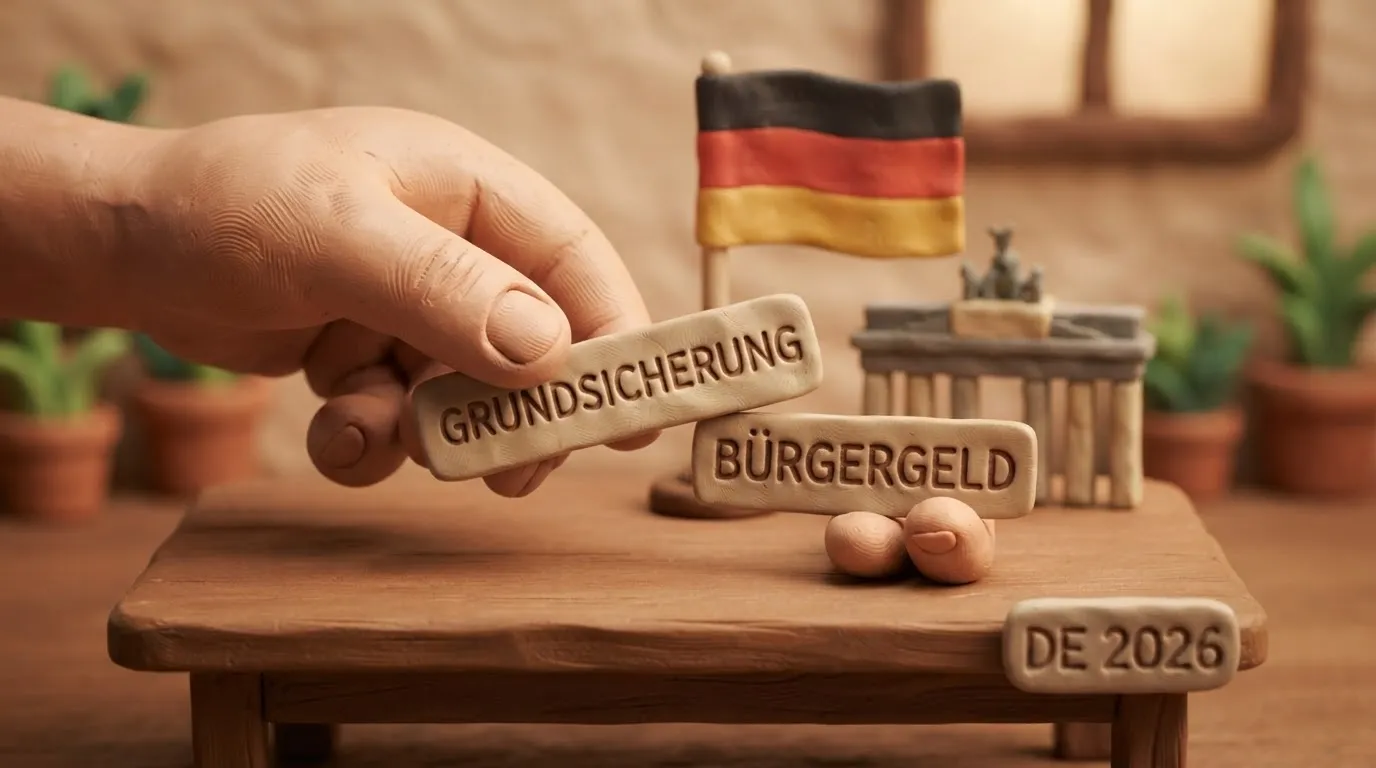
From 1 July 2026 Germany replaced Bürgergeld with Grundsicherung: stricter savings checks and sanctions for about 5.5 million recipients, including Ukrainians.
In this article · 6 sections
Key points
5 points- From 1 July 2026, Germany's Bürgergeld was officially replaced by Grundsicherung — the reform was passed by the Bundestag on 5 March 2026.
- The switch is automatic and affects about 5.5 million recipients nationwide, including Ukrainians currently on Bürgergeld — no new application is needed.
- The biggest change: savings are checked from day one instead of after a 12-month grace period, with new age-based allowances of roughly €5,000-€20,000 instead of the old €40,000.
- Sanctions for missed Jobcenter appointments are stricter — repeated misses can lead to a full stop of benefits, including housing costs.
- A separate bill to move Ukrainians who arrived after 1 April 2025 onto lower AsylbLG payments (about €441 instead of €563) was still stuck in the Bundesrat as of mid-2026 — not yet in force.
What changed
As of 1 July 2026, Germany's basic welfare benefit for people able to work is no longer called Bürgergeld. The Bundestag passed the reform on 5 March 2026 (321 votes in favor), and the Bundesrat approved it on 27 March 2026. The new name is Grundsicherung (the payment itself is called Grundsicherungsgeld), and the rules changed along with the name. The reform affects roughly 5.5 million recipients across the country.
| Before (Bürgergeld) | Now (Grundsicherung, from 1 July 2026) |
|---|---|
| The first 12 months (a «grace period») ignored savings up to €40,000 (+€15,000 per additional family member) | No grace period: savings are checked from day one; the allowed limit depends on age — roughly €5,000 to €20,000 |
| Base rate for a single adult (2026): about €563/month plus housing costs | Rate unchanged: about €563/month plus housing costs (no increase for 2026) |
| Missing a Jobcenter appointment led to warnings and gradual benefit cuts | First missed appointment: no consequence. Second: minus 30% for one month. Several in a row: staged cuts up to a full stop, including housing costs |
| Available work could be declined in favor of a retraining course | Suitable available work must be prioritized; an unjustified refusal leads to reduced benefits |
The transition is automatic: if you already receive Bürgergeld, you don't need to file a new application — the Jobcenter will switch you to the new Grundsicherung terms from your next approval period.
The government presents the reform as a way to move people able to work back into jobs faster and reduce abuse of the system. Social organizations, including SoVD, warn that stricter savings rules and sanctions will hit people with small savings and the long-term unemployed hardest.
Who this affects
The reform applies to everyone receiving basic welfare support for people able to work in Germany — including Ukrainians under temporary protection (§24) who are currently on Bürgergeld. The same new rules on savings, Jobcenter appointments, and job-search priority apply to them as to German citizens.
Separately from this reform, since November 2025 the government has been working on another bill — the Leistungsrechtsanpassungsgesetz. It would move Ukrainians who entered Germany after 1 April 2025 from Grundsicherung to the lower payments under the Asylum Seekers' Benefits Act (AsylbLG, roughly €441 instead of €563 for a single adult). The cabinet approved this draft on 19 November 2025, but as of mid-2026 the Bundesrat had still not agreed to it — the date it would take effect, if at all, is unknown. This is a separate matter: don't confuse it with the Grundsicherung reform, which is already in force from 1 July 2026 for all current recipients.
The temporary protection status under §24 of the Residence Act is not affected by these changes: it was automatically extended to 4 March 2027 for anyone whose permit was valid as of 1 February 2026 — no separate application to the Ausländerbehörde is needed.
What to do now
- Check your mail and your Jobcenter account: your next benefit notice will already follow the new Grundsicherung rules.
- Prepare up-to-date information about your savings and accounts — under the new rules they can be checked immediately, with no grace period.
- Don't miss scheduled Jobcenter appointments, and notify them in advance if you can't attend — penalties for repeated misses are now stricter.
- If you arrived in Germany after 1 April 2025, follow the news on the Leistungsrechtsanpassungsgesetz separately — as of this publication it had not yet taken effect.
- Don't worry about your §24 residence permit for now: it's automatically valid until March 2027, and no early renewal is needed.
Common mistakes
- Confusing the Bürgergeld → Grundsicherung renaming (applies to everyone, already in force since 1 July 2026) with the separate bill to cut payments for newly arrived Ukrainians (not yet passed).
- Thinking you need to file a new application because of the name change — you don't, the switch is automatic.
- Ignoring letters from the Jobcenter, assuming the reform doesn't apply to recipients with temporary protection status.
- Assuming your §24 residence permit needs urgent renewal because of this news — the status has already been extended separately, until March 2027.
Rules change often — always check the current requirements on the official government source listed above before acting.
05Questions
4 answers01Do I need to file a new application for the switch to Grundsicherung?
No. If you already receive Bürgergeld, the Jobcenter will automatically move you to the new Grundsicherung terms from your next approval period — no separate application is needed.
02Does the Grundsicherung reform apply to Ukrainians with temporary protection status?
Yes. Ukrainians who receive basic welfare support in Germany (Bürgergeld/Grundsicherung) are subject to the same new rules on savings, Jobcenter appointments, and job-search priority as German citizens.
03Is it true that Ukrainians who arrived after 1 April 2025 will get less money?
The government proposed such a bill (Leistungsrechtsanpassungsgesetz) back in November 2025; it would move them to the lower AsylbLG payments (roughly €441 instead of €563 for a single adult). But as of mid-2026 the bill was still stuck in the Bundesrat and had not been finally passed — this is not the same as the Grundsicherung reform, which is already in force from 1 July 2026.
04Do I need to urgently renew my §24 residence permit because of this reform?
No, that's a separate matter. §24 permits valid as of 1 February 2026 were automatically extended to 4 March 2027 without a separate application to the Ausländerbehörde.
06Official sources
- Bundesregierung — Bürgergeld wird zur neuen Grundsicherung
bundesregierung.de - Bundesagentur für Arbeit — Grundsicherung löst Bürgergeld ab
arbeitsagentur.de
Author: Yevhen Kravchenko. Published . Checked against official sources on .
 United KingdomGermany
Baby Passport Photo Rules: Eyes Open? Toys? Dummies? What the UK and Germany Actually Say
For a UK passport the baby must be alone, without toys or dummies; under-1s needn't have eyes open, under-6s needn't look at the camera.
 Germany
Germany's Digital Passport Photo Rule: How the E-Passfoto Process Works Since May 2025
German passports and ID cards now take only digital photos — captured at the office or uploaded by a registered photographer and retrieved via a code.
 USAUnited KingdomGermany+5
Passport Photo Size by Country: 18 Passports, 8 Different Formats — and Why One Photo Never Fits All
Of 18 passports we compared, 8 use 35x45 mm — but the US, Canada, Turkey, China, Spain and others don't, and head size ranges from 26 to 36 mm.

Make your photo to the current rules
Pick your document and upload a selfie — we crop it to size, replace the background and check it. Free. The sizes come from the same official sources as the news.