
Two standards for one border: visa photo requirements for Romania and Bulgaria
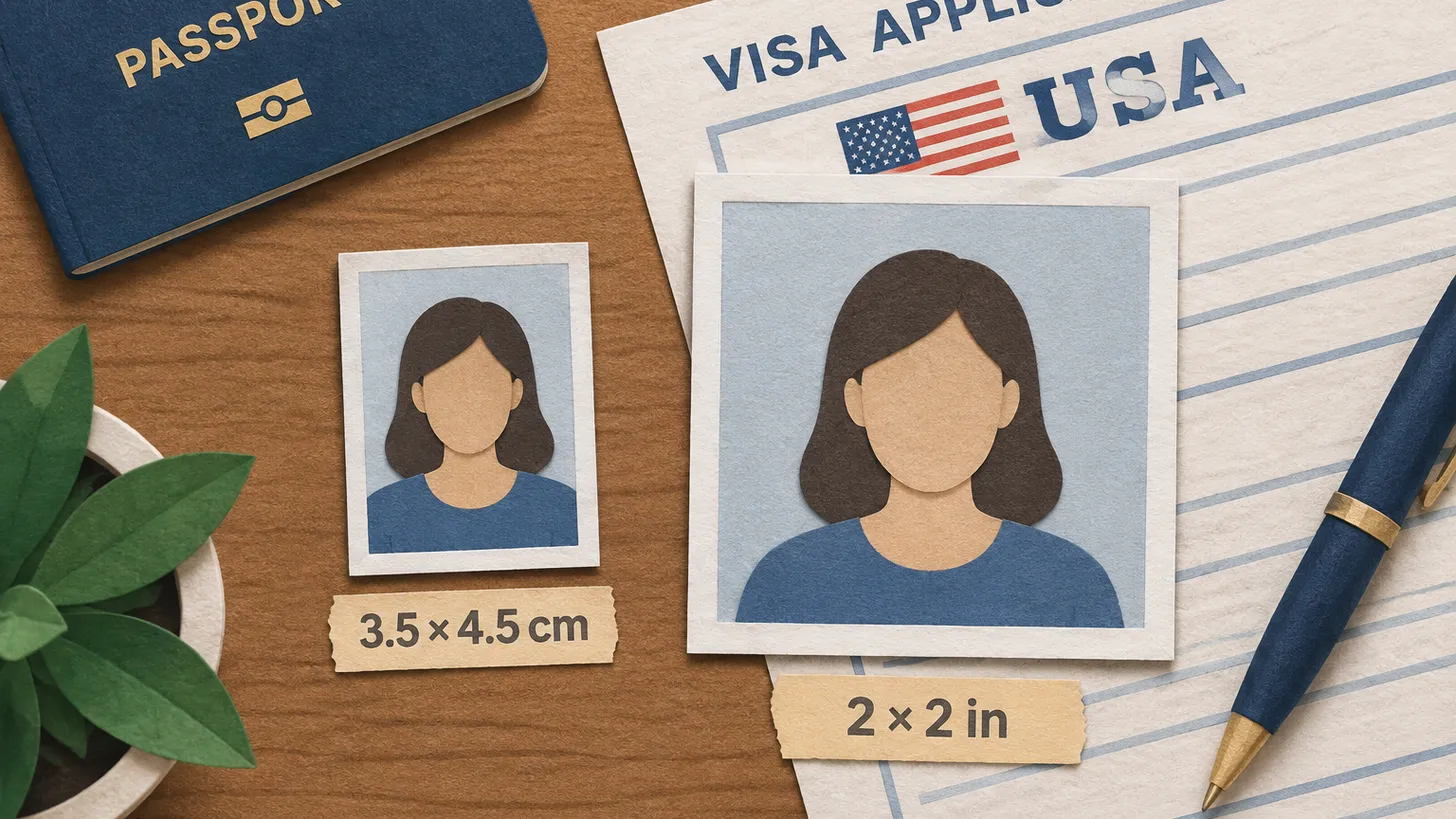
A Romanian national D visa requires two photos measuring 30×40 mm, while the Schengen C visa and Bulgarian visas require a single 35×45 mm photo.
News and guides · 582 articles
What changed in passport, visa and residence photo rules — every update dated and sourced.
A Romanian national D visa requires two photos measuring 30×40 mm, while the Schengen C visa and Bulgarian visas require a single 35×45 mm photo.
In Germany and Azerbaijan you may be photographed right at the issuing office.
Consular requirements are often stricter than domestic rules: for the US or a German passport, you may need a paper print even when applying electronically.
In the US 51x51 mm square, head height must be 50–69% of the frame height.
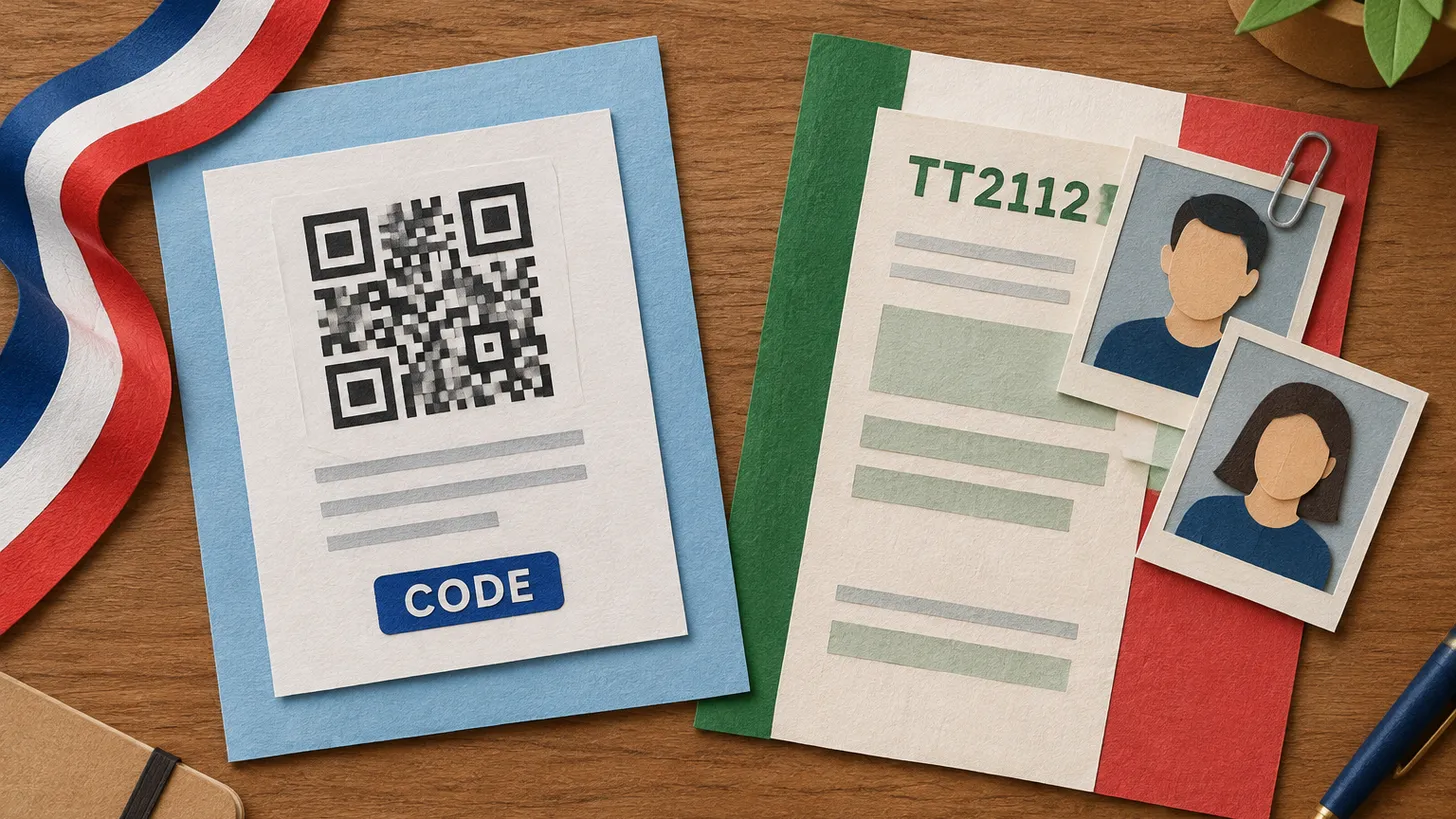
In France, a driving licence exchange uses an e-photo code or a paper photo-signature form sent by post, and from 12 May 2026 the exchange costs 40 euros.
In Russia, a child of any age must attend in person for biometrics, while in Ukraine a single 10 × 15 cm photo card may be submitted for children under 12 so that the image can be entered by scanning.
For an electronic application form you do not need to bring a photo, because an authorised officer takes the picture.
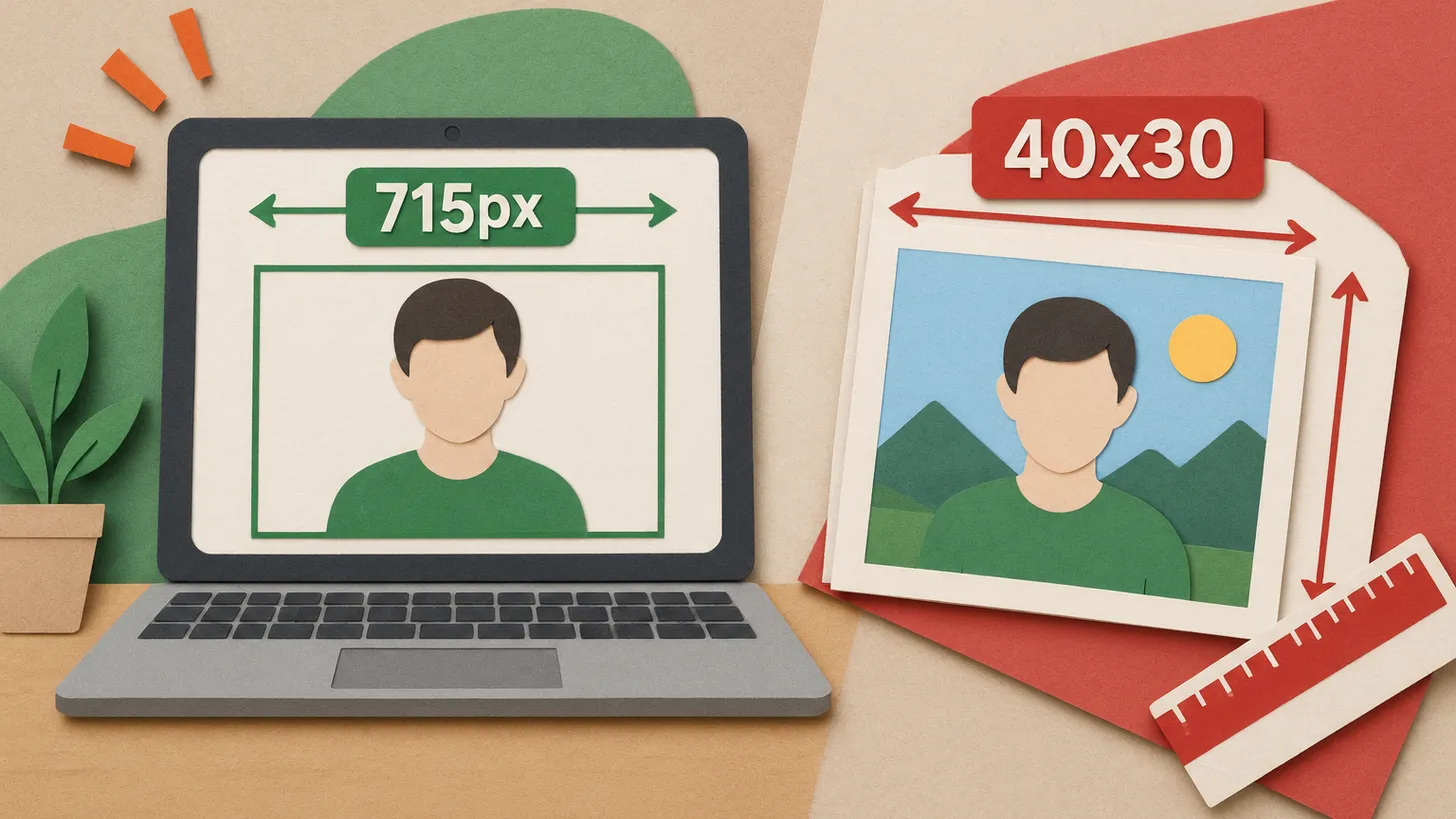
Estonia normally requires a 1300×1600 pixel digital file (a paper photo may be accepted in justified cases), while the 40×50 mm format survives only as the upper limit of the permitted range for Estonian long-stay visas.
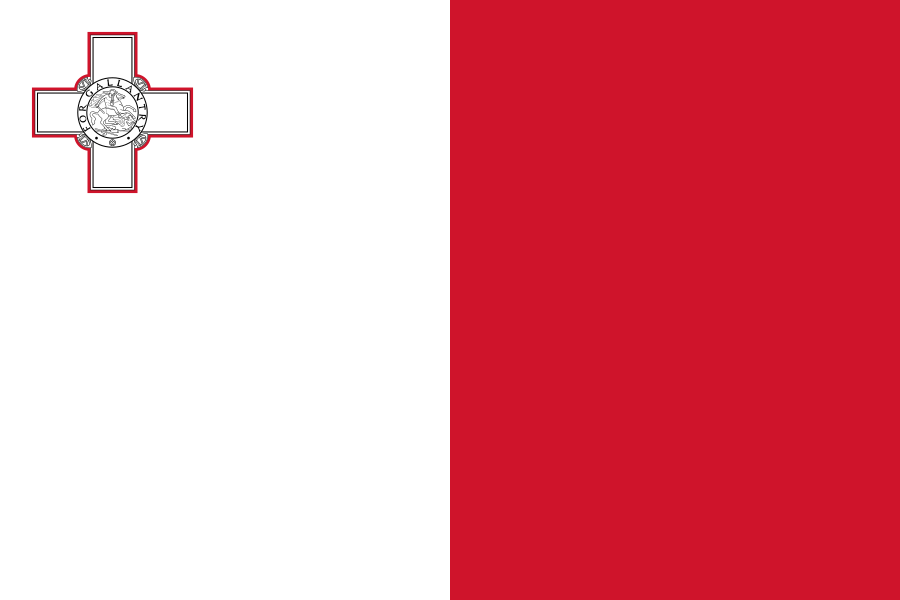
Ireland accepts digital files up to 9 MB or paper photos from 35×45 mm to 38×50 mm, while Malta requires original non-glossy prints measuring 40×30 mm.
To apply for an ikamet, you must bring 4 biometric photos on a white background, taken within the last 6 months, to your appointment; the authority does not publish the exact size in millimeters.
The 3×4 cm and 35×45 mm formats differ in both size and proportions.
For PESEL UKR you need a colour photo measuring 35 × 45 mm printed on photo paper, because the procedure requires an in-person visit to the gmina office.
There is no single standard: a Russian passport takes 2 photos, an Egyptian one takes 3, and in Estonia a paper print is accepted only as an exception in justified cases.
For a TPS Travel Authorization Document from inside the US, the Form I-131 instructions require two 2x2 inch paper photos; for a Refugee Travel Document, paper photos are required when applying from abroad.
A type D visa photo is governed by the national laws of the specific country, not the EU Visa Code: the Czech Ministry of Foreign Affairs, for example, requires a 35x45 mm size with a 32–36 mm face height.
For a Schengen visa, the technical photo requirements are set by the EU Visa Code, but the authorities publish sizes for the Slovenian national D visa (45 × 35 mm) and the Croatian visa (35 × 45 mm).
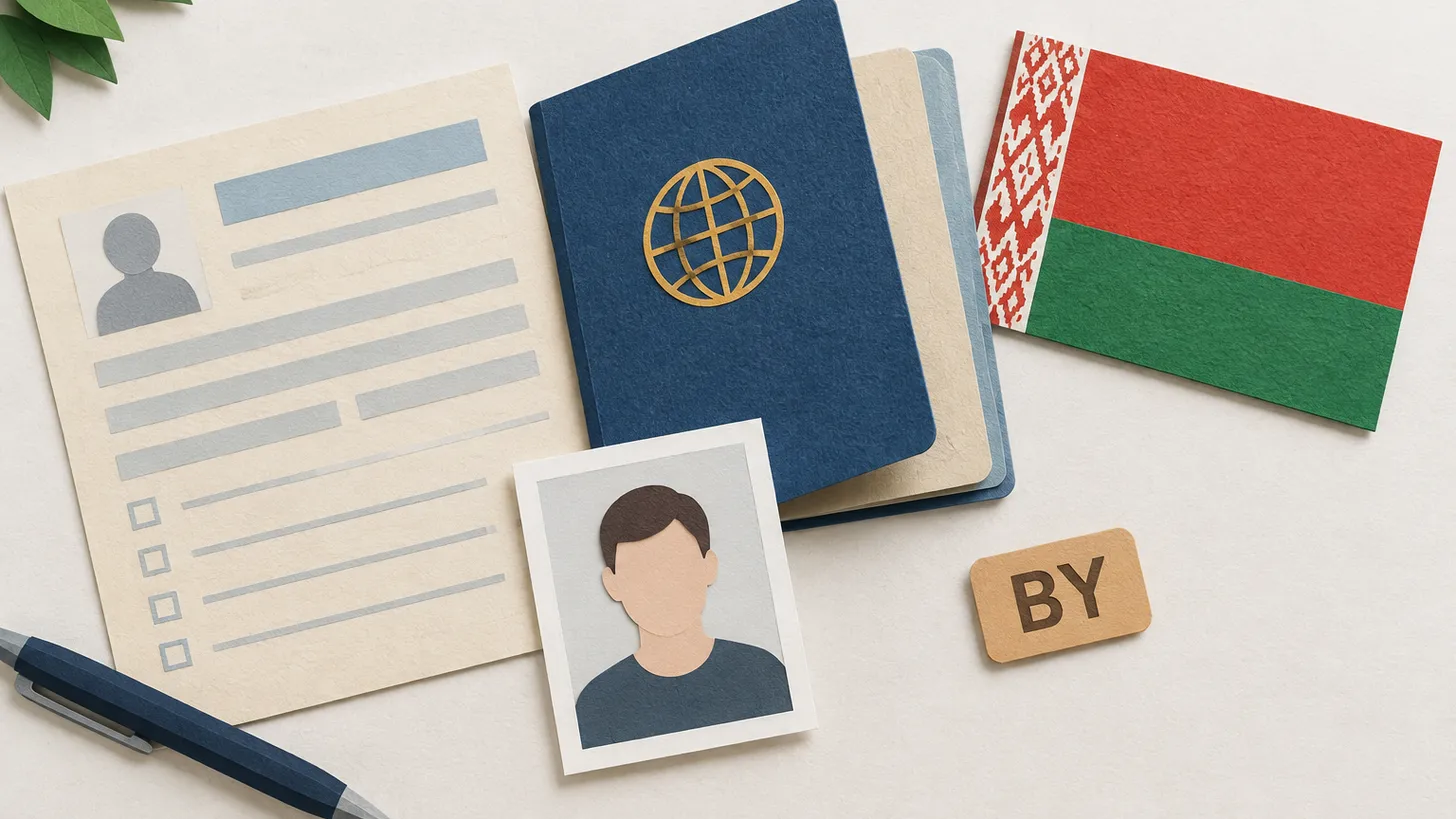
A Belarus visa requires a 35x45 mm photo in which the face fills 70–80% of the vertical height of the image, and the photo must be no more than 6 months old.
For the electronic form, a photo is not on the list of documents; clause 7 requires two 3.5 x 4.5 cm photos for the paper form.
For a Polish driving licence, the photo must be 35×45 mm and the face must take up 70–80% of the frame.
Replacing a Turkish driving licence requires 1 biometric photo no older than six months.
Using one photo for several documents can be difficult because of differences in frame sizes and validity periods, which in the verified set range from 3 to 12 months.
On 19 June 2026, Switzerland's Federal Council launched a consultation on the future of protection status S after 4 March 2027. It considers a possible exclusion of Ukrainian men of conscription age and greater cantonal control over social assistance levels.
From 1 July 2026 the Dutch government has, for the first time since the war began, adopted a separate country policy for assessing asylum applications from Ukrainians who do not fall under the Temporary Protection Directive (TPD). The IND can refuse status by pointing to relatively "safe" regions of Ukraine, but anyone who already holds TPD is unaffected: their status has been automatically extended until 4 March 2027.
Throughout 2026, Ukraine's Cabinet of Ministers expanded the grounds for exiting the country under martial law through separate resolutions: since January 1, media and information workers may exit with a Derzhkomteleradio letter (up to 60 days); since May 11, women in state positions are no longer limited to business trips; reserved men saw no major easing as of August.
Pick your document and upload a selfie — we crop it to size, replace the background and check it. Free preview. The sizes come from the same official sources as the news.