Crop a photo to 30 × 40 mm — Japan residence permit
Upload a photo — the frame is already set for a Japan residence permit. Ready to print or upload.
Document
No sign-up · no watermarks · your photo stays in your browser
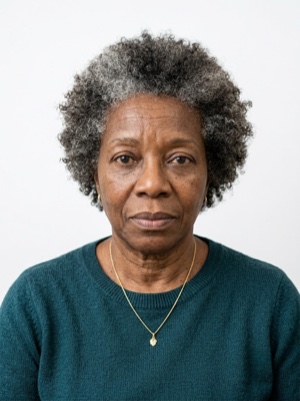
Want studio precision?AI correction fixes the light, shadows, clothing and pose — to the document's rules.€5.99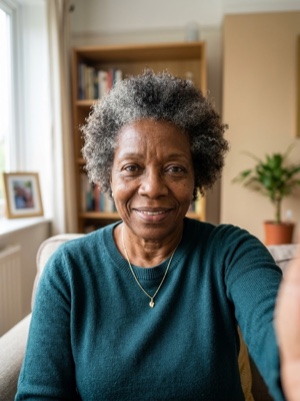
Exact numbers for this document
| Parameter | What it must be |
|---|---|
| Print size | 30 × 40 mm |
| Pixels at 300 dpi | 354 × 472 px |
| Pixels at 600 dpi | 709 × 945 px |
| Aspect ratio | 3:4 |
| Head, share of height | 55–70% of photo height |
| Background | Even plain background without shadows. #ffffff |
| Glasses | Eyes must be fully visible without strong reflections. |
What these millimetres work out to
- In a 30 × 40 mm frame a head band of 55–70% is 22–28 mm from the chin to the crown.
- Of the 40 mm of height that leaves 12–18 mm for the gap above the crown and the space below the chin together.
- At 300 dpi that is a head 260–331 pixels tall — below 260 px the file is too small to print, however good the crop is.
- Against the European 35 × 45 mm standard this frame is 0.86 times as wide, 0.89 times as tall and 0.76 times the area — a photo cut for one of the two cannot be reused for the other.
How to crop it, in three steps
- 01
Upload a photo taken face-on, in even light
- 02
The tool finds the face and aligns the frame itself — check that the head lands in 55–70%
- 03
Save the 30 × 40 mm result — print it or attach it to the application
Do not confuse it with another Japan document
Japan does not use one frame for everything. This page is about residence permit — 30 × 40 mm. The documents below are cut to a different size, so a file prepared here will not fit them.
- visa 35 × 45 mm
What we fix for free, and what AI fixes
Fixed for free
- Background. Replaced with the one this document asks for: even plain background without shadows.
- Head tilt. Straightened if the head leans slightly to one side.
- Frame. Exactly 30 × 40 mm, by the document’s rules.
- A light shadow on one side of the face. Gently brightened.
- File and print sheet. A file to the document’s rules and a 10 × 15 or A4 sheet to print.
What can't be fixed for free, AI correction fixes
- Hard shadows and uneven light on the face.
- A smile, raised brows or a half-open mouth. Cropping keeps the face it was given.
- Too few pixels. If the original is smaller than 354 × 472 px, enlarging it only blurs the face.
- Clothing and pose. Shoulders out of frame, body turned away from the camera.
Glare on the lenses. Take the glasses off or turn away from the light source and shoot again.
Why these photos get rejected — and how to fix each one
Japan-specific things to know
- Japan measures the face from the crown including the hair to the chin on a 4 × 3 cm photo and publishes the figures in a drawing (25 ± 3 mm), and it measures the part without the border.
- The ISA says «no background, including shadows» rather than naming a colour, and rejects a very dark background that hides the outline of the face.
- Editing is rejected in every case — larger eyes, whitened skin, removed moles or wrinkles — and so is a mirror-reversed photo.
- The standard page says six months before submission while an English procedure page says three months, and the name is written on the back unless the photo is printed into the form.
Printing on a single sheet
4 × 2 frames fit on one 10×15 cm sheet — 8 copies from a single print.
Print at 100% scale, borderless, and turn off fit-to-page so each photo keeps its exact size.
10 × 15 cm · 4 × 6″Photos: 10 (5 × 2)
A4 · 21 × 29.7 cmPhotos: 49 (7 × 7)
Where these numbers come from
Source: Immigration Services Agency of Japan (ISA), Ministry of Justice. Last checked against the official page on 1 Oct 2026.
What the source confirms
- ISA, standard for submitted photographs (translated from the Japanese): the size is 4 cm high and 3 cm wide; the applicant alone; the dimensions of the part without the border must match the dimensions of the drawing (the face is measured from the top of the head including hair to the tip of the chin); bareheaded and facing forward; no background including shadows; sharp; taken within six months before the day of submission; the name written on the back, except when the photo is printed directly in the photo field of the application (check the page of each procedure); if a photo that does not meet the standard is used, a retake is requested.
- Same page, the drawing as checked on 2026-09-21: the face from the top of the head (hair included) to the chin 25 ± 3 mm (22–28 mm), the top margin 5 ± 3 mm, and the face centred 15 ± 2 mm from the edge of the 30 mm width.
- Same page, unsuitable examples: not meeting the stated size or standard; off-centre; the face turned sideways; a shadow on the background; a tilted body; a part of the face hidden (glasses frames over the eyes, very thick frames, lighting reflected in the glasses, a mask, a fringe hiding the eyes, a face covered with cloth that leaves a shadow); hard to identify (an expression very different from the usual one, a dark background that hides the outline, a blurred or shaken picture, a shadow on the face); image processing or editing that enlarges the eyes, whitens the skin or corrects face parts, moles or wrinkles is unsuitable in any case; a left-right reversed photo is unsuitable.
- Same page, cloth over the face: a face covered with cloth that is still sharp is no problem; if the face is covered for a religious or medical reason, a statement in a free form is requested.
- ISA English procedure page «Business Manager», change of status of residence (Internet Archive copy): one photograph (4 cm long × 3 cm wide), a sharp, clear photo of the applicant facing forward with no hat, cap or head covering against a plain backdrop with no shadows, taken within three months prior to submitting the application, attached to the photograph section of the application with the name written on the back; the passport and the residence card are presented.
Submitted photograph standard: 30 x 40 mm, 25 +/- 3 mm head ↗
Questions people ask before cropping
What size must a residence permit photo be in Japan?
30 × 40 mm. 55–70% of photo height.
How many pixels is 30 × 40 mm when printed?
354 × 472 px (300 dpi) · 709 × 945 px (600 dpi).
How much of the frame should the head take?
55–70% of photo height.
What background does this document need?
Even plain background without shadows.
What can’t be fixed here for free?
Hard shadows and uneven light on the face. A smile, raised brows or a half-open mouth. Cropping keeps the face it was given. Clothing and pose. Shoulders out of frame, body turned away from the camera. AI fixes this from the same photo — you see the result before paying.
How many photos fit on one 10×15 cm sheet?
4 × 2 frames fit on one 10×15 cm sheet — 8 copies from a single print.