 Germany
 Poland
 Italy
 Schengen Area
Photos for family reunification documents: how requirements differ for adults and children
In Poland, a single statutory rule on photos covers applications for a national visa and a residence permit, but the specific parameters differ: four photos on a light background are requested for the permit, and one on a white background for the D visa. In Italy, the requirements depend on the procedure and the source. A German D visa requires one biometric photo.
In this article · 12 sections
- 01Uniform format for residence permits: Regulation (EC) No 1030/2002
- 02Comparison of photo parameters
- 03Photo requirements in Poland: the law and practice
- 04The Italian procedure: questure and postal kits
- 05German rules: the Aufenthaltsverordnung
- 06Photographing children: legal exceptions and attendance
- 07Why family applications are left unexamined (analysis of typical refusals)
- 08Step-by-step procedure for submitting photos for reunification
- 09Requirement statistics across countries
- 10What the authorities do not publish
- 11Questions
- 12Official sources
Key points
5 points- In Poland, one photo rule applies to visas, residence permits and documents for foreigners.
- For infants in Poland, photos with closed eyes or an open mouth are accepted in justified cases.
- At the Questura di Treviso, photos are also required for each child under 14 who is entered on the permit.
- In Germany, photos can be taken at the authority itself for a separate fee of 6 euros.
- Whether children must attend depends on the country: in Poland fingerprints are taken from age 6, while at the Questura di Treviso children under 14 attend the appointment.
Short answer
Polish law sets one rule on photos for applications for a national visa, a residence permit and documents for foreigners, while the figures come from other sources. The information sheet of the Pomorski Urząd Wojewódzki for a temporary residence permit asks for 4 photos measuring 35 × 45 mm on a uniform light background, taken within the last six months; a Polish national D visa requires one colour photo measuring 35 × 45 mm on a white background, no older than 6 months. For a German D visa, the German Federal Foreign Office requires a biometric photo measuring 35 × 45 mm on a light, plain background. For infants and young children, Art. 15 of the Polish law makes exceptions: in justified cases, a photo with closed eyes or an open mouth may be submitted.
Uniform format for residence permits: Regulation (EC) No 1030/2002
Council Regulation (EC) No 1030/2002 laying down a uniform format for residence permits, in its consolidated version of 21.11.2017, establishes a uniform format for the relevant residence permits and separate rules for the categories specified in it. The residence permit, including biometric data, must be produced as a stand-alone document in ID-1 format. The uniform format for residence permits must include a storage medium containing a facial image and two fingerprints of the holder.
The Regulation provides that the photo may be supplied by the applicant or taken when the application is submitted. The procedure is determined by the national practice of the EU member state concerned. For a family member of a European Union citizen who has not exercised the right of free movement, the "type of permit" field on the permit must contain the entry "family member".
Comparison of photo parameters
| Parameter | Poland (D visa / Permit) | Italy (Carta di soggiorno) | Germany (National visa / Permit) |
|---|---|---|---|
| Print size | For the permit: 35 × 45 mm. For the D visa: 35 × 45 mm | Width 35 mm, minimum height 45 mm | For the D visa: 35 × 45 mm. For the permit, a size in millimetres is not established in the sources provided |
| Number of photos | For the permit: 4. For the D visa: one colour photo | Portale Immigrazione: 4 photos. Questura di Treviso: 4 for the applicant and 4 for each child under 14 entered on the document | For the relevant residence documents, the authority may request a current photo or participation in taking it |
| Background | For the permit: uniform light. For the D visa: white background | White, as required by Portale Immigrazione | For the D visa: light, plain background. For the permit, a specific requirement is not confirmed in the sources |
| Age of the photo | For the permit: within the last 6 months. For the D visa: no older than 6 months | For the relevant residence documents, § 60 AufenthV refers to a current photo | |
| Face proportions | For the permit: 70–80 % of the photo area. For the D visa: 70–80 % of the frame | A requirement on the share of the frame is not confirmed in the Italian sources provided | For the D visa: 71–80 % of the frame (32–36 mm). Not confirmed for the permit |
GermanyNational Visa (Type D) · requirements · check a photo
PolandNational Visa (Type D) · requirements · check a photo
Europe SchengenResidence Card · requirements · check a photo
Photo requirements in Poland: the law and practice
Poland's Act of 12 December 2013 on Foreigners sets general requirements for the image. Under Art. 15(1), current photos of a foreigner attached to applications for residence permits, national visas or documents for foreigners must show the foreigner's face without headwear and without glasses with dark lenses, so that the person can be recognised without reasonable doubt.
The figures and specific physical parameters that are not in the text of the law itself are given in the information sheet "Zezwolenie na pobyt czasowy – łączenie rodzin" from the Pomorski Urząd Wojewódzki in Gdańsk. For a temporary residence permit, it specifies 4 current biometric photos: undamaged, in colour, measuring 35 × 45 mm, taken within the last 6 months on a uniform light background. The face must take up 70–80 % of the photo, from the top of the head to the top of the shoulders. The sheet warns that its information is not a source of law.
The official checklist for the Polish national D visa requires one colour photo measuring 35 × 45 mm, no older than 6 months, on a white background, with the face taking up 70–80 % of the frame.
In Poland, the photo must by default show the person without dark glasses or headwear. Under Art. 15(2) of the Act, people with congenital or acquired visual impairments may submit photos wearing glasses with dark lenses; documents confirming the disability or, if these cannot be provided, a declaration of disability are attached to the application. Art. 15(3) allows a photo in headwear worn in accordance with religious rules, provided the face is fully visible; a declaration of membership of a religious community is attached to the application.
The Pomorski Urząd Wojewódzki information sheet lists the following fees for a temporary residence permit: 340 zloty for the permit and 100 zloty for the residence card; for minors under 16, the card fee is 50 zloty.
The Italian procedure: questure and postal kits
The instructions on the Portale Immigrazione of the Italian Ministry of the Interior specify 4 passport-format photos with a white background, one of which will be placed on the residence permit. The stated dimensions are a minimum height of 45 mm and a width of 35 mm.
For children under 14 who are included, or are to be included, in a parent's renewal application, the postal kit is submitted at a Poste Italiane office (Rete Sportello Amico) by the parent, who signs the application and undergoes identification. For minors over 14, the kit is submitted by the minor themselves, accompanied by a parent; both sign the kit.
Requirements may differ depending on the specific source. In its list of documents for cards of family members of EU citizens, the Questura di Treviso requires 4 photos of the applicant plus 4 photos for each child under 14 entered on the residence permit; the children must attend the appointment. This list also mentions a revenue stamp (marca da bollo) costing 16 euros. An information sheet from another source for the residence card of a family member of an EU citizen states "2 Foto"; the sources provided do not establish which questura issued it. The Portale Immigrazione gives a validity of more than two years for a family reunification permit.
German rules: the Aufenthaltsverordnung
The German Federal Foreign Office states that for a national D visa the applicant must submit a biometric photo measuring 35 × 45 mm on a light, plain background, with the head height taking up 71–80 % of the frame (32–36 mm).
The German side of the domestic process is governed by the Aufenthaltsverordnung (AufenthV). Under § 60 "Lichtbild", the photo must meet the requirements of § 4 Passverordnung and allow the foreigner to be identified unambiguously; it must show the person without face or head covering. This provision also covers residence permits issued on the uniform sticker form referred to in § 78a AufenthG. A photo size in millimetres for the domestic procedure is not established in the sources provided.
For the relevant residence documents, the foreigner, at the request of the competent authority, submits a current photo or takes part in having it taken. A separate fee of 6 euros applies for taking the photo.
If your family is preparing to move, you can get a photo for a German national D visa with our service.
Photographing children: legal exceptions and attendance
In Poland, Art. 15(4) of the Act on Foreigners provides an exception: in justified cases, the application may be accompanied by a photo in which the foreigner is shown with closed eyes, a facial expression other than natural, or an open mouth.
When children have to attend depends on the procedure:
- in Poland, children under 6 are not brought to the submission, while a child who has turned 6 by the day of submission must give fingerprints (the parent is responsible for this);
- in Italy, according to the Questura di Treviso list, children under 14 who are entered on the residence permit attend the appointment, and on the day the permit is issued and activated, parents and children over six attend.
Why family applications are left unexamined (analysis of typical refusals)
The sources provided describe the document requirements and the consequences of an incomplete file in one particular Polish procedure. They do not confirm that a specific photo error necessarily leads to refusal or determines the outcome of the entire family file.
- One set of photos for the whole family, although photos are needed for everyone entered on the document.
- A photo of an infant with closed eyes was treated as a mistake, although Polish law (Art. 15(4)) allows it "in justified cases".
- A child did not come for fingerprinting or the appointment when their attendance was mandatory.
- Italian sources disagree on the number of photos: one sheet for the residence card of a family member of an EU citizen asks for two, while the Questura di Treviso asks for four for the applicant.
- A photo with dark glasses or religious headwear was submitted without the required documents.
- Photos older than six months: both the sheet for the Polish permit and the D visa checklist require recent photos.
- An incomplete file: according to the Polish information sheet, the applicant is called on to supplement the documents within a period of no less than 7 days from delivery of the request, and if they do not, the application is left unexamined.
Step-by-step procedure for submitting photos for reunification
- Check how many photos your procedure requires and count them for each family member.
- Check the children's ages on the day of submission: this determines whether fingerprints and attendance are required.
- Prepare the documents for exceptions: for dark glasses, disability documents or a declaration of disability; for religious headwear, a declaration of membership of a religious community.
- In Italy, submit the postal kit at Poste Italiane; who submits and signs it on behalf of children depends on the child's age (under 14 or older).
- If you are asked in Poland to supplement your file, do so within the stated period.
Requirement statistics across countries
In our database of 241 document profiles, 229 have a recorded print size. Altogether they use 17 different sizes. The most common is 35 × 45 mm, specified in 148 profiles. Next in frequency are 51 × 51 mm (16 profiles), 30 × 40 mm (14 profiles) and 40 × 60 mm (11 profiles). Database figures as of 22 Sep 2026, the date of this article.
On background colour: 52 of 241 profiles specify a white background, 23 name a specific non-white shade, and the rest require a light, plain background without fixing an exact colour. Figures as of 22 Sep 2026.
On photo age: only 32 of 241 profiles set a maximum age. Of these, 2 profiles specify 3 months and 30 profiles specify 6 months. The remaining profiles contain no data on a maximum age, although a limit may exist. Figures as of 22 Sep 2026.
What the authorities do not publish
A photo size in millimetres for the domestic German procedure (for a residence permit) is not established in the sources provided.
The Polish requirements of 35 × 45 mm, four photos, a six-month limit and the background and face parameters are given in the authority's information sheet for a temporary residence permit, not in the law itself. The parameters for the national D visa are confirmed by the official checklist.
Directive 2003/86/EC on the right to family reunification was not part of this review, so whether it mentions photos has not been established. It has not been established which Italian questura issued the information sheet requiring two photos. None of the sources reviewed publishes the wording of the refusal a family receives when one person's photo does not meet the requirements; whether the entire file is halted as a result is not confirmed.
11Questions
5 answers01Can an infant be photographed with closed eyes for Poland?
Yes, in justified cases (Art. 15(4)).
02How many photos does a family need in Italy?
It depends on the source: 4 according to the Portale Immigrazione, 2 according to another sheet; the Questura di Treviso also asks for 4 for each child under 14.
03From what age must a child attend the submission in Poland?
Children under 6 are not brought along; from age 6, the child gives fingerprints.
04What should I do if a German authority requires the photo to be taken on its premises?
Agree: under § 60 AufenthV the authority may require this, and a fee of 6 euros is charged for taking the photo.
05Will an application in Poland be rejected if one photo is missing?
No, you will first be given at least 7 days to supplement the file.
12Official sources
- Poland's Act on Foreigners of 12 December 2013 (ISAP)
isap.sejm.gov.plopened - Information sheet of the Pomorski Urząd Wojewódzki in Gdańsk
gov.plopened - Portale Immigrazione (Italy) — La Procedura
portaleimmigrazione.itopened - Questura di Treviso — documents for family member cards
questure.poliziadistato.itopened - Council Regulation (EC) No 1030/2002 laying down a uniform format for residence permits
eur-lex.europa.euopened - Aufenthaltsverordnung (AufenthV) § 60, Germany
gesetze-im-internet.deopened
Author: Yevhen Kravchenko. Published . Checked against official sources on .
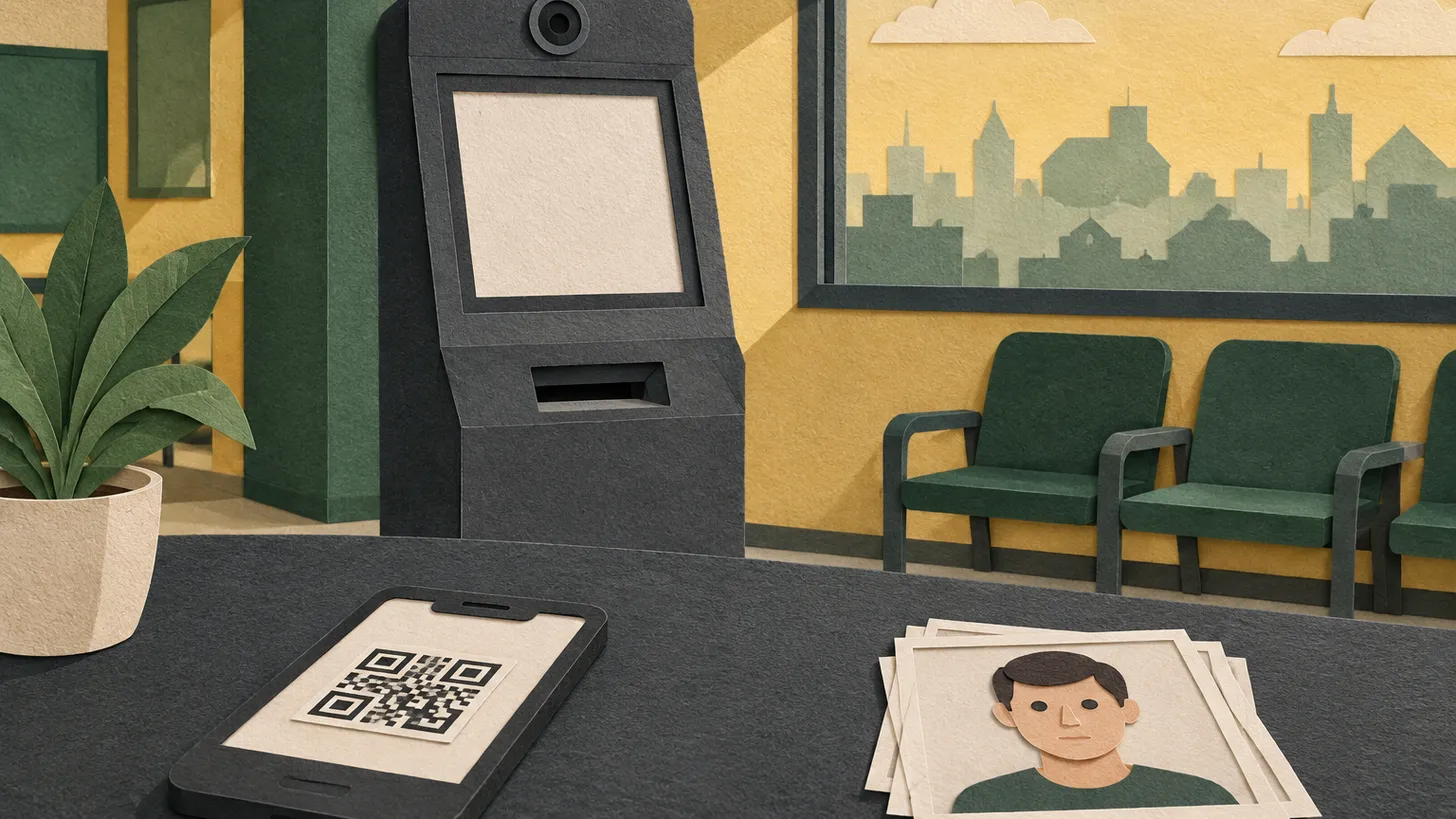
GermanyBerlin Residence Permit Photo: Digital Only — Studio QR Code or €6 PointID Terminal, No Paper Photos
No paper photos for the eAT at Berlin LEA since 14 July 2025: bring a studio QR code or pay €6 for a terminal photo.
 Germany
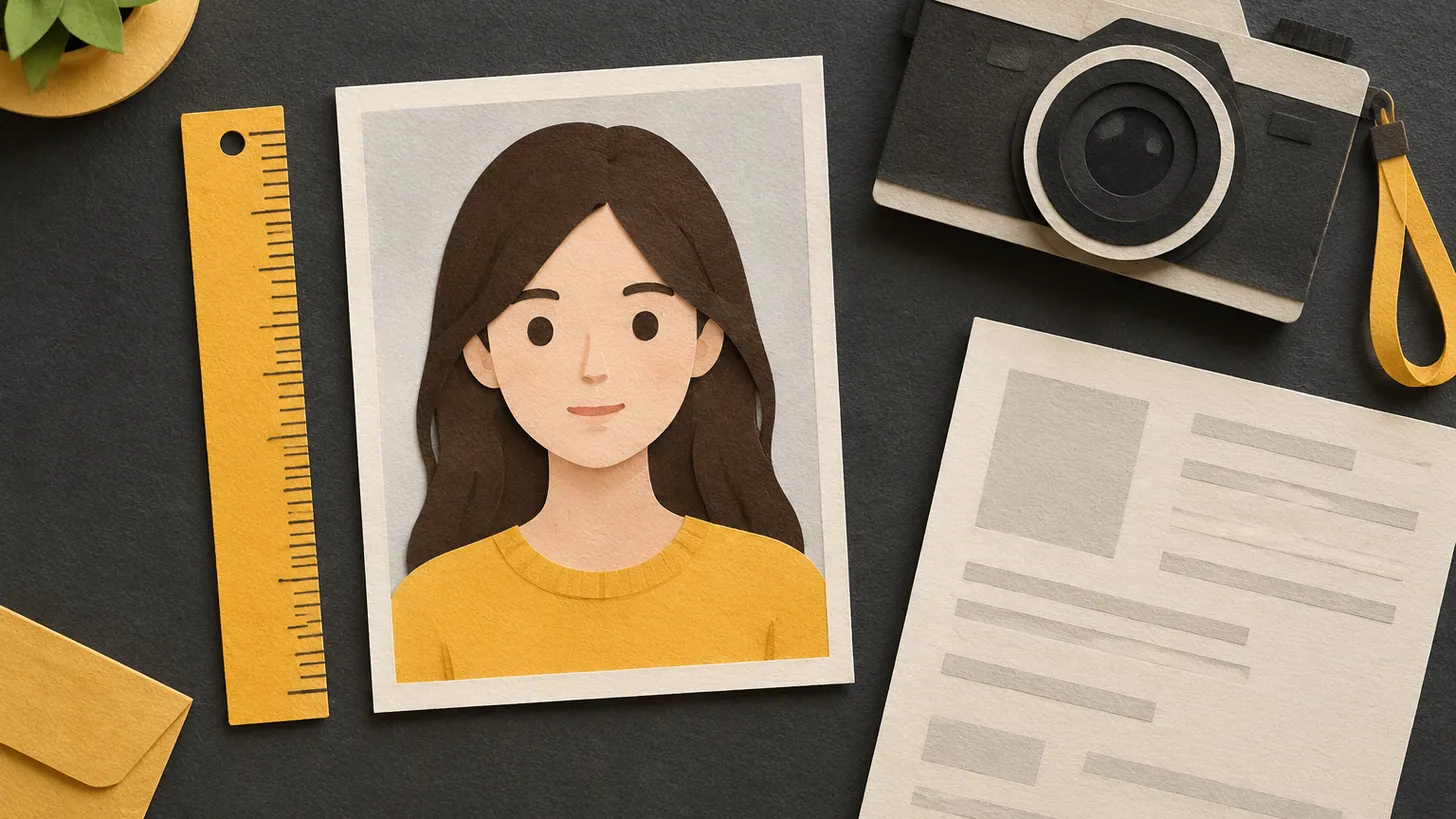
 Schengen Visa Photo Requirements: 35 x 45 mm Biometric Photo, Face 70-80 %, Not Older Than 6 Months
German Schengen visa photo: biometric 35 x 45 mm, face 70-80 % of the photo height, plain background, neutral look.
 United KingdomGermany
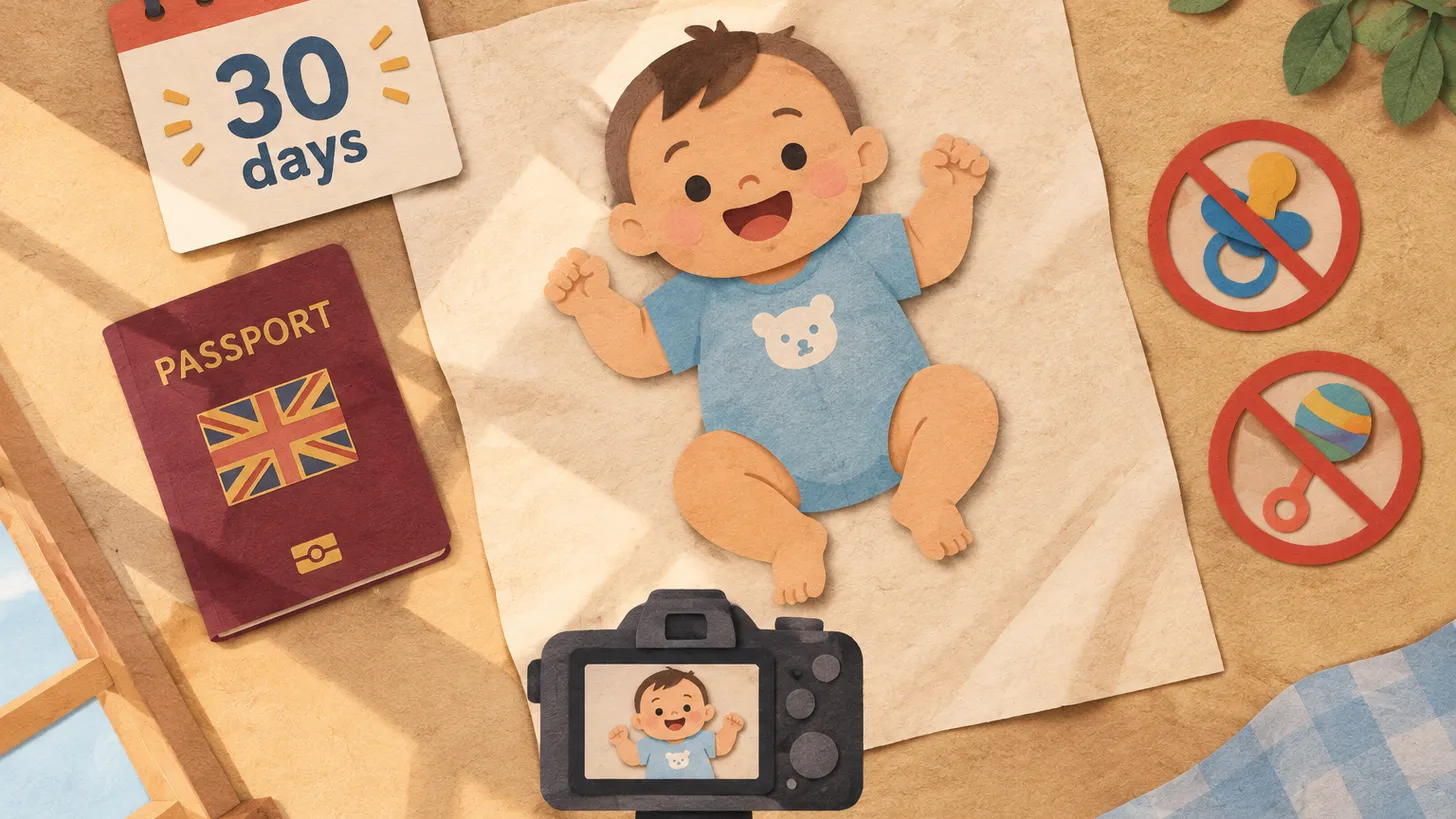
Baby Passport Photo Rules: Eyes Open? Toys? Dummies? What the UK and Germany Actually Say
For a UK passport the baby must be alone, without toys or dummies; under-1s needn't have eyes open, under-6s needn't look at the camera.
Make the photo for this document
Upload a selfie — we crop it to 35 × 45 mm, replace the background and check it against the document rules. Free preview.
National Visa (Type D) · GermanyUpload