Japan passport photo rejected — MOFA reasons and how to fix each
Japan's Ministry of Foreign Affairs (MOFA) publishes an unusually precise photo standard: 35 × 45 mm, head height 32-36 mm, and headroom above the crown of only 2-6 mm. The tolerance is enforced strictly, and a photo that is even a millimetre outside range is rejected.
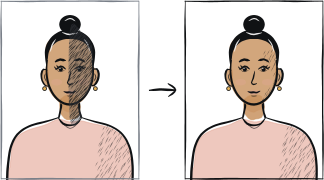
Fast diagnosis
Key checks: head height outside range, headroom above the head, glasses glare
Common checks include a head height outside the 32-36 mm chin-to-crown range, headroom above the crown outside 2-6 mm, and glare or a shadow from glasses, which is technically allowed but a common automated check.
7 common rejection checks
Head height outside 32-36 mm
MOFA specifies the chin-to-crown head height as 34 mm ± 2 mm — a 32-36 mm range — inside the 35 × 45 mm frame. The tolerance is published as a hard range, so a crop outside it does not meet the standard; use a tool that fits the ratio automatically rather than cropping by eye.
Headroom above the head outside 2-6 mm
The standard also fixes the gap between the top of the photo and the top of the head at 4 mm ± 2 mm. Too little headroom crops the hairline; too much pushes the head height below range.
Mirror-flipped selfie
The published standard lists mirror-flipped images as unacceptable, which catches phone selfies saved the way they appear on screen. Shoot with the rear camera, or check that the saved photo is not mirrored.
Background not plain or shadowed
The background must be even and free of patterns, gradients or shadows, with plain white the officially recommended choice. A faint shadow near the shoulders or behind the head is one of the common rejection triggers.
Glasses with glare or an obscuring frame
Prescription glasses are technically allowed if both eyes are fully visible with no glare and the frame does not cover any part of the eyes, but glare and frame shadows are a frequent automated rejection trigger in practice. Sunglasses and tinted lenses are not allowed at all; removing glasses for the shot is the safer choice.
Head tilted or rotated
Even a slight tilt away from perfectly straight and centred fails the check. Use a tripod or a steady surface and keep the eye-line level.
Photo older than 6 months
Japanese passport photo rules require an image that reflects your current appearance, taken within the last 6 months. An older photo is rejected even if your appearance has barely changed.
5-step recovery checklist
Use a tool that fits the head to exactly 32-36 mm and the headroom above it to 2-6 mm, rather than cropping by eye.
Shoot against a plain, evenly lit wall; white is the safest background choice.
Remove glasses if you can, or make sure both eyes and the frame are completely free of glare.
Use the rear camera on a steady support and keep your head level — a front-camera selfie is often saved mirror-flipped.
Take the shot within a few weeks of your application so it clearly reflects your current appearance.
Frequently asked questions
01How exact does the head height have to be for a Japan passport photo?
MOFA's standard fixes the head height at 34 mm ± 2 mm, the headroom above the head at 4 mm ± 2 mm, and the gap below the chin at 7 mm ± 2 mm, all inside the 35 × 45 mm frame. Those tolerances are published as hard ranges, so a crop outside them does not meet the standard. A tool that fits all three automatically is safer than a manual crop.
02Am I allowed to wear glasses in a Japan passport photo?
Prescription glasses are technically permitted if both eyes are fully visible with no glare and the frame does not cover any part of the eyes. In practice, glare and frame shadows are a common rejection trigger, so removing glasses for the shot is the safer option; sunglasses and tinted lenses are not allowed.
Other rejection guides
Show all 33Collapse



Official sources
Verified .
Reshoot in 2 minutes
Upload a fresh portrait — Anfas.Pro applies the correct crop, background and biometric framing automatically and shows the result before you pay.